
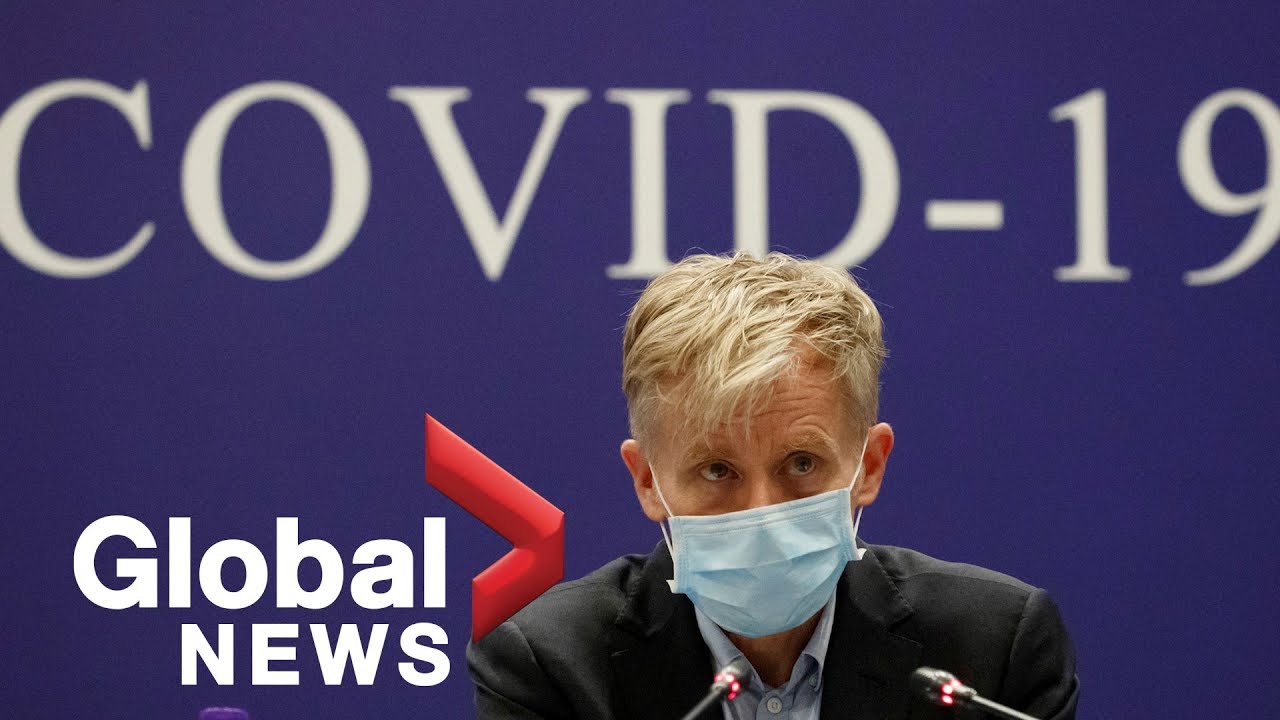
Excerpts from the press conference of the WHO Commission that returned from China + my comments (after //)
(English PDF of the presentation here
)
1. About 80% of cases are transmitted via droplets (close contact among family members). Transmission through fine aerosols over long distances is not the main cause of infection. Most of the 2055 infected healthcare workers were infected either at home or in the early stages of the epidemic, when precautions were not stringent.
2. About 20% of infected people require hospitalization for several weeks. China has a hospital capacity of 0.4% of its population size, other countries from 0.1 to 1.3%, and most of these spaces are already occupied by patients with other diseases.
3. About 5% of patients required mechanical ventilation. 15% required extracorporeal oxygenation (for several days). // Amidst COVID-19, Russia is currently purchasing 17 devices for extracorporeal membrane oxygenation (ECMO) and 507 high-frequency ventilation devices to combat the coronavirus. One device – one person per week. In Russia, there were only about 350 cases of ECMO used in 2018.
4. On average, the illness lasts 3–6 weeks. Mild cases resolve within a couple of weeks. The number of patients and the duration of treatments far exceeded the capabilities of all hospitals (45 total) in Wuhan, of which 6 were for critically ill patients. 39 hospitals for seriously ill and for those infected over the age of 65. // no comments
5. It turns out that China is ready to produce 1.6 million testing kits per week. This allows testing everyone who goes to the doctor with a high fever. // Russia still doesn’t have these testing kits. The WHO states it will send 250,000 tests to 159 labs worldwide, but it’s important to manufacture these ourselves. As of mid-February, only about 3,500 kits had been sent to 34 countries (source:

6. The majority of those infected show symptoms sooner or later. The number of asymptomatic cases is rare, and most carriers become ill within a few days of detection.
6. The most common symptoms are:
– fever 88%,
– dry cough 68%,
– fatigue 38%,
– sputum production during cough 33%,
– muscle pain 14%,
– chills 11%.
Less common are nausea 5%, and diarrhea 4%. Nasal congestion is NOT a symptom.
7. The mortality rate is 3.4%. Heavily dependent on age, pre-existing conditions, sex, and, especially, the quality of medical care.
The younger you are, the less likely you are to get infected or seriously ill
age | infected | deceased
0–9 | 0.9% | 0
10–19 | 1.2% | 0.1%
20–29 | 8.1% | 0.2%
30–39 |17.0% | 0.2%
40–49 |19.2% | 0.4%
50–59 |22.4% | 1.3%
60–69 |19.2% | 3.6%
70–79 |8.8% | 8.0%
80+ | 3.2% | 14.8%
Women get sick as often as men, but the mortality rate among women was only 2.8% compared to men’s 4.7%
9. The first thing necessary is to aggressively contain the spread of the virus in order to keep the number of seriously ill patients low. The second is to increase the number of hospital beds. Also, care must be taken for staff and material provision.
10. China continuously tests treatment methods. The most successful ones are immediately adopted nationwide, reducing the mortality rate compared to last month.
11. The likelihood of falling ill among pregnant women is no higher than for others. C-sections were performed on nine pregnant women, which helped prevent the newborns from getting infected.
12. The virus is 96% genetically identical to a known virus in bats and 86-92% identical to a virus in pangolins. Therefore, the transmission of the mutated virus from animal to human was the most likely cause of the outbreak.
13. Since the end of January, the number of newly infected in China has gradually decreased, 329 new cases the previous day. A month ago, there were 3000 cases per day.
14. An effective way to contain the virus is to interview the infected about their contacts followed by testing of the identified potential carriers.
 Hi, I'm Rauf Aliev.