
Arrived at my daughter’s skating rink. It’s 35-36 degrees Celsius outside.
Covered 37km in 1:18, average speed 28.4 km/h.
About to eat a salad and then back to work.
The bike ride is great for airing out the brain


Arrived at my daughter’s skating rink. It’s 35-36 degrees Celsius outside.
Covered 37km in 1:18, average speed 28.4 km/h.
About to eat a salad and then back to work.
The bike ride is great for airing out the brain
A very interesting 2-hour course on “Cell Biology” by Evgeny Sheval.
Post-Science has really come up with an interesting lecture format – no slides, no illustrations, just a talking head on a white background. Perfect for listening while driving. Although some commentators are precisely unhappy with this 🙂
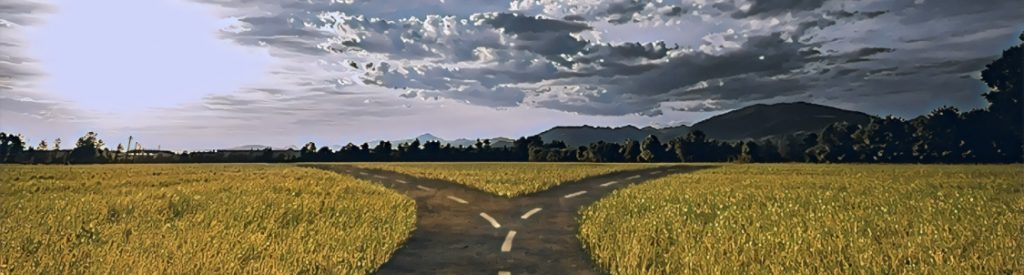
Nadiya and I have grown fond of nighttime bike rides. Well, as for nighttime, we set out at six in the evening, and three hours later we’re back, so most of it still happens at dusk (sometimes incredibly beautiful). We return at night; it looks roughly like in the photo. There are hardly any people, deer and squirrels also seem to be cautious.
On the downside – you periodically ride into a swarm of flies. There are never any during the day, but at night they come out to hunt cyclists. Cycling glasses help, but the thought of putting on a mask (which we always carry with us) has crossed our minds more than once.
Surprisingly, this year there have been no mosquitoes. At all. Neither at home nor by the river. Neither during the day nor in the evening. Where are they?
Today we covered 50 km. We try to ride 100 km a week in two outings, keeping up an average pace, and we’ve managed it for at least three weeks now.

Gathering dandelions

Continuing with the topic of science fiction. Look what they could do in 1959! The movie “The Sky Calls,” about Mars rockets and rescuing foolish Americans.
Continuing the theme. Today I finally watched an episode of “The Twilight Zone” from 2019. And there, a quite sensible script (Alex Rubens). Exactly how I like it (see the attached post). According to the script, at the moment when the main character, Samir Wassan, steps on stage and jokes about someone, that someone disappears along with all their past. So, effectively Samir is transferred to a dimension where the mentioned person doesn’t exist and never did, and other details may also differ. Essentially, it appears that a person can influence what happens around them, but nothing, except his own brain, contains the old reality anymore. Interesting concept.
There is a moment in the episode that is unclear without googling, I assume not just to me. The comedy club where Samir performs and makes people vanish from the world is called eddies – just like that, without an apostrophe (eddie’s). It turns out as “eddies”, not “Eddie’s club”. But that’s trivial – what’s interesting is the “no apostrophes” sign, which Samir’s nephew pointed out. Apostrophe is not just a punctuation mark, but also an address to the absent or to inanimate and abstract objects, as if to the living. There are tons of references and nuances throughout the film that can be discussed if you speak the language and have the erudition to catch them as you go (I don’t).
In general, fans of “Black Mirror” will probably enjoy it. Each episode is independent and has entirely different setups.

UFO or a turtle? Dragged out from behind the computer to walk

Someone should come up with “quick buttons”. Physical buttons that can be attached anywhere. Pressing them launches an app on your phone and performs a certain action in it.
For example, there’s a robot vacuum about a meter away from me. To send it to the kitchen, it takes about 30 seconds. Launch the app, it has to load, connect with the vacuum, load the map, select the kitchen, and start its journey there. 30 seconds might not seem like much, but it’s annoying because they are not spent fruitfully. I just need to give a command and forget about it.
Or in the car, start something while you’re driving. You could just press a button – and it would kick off on its own.
Today, Apple introduced a bunch of features that Androids had many years ago. Here’s an idea for you, Apple. Make those buttons. They should be simple and cheap. For instance, based on a simple Bluetooth beacon. Each button has an ID and just broadcasts it into the air, and the phone catches this signal and responds by launching an app.
They should work like this: you press and hold a button. The phone detects this and activates the macro recording mode. You launch the app, and press the necessary buttons there. All this is recorded into a macro. Press the button again – the macro stops recording. From now on, every time you press the button, the recorded macro is executed. Profit! You could order laundry detergent on the internet with a press of a button from the laundry room (Amazon Dash is already in this game).
You then link this macro to a voice command for Siri or associate it with some complex gesture for quick launching.
Published a new post on hybrismart.com – about whether Java developers should go into development for SAP Commerce. The main argument of the resistors is why should we narrow the field in which we are experts and call ourselves developers on just one platform – after all, we are narrowing the market, and where will you go next with all this knowledge if SAP Commerce suddenly ceases to exist.
I discuss this topic in the article, and based on my experience at Teamidea and EPAM, I share some thoughts and advice. Welcome if you’re interested in the topic, and I’d be happy for a like/share if you agree with what’s written 🙂
Interesting work. Scientists attempted to find a correlation between blood type and COVID fatalities. Using small samples from three hospitals, there appears to be a somewhat elevated risk for those with Type A blood, and significantly reduced for those with Type O. In my opinion, it is too soon to draw conclusions, as the sample sizes in two of the three hospitals are quite small. Only the sample from the hospital in Wuhan is worth the time spent on this post, yet without rechecking in other locations, it is still premature to make claims. They analyzed the blood groups of 3694 residents, resulting in 32.16%, 24.90%, 9.10%, and 33.84% for groups A, B, AB, and O respectively. Among the infected, the distribution was 37.75%, 26.42%, 10.03%, and 25.80% – highlighting groups A (higher risk) and O (lower risk). Furthermore, they gathered data from 206 deceased in the same hospital. The results were 41.26%, 24.27%, 9.22%, and 25.24% – meaning, among the deceased, there was a significantly higher than average number of people with Type A blood (41.25 versus 32.16) and significantly fewer with Type O (25.24 versus 33.84).
The authors acknowledge the problem with the lack of data in two hospitals and noted the absence of information on the distribution by age and gender. It is also difficult with such small samples to account for the influence of other factors, such as pre-existing illnesses. It could turn out, for example, that patients with Type A blood are more likely to suffer from something that complicates the treatment of COVID.
Original article:


 Hi, I'm Rauf Aliev.