An interesting opinion from an “insider”, astronaut Padalka:
“Dragon” has flown? Let’s not dramatize
As a professional, I am impressed and sincerely happy for our ISS partners. I wouldn’t describe the recent event as “the beginning of a new era in space exploration.” However, it’s undoubtedly a breakthrough for both a private company and for America as a whole. They have regained their position in crew delivery that was lost over the last decade. Investing in private rocketry and space exploration seems to be paying off. It is to be hoped that this example will finally spur our own space industry.
Surprisingly, a small private company, SpaceX (8,000 employees), has matched the entire Russian Federation in terms of manned spaceflight capacity. Elon Musk has managed to break our monopoly on manned flights to the ISS. This is a case where private entrepreneurship is outperforming state companies and state corporations. They clearly lag behind in human resources, engineering developments, and the speed of implementation. Additionally, state companies are more financially wasteful due to the excessive number of redundant bureaucrats and managers.
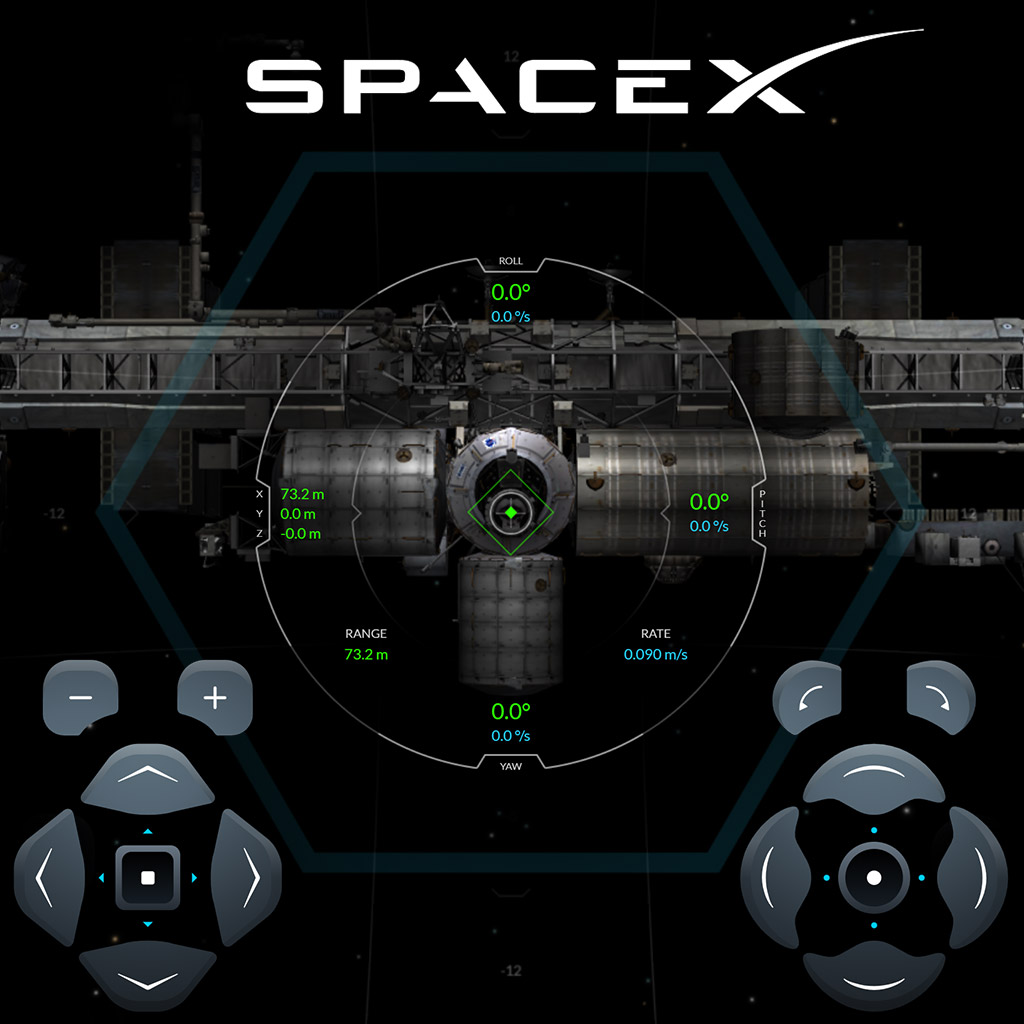
A few words about the spacecraft itself. All around are the latest technical developments and achievements. An endless number of innovative solutions: in the architecture of the spacecraft, its exterior design, interior construction and ergonomics, spacesuits, touch screen displays, and the graphic interface showing the crew’s communication with the ship’s systems. The large internal volume and level of comfort are impressive.
This is not just the launch of a new spacecraft, but a real step towards lunar and Martian programs. In my view, a point has been set in the space race between our countries in two respects. First, the programs have become international, as we have long been collaborating rather than competing. Second, with the launch of the new spacecraft and real progress in the lunar program, the Americans have no competitors. No one is breathing down their neck.
Our technological backwardness, lack of clear goal-setting in space exploration, the state sector of the economy with no competition, a shortage of highly skilled professionals in the industry, and other negative trends have led to the fact that, having started building a new spacecraft a year earlier than Musk, we succeeded only in renaming it—from “Federation” to “Eagle.” Earlier, we had designed the multifunctional, reusable spacecraft “Clipper,” but after six years, Roscosmos virtually shut down the project.
I find the humor of our leaders in such a situation amusing. It’s funny to watch the recent banter about the “trampoline.” As for the “rescue of the Russian rocket and space industry from American sanctions” in 2014 and mutual threats, they are too exaggerated and contrived. Dmitry Rogozin was likely misled by advisors and consultants at the time about our self-sufficiency and independence on the ISS. This is not the first time I’ve spoken about this.
At that point, the Americans depended on us not only for crew delivery to the ISS but also in terms of several technical aspects. We, in turn, depended significantly on them, and we still do to this day. Here are a few examples. For motion control systems that manage the station’s orientation, only the American side has gyrodynes (huge gyroscopes), while the engines that unload them operate in the Russian segment. They work in tandem—gyrodynes without engines are just space station scrap metal, and relying only on our engines for station orientation would be too fuel costly. The ISS wouldn’t last a month.
Lacking the long-promised, yet-to-be-orbited Russian scientific and power module (NEM) with its powerful solar panels, we get nearly half the necessary electrical power for the Russian segment from our partners. For continuous control (telemetry) and management of the Russian segment systems (including voice communications through the TsUP-ISS channel), Russians use the partners’ communications facilities. The partners’ systems partially operate in the Russian segment to support crew life as well. All equipment for psychological support—including mobile phone service, video conferences with families, internet—is provided by partners. The element base of the station’s computer network, including the entire Russian segment, is almost entirely not our own… And there are many such examples.
However, even a non-specialist understands: in this space project, our countries are interdependent. The relationships have been built and are built on full trust, especially concerning safety and supporting the well-being of crews aboard the ISS. But we must honestly acknowledge: now, after the Americans created their own crew transport system, the balance of interdependence is clearly not in our favor. In general, another transport system for sending crews to the ISS creates a reserve and enhances reliability in case of unexpected circumstances. For the past 20 years, there have been enough incidents involving both us and our partners. Collaborative cooperation is much more beneficial than mutual reproaches and threats.
What’s next? In the first half of next year, another manned spacecraft, Boeing’s Starliner, will begin flying to the ISS. The demand for our “Soyuz” and for delivering tourists might finally end, and Roscosmos will lose a significant part of its income.
In late May, the Americans began the final test (Green Run Test) of their super-heavy carrier. For the second half of 2021, its launch is scheduled as part of the Artemis 1 mission. NASA plans to conduct an unmanned lunar flyby with the Orion spacecraft. Artemis 3 mission involves the first astronaut landing on the moon in 2024/2025.
All the elements necessary for landing a person on the moon have already been worked out by them and are at the stage of construction or pending pertinent contracts in the near future. Next, NASA plans to organize joint missions with partners. The task is interesting and topical: to create a base on the moon suitable for long-term living. The prospective lunar orbital station, Lunar Gateway, which according to the partners’ plans, will replace the ISS, is intended to help implement the project.
It is obvious that we are unlikely to be in high demand as a full-fledged partner in future projects. However, we should not dramatize the situation by saying we will be “cast aside in the history of space.” We should take part in the project of the lunar station. We are not yet capable of building and designing quickly, and there is no one to do it. We do not have a heavy rocket or a spacecraft for bringing our crews to the lunar station either. It’s not the time now to make counter-demands and figure out the role, whether primary or secondary, our participation will be.
A joint project with partners will help us maintain the potential of the space industry, give us the opportunity to learn a lot, eventually prepare new engineering personnel, and imbue the lives of the next generation of space engineers and researchers with meaning.
On a personal note
Gennady Ivanovich Padalka is a Hero of Russia and currently holds the world record for the total duration of space flights. His record includes five long-duration missions to near-Earth orbit. In total, he spent 878 days in space, venturing outside the spacecraft ten times. Before joining the Cosmonauts Corps, he was a military pilot. While a cosmonaut, he also studied at the UNESCO International Center, earning a degree as an “engineer-ecologist” and a Master’s degree in Environmental Management. I have known him for many years. I have always admired not only his vast knowledge, unique experience, and ability to think big, but also Gennady Ivanovich’s integrity, his fearlessness, and his readiness to speak the truth, including to his superiors. Three years ago, due to professional redundancy, Padalka had to leave the Cosmonauts Corps and the Cosmonaut Training Center…
Source: Trud (
)







 Hi, I'm Rauf Aliev.