
I remember learning about the game “Life” in my early childhood from Martin Gardner’s book “Mathematical Games” published in 1979. John Conway, the inventor of the game, recently died from coronavirus at the age of 82.
Speaking of the game. Conway’s “Life” is a cellular automaton defined on a grid of squares.
Each cell on the grid at each moment in discrete time is considered alive or dead. In the next time step, its state is determined by rules depending on the state of the eight neighboring cells. Specifically: 1) in an empty (dead) cell, if there are exactly three live cells adjacent to it, life is born; if a live cell has two or three live neighbors, the cell continues to live; otherwise, if there are fewer than two or more than three neighbors, the cell dies (from “loneliness” or “overpopulation”). The essence of the game lies in selecting an initial configuration of cells and observing their development.
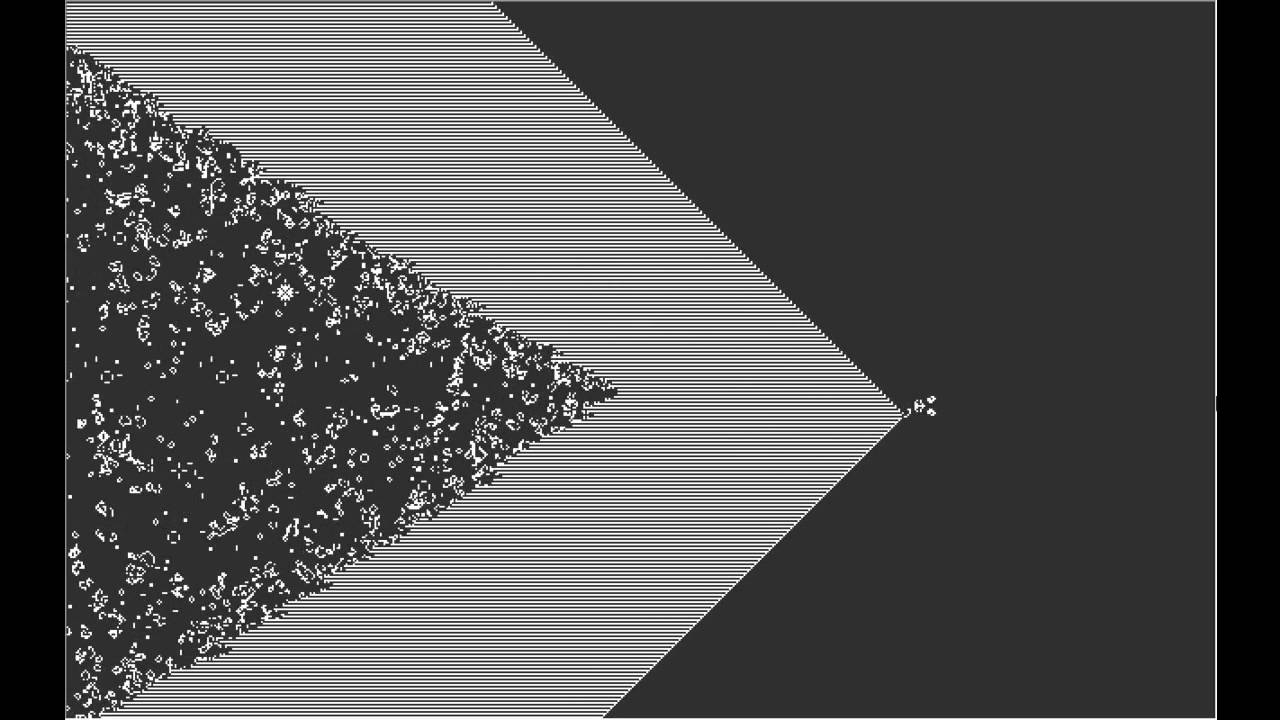
Such simple rules allow for the creation of moving objects (such as the “glider”), or objects with a long but finite life (for example, the Diehard pattern, which lives for 130 generations and then dies). There is a figure, the pentadecathlon, capable of “absorbing” a colliding glider or reflecting it by 180 degrees. Placing two pentadecathlons against each other, one can have a “tennis match”: they will toss the glider back and forth like a ball. There’s the “Cheshire Cat”: after six moves, only the “smile” remains from the cat, and the “face” completely disappears. There’s even a “virus,” which if placed correctly on a field of figures, can create beautiful chaos. See the link from the comments, there’s something at the very end of the article, you won’t regret it.
A wonderful video showing how it all works on a huge field with complex initial configurations. In the middle of it, there’s Gosper’s glider gun – a pattern that shoots gliders 🙂
P.S. If you search for “conway’s game of life” on Google, there will be a simulation of this game running in the background. Just a little Easter egg from Google.
 Hi, I'm Rauf Aliev.