
Finally watched the movie “Awakenings.” Surprisingly, it was “very topical.” It’s also about an epidemic. Of lethargic encephalitis.
The film doesn’t mention this, but from 1917 to 1927 it was a real epidemic, and COVID was nothing compared to lethargic encephalitis.
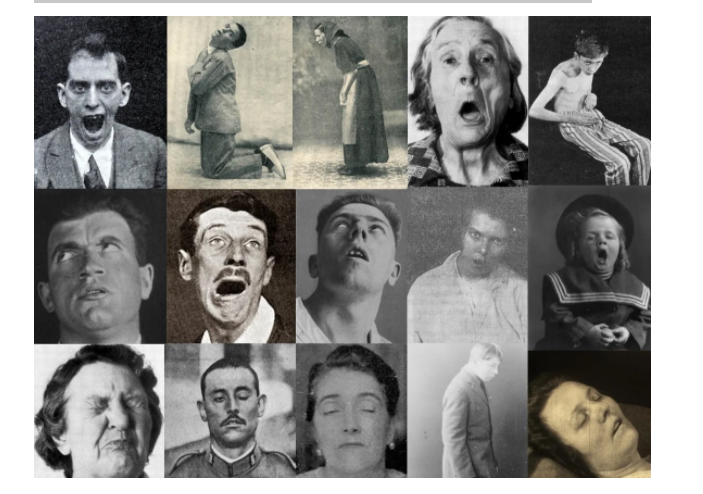
Imagine this. Hundreds of thousands of people around the world suddenly started “freezing” in place. With food in their mouths, a book in their hands, they would fall into a stupor they couldn’t escape from for years, and every third person died without ever coming back from their dreams. Those affected lost the ability to speak or move, despite having the physical capability to do so. With rare exceptions, only the ability to move their eyeballs remained, while the rest of the body was completely passive. Those who recovered described it as feeling an oppressive force that weighed down on them every time they tried to make any movement.
The epidemic struck everyone, especially children. The pathogen has not yet been identified. It’s suspected to be a virus, but this is uncertain. Perhaps, it was the diplococcus bacteria. It was presumed to be transmitted through contact or via airborne droplets, though the contagion rate was low, or even very low. However, for instance, it is documented that at the Derby and Derbyshire Rescue and Training Home in August 1919, within two weeks, 12 out of 21 girls and women were infected and six died within ten days of infection. In any case, estimates suggest that 1-5 million were infected, with deaths ranging from half a million to one and a half million. This epidemic coincided with the “Spanish flu” of 1918, which then killed 100 times more people, about 50 million. It is suspected that Adolf Hitler suffered from this disease.
The epidemic suddenly stopped in 1927, as abruptly as it had started ten years earlier.
Since 1940, only 40 cases of lethargic encephalitis have been found worldwide.
 Hi, I'm Rauf Aliev.