February 23 2023, 20:10

Re-reading Sapiens, I’ve reached the chapter where Yuval talks about the various horrors of animal husbandry for meat and dairy. Did a quick Google on meat farms with ‘Happy’ in their name. There’s a ton of them! Here’s one, for example. The photo shows a piglet that couldn’t be happier. To the right, some merchandise, it says I like my butt rubbed, and my pork pulled.

In the USA, 100,000,000 pigs are slaughtered every year. A pig’s pregnancy lasts 3 months, 3 weeks, and 3 days, producing 8-12 piglets who stay with their mother for one and a half to two months (in the USA – 1-2 weeks), and then are sent to a separate place. Or not, as in the photo. This cycle is repeated 3-5 times with the mother, after which they say goodbye to the sow forever. The piglets are sent to their deaths six months after birth.

February 21 2023, 14:34

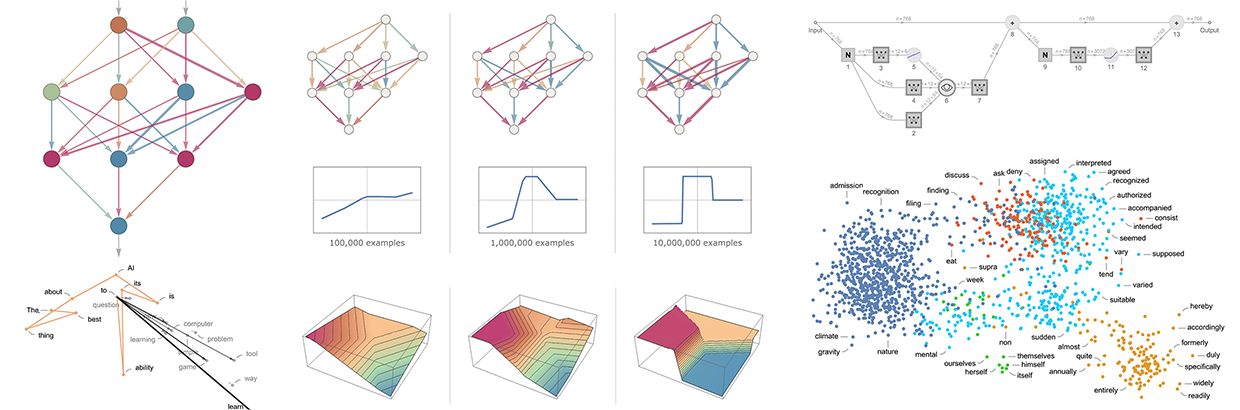
A very interesting text about Machine Learning and ChatGPT in particular by Stephen Wolfram, the creator of WolframAlpha. Overall, it’s really the very basics, but there are interesting details flying between them, especially in the second half. Plus, it’s excellently presented. A good link to refresh knowledge, and for those not in the loop — get

his blog is very insightful

February 19 2023, 23:09

In the last post, I showed my (non) workspace. Here, I’ll talk about my “invention” for transferring references onto the canvas. I recorded the video about two months ago when there was still no oil paint. Well, now it’s the same, just with oil.

So, how it works. I attached a phone holder so that the phone faces the drawing. Back then, two months ago, I ran a special app, EpocCam Pro, which broadcast everything captured by the phone to my computer. The new MacOS has this feature built-in, so EpocCam Pro is no longer needed. On my computer, I made a simple program in Python/OpenCV “on the fly,” which takes the camera image and “projects” a semi-transparent reference image onto it. Since the camera looks at the canvas at a slight angle, there also happens to be a perspective correction.

In separate windows, a black-and-white image from the camera is displayed, allowing me to see my drawing not only reduced but also — separately — in monochrome.

That’s not all. I got carried away and created a feature to separate the image into layers based on brightness. You define the number of layers, and you can “project” onto the view from the camera all the dark spots (like from the range of 85-100%), then switch to all the less dark spots (like from the range of 75%-85%), and so on up to the brightest spots (0-10%). Theoretically, you can draw layer by layer, starting from the darkest and ending with the lightest. This might be something to try as well. If it works out, I’ll share. This trick doesn’t really take off with colored images, but with monochrome, it indeed does. Something else could possibly be devised for colored images. For example, separation by colors.

All in all, I made this thing a few months ago, and only tried it out today on oranges (see the previous post). Essentially, it helped me transfer the outlines onto the canvas faster and more accurately than I would have without any automation. Specifically for oranges, there’s practically no benefit, as there’s no place to make a mistake. Whether I would have drawn a lemon a bit more to the left or right, no big deal. But if it were something complex, it could theoretically be useful. I should try it with a portrait, for instance.

February 19 2023, 22:54

Gradually (almost finished) my tenth attempt at oil painting. In this post, however, I want to talk about some automation and equipment for my (non)working space.

I finally moved from the garage to the study since I learned to paint without getting paint on my clothes and surrounding objects. It took some time to grasp these nuances.

About the contraption with the light bulb and the phone holder — see my next post. It’s my invention for transferring the sketch onto the canvas. Briefly, the phone captures the canvas, sends it to the computer where it aligns with the original, and on the screen, I see my hand with the brush, the result, and the reference. I’m not sure if I will use it often, but I tried it with oranges. I’ll discuss the pros and cons of this “invention” in the next post. I could do it here, but unfortunately, Facebook no longer allows adding videos and photos to a single post. And there is a video there.

Paints — WINSOR&NEWTON, bristle brushes from Amazon, some random set, Gamblin NEO-Megilp oil, Gamblin Gamsol solvent, rags (this turned out to be very important) – a roll of 72 microfiber pieces, a box for the palette with a tightly sealing lid – Masterson Palette Seal, and the palette itself – just a piece of glass. I bought a picture frame of the right size for 12 dollars and took the glass out of it. The presence of a rubber lid allows reusing paints even a week later. I converted the frame itself for transporting wet canvases, which deserves a separate discussion. I couldn’t find a “store-bought” solution for this. The solution is simple – a “picture frame” of the suitable size with a minor modification – the front part is covered with plywood. And you can transport a wet canvas without the risk of smudging.

Oh, about the miscellany I have not yet finished… It’s useful to have a hermetic container for washing brushes. Then the Gamsol is used more slowly. Yes, a spatula is also needed to clean the glass palette. Canvases are still a consumable material. I think that’s it. Well, you might also want to keep a roll of paper towels nearby.

February 18 2023, 01:02

When people say that history does not repeat itself, I remember Hernán Cortés and Francisco Pizarro.

The Spanish conquistador Cortés arrived at the Aztecs in 1519, presented himself as an envoy of the Spanish king, demanded an audience with the local king Montezuma II, and immediately captured him. He then organized the local Indians and killed almost all the Aztecs, taking Tenochtitlan.

Ten years later, Francisco Pizarro, in South America among the Incas, also introduced himself as an envoy of the Spanish king, asked for an audience with the ruler of the Incas, Atahualpa, and captured him. Pizarro then quickly subdued the paralyzed empire with the help of local tribes.

Obviously, in the 16th century, there was no way for the Aztecs to send a message to the Incas. They didn’t even know about each other (well, you know, the internet back then was still slow, like on modems, 9600 baud).