
I’m in Pittsburgh, Pennsylvania. Today, I felt like having some draft Guinness. A Google search showed that there’s only one place within a half-hour walk. It’s a bar, the food is so-so, but I also wanted to have dinner. I asked if they do takeout. They told me that the law states you can only drink inside. Decided to find out how it differs from our Virginia.
Grocery stores here don’t sell any alcohol at all (my readers from Russia probably wonder why even open a grocery store, since alcohol boosts sales). So, no beer or wine here.
Beer is sold in a separate store, which has all kinds of beers (there were four varieties of Guinness, including imported), but no wine or chips (my readers from Russia probably wonder how you can sell beer and not sell anything to go with it).
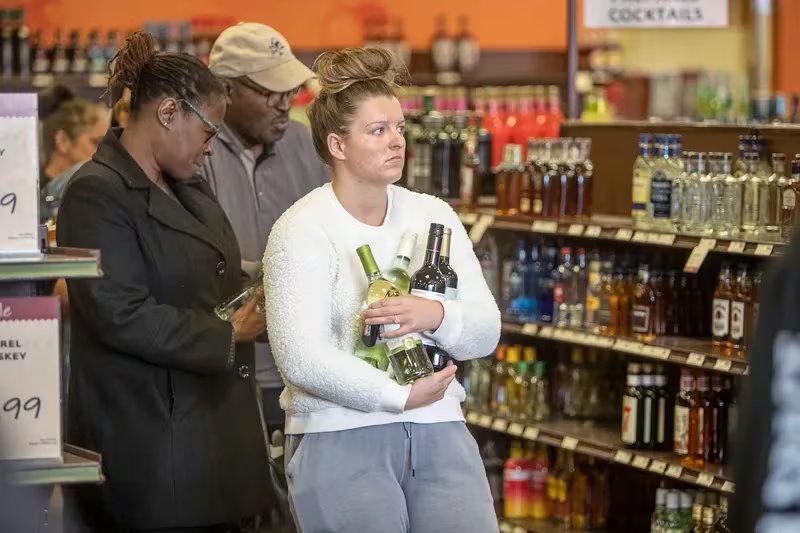
Wine is sold in dedicated stores, along with spirits. This is the Fine Wine & Good Spirits network, managed by the Pennsylvania Liquor Control Board (PLCB). These stores close at 5-6 PM (my readers from Russia probably wonder why sell vodka and wine until 5 PM, when it’s usually needed well after 5).
Theoretically, as of relatively recently, groceries can sell wine and beer with restrictions, but it seems most of them prefer not to change anything. Probably, it requires not only acquiring a license but also organizing more stringent processes for control, management, and reporting within the store, and it’s easier for them to keep things as they are.
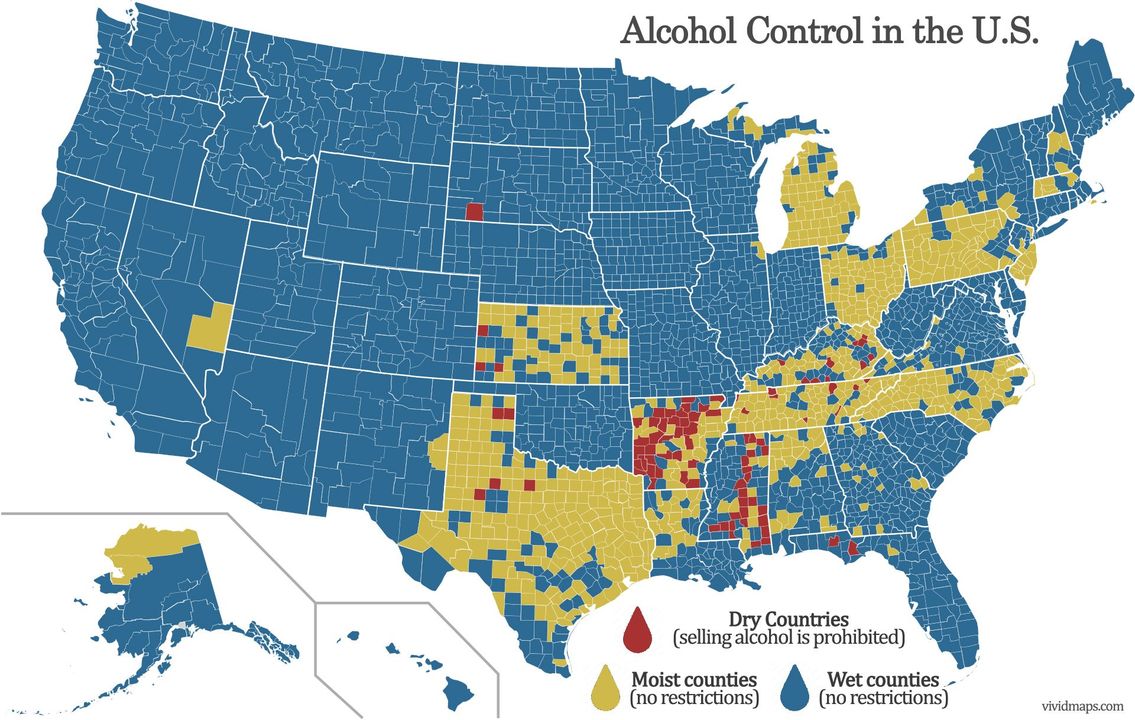
Attached is a map marking “dry” counties in red, where no alcohol can be purchased at all, as well as “moist” counties in blue and “wet” counties in yellow. In a “wet” county, alcohol sales are fully permitted. This means that alcoholic beverages can be purchased in stores, bars, restaurants, and other licensed establishments without significant restrictions. Most of the territory is painted blue on the map. Yellow marked areas are “moist” counties, where alcohol sales are permitted with certain restrictions, a kind of compromise between “dry” and “wet” counties. Restrictions might include selling alcohol only in specific types of establishments (e.g., only in restaurants), time restrictions on sales, or a ban on selling spirits while allowing the sale of beer and wine. I’ve described the restrictions in Pittsburgh above, but each state has its specifics.
Virginia, where I live, contains moist and wet counties, and no dry counties. Specifically in Leesburg, beer and wine are indeed sold in groceries. For spirits, however, you have to go to the ABC stores, which are managed by a state-affiliated organization (Virginia Alcoholic Beverage Control Authority).
 Hi, I'm Rauf Aliev.