
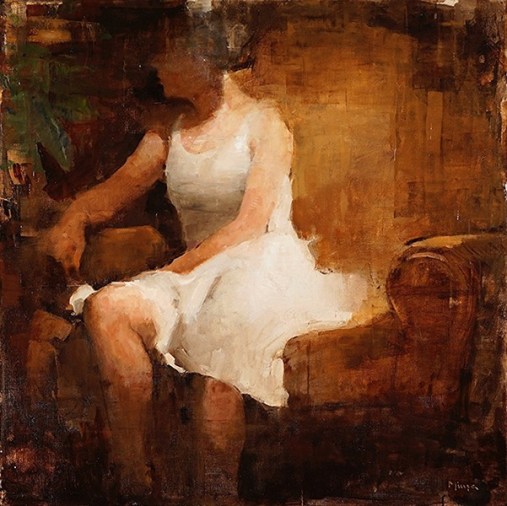
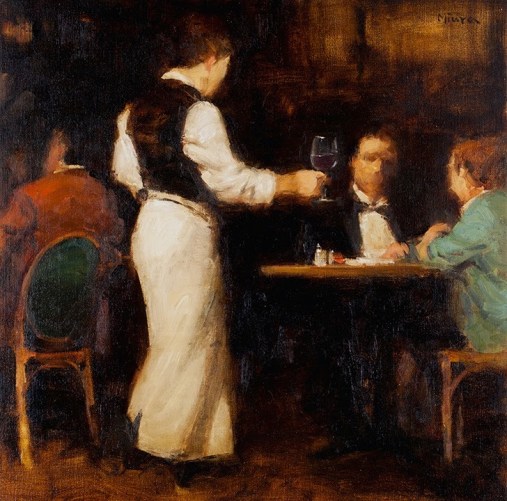
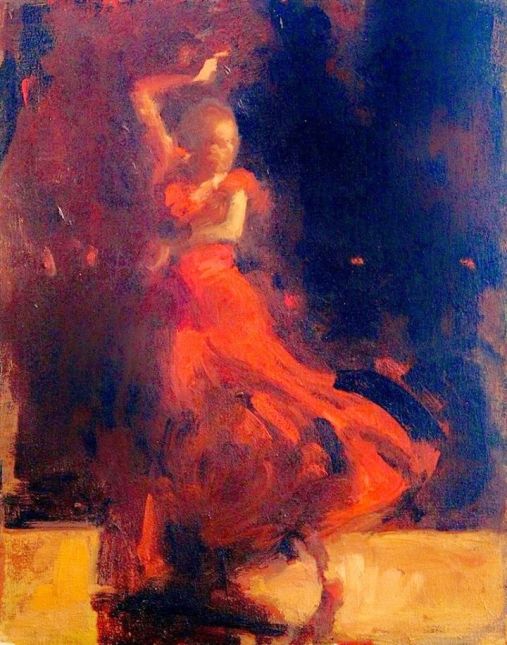
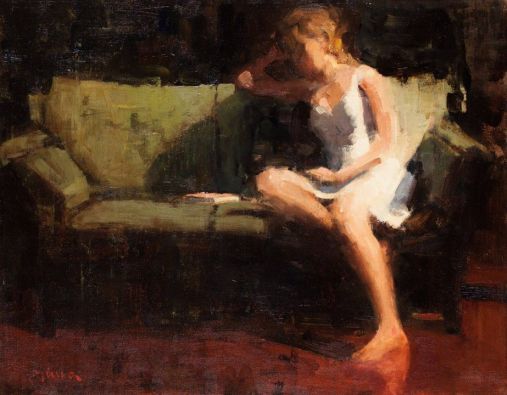
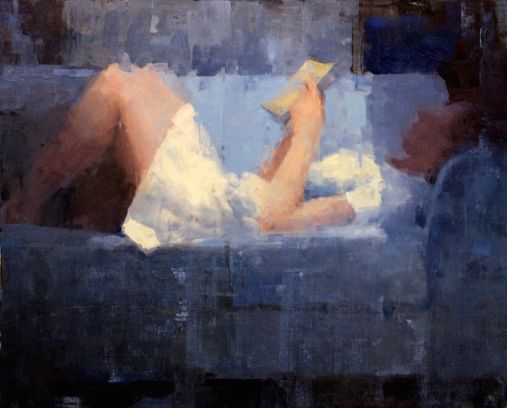
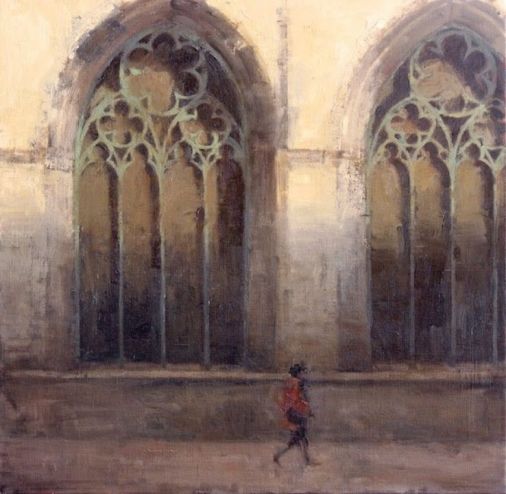
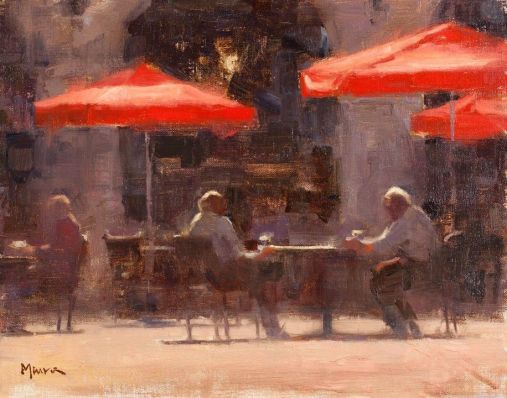
An intriguing artist, Terry Miura (born in 1964), originated from Japan and relocated to New York, where he pursued his education and furthered his artistic journey.
As I gaze upon his paintings, I am reminded of Richard Schmid’s assertion in his current book that nature contains no definitive lines. Thus, when translating visuals onto canvas, line-oriented thinking may prove counterproductive, even obstructive. It’s more useful to consider swathes of color. Another compelling concept he mentioned is prioritizing the observed over the known; should a conflict arise, depict what you see, for painting the known risks portraying an absence instead of presence—a fascinating notion indeed.
This perspective harks back to the ethos of earlier painters (and some of their modern counterparts): viewing objects more as people and items within a context than as visual constructs shaped by light necessitates painting based on known attributes—what other references could they rely on? Understandably, the more these early artists knew about their subjects, the more adept their renderings. Thus, depicting what was expected involved extensive study and memorization due to the sheer expanse of subjects. Naturally, this led to specialization: one might focus on animals, another on architecture, and a third on portraiture.
Even today, such artists (including many contemporaries) are often easily recognized as much for their thematic focus as for their stylistic and period distinctions.
I find this methodology compelling. It’s not novel, and Richard Schmid articulates it effectively. This becomes particularly evident when attempting to paint a modern car seen from a few meters away. It appears straightforward: four wheels, some curves. Yet, each car’s curves are unique, lacking clear rationale, and knowing the ‘anatomy’ of a Toyota RAV4 offers little aid in depicting, for example, a Chevrolet Corvette. Furthermore, proximity amplifies these curves’ perceptual distortions, potentially overwhelming the mind. It proves simpler to bypass sketching and commence with color patches and shapes, refining them subsequently.
Clearly, Terry Miura shares this perceptual framework. For him, there are no figures clad in red or white dresses; there are only patches. Compositionally effective and balanced patches are all that need to be accurately placed—and misplaced where not needed.
Note that related posts are consolidated under the hashtag #artrauflikes, and the “Art Rauf Likes” section on beinginamerica.com lists all 79 (unlike Facebook, which omits nearly half).



 Hi, I'm Rauf Aliev.