
Today I learned about “sacrificial anodes” used for corrosion protection. This mechanism, called “cathodic protection,” safeguards the ship’s hull from rusting. It works by establishing an electrical current between two different metals, either via a conductor or directly, because electrons are held with varying strengths in different metals. Thus, electrons physically transfer from one metal to another. Incidentally, this is roughly the same principle on which batteries operate. So, special little bars, usually made of zinc, are attached to the ship’s hull, causing an electron flow from the zinc, effectively turning the entire ship into a huge battery. As a result, it’s not the hull that corrodes but the material of these bars. That’s why they’re called sacrificial anodes.
How does corrosion work anyway? It’s a redox reaction that occurs in two stages. First, the metal is oxidized, meaning its atoms lose electrons and become positively charged ions. Then comes the reduction: they bond with OH ions, which are abundantly found in water, resulting in rust. This is, of course, a simplified explanation.
The main point is that both these processes occur on the same area on the surface of the metal. Cathodic protection, however, spatially separates them. On the sacrificial anode, oxidation strictly occurs as electrons leave zinc atoms, while iron acts as the cathode where the surplus electrons are reduced. The ions from the water are reduced, but the iron atoms remain untouched—which is exactly the intended goal. The anode degrades over time, but it can always be replaced. As long as it’s present, no rust will form.
It’s truly impressive how these small bars can save such a massive machine by sacrificing themselves.
By the way, the cathodic protection system is also used, for example, in the Burj Khalifa in Dubai. There’s a titanium grid underground with pulsed current supplied to it. If this generator is shut down, they say the building won’t last long. Burj Khalifa is located in an area with high humidity and air salinity due to its proximity to the Persian Gulf, and generally, building skyscrapers there seems like a strange idea. But with such engineering ingenuity, it’s feasible.
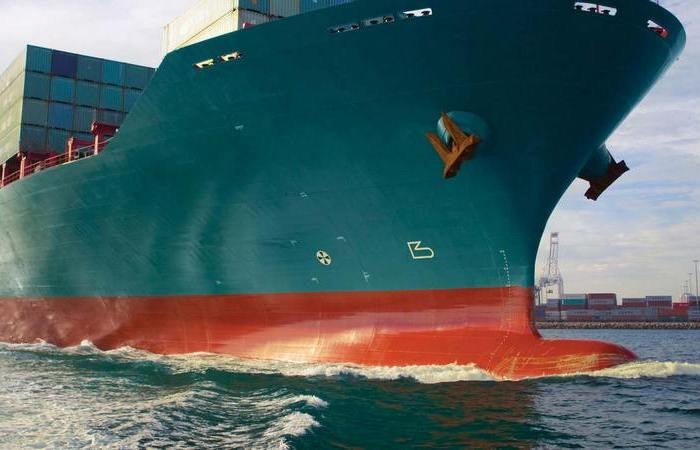
The hull’s bottom is often painted (or was painted) red. It turns out that without this, the bottom of the ship would quickly become covered with sea organisms such as algae and shells (these are known as foulers). Historically, red paint was used in anti-fouling paints, containing copper oxide, red lead, and other components. Copper (Cu) and its compounds (copper oxide (CuO) and copper sulfate (CuSO4)) are toxic to many marine organisms. Copper ions (Cu²⁺), released from the coating, interfere with the metabolic processes of marine organisms, disrupting their ability to attach and grow. In addition, a protective oxide film forms on the surface of the copper, which prevents further oxidation. Nowadays, chemistry has advanced, and the color of the protective layer can be any color, but historically, red has been used. And the shells have already adapted.



 Hi, I'm Rauf Aliev.