
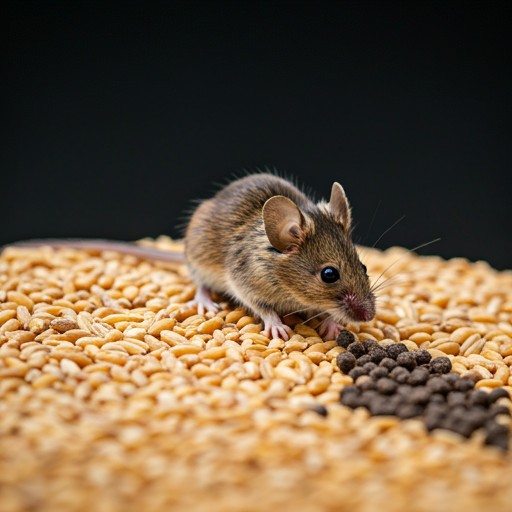
I am reading the book At Home by Bill Bryson and concurrently Googling. In the USA, the FDA has a standard called the Food Defect Levels Handbook, which sets threshold levels for food contaminants. Find out how much mouse excrement can be in flour!
I will post the link in the comments. Also, check out the next post about Russian standards.
Everywhere the word “permissible” appears, it refers to the DEFECT ACTION LEVEL. It is incorrect to believe that if the FDA sets a defect level for a food product, the manufacturer only needs to not exceed this level. Defect levels are not representative of the average defects found in any of the products—they are, in fact, much lower on average. These levels represent the limits at which the FDA will consider a food product “contaminated” and subject to enforcement under Section 402(a)(3) of the Food, Drug, and Cosmetic Act.
But it’s amusing to recognize that such contaminations do indeed exist and to understand their potential scale.
== Wheat ==
Mouse droppings (MPM-V15): not permissible more than 9 mg of rodent droppings per kilogram
== Wheat Flour ==
Insect contamination (AOAC 972.32): not permissible more than 75 insect fragments per 50 grams
== Chocolate and Chocolate Liquor ==
Insect contamination (AOAC 965.38): not permissible averaging 60 or more insect fragments per 100 grams when analyzing 6 samples of 100 grams EACH OR any sample containing 90 or more insect fragments
Mouse hairs (AOAC 965.38): not permissible averaging 1 or more rodent hairs per 100 grams when analyzing 6 samples of 100 grams EACH OR any sample containing 3 or more rodent hairs
Shell (AOAC 968.10-970.23): for chocolate liquor, shell content not permissible more than 2%, calculated on the basis of non-alkalized cocoa beans
== Pasta and Noodles ==
Insect contamination (AOAC 969.41): not permissible, if on average 225 or more insect fragments per 225 grams in 6 or more samples
Mouse hairs (AOAC 969.41): not permissible, if on average 4.5 or more rodent hairs per 225 grams in 6 or more samples
== Canned or Frozen Spinach ==
Insects and mites (AOAC 974.33): not permissible more than 50 aphids, thrips, and/or mites per 100 grams OR 2 or more larvae 3 mm in length or longer and/or larvae or caterpillar fragments longer than 12 mm per 24 pounds OR an average of 8 or more miners per 100 grams OR an average of 4 or more miners 3 mm in length per 100 grams
== Strawberries: Frozen Whole or Sliced ==
Mold (AOAC 952.22): the average level of mold should not exceed 45% and in half of the samples 55% or more
== Citrus Juices ==
Mold (AOAC 970.75): permissible average mold level <10%
Insects and insect eggs (AOAC 970.72): not permissible 5 or more Drosophila and other fly eggs per 250 ml OR 1 or more larvae per 250 ml
== Coffee (raw beans) ==
Insect contamination and insects (MPM-V1): not permissible on average 10% or more beans infested or damaged by insects
Mold (MPM-V1): not permissible on average 10% or more beans by count moldy
== Corn Flour ==
Insects (AOAC 981.19): not permissible on average 1 or more whole insects (or equivalent) per 50 grams
Insect contamination (AOAC 981.19): not permissible on average 25 or more insect fragments per 25 grams
Mouse hairs (AOAC 981.19): not permissible on average 1 or more rodent hairs per 25 grams OR an average 1 or more rodent dropping fragments per 50 grams
== Cocoa Beans ==
Mold (MPM-V18): not permissible to have more than 4% of beans by count moldy
Mammalian excreta (MPM-V18): not permissible on average 10 mg or more mammalian excreta per pound
== Hops (used in brewing) ==
Insects (AOAC 967.23): not permissible on average more than 2,500 aphids per 10 grams
== Ground Allspice ==
Insects (AOAC 981.21): not permissible: average — 30 or more insect fragments per 10 grams
Mouse hairs (AOAC 981.21): not permissible average — 1 or more rodent hairs per 10 grams
Source of defect: insect fragments — contamination before/after harvest and processing. Rodent hairs — contamination after harvest and/or processing.
…
== Canned and Frozen Berries (blackberries, raspberries, etc.) ==
Mold (AOAC 955.47): permissible average level of mold is 60% and less
Insect larvae (AOAC 981.20): permissible average — 4 or fewer larvae per 500 grams
OR
Average value — not permissible more than 10 whole insects or their equivalents per 500 grams (not including thrips, aphids, and mites)
== Frozen Broccoli ==
Insects and mites (AOAC 945.82): permissible average — 60 or fewer aphids and/or thrips and/or mites per 100 grams
== Frozen Brussels Sprouts ==
Insects (MPM-V95): permissible average — 30 or fewer aphids and/or thrips per 100 grams
== Whole Allspice ==
Mold (MPM-V32): permissible average — 5% or less of berries by weight moldy
Significance: potential health threat — may contain mold producing mycotoxins
== Ground Cinnamon ==
Insect contamination (AOAC 968.38b): permissible on average 400 or fewer insect fragments per 50 grams
Mouse hairs (AOAC 968.38b): permissible on average 11 or fewer rodent hairs per 50 grams
 Hi, I'm Rauf Aliev.