
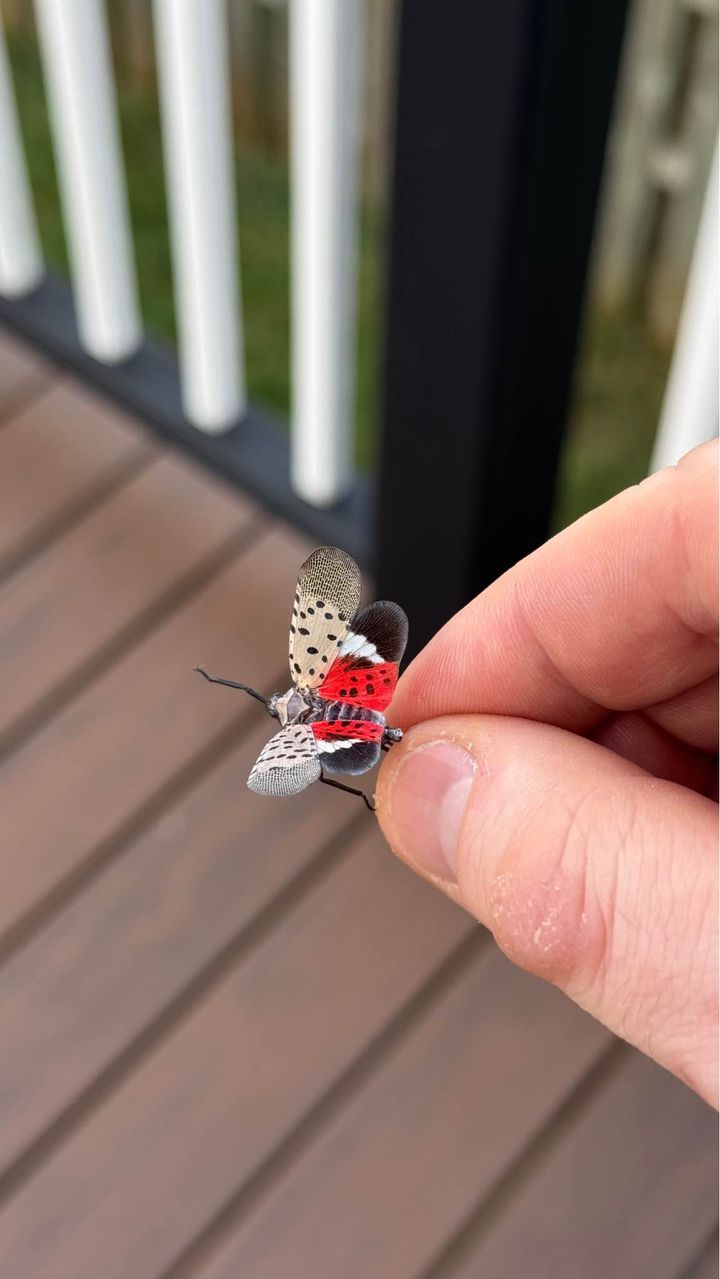
We currently have about a dozen Spotted Lanternflies on our porch — Spotted Lanternfly. Here’s a photo of one I’m holding. It’s an insect from the cicada family, about the size of a thumb phalanx. Generally harmless, although, of course, it depends on how you look at it, since at home, it periodically annoys the dog, and it also drains vineyards, not disdaining apples, peaches, cherries, maple, oak, and birch.
This creature is actually an immigrant from China. And it brought its whole ecosystem from China with it. So, listen up.
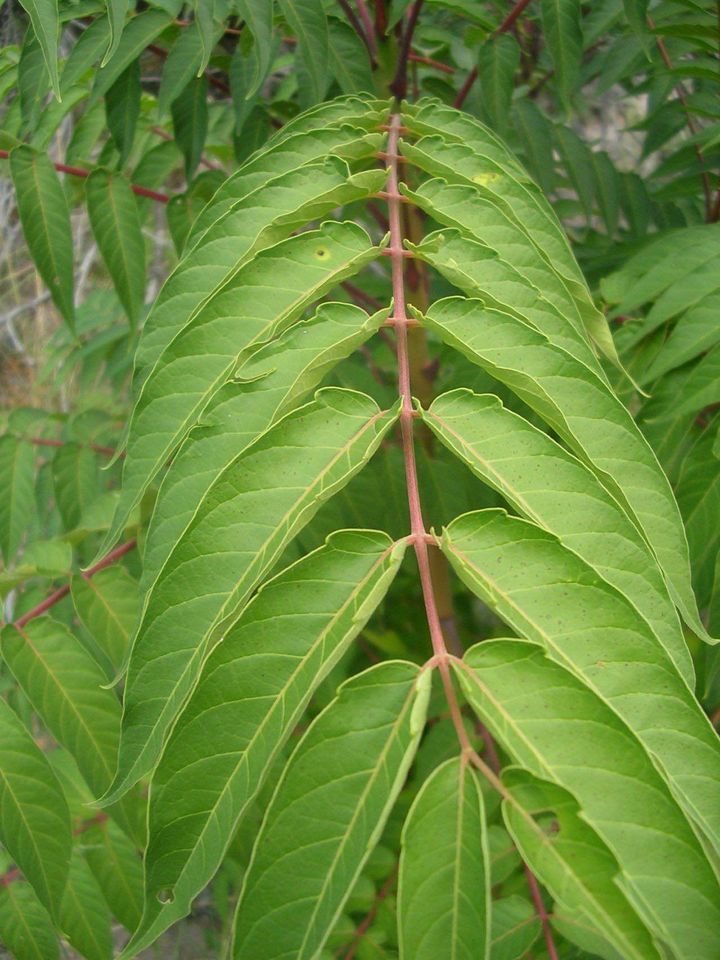
Until 2013, we didn’t have Lanternflies in the U.S. They arrived from China. But generally, animals always have some environmental dependencies, which is why they don’t just colonize the entire world, but stick to familiar habitats. The Lanternfly’s preferred tree is beautifully called the “Tree of Heaven” because of its ability to grow 20-30 meters tall. The botanical name of this tree is also telling — Ailanthus altissima. And this tree is native to China, where they used it to breed silkworms. Actually, it grows in many places, including Russia and Ukraine. And these Lanternflies really love this tree.
It was introduced to the U.S., where it has become a weed. And for the Lanternflies — it’s a feast. They lay their eggs on it, and each year there are more than the last. How to deal with this, it’s unclear, as the typical recommendation of “scrape the eggs off the trees, putting them in two bags with alcohol” obviously won’t be applied.
One option is to bring in the combat wasp, Anastatus orientalis, from China, which greedily devours Lanternfly eggs. Quite an amusing method. They lay their eggs inside the egg masses of the lanternfly. The larvae of the wasp develop inside the eggs of the lanternfly, consuming them from within, which prevents the hatching of the lanternflies.
However, scientists suspect that if the combat wasps proliferate and start eating more than just Lanternflies, we might have to bring in yet someone else from China who eats the wasps themselves.
 Hi, I'm Rauf Aliev.