
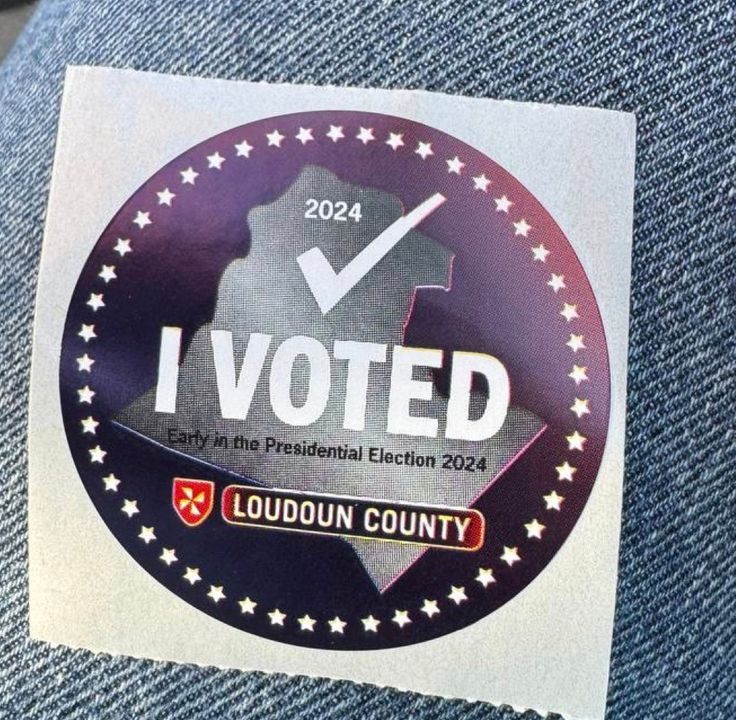
Voted!
Interestingly, all you need to vote are your legs and just a bit of paperwork, provided of course that you’re already registered in the system (which requires internet access).
The final and main voting day will be November 5th, but early voting is allowed starting from September 20th.
At the site, you need to introduce yourself, receive a ballot, fill it out, and scan it. In the room where you draw circles on the ballot, talking to each other is not permitted, and if you really need to talk, you should have filled out a form designed for assistance beforehand—for example, if an elderly grandmother needs her granddaughter’s help.
“Introducing yourself” typically means showing a driver’s license or any other form of identity proof. Valid proofs of identity include even work IDs, student IDs, or even a utility bill, bank statement, government check, or payroll summary issued within the last 12 months that includes the voter’s name and address. Overall, the list even contains “any other valid government document that includes your name and address”, but even if none of this is available, it’s no trouble—you need to fill out a “Statement of Identity Confirmation” declaring that you are the registered voter you claim to be, and then vote.
Notably, there is criminal liability for impersonating someone else at this stage. For example, in our state, it’s a serious offense, punishable by up to 10 years in prison and a fine of up to $2500.
The ballot asks you to vote for the future president (you can write in anyone’s name, and they will be added to the statistics), choose a senator from Virginia, and a representative in the House of Representatives from our district. It also asks you to select the city mayor—there’s only one name listed, but you’re free to write in anyone else.
On the other side—there’s a survey. It begins with the question of whether a Constitutional amendment in Virginia (yes, in the USA, each state has its own Constitution) is needed—to grant or not a tax relief to the widows of servicemen who died on duty, and not just in battle. Currently, the wives of soldiers who died in battle are entitled to a property tax exemption. However, those whose loved ones died while performing their duties (for example, as a result of an accident or mishap not related to combat) are not eligible for this benefit.
The rest is about money. The district is asking for permission to raise up to $10 million for improving school facilities, roughly the same for replacing a fire station and purchasing equipment, up to $53.78 million for building and improving sports and entertainment complexes, parks (listed in detail), as well as up to $151.16 million for expanding and improving road infrastructure, including widening roads and creating new interchanges.
At the exit, you scan your ballot and that’s it, you’re free. No tables with free cookies and music at the entrance. On the election day, you’ll have to walk there and see what’s different.
 Hi, I'm Rauf Aliev.