
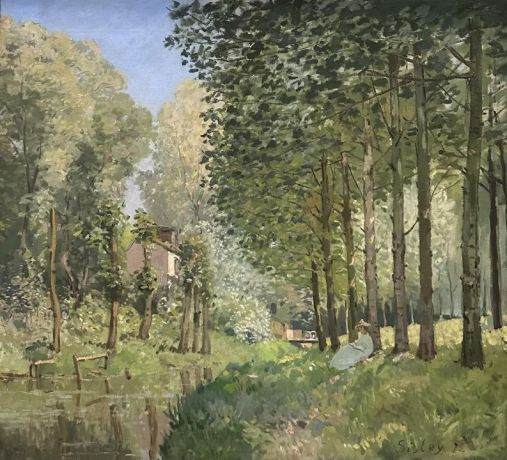
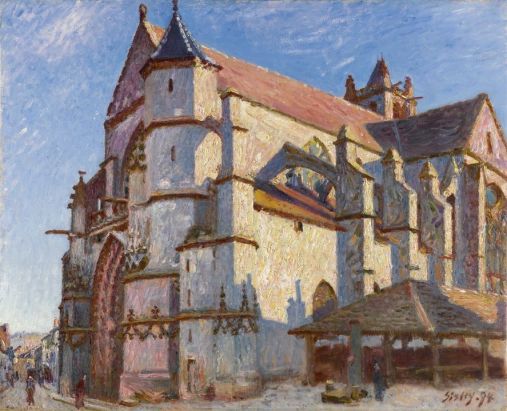
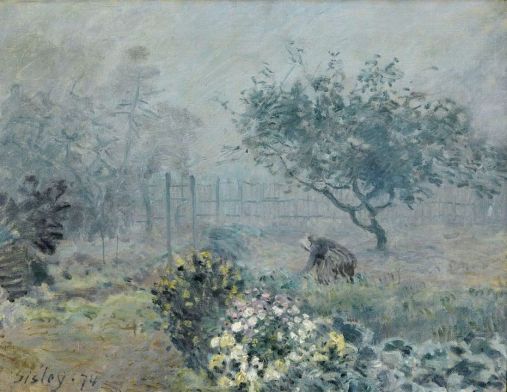
Today, let’s talk about Alfred Sisley, who would have turned 185 yesterday.
Unappreciated in his lifetime, Sisley has since become a symbol of Impressionism, though he faced countless hardships during his life. He joined the ranks of artists whose talents were only recognized posthumously.
Sisley was friends with other Impressionists, including Monet, Pissarro, and Renoir, and participated in the earliest Impressionist exhibitions. Yet, his works rarely sold. Art dealers, such as Durand-Ruel, tried to support him with modest stipends, but his art never brought him wealth. Poverty shadowed him to the end, and he relied on the kindness of friends and the occasional buyer.
Over time, Sisley’s health declined, and he grew more reserved. While his peers gained fame, he remained in obscurity. His long-awaited solo exhibition in 1897 ended in disappointment—none of his works sold.
Sisley died in abject poverty from throat cancer, just months after losing his wife. Ironically, only a year after his death, his painting Flood at Port-Marly (1876) sold to Isaac de Camondo for 43,000 francs—a sum that could buy several houses in smaller towns or a fine home in Paris—more than Sisley had earned in his entire life.
After his death, interest in his work surged, with paintings that once fetched nearly nothing now selling for tens of thousands. In February 2008, Snow at Louveciennes (1878) sold at Christie’s in London for £3.7 million, or roughly $7.8 million.
Posts like this can be found under #artrauflikes, and all 125 are available on beinginamerica.com in the “Art Rauf Likes section—unlike Facebook, which often overlooks nearly half of them.






 Hi, I'm Rauf Aliev.