January 23 2022, 12:24

@[100001248794401:2048:Irina Shikhman] has been quite delightful lately with the content on her channel. Besides “Revolution of the Dwarfs”

, you should also check out her discussions about Russian cartoons and their place in the global market today

, about the history of the New Year

, and a very interesting conversation with Ilya Kolmanovsky

. And indeed, the entire “Ah, Science” segment is interesting. And of course, an interview with Mizulina about the Spanish shame

January 22 2022, 22:51

In the USA, there is a rather well-thought-out address system. To find my previous address, I need to enter three digits and two letters, and my current one requires only three digits and one letter. That’s it, the rest of the form fills in automatically – city, ZIP code, street, house number. That means, filling out an address form takes one to two seconds on a mobile device – just to enter four characters and click on a suggestion.

(you might say that Google knows where I am, and it simply shows the nearest match. No, it works this way even in incognito mode and with GPS turned off – CORRECTION. STILL, GOOGLE KNOWS WHERE I AM EVEN IN INCOGNITO – BY IP AND SHOWS THE NEAREST ADDRESS)

An address in the USA consists of a house number and a street in the XYY scheme, where X is the block number (single-, double-, or even triple-digit), and YY is the double-digit number of the house within the block boundaries. Plus the street, which is often in words or can also be numbered (in large cities with planned development). Of course, this combination is not unique within the country, you still need the city or ZIP code, but in new districts outside the cities, they try to make it unique by choosing a street with a clever name. The house number consists of the block number, followed by the building number within the block. The block often corresponds with the street number if the streets are numbered. For example, The White House, located at 1600 Avenue NW: it is located at 1600 NW Street (Lafayette Square) and Avenue N.

January 21 2022, 15:51

This is when the vacuum cleaner is allergic to chairs, and it must be either it, or them, or you need to periodically (always) separate them and keep them in different rooms.

Does your vacuum cleaner poke its nose into chairs and generally get entangled in such unpleasant situations? In theory, this situation can be easily managed with LiDAR on its head and algorithms in its rear, but someone did a poor job of testing.

Apart from this downside, it cannot operate on three floors. It still manages on two, but it jumbles the map of one of the three, which ultimately makes mapping useless in the case of a house.

On the upside – it recognizes stairs and doesn’t attempt suicide on the staircase. It has befriended the dog, which is more than can be said for manual Dysons and the washing Bissel.

All in all, despite such indecent incidents with chair legs, this robot vacuum is the best purchase of recent years. It works more than me and manages everything by itself.

Wish someone would hack it soon and create a Python interface. There would be so much to do – from detecting shoelaces to drawing beautiful patterns on the carpet.

January 20 2022, 20:00

In the USA, COVID-19 rapid tests are being distributed for free, four per household. Friends living in the US, order here usps.com/covidtests. Recently, they were impossible to find at any price — the Omicron variant cleared them off the shelves entirely.

By the way, there is also a portable electronic PCR-test, the Lucira COVID-19 All-In-One test kit sold here. It costs 75 dollars and is available for purchase. Although it’s electronic, it is, of course, designed for SINGLE USE. It detects the presence of the virus’s RNA, not antibodies like other home tests. The result it provides is recognized by insurance companies, which also reimburse the 75 dollars upon submission of documents. Since January 15 of this year, all insurance companies are obliged to reimburse tests for self-testing without any questions, up to 8 per person per month. Well, visits to clinics for testing are even more readily reimbursed, but the interesting part here is how it works in the case of home tests purchased from pharmacies or Amazon.

January 20 2022, 10:51

We watched with interest the documentary series from BCC about Claude Monet, Renoir, Manet, Degas, Cezanne. Strange people — especially Cezanne — with their quirks, but unique and in many ways revolutionary. You can partly see the parallels — the attitude towards contemporary art now and how impressionism was perceived at the end of the 19th century. The film is shot like a drama, but essentially it’s a retelling of biographies. Colorful, rich, emotional, informative.

This year I managed to visit the “Monet, Rodin, and Boston” exhibition, as well as several art museums just a few days prior, in Washington, two in New York, one in Providence, and of course, the Boston one. So the memories are still fresh.

I’m concurrently reading the book “Falling in Love with Art: From Rembrandt to Andy Warhol” by Anastasiia Postrigai. And just as I was watching the series, I was on the chapters about Monet and Manet. So I was looking at the events from two perspectives 🙂

I highly recommend both.

January 17 2022, 02:29

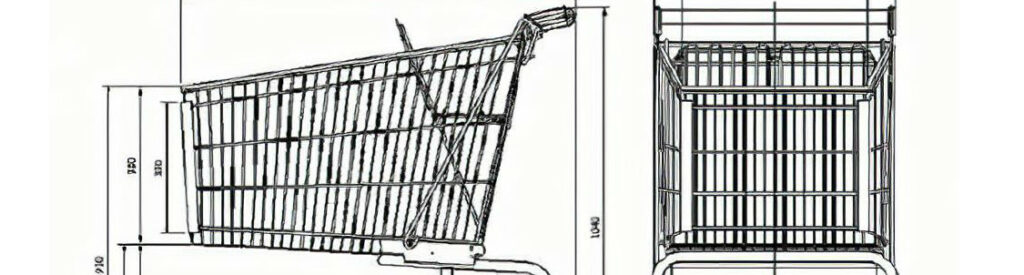
After a long (very) break—a new article on Hybrismart about online shopping carts and their architecture. The article is for developers on SAP Commerce, but around 20-30% of the content is also applicable to other platforms. Well, for instance, to be able to say “ugh, everything is so bad in Hybris” or “cool, we should adopt some good ideas from Hybris”. In short, welcome to the blog.

January 14 2022, 17:33

An excellent channel on pronunciation. For some unknown reason, the creator has only 21K subscribers. The latest half-hour video on the sound /ɹ/ – used in “Rory rarely reads romantic poetry” — I struggled with it in Russian, sounding like Lenin 🙂 Thanks to lessons with @[100000066699061:2048:Elliot Teplitsky-Bauer], it’s now as it should be in my English (neither rolling nor trill). In Russian, I never bothered to correct it. Thus, the pronunciation of the vast majority of those who studied English at school is quite far from being correct, as the Phonetics Fanatic videos vividly demonstrate.

Some Americans really think that our Russian ‘R’ is quite close to ‘Ж’. To one such American on Quora, all the Russian speakers commented that he should clean his ears, as ‘Ж’ is nowhere near ‘Р’. This goes to show how differently people who grew up in different linguistic environments can perceive sounds. Google “Why is ‘R’ corresponding to Russian letter Р instead of Ж? I feel that the pronunciation of ‘ж’ is closer to ‘r’ in English.”