
October 02 2018, 10:02

A very interesting analysis –

(in the image — the amount of payload launched by customer country)

Some bold statements:
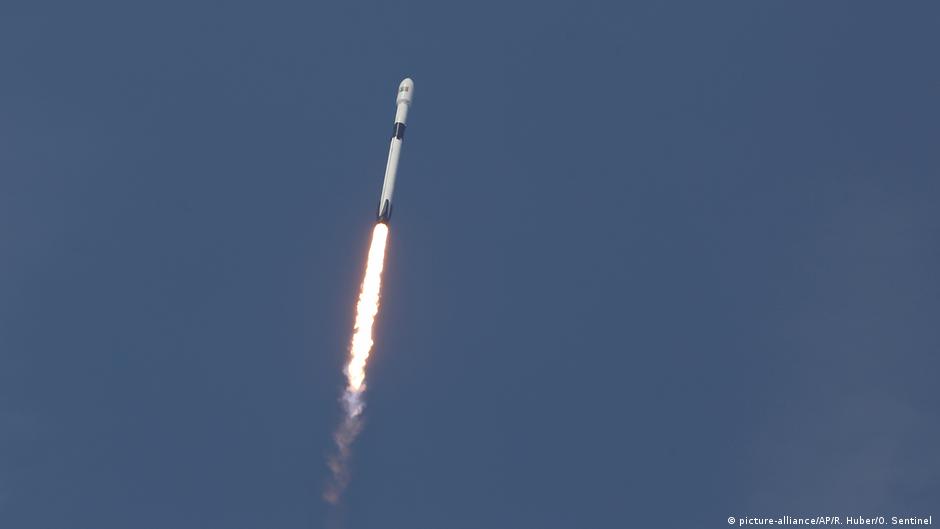
“The CEO of Roscosmos, Dmitry Rogozin, accused the head of the American company SpaceX, Elon Musk, of dumping in the space launch market with the aim of ousting Russia. (…) According to Rogozin, Musk receives about 150 million dollars from the Pentagon for each launch. ‘He is paid extra to enter the market with a cheap product,’ noted the head of Roscosmos. He admitted that under such conditions, Russia is unable to compete. Roscosmos cannot demand from the Ministry of Defense a launch price that would be 3 – 5 times more expensive, Rogozin highlighted, adding that such a game would be unfair. Nonetheless, the head of Roscosmos promised that in the near future, Russia will once again lead in the market of launching payloads into space using carrier rockets. According to him, next year Russia will conduct the second launch of the heavy rocket ‘Angara’, and from 2021 will start its mass production. ‘We will return and be the first again, I promise you,’ Rogozin declared.”

Sad to say.

Dmitry Akhmerov

October 01 2018, 12:19

These brilliant UI designers at Apple must have been tipsy that day, no other way about it. Imagine you’re writing an email from the Apple mail client and you need to attach an image from the library. A screenshot. First of all, there is no attach button or insert image option. But a very curious mind might suggest holding your finger on the email text to open a contextual menu. It’s worth noting that such a menu is nowhere else to be found in iOS – except maybe just for cut/paste, but now we’re talking about pictures and attachments. In this menu, pay attention, there’s again nothing about adding a picture or attachment, but there is a right arrow, which kind of hints at something. You press it, and there you find two more menu items, insert picture and insert attachment. The first inserts the image into the text – which I do not want. The picture is huge, and I do not want to insert it into the text. I go to insert attachment, and there is everything except for pictures. Someday Apple will adopt a file system for phones and call it a huge breakthrough.

October 01 2018, 00:38

I don’t have another notebook, as they say, I can’t recall anything in the morning 🙂 This is about script->pdf tools.

For texts, I periodically use latex; for diagrams, I try to use console tools that convert scripts into graphic form. For flowchart, sequence diagram, and gantt, I use mermaid (https://mermaidjs.github.io/), for sequence diagrams I also use graphviz (https://www.graphviz.org/), and just today, I installed and tested erd+graphviz, a package on Haskell.

I’m afraid next time I won’t be able to find this from scratch, so it may as well hang here, searchably.

September 30 2018, 20:10

Got engrossed in a new book by Yuval Noah Harari, “12 lessons for the 21th century” at B&N. This is the same guy who wrote the wonderful Sapiens and Homo Deus. Nearly parted with 30 dollars in my mind, but then found this book on VKontakte, and, delighted, bought a pastry for five. Last time, we found three books on the art of essay writing there, and bought all three directly from the bookstore on thriftbooks.com for a price five times cheaper (they were used, but it didn’t matter to us). It’s tough being a bookstore these days. I think B&N needs to transform into something fundamentally new in the coming years. Since 2015 their stock has fallen fivefold. Perhaps they need to hold public lectures and educational events in stores. Nowadays, it’s hard to even find a consultant there. Before, there used to be a computer in the center with their in-store search system, now even that’s been removed. What do you think is the future for offline bookstores?

September 29 2018, 21:45

The service allows you to upload your photo and get a 3D model. You can even use it with a photo of the president.

http://cvl-demos.cs.nott.ac.uk/vrn/

Tried uploading myself – it turned out pretty well.

Here are the details:

Here are the sources on GitHub:

Here is another work by one of the authors – already with human figure modeling:

September 29 2018, 13:53

Konstantin Kharitonov you seem to understand this. Why isn’t there a tool for creating a 3D model of a person in motion (by taking photos of them from multiple angles, asking them to make various facial expressions, possibly by projecting a laser grid on them), then process what was captured, and by combining it with some universal knowledge base about human anatomy, achieve a 3D model of a specific face, which can then depict any desired facial expression on a computer just because a) muscles work the same way in all people b) the model knows the ranges in which certain muscles move c) the model knows how the skin, eyes, mouth, and ears look when certain muscles are tensed or stretched.

After all, no one limits us in the number of photos taken from different angles and under different lighting conditions. So even if there are a million photos, it’s no problem, we’ll wait. But then, the system could extract the photo from the needed perspective under the required lighting to render realistic expressions of a specific face for any artist’s requirement.

I imagine this as a framework for 3D designers, allowing them to simply specify any facial expression, but also to alter the face itself (e.g., widen the eyes or protrude the nose). With a 3D model from a camera, import these facial features from a “scanner”, as well as the skin texture for more accurate rendering.

Is there such software?