
I wonder, why aren’t there decentralized instant messaging systems built on the principles of tor/torrent? Like, having each client assemble a pool of IP addresses that perform further routing of the message across the network, and this pool being dynamic, i.e., constantly updated. That means, if user A sends a message to user B, the message goes through a network of intermediate servers set up by the users themselves, using HTTPS. Since the nodes are ultimately set up by the participants, there is a risk that something might suddenly turn off. Therefore, each node in the network has a reliability rating, which influences others’ decisions about the level of redundancy in sending to this somewhat unreliable network. As soon as a mess-up happens, the reliability rating drops. The provider can only curb such activity by either analyzing the protocol or blocking the IP addresses. If the system of obtaining IP addresses and the protocol are secured, then, in general, the nature of the traffic won’t differ much from ordinary web surfing. Participants need a public IP for this, which is challenging since not everyone has one. But if you could devise a monetization model where these participants earn money from ads passing through them… technically it seems feasible. Where here is the oversight and logical flaws?
Author: Rauf Aliev
March 28 2018, 13:37
This pertains to the quality of chat support. Sberbank is sticking to its usual standards. And just so you know, this is not a bot, but a live agent (“Thank you for waiting. Specialist NATALYA will assist you.”)

March 28 2018, 09:10
Hmm. Coffee can still surprise. On the box – a recipe for making “a large thermos of one liter”: boil one and a half liters of water, add ten teaspoons of coffee with cardamom, boil for 3-4 minutes, turn off the heat and wait at least an hour, filter, reheat to a boil, add more cardamom


March 26 2018, 18:53
my bad translates as “well, my bad”
March 26 2018, 01:00
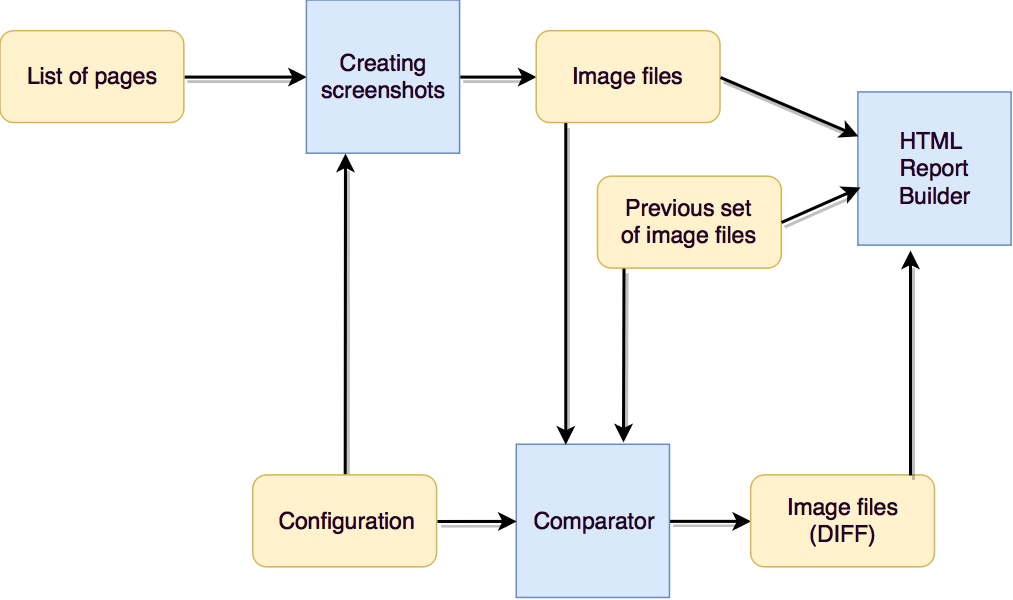
I am sharing my experience in developing a screenshot testing system for a large website. There are hundreds of pages, in different languages and domains, containing a final set of functional components (like news or banners). All this was managed by a network of distributed administrators, who were not easy to control, as Hybris is not great with auditing, plus people make mistakes. Controlling the changes of these pages was crucial because at the crucial moment the website is launched, and it is essential to be sure everything is under control. This solution helped to identify problems earlier than the client found them or before they started to have consequences.
Although all of this was implemented on Hybris and in Java, the approach is not tied to any specific technology.
March 25 2018, 18:52
Very interesting lecture #2 from those viewed today https://www.youtube.com/watch?v=koI4dGUBS_8
March 25 2018, 18:52
Very interesting lecture #1 from today’s viewed https://www.youtube.com/watch?v=sA1W8ovKUq4
March 25 2018, 10:25
Nice little task)
March 23 2018, 16:05
And why don’t manufacturers create Wikipedia pages for their products? For instance, there are headphones lying next to me – why can’t I find them on Wikipedia? Does anybody know? Does it really not help manufacturers to sell? This applies to almost all products. As a good example, I’ll mention Yamaha – but that’s only because I stumbled upon it there. Many products have their own page. Everything is systematic. Here, for instance, is my instrument: https://en.wikipedia.org/wiki/Yamaha_P-120
And everything else around me is missing.
March 23 2018, 11:54
Here’s some more music for your Friday. A wonderful jazz album (although it seems there is nothing jazzy about it) and a suite for a variety orchestra. Starting at 33:24, there is a waltz that became the theme in Kubrick’s “Eyes Wide Shut.” https://www.youtube.com/watch?v=CDSeqqEN9Rg Here’s something to read for those interested, the whole history with these jazz albums is quite murky http://www.cogita.ru/a.n.-alekseev/andrei-alekseev-1/o-abvalse-no-2bb-d-shostakovicha-i-ne-tolko

