
Happy Birthday! All the best!
Category: facebook
January 21 2020, 23:57
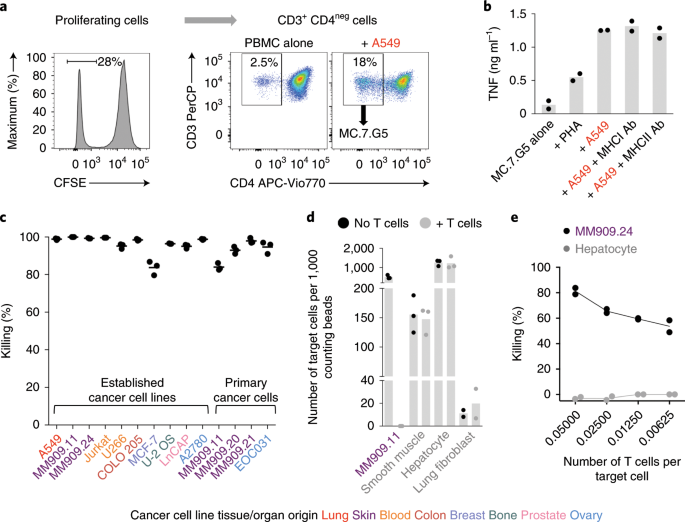
Yesterday, in the Nature journal, British scientists (the real ones, from Cardiff) published an interesting article. They managed to assemble T-lymphocytes that can bind to almost all types of cancer.
The technology itself is not new. CAR-T therapy involves implanting specially engineered lymphocytes with chimeric receptors targeted at a specific type of cancer and individual.
In this case, it seems they created a “universal soldier” that works across a broad range of target molecules.
This has always been a rather expensive procedure, up to 1 million dollars, partly because it requires fine-tuning. The novelty—seemingly a discovery—is only the first swallow.
It will be interesting to observe.
January 21 2020, 01:53
I have always been amazed – why on earth should we know and remember when someone like the hypothetical Pushkin was born if the school years of all these luminaries went relatively unnoticed in history, and some even began writing closer to their life’s twilight.
For “practical” purposes, it’s sufficient to remember for about a decade when this or that author was in their prime, and who their contemporaries were (especially in the same location), and what significant events were happening around them (especially in the same location). It’s never and nowhere important whether Pushkin was born in 1799 or, say, five years later (unless you are a Pushkin scholar, of course). Yet, in school, we had to learn all these dates for some reason.
To me, it seems far more important to remember that Pushkin’s brightest works came within 15-17 years starting around the era of the Decembrists and Nicholas I, around which time there was also war with the Persians and Turks and the Caucasus in general, and that young Lermontov and Gogol were loitering somewhere nearby. That’s it, unforgettable. And no need to remember any dates.

January 13 2020, 12:48
January 12 2020, 12:59
To the left – a dead end, and to the right – a dead end. Behind – a large neighborhood. Very typical for America. By the way, there’s a park 50 meters away (with a parking lot). Apparently, it bothers no one, and everybody here drives rather than walks

January 12 2020, 12:53
A cyclist’s dream: a straight 70km bike track with hardly any slowdowns or hills. My average speed on a 14-km section was 28km/h, and that’s just because the dew hadn’t dried yet and it was scary to go any faster. Over the weekend, I covered 80 km on such tracks, 30 today and 50 yesterday. Someday, I need to ride a hundred in a day

January 11 2020, 10:31
It’s hard to believe, but this is our winter


January 10 2020, 22:57
I was wondering, isn’t it curious that one of the four nitrogenous bases that make up the DNA of any organism is named (in Russian translation) “gavnin” (guanine)? There’s something to it 🙂
(Julius Bodo Unger isolated it from bird droppings, which he studied to develop better fertilizer, hence it was named guanine)
January 10 2020, 09:03
My younger daughter’s passport name is Mariia. And I finally listened to how we often call it when it’s necessary to spell it out “letter by letter”: “It’s Maria, but with two Is in the middle” or “with double Is in the middle.” And yet, no one from the call center operators has turned on their imagination or pictured it 👀

