Sketched today (charcoal, pastel). Ah, haven’t picked up the pencils for six months.

Sketched today (charcoal, pastel). Ah, haven’t picked up the pencils for six months.
Ha-ha 🙂
I’ve really gotten into Reddit here)
https://www.reddit.com/r/funny/comments/4jfchh/the_best_language_barrier_story/
To the news

Found something intriguing. Turns out, an explosive water dump was used to launch the shuttle, intended to dampen the sound vibrations from the engines. A million liters of water turn into a massive waterfall a few seconds before launch and last only 20 seconds. It’s reported to reduce up to 20dB and it’s worth it: used for all subsequent launches. There’s a video in the link.
I can’t find a word about it in the Russian internet. Maybe I’m not searching right.
https://metinmediamath.wordpress.com/2013/12/01/space-shuttle-launch-and-sound-suppression/
Very interesting about our Russian language. I regret not going to the dictation event. It also took place in Washington.
https://meduza.io/cards/kak-pravilno-stavit-znaki-prepinaniya
Has anyone ever wondered about connecting powerful (1KW and above) European electronics 220 volts to an American 110 volts network? What solutions are there? For example, an iron or a coffee machine, or say, a washing machine?
There ought to be a transformer, but those Chinese ones that are sold everywhere are not trustworthy.
For instance, the most powerful consumer-grade step-down transformer I found was 300W for 1700 rubles http://www.zapitatel.ru/catalog/ponizhayushchie-avtotransformatory-220-110-volt/thg-300s-/
But I doubt it could handle an iron.
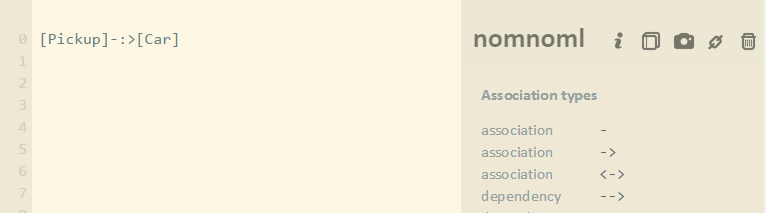
For solution architects: Discovered a free and convenient tool for drawing UML diagrams. Much more convenient than Visio. I can render several hundred objects on this thing and get fairly readable diagrams.
Perhaps this video should be posted every year on May 9th. Lest we forget. Very well-done and clear infographic about the losses in World War II.
Very interesting from @[100000022300673:2048:Evgeniya Timonova]. The whole channel is cool, I recommend it. Also, there’s an interesting interview with Evgeniya – http://bg.ru/education/evgenija_timonova_o_tom_kak_delaetsja_videoblog_vs-20477/
Working to Rachmaninoff and Kultyshev. Every time I listen to this concert, I can’t figure out – how can professional pianists play a forty-minute piece from memory! It’s most noticeable that they shouldn’t make mistakes. And it’s not even the most complex or longest concert, though it is far from simple.
The chasm between me and professional pianists is so deep that it seems, to even understand how they do it, one must dedicate a lifetime to music.
With other areas of art, everything is significantly simpler. In theatre, for example, performing for three hours and reciting lines from memory, although difficult, is understandable. With painters, there’s no magic at all – just a generally comprehensible craft, and there’s no hurry, no real-time requirements. For singers, for example, the density of information isn’t as heavy as it is with musicians: roughly speaking, a performer might sing lyrics that fit on three pages for an hour, and it’s still just words, whereas a musician in an hour plays through a substantial stack of notes.
If only all composers employed similar principles. But while popular music and jazz might share basics, the difference between Debussy, Rachmaninov, Vivaldi, Mozart, and Bach in classical music is just enormous. Essentially, the only commonalities are melody, rhythm, and harmony. And I cannot grasp how performers remember all this so well?
An explanation is starting to form. If you work long enough with a single piece, you begin to understand/perceive it on different scales. Here are three major parts, each divides into five smaller ones, each of these five into seven, and each of these seven consists of a few blocks and so on. I assume that within a single work there must be a plethora of repetitions and echoes, built on the same principles, which allows a musician to find commonalities between, say, a melody at the fifth level of this hierarchy (which lasts about 30 seconds) and the same melody at the fourth level (which with slight modifications stretches for about 10 minutes). Plus, both with slight or significant changes are repeated in different forms. As a result, you get such a story.
Moreover, there are many types of musical ear, including absolute and harmonic. After decades of daily friendship with the piano, you play with “spinal reflex” – just as when you drive a car, you can think about work, talk about life with a passenger, and still not run a red light?.. the brain gradually stops controlling the details, and operates “on a large scale”. And the details are automatic. A harmonic ear allows a musician to place their fingers on the right keys immediately as the next chord sounds in their head – and here too, “with the spinal reflex”. The same goes for melody and rhythm.
But, even though I’ve explained it to myself, I still can’t believe how they do it 🙂
A beautiful concert, give it a listen.
@[100000569108009:2048:Ivan Shapovalov]