February 18 2023, 01:02

When people say that history does not repeat itself, I remember Hernán Cortés and Francisco Pizarro.

The Spanish conquistador Cortés arrived at the Aztecs in 1519, presented himself as an envoy of the Spanish king, demanded an audience with the local king Montezuma II, and immediately captured him. He then organized the local Indians and killed almost all the Aztecs, taking Tenochtitlan.

Ten years later, Francisco Pizarro, in South America among the Incas, also introduced himself as an envoy of the Spanish king, asked for an audience with the ruler of the Incas, Atahualpa, and captured him. Pizarro then quickly subdued the paralyzed empire with the help of local tribes.

Obviously, in the 16th century, there was no way for the Aztecs to send a message to the Incas. They didn’t even know about each other (well, you know, the internet back then was still slow, like on modems, 9600 baud).

February 17 2023, 00:47

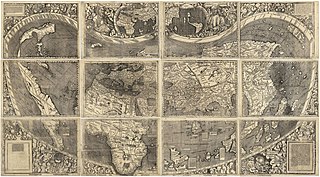
Interestingly, the name of the guy who gave America its name is only used for a piece of rock in Antarctica. I’m sure you’ve never heard of Martin Waldseemüller, much like nearly everyone in America. Perhaps it’s because he later changed his mind, renaming the lands discovered by Amerigo Vespucci from America to “terra incognita”.

February 14 2023, 19:01

Generative neural networks will keep getting better at creating artifacts on demand (prompt). I see that everyone has started to learn the science of writing queries now. Yes, tactically it is the right move, but strategically – it’s a waste of time. An AI can generate a better query than a human. And link it to the task, like why this, say, banner was even created. A generated banner or textual advertisement has different CTRs depending on the success of the banner or text, and if we let AI experiment and accumulate statistics on various designs and messages, over time it can even understand the contribution of each element (whether to display the price or not, show the brand or not, etc.).

For some time, people capable of making good banners with the help of AI will be needed. But in the long term, we will need people capable of creating better AI. If you are under 30, learn mathematics and programming, and then delve into machine learning from simple to complex. You most likely won’t live to see the day when AI can create better versions of itself without programmers, but there’s still a chance to join the caste of AI magicians. Everyone will be needed there – from solution designers to business analysts. But you need to start early, and the road to the first decent salary will require at least five to seven years of work. With a high probability, for many years to come, this field will be well paid and bring a lot of fun and benefits. Humanity is accumulating a lot of data, and ML applications are growing like mushrooms.

P.S. I don’t understand why not everyone in depressed regions has become IT professionals yet. The investment is only your time, internet, and a computer, with prices now starting from several hundred dollars (and Chromebooks for less than 100 bucks). Earlier, with more complex basics, people went into Herbalife.

The answer, most likely, is in a quote attributed to Edison: “Opportunity is missed by most people because it is dressed in overalls and looks like work.”

February 13 2023, 00:43

Currently rereading “Sapiens” by Y. N. Harari, and I stumbled upon a parable-like story. Here is the translation:

On July 20, 1969, Neil Armstrong and Buzz Aldrin landed on the Moon. Several months before their flight, the Apollo 11 crew trained in the desert, in a “moon-like landscape” in the western USA. A few Native American tribes live in those areas, and there exists a story—or a legend—about the astronauts’ encounter with one of the locals.

During preparations for the Moon expedition in 1969, the astronauts trained in a remote area of the western US, in regions inhabited by several tribes of local Native Americans.

During one of these training sessions, they met an elderly Native American who asked what they were doing. When he learned that they were training for a Moon flight, he pondered for a while, then asked if the astronauts could fulfill a simple request for him?

“The people of my tribe believe in spirits living on the Moon. If you are going to be there, could you convey an important message from my people to them?”

The astronauts agreed, and the Native American spoke a phrase in his language. He made them repeat it over and over until they memorized it and could recite it exactly as he had said.

The astronauts were naturally curious about what the mysterious phrase meant, but the Native American said he could not reveal its meaning. It was a tribal secret meant only for the lunar spirits.

They then returned to base and immediately started looking for a specialist who could translate the words. When they found an interpreter and recited the Native American’s message, he burst into hysterical laughter. When he calmed down, he told the astronauts that the phrase they had learned meant:

“Do not believe a single word they say. They have come to take your lands.”

* * *

It seems that the story is entirely fabricated, and most likely it was first told by the famous American comedian Johnny Carson on his evening TV show a few days after the astronauts landed on the Moon.

But it’s still telling.