April 09 2022, 22:20

Reading “Life’s edge”. I liked Carl Zimmer’s “She Has Her Mother’s Laugh: The Powers, Perversions, and Potential of Heredity” and could not stop myself from buying his new work. As the book’s name says, “Life’s edge” is about what life is, and why scientists have struggled to draw its boundaries.

(Side note… I bought this book after returning another one, which appeared to be not interesting. It turned out that books are returnable at Barnes and Noble, 30 days after the purchase)

So, what I want to say is… there is an interesting story with which the book begins. That story is about John Butler Burke, a physicist at the Cavendish Laboratory at the University of Cambridge, who performed experiments in which he introduced a radium salt into the sterilized beef broth. The result was the creation of lifelike forms that he called radiobes. These radiobes started out as small spots, some less than a micrometer across and barely visible under Burke’s microscope. These spots gradually grew and changed shape over a period of a few days, developing internal structures that made them resemble bacteria. Burke came to believe that these forms were not quite alive but existed somewhere on the border of living and nonliving. They were perhaps evidence of an ancestor to life, one that predated the earliest life forms.

That was happening in far 1904. Interesting that his theory had surged in popularity so that he quickly stopped continuing his research and instead he started giving public lectures which helped to monetize his popularity.

Excited newspaper headlines were proclaiming that Burke had found the “Secret of Life,” but skepticism from scientists came quickly. Another Cavendish-trained physicist, W. A. Douglas Rudge, repeated the experiment and concluded that the radiobes were sulfate precipitates and therefore purely physical. By the time Burke published a book in 1906 summarizing his work, he was widely dismissed as a physicist with a weak knowledge of biology.

Interesting that both Burke’s radiobes and Burke himself have not earned even a Wikipedia page. The story of radiobes is hardly covered on the Internet. While Burke went wrong, he did so in an attempt to make sense of life itself, and it is quite surprising for me to see him virtually unmentioned.

A link to his book is in the comments.

April 07 2022, 14:15

For the first time in I don’t know, twenty-something years, I’ve got a TV. Yesterday, I designed and printed a soundbar holder for the TV – see photos in the comments. Printing on a 3D printer is somewhat akin to being a botanist – you plant a seed and then check every hour to see what’s happening. The holder took 40 hours to print.

In the video, Yuki is watching a cartoon

April 06 2022, 09:52

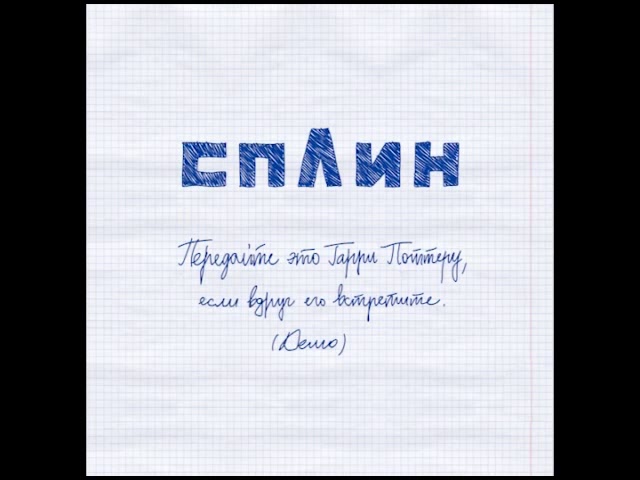
Harry Potter is leaving Russia

“As reported by the TJ publication, Russia’s largest ebook sellers LitRes and MyBook will remove the entire series of novels by J.K. Rowling about Harry Potter from access starting April 8. Both stores stated that the removal was mandated by the copyright holder.”

It reminds me of Splean

April 02 2022, 11:15

Look at the Tesla plant recently launched in Germany. That’s fantastic!

P.S. There is an old Soviet joke about AvtoVAZ, a Soviet automobile manufacturing company which had been producing for decades a car called Zhiguli, which was a ruggedized version of the Fiat 124, and which became notorious for poor quality, was one day bought by Mercedes. The whole plant was rebuilt, all processes were repaired, new equipment was installed, and the new assembly line was eventually launched and —

Bam! The same Zhigulis left the gate. WTF? All equipment was carefully inspected, many components were replaced, the whole assembly line was replaced with brand-new. The plant reopened and —

Bam! The same Zhigulis came out again! Half of the personnel had been let go. Then thousands of specialists came from Germany to replace them. Everything was carefully inspected again. The shiny assembly line restarted, and the first assembled machines left the gate.

WTF?! The same Zhigulis rolled off the assembly line.

A former chief engineer and a former director look at the plant from the nearby hill.

“I told you beforehand that the entire place was cursed, and what you responded to me? That my hands grew out of my ass, yeah?”

Original:

Mercedes bought the AvtoVAZ factory. They reconfigured the production, started the conveyor. . . Bam! Zhigulis at the output!

They dismantled the equipment, brought in new ones from Germany, installed and adjusted, started. ! ! ! Yet again, Zhigulis!

They fired the entire factory staff, brought in workers from Germany, adjusted, checked, started. DAMMIT! Again – Zhigulis at the output!

There is a hill near the factory, where the former chief engineer and director (both prefixed with ‘Ex’) are resting. They look at all this. The engineer to the director:

– I told you – the place is cursed! ! ! And all you said was “hands grew out of your ass, hands grew out of your ass”

March 29 2022, 22:57

Reading 1984. It appeared to me that Orwell liked lengthy sentences. I decided to come down to my computer and check a few other books. Just to compare. The longest Orwell’s sentence is 132 words/703 characters. Tolstoy’s… the longest sentence of War and Peace has 228 words/1293 characters. Nabokov is right on the heels of Tolstoy in terms of long sentences. 183 words/921 characters in the English (original) version of Lolita, and 209 words/1126 characters in its Russian translation! The screenshots are attached 🙂

Reading 1984. It seemed to me that Orwell uses a lot of long sentences. I quickly decided to go to my computer and compare with Tolstoy. The longest sentence by Orwell turned out to be 132 words and 703 characters without spaces, while Tolstoy’s longest was 228 words and 1293 characters. Then I found Nabokov’s Lolita in the original. The longest sentence in the English version is 183 words and 921 characters, and in the Russian version, it jumps to 209 words and 1126 characters—almost catching up to Tolstoy!