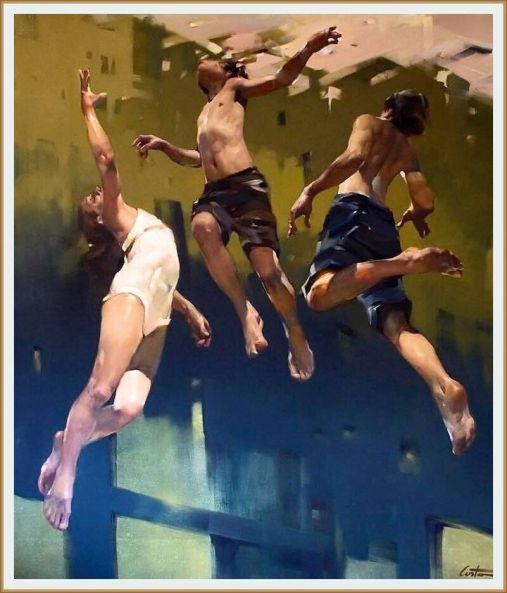
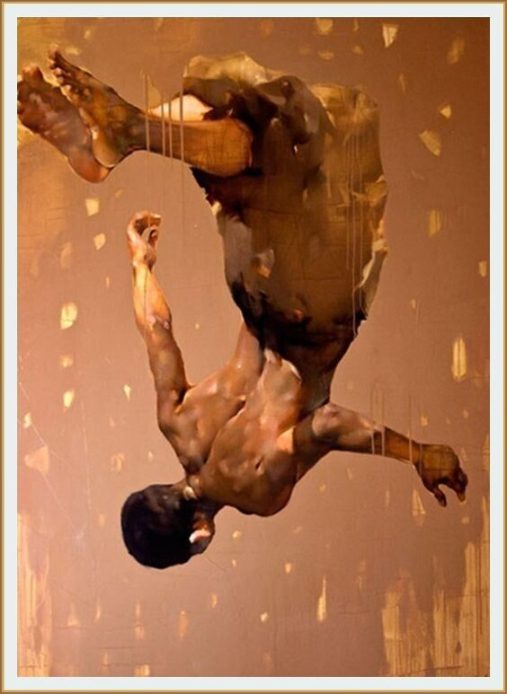
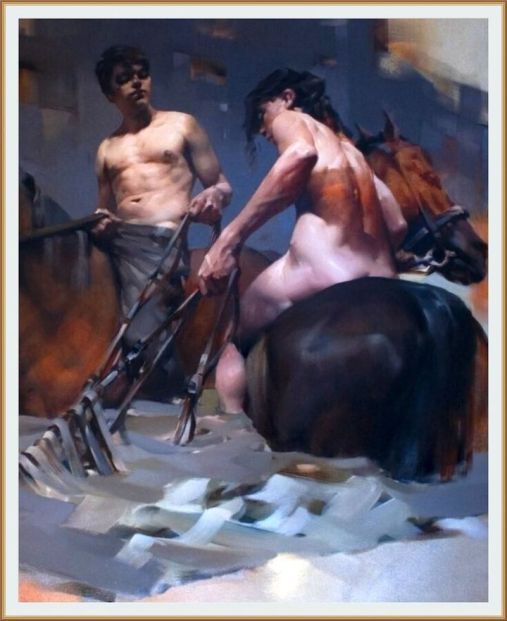
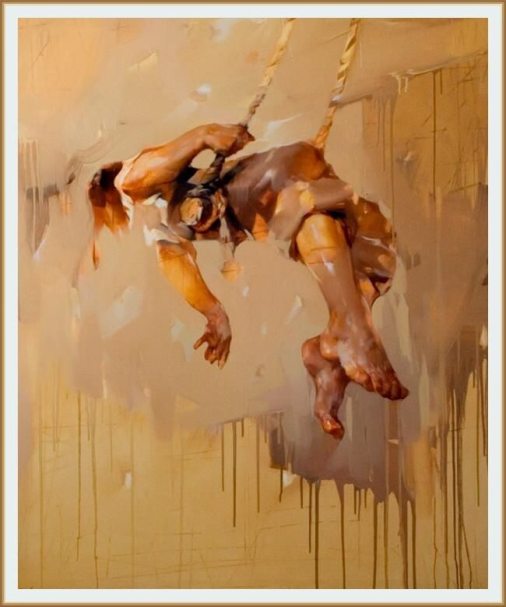
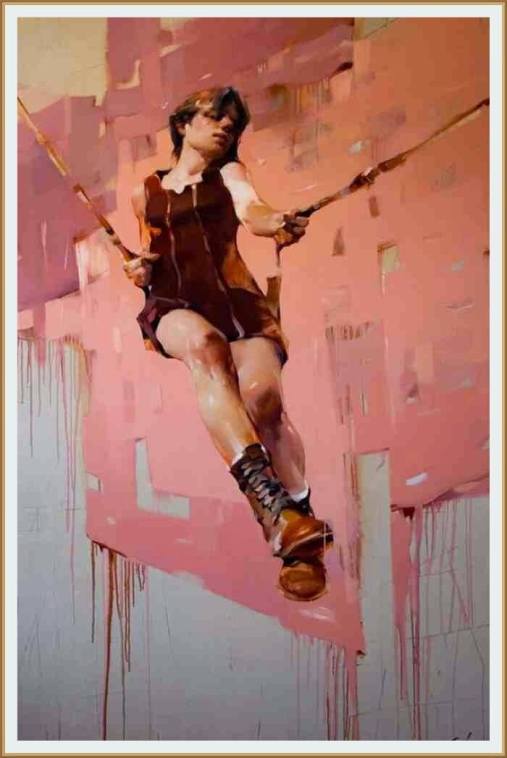
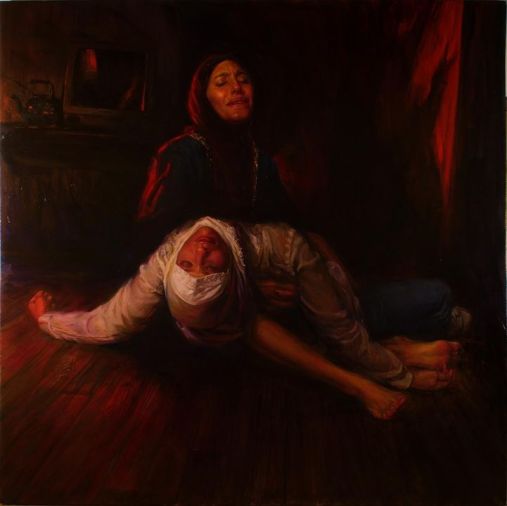
The Canadian artist of Russian origin, Konstantin Dvoretsky (Costa Dvorezky), resides in Toronto and teaches at Max the Mutt. His paintings are rarely static—his characters seem eager to escape the canvas and leap toward the viewer. “I’ve been creating art since early childhood; it’s a great way to escape reality, he says.
Posts like these are grouped under the hashtag #artrauflikes, and all 120 of them can be found in the “Art Rauf Likes section on beinginamerica.com—unlike Facebook, which overlooks nearly half.
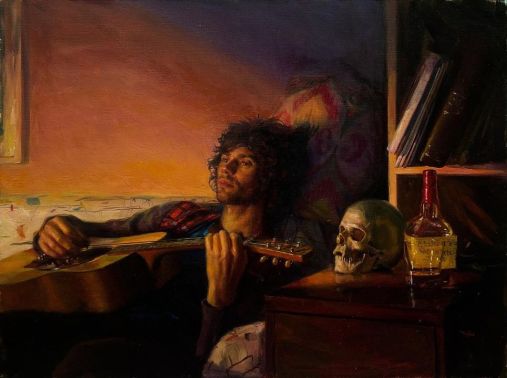
Today, I present the American artist of Cuban origin, Ricardo Jose Mujica (b. 1961). Born and residing in New York City.
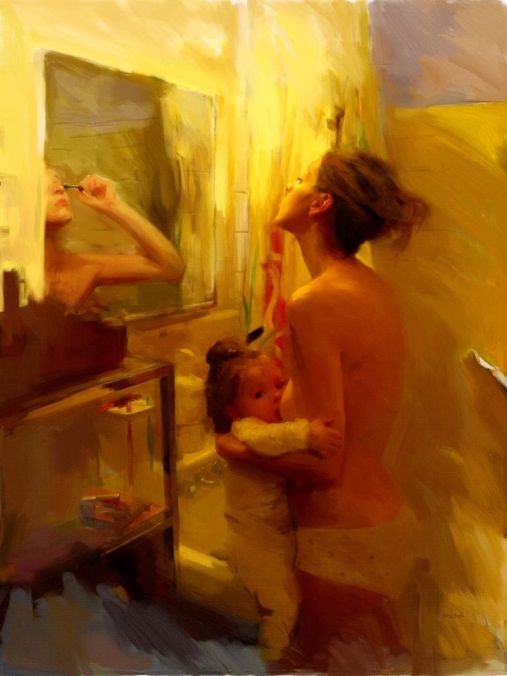
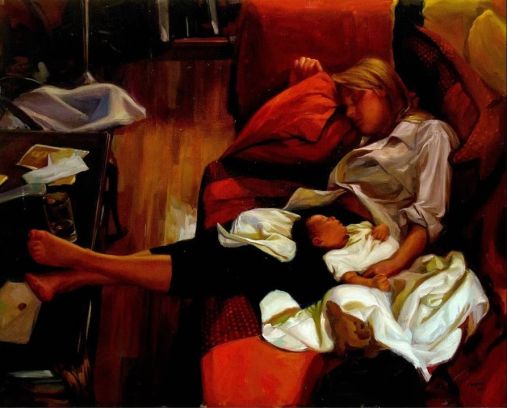
The first painting in the gallery is Multitasking (2012), a portrait of the artist’s wife and child. In the same year, Ricardo shared it on Facebook (having sold the canvas itself for next to nothing). As he mentions on his website, for many years since, he’s been receiving threats from angry women convinced that he had somehow obtained their photograph without consent, demanding either compensation or immediate removal. Meanwhile, many men, baffled by how and where Ricardo might have seen their wives naked, have threatened to break his legs.
Although his body of work isn’t extensive, his paintings are soft, kind, and filled with positivity.
Posts like these are grouped under the tag #artrauflikes, and all 119 works can be found in the “Art Rauf Likes section on beinginamerica.com—unlike Facebook, which either forgets or ignores nearly half of them.
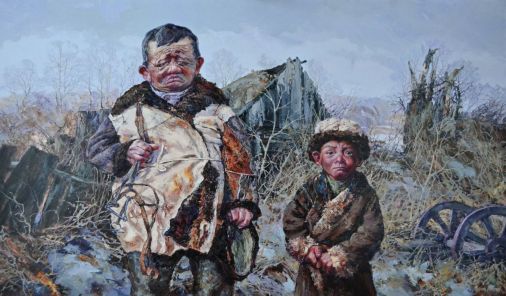
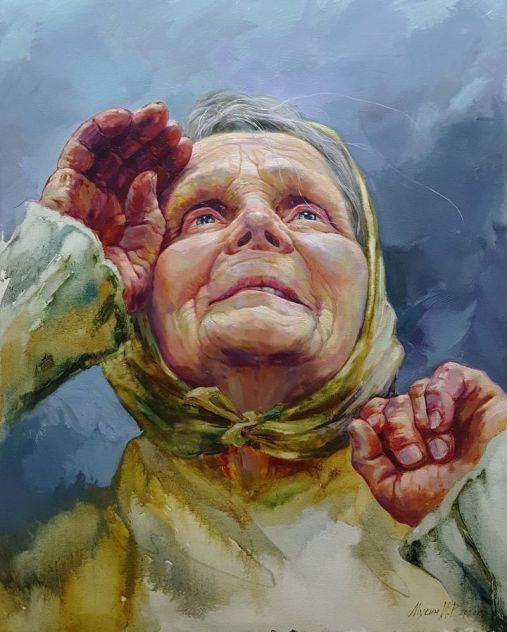
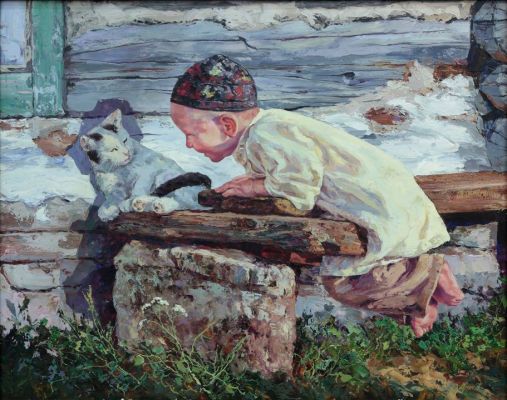
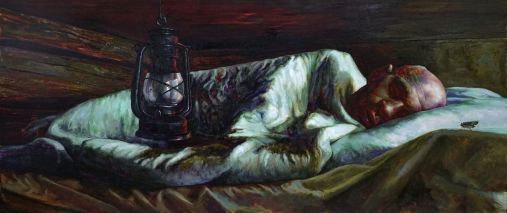
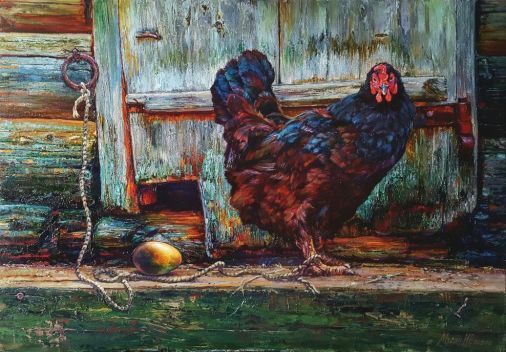
Today, I want to introduce the artist Irik Musin (Kazakhstan). I had planned to feature someone else, but since it’s Irik’s birthday today—and his paintings are impossible to overlook—I decided to share his work instead. They have a slightly caricature-like style, but that’s exactly what makes them so fitting. Of course, what may seem like caricature to us city dwellers could just be ordinary life in a village.
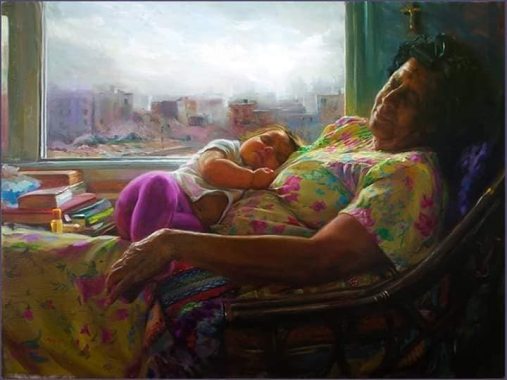
His recurring themes are old age, Kazakhstan, rural life—often depicted with a sense of melancholy—and children, who usually radiate positivity. Each painting is full of movement, as if telling a story. It’s also clear that the artist didn’t stage his models for a photorealistic transfer to canvas, and I really respect that. Personally, I admire this ability to create and paint from imagination, because reaching that level feels as distant to me as the Moon, and I envy those who can do it so effortlessly, in the best way possible. His work is truly beautiful—take a look.
The first painting in the series is called “Anniversary. As the title suggests, it’s likely about the anniversary of a death—probably a mother’s. The husband’s grief-stricken face is contorted with unbearable sorrow, and the boy appears deeply saddened, his gaze fixed directly on the viewer.
A remarkable artist, though a little on the melancholic side.
Posts like this are grouped under the hashtag #artrauflikes, and you can find all 119 of them in the “Art Rauf Likes section on beinginamerica.com—unlike Facebook, which tends to forget (or ignore) almost half of them
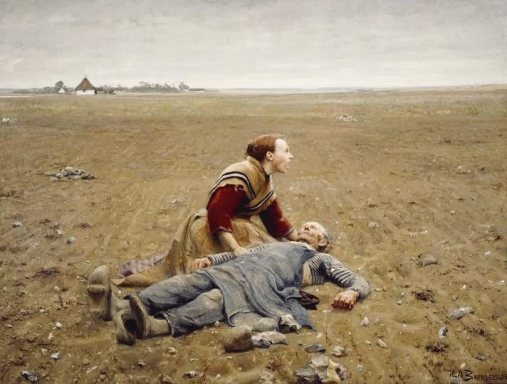
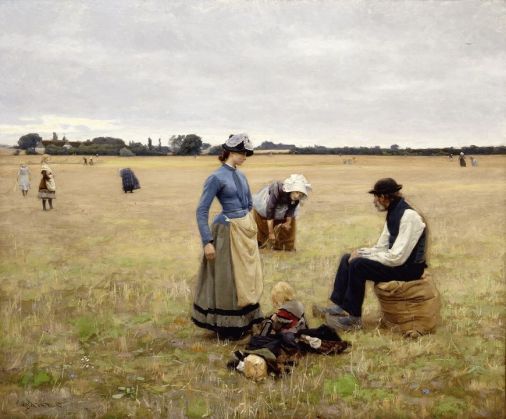
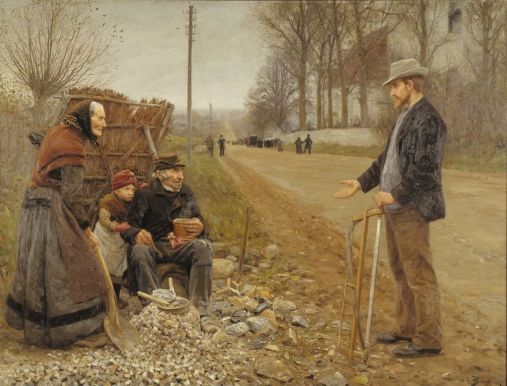
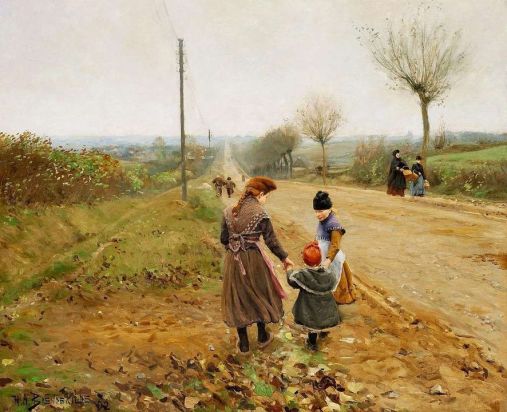
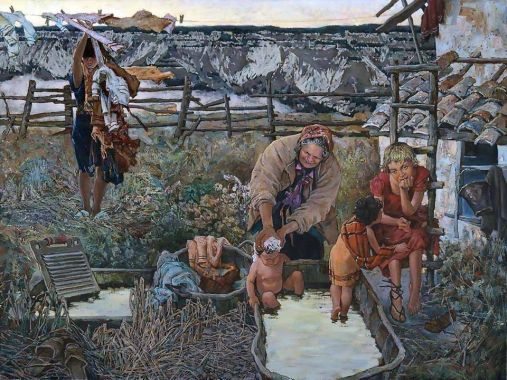
Today, I’m introducing the Danish artist Hans Andersen Brendekilde, one of the most renowned Danish painters of the late 19th and early 20th centuries. Brendekilde is best known as a master of landscapes and genre scenes. By his time, color photography was already well established, fundamentally changing the philosophy of oil painting and the reasons behind what artists chose to create. Take a look at Brendekilde’s paintings—there’s a kind of warmth and softness in the light, with countless small details of interiors, clothing, and surroundings lovingly selected. Something very hard to do with the photography at that time.
Personally, I prefer his genre scenes over his landscapes. His landscapes often feel too loud and garish in color, without evoking much emotion. They’re beautiful and bright, but somewhat ordinary. With people, though, it’s a different story—each painting seems to carry an entire narrative within it.
These kinds of posts are grouped under the hashtag #artrauflikes, and all 119 can be found in the “Art Rauf Likes section on beinginamerica.com (unlike Facebook, which tends to forget—or ignore—nearly half of them).
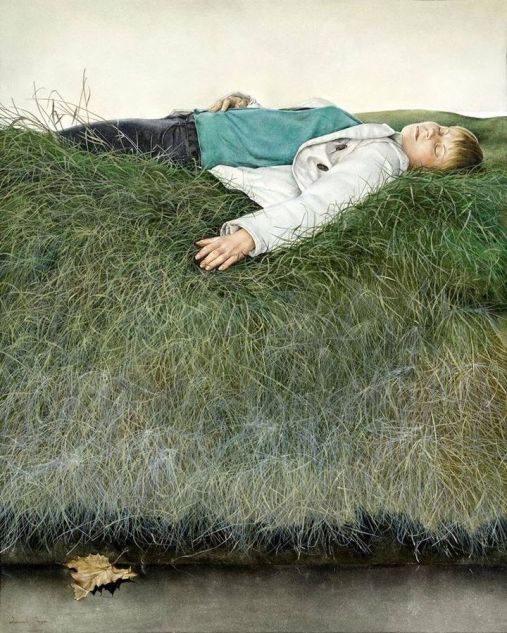
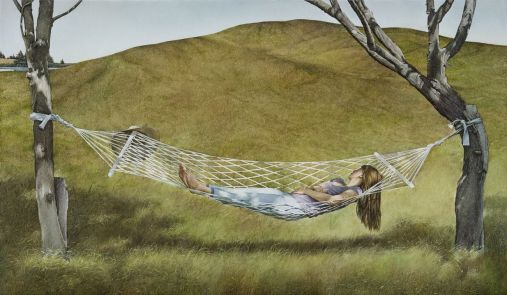
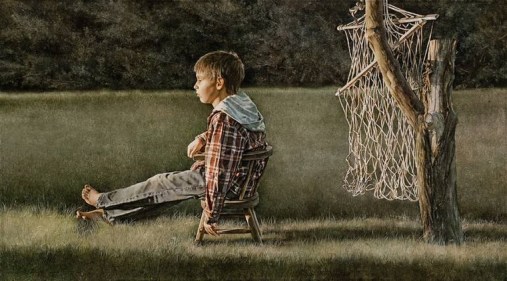
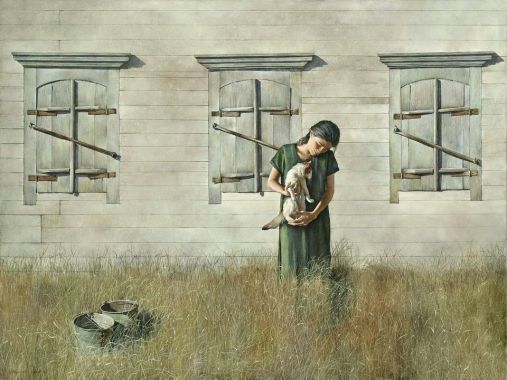
An intriguing Ukrainian artist, Eldar Eshaliev (b. 1984, Kharkiv). His oeuvre often reveals a marked alignment with Andrew Wyeth’s style, clearly by design. Perpetuating the legacy of celebrated artists is a formidable challenge. Should you lag behind, critics decry you for “imitating the master,” while success brings accolades of “continuing the tradition.” In either scenario, a certain derivative quality is inescapable.
The transition of the artist from a decidedly Impressionist style to one reminiscent of Wyeth remains somewhat enigmatic. Nonetheless, as evident, he has mastered it. Examine his first two pieces—they seem crafted by two distinct artists. Additionally, he maintains a series of cityscapes, equally grounded in Impressionism.
It is rumored that the grass depicted in some paintings showcases a unique technique devised by the artist himself, employing walnut oil instead of white paint.
Related posts are aggregated under the hashtag #artrauflikes, all 118 of which are accessible in the “Art Rauf Likes” category at beinginamerica.com (unlike Facebook, which tends to overlook—or ignore—nearly half of them).
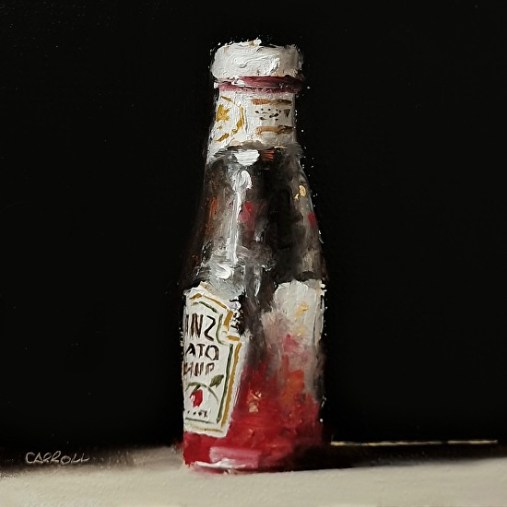
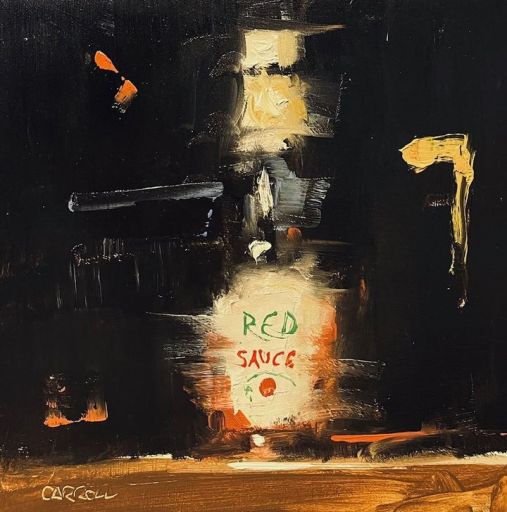
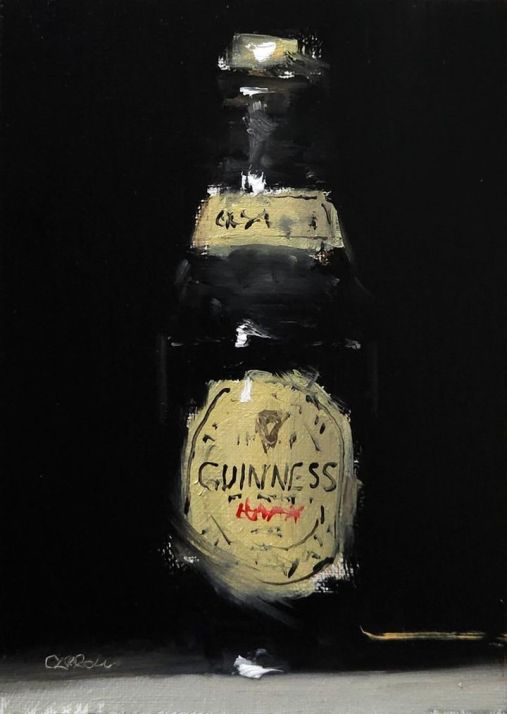
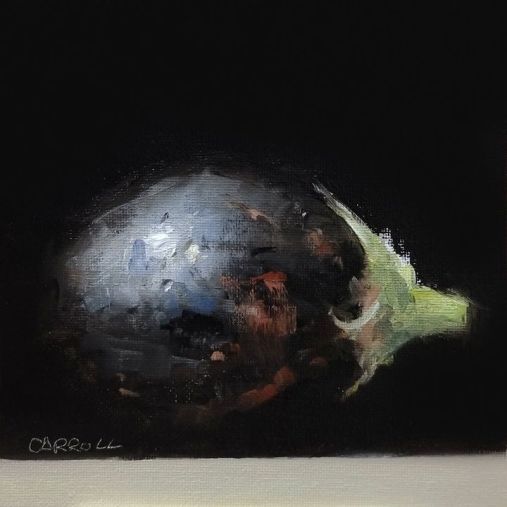
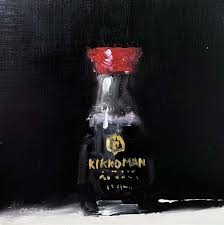
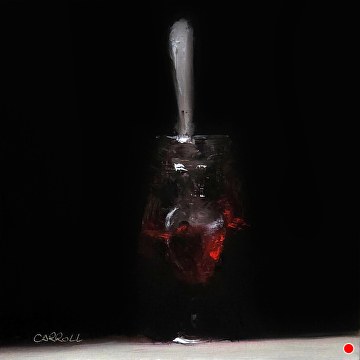
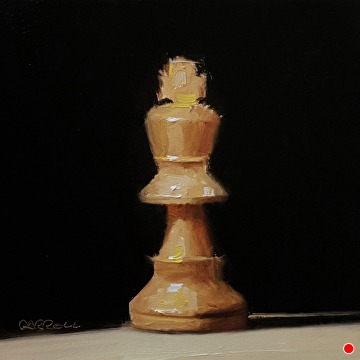
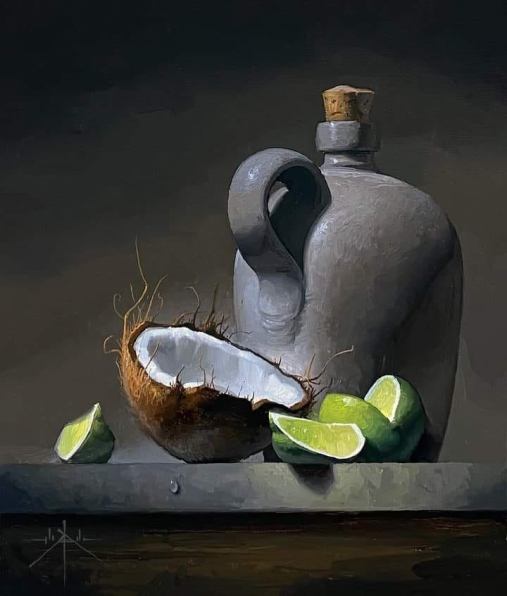
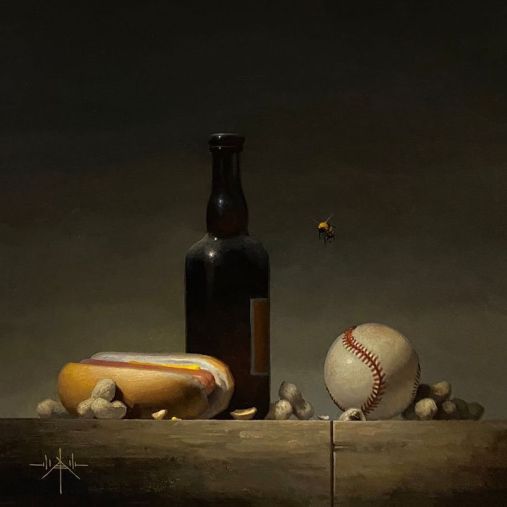
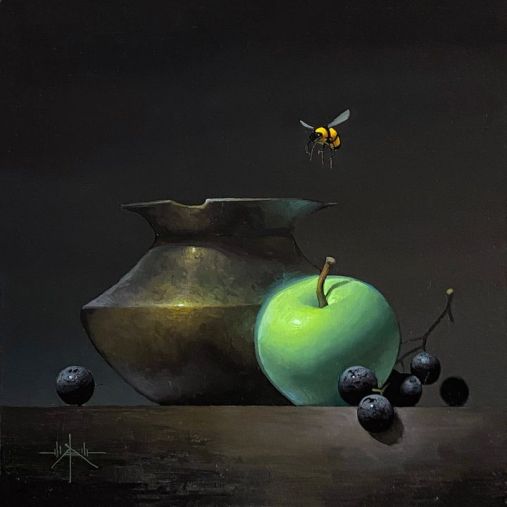
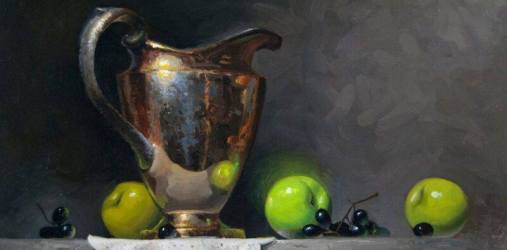
Today, I’m sharing these thematically simple paintings by British artist Neil Carroll. All of them depict everyday kitchen objects against a dark background. Many of them are quick sketches that likely didn’t take more than a few hours to complete (most canvases are about 6″ wide, give or take). Carroll has turned this into a steady output, and online, you can find hundreds of similar yet distinct paintings, all in a consistent style.
But what’s so special about a painting of an apple or a lemon with side lighting on a dark background? It’s practically a student sketch—art school students have piles of these gathering dust in the back of their closets. Yet once you gather at least a dozen of these uniform paintings, completed in a consistent style, suddenly it becomes “real” art, and the artist is lauded for carving out their niche. The more they create, the more firmly they establish themselves in that niche.
It’s a straightforward formula: do what you enjoy and remain consistent in your style and approach.
What’s also captivating about such simple objects is observing how the artist distinguishes between what’s significant and what’s not. I’ve gleaned a lot of intriguing insights and now I’m eager to try my hand at it having studied Carroll’s techniques. So, expect some ketchup paintings from me soon.
Posts like this are grouped under the hashtag #artrauflikes, and all 117 of them can be found on beinginamerica.com in the “Art Rauf Likes” section (unlike Facebook, which forgets—or neglects—almost half).
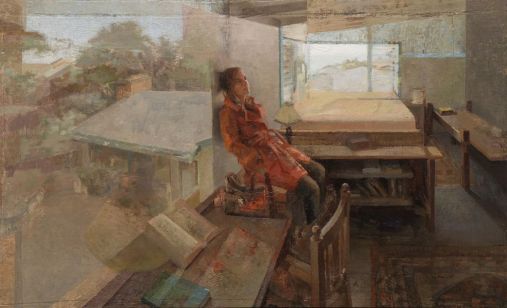
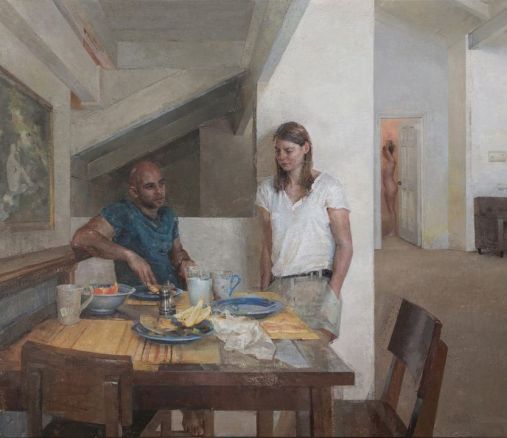
Wow, what an amazing artist today – Zoey Frank from the USA. Her works are incredibly unique, blending classical technique with hints of contemporary art — exactly in the proportion I love. Some pieces lean more into surrealism, others are dominated by abstraction, while a few are purely classical, reminiscent of the old masters. Yet almost none can be labeled as “just another painting.”
Posts like this are grouped under the tag #artrauflikes, and all 116 can be found in the “Art Rauf Likes” section on beinginamerica.com (unlike Facebook, which tends to forget or ignore nearly half of them).
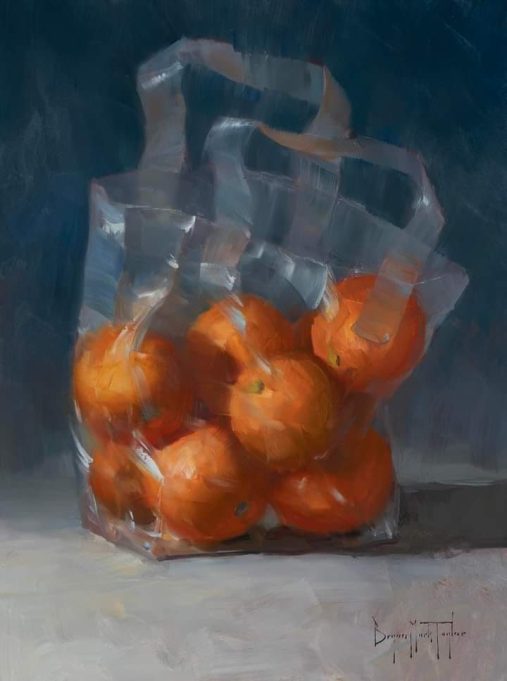
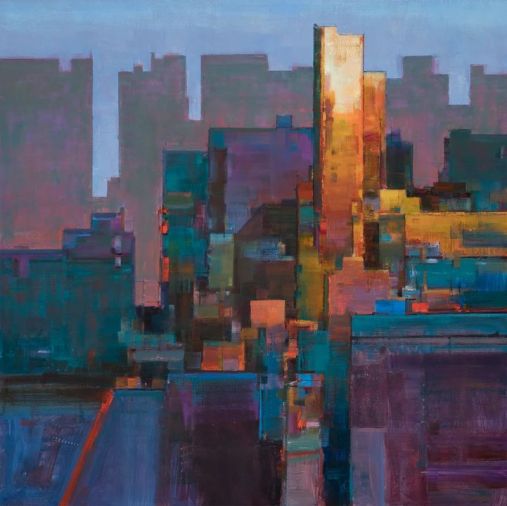
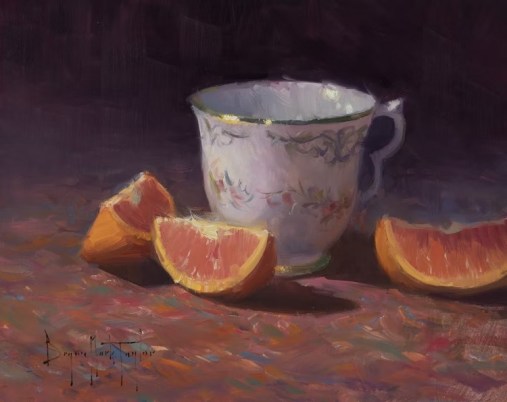
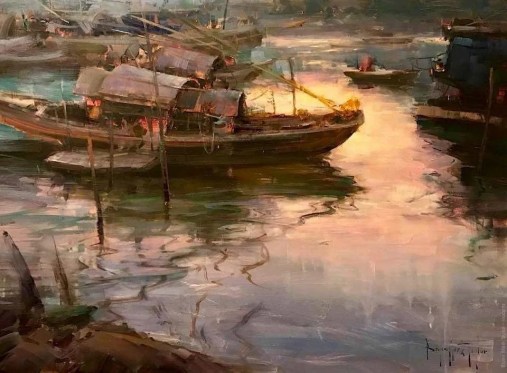
Today, I’m sharing the works of the American artist Bryan Mark Taylor. His paintings are incredibly diverse, with a lot of plein air pieces and quick impressionistic sketches. The only thing missing is people—there aren’t any, in any form, anywhere.
I firmly believe that if a person has the talent to capture the fleeting beauty of nature or cities or objects of any kind —whether through photography or landscape painting—then they should seize the opportunity to travel. Otherwise, that talent risks being locked away. Of course, you could argue, “And what about Andrew Wyeth, who spent his whole life in Pennsylvania and Maine, painting his neighbors on the porch?” Probably, Wyeth is the exception, he is the King anyway. A better example is John Singer Sargent, an American of the 19th century who traveled across half of Europe.
Bryan Mark Taylor is another excellent example. He’s just a year older than me, so the most exciting work is still ahead!
Posts like this are grouped under the hashtag #artrauflikes, and you can find all 115 posts in the “Art Rauf Likes” section on beinginamerica.com (unlike Facebook, which tends to forget—or neglect—nearly half of them)
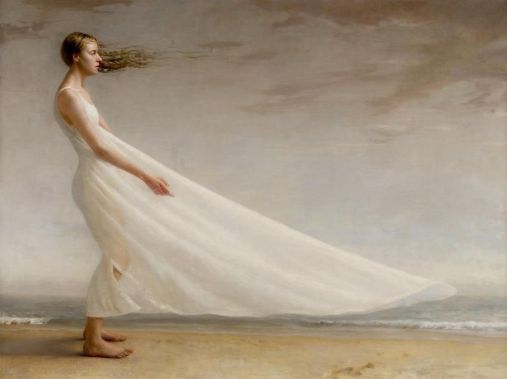
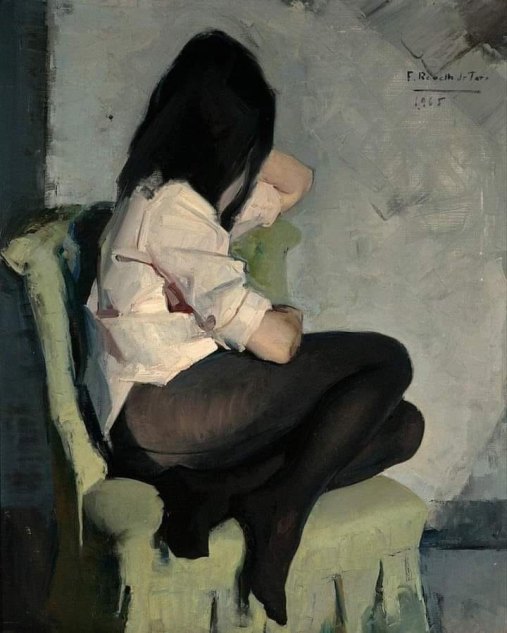
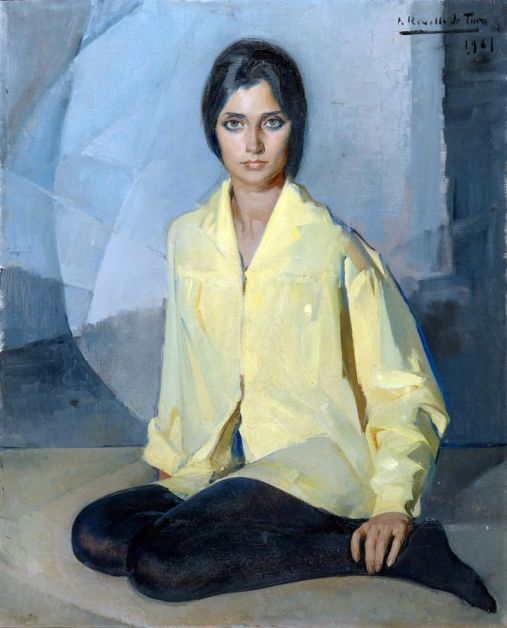
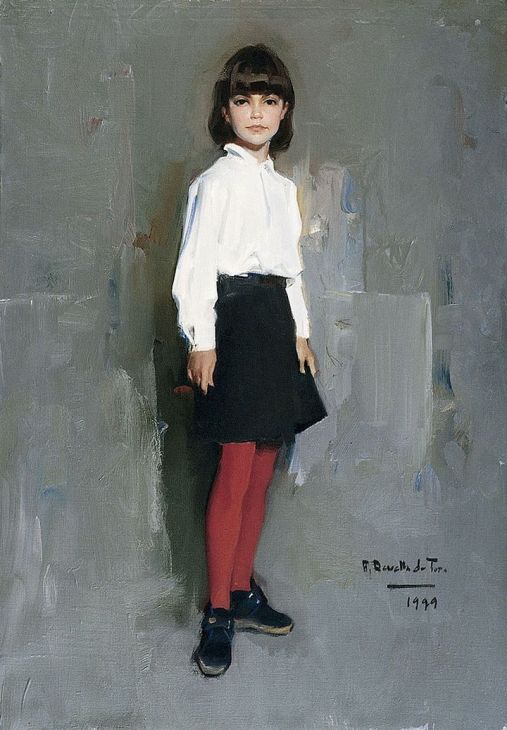
Today — meet Revello de Toro, a mid-20th-century Spanish painter. He primarily painted women in white, deep in thought, in various poses and life situations. But he did so—perfectly. If I ever make it to Málaga, I must visit his museum. There, they have about 150 of his works.
Posts like this are grouped under the tag #artrauflikes, and on beinginamerica.com, in the “Art Rauf Likes” section, you can find all 114 (unlike Facebook, which forgets or overlooks nearly half of them).
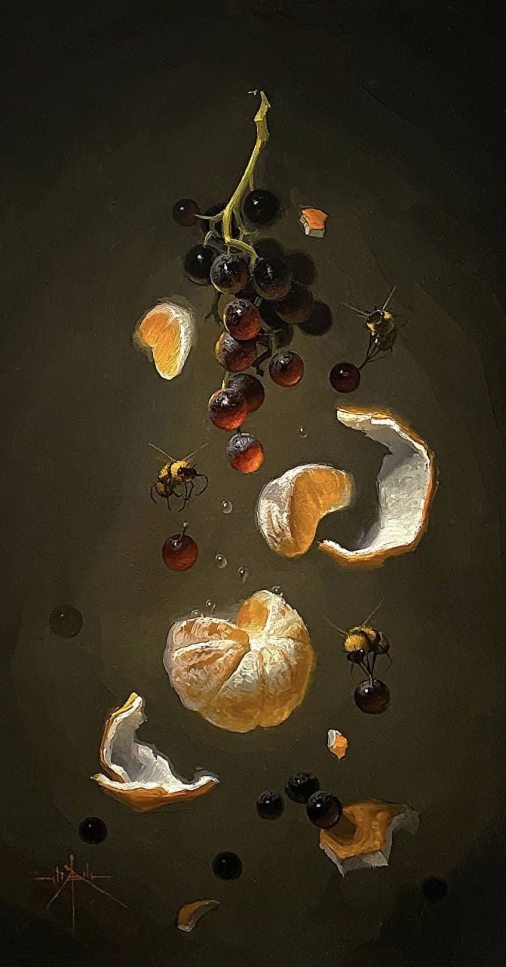
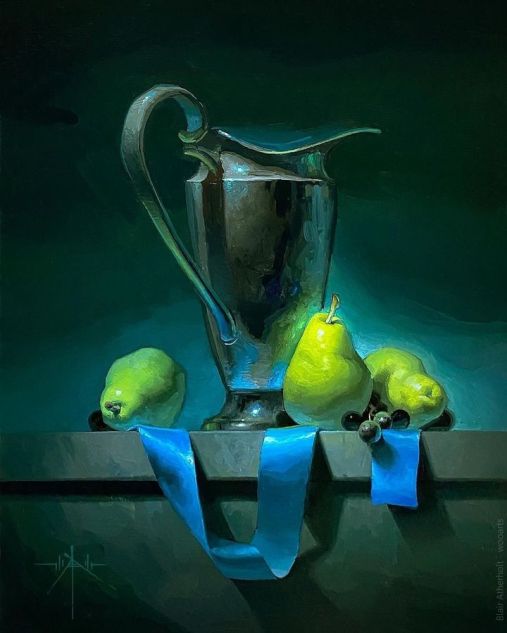
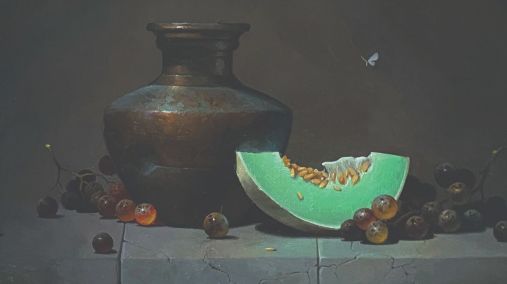
Today I introduce you to the American artist, Blair Atherholt. He works in the genre of realistic oil painting, specializing in still lifes, drawing inspiration from the canvases and techniques of the old masters. His paintings are highly distinctive and memorable, almost glowing from within. Yet, it’s just oil paint, which can often appear quite dull if used carelessly.
His works provide a fascinating study of how to achieve this glowing effect. Atherholt plays with contrasts between low and high color saturation, guiding the viewer’s eye to specific parts of the composition while maintaining the natural feel of the whole—a technique reminiscent of Caravaggio’s chiaroscuro. He also expertly employs “lost edges,” creating a soft, blurred effect that encourages the viewer to focus on key elements rather than on every object at once. This gives his work a lively, dynamic quality, despite its static subject matter.
Occasionally, he’s commissioned to paint cats and dogs, but even those end up looking like still lifes!
You can find similar posts grouped under the tag #artrauflikes, and all 113 can be viewed at beinginamerica.com in the “Art Rauf Likes” section (unlike Facebook, which forgets— or neglects—nearly half of them).






















































 Hi, I'm Rauf Aliev.