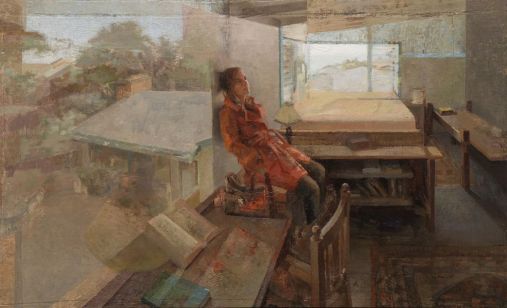
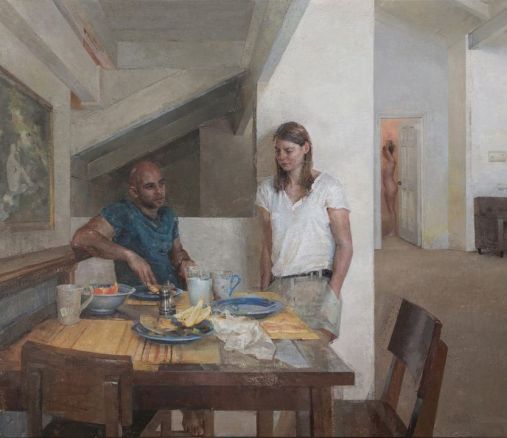
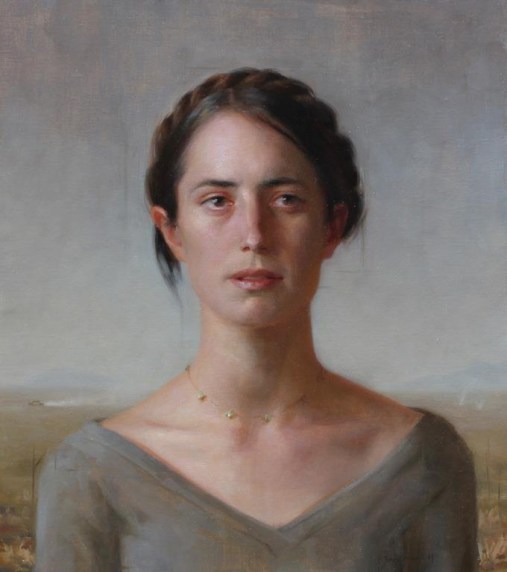
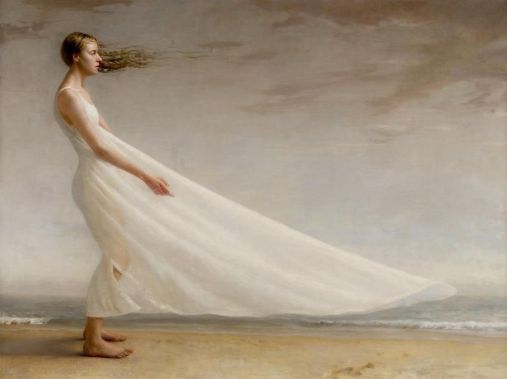
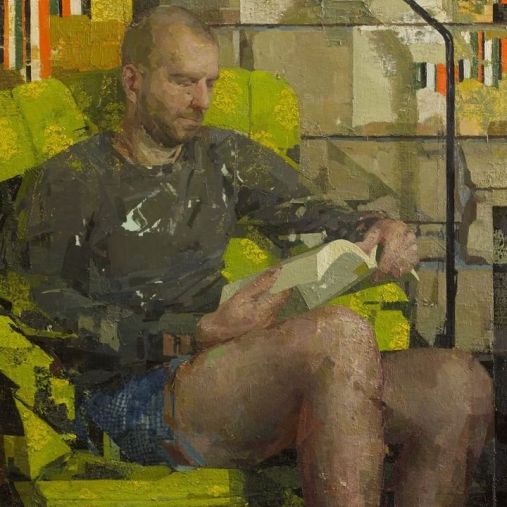
Very interesting contemporary American artist, Joshua LaRock. He has a wide range of works—there are many of them, and they’re technically and emotionally impressive, in my opinion. But I started the gallery with a selection of paintings where the sun is shining directly at the viewer. You actually don’t see this very often in oil paintings. It’s not that it’s particularly difficult to do technically, it’s just that no one really does it. Well, except for the Impressionists. In those very rare cases where it does appear, it usually depicts a sunset or sunrise, but never with people in the foreground.
Posts like this are grouped under the tag #artrauflikes, and you can find all 148 of them (unlike Facebook, which forgets—or ignores—almost half) in the “Art Rauf Likes section at beinginamerica.com.
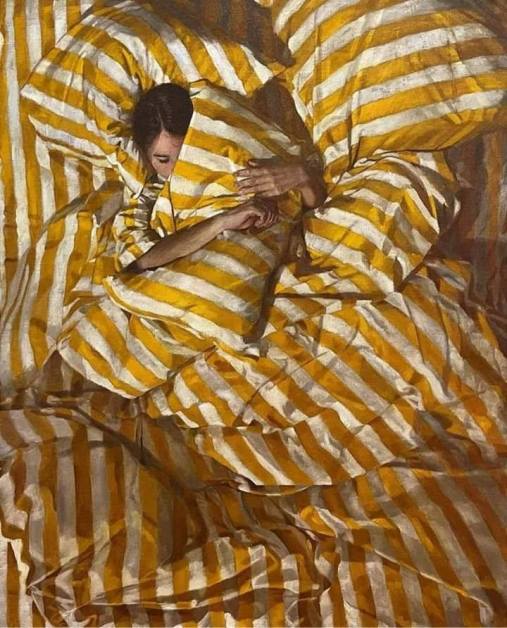
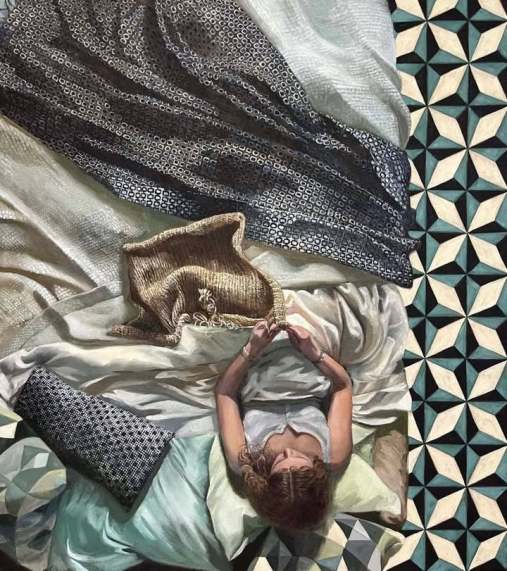
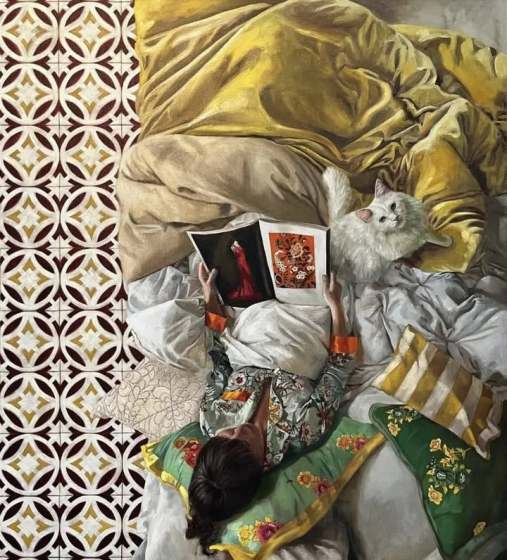
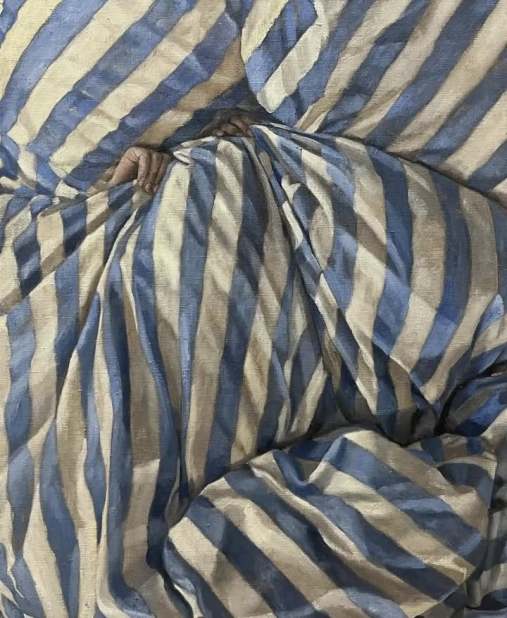
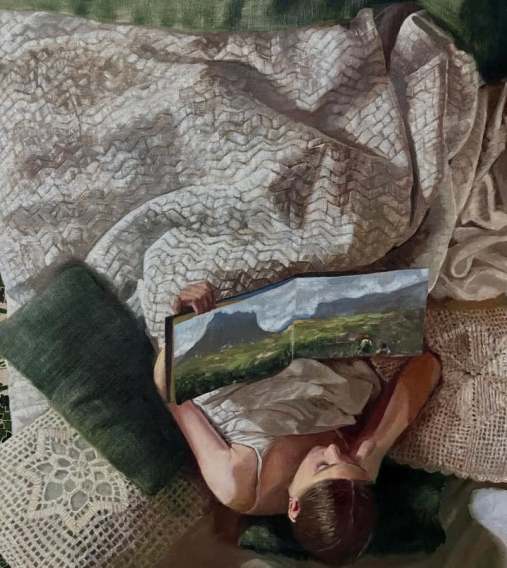
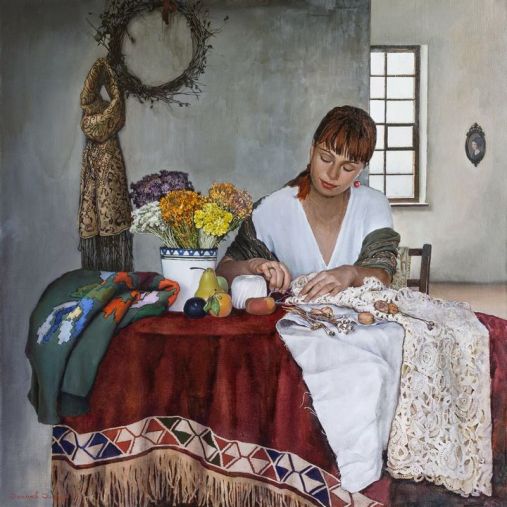
An intriguing British artist, Frances Featherstone, is renowned for her series “Girl in Bed Under a Blanket with Stuff,” where the girls, blankets, and “stuff” vary. Her work often explores the interplay of people and interiors from an unconventional perspective. British artists, in general, tend to be a bit eccentric—in the best possible way—and the influence of their peers like Lucian Freud, David Hockney, and Francis Bacon is unmistakable.
Posts like these are grouped under the tag #artrauflikes, and all 134 entries can be found in the “Art Rauf Likes” section on beinginamerica.com (unlike Facebook, which neglects—or outright omits—nearly half of them).
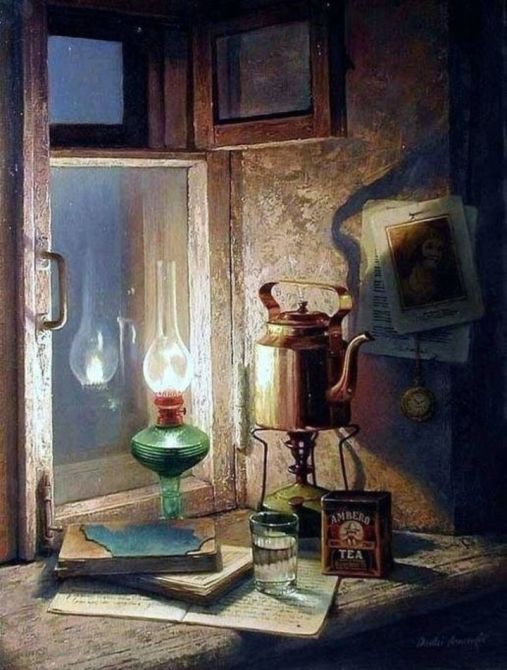
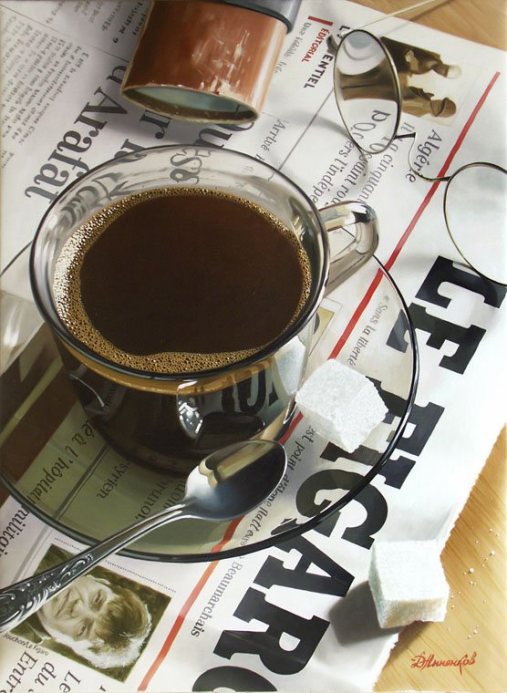
Today’s spotlight is on the works of Russian hyperrealist Dmitry Annenkov. How one can fit so many minute details onto a 40×60 cm canvas is beyond me, but if the Dutch painters managed it back then, why not now? That’s one way of looking at it.
To be honest, I’m not much of a fan of hyperrealism, because I’m left wondering: what’s the point, when we already have photography? Hyperrealism might give the impression that, if you select the precise color from a photograph using a colorimeter and apply it exactly to each millimeter of the canvas, with enough time, patience, and perhaps a bit of automation (like a canvas printer?), you’d end up with something close to what Annenkov creates. With more automation, you could churn out a painting a week. That’s why I find it far more intriguing when the mind has to fill in the gaps itself. Here, there’s nothing missing; the brain just ends up bored. Even watching the process would be interesting. Take, for example, those apples in water—was it painted layer by layer, moving from general forms to details, or simply from the top-left corner down and to the right, like a printer? If there were any visible signs of layering from broad strokes to fine detail, it would be a different conversation entirely. But I don’t see them anywhere.
I haven’t seen a single high-resolution image where you can make out brushstrokes, nor any YouTube videos showing the process—or even an interview.
So, forgive me, but I can’t help thinking critically and suspecting that these works might just be printed on canvas from photographs in oil paint. I’m really looking for arguments against this heretical, and probably offensive, idea for the artist. Do you have any?
But even if it is done with a printer, it’s still art. After all, you have to set the scene, arrange the lighting, take the photograph, and transfer it to the canvas. All of that takes a great deal of effort and time, and the result is something that admirers of beauty are willing to pay for.
Posts like these are grouped under #artrauflikes, and all 127 of them can be found in the “Art Rauf Likes” section on beinginamerica.com (unlike on Facebook, which seems to forget—or ignore—almost half of them).
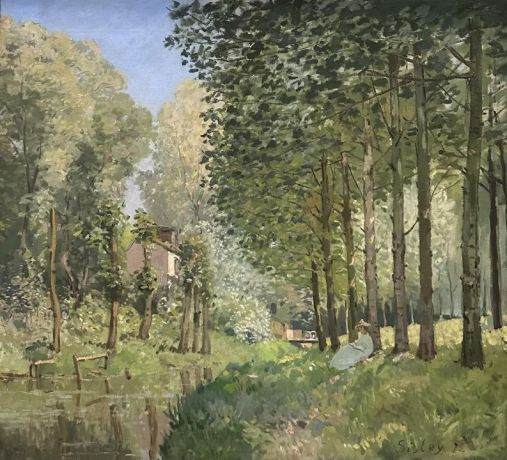
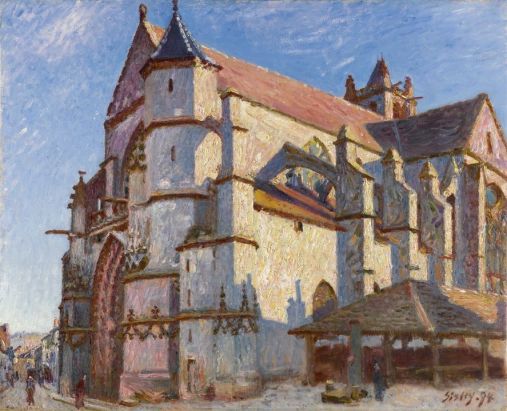
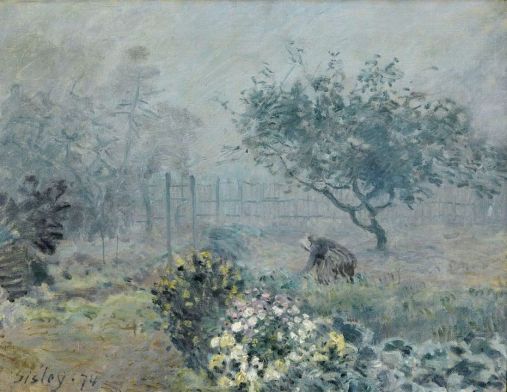
Today, let’s talk about Alfred Sisley, who would have turned 185 yesterday.
Unappreciated in his lifetime, Sisley has since become a symbol of Impressionism, though he faced countless hardships during his life. He joined the ranks of artists whose talents were only recognized posthumously.
Sisley was friends with other Impressionists, including Monet, Pissarro, and Renoir, and participated in the earliest Impressionist exhibitions. Yet, his works rarely sold. Art dealers, such as Durand-Ruel, tried to support him with modest stipends, but his art never brought him wealth. Poverty shadowed him to the end, and he relied on the kindness of friends and the occasional buyer.
Over time, Sisley’s health declined, and he grew more reserved. While his peers gained fame, he remained in obscurity. His long-awaited solo exhibition in 1897 ended in disappointment—none of his works sold.
Sisley died in abject poverty from throat cancer, just months after losing his wife. Ironically, only a year after his death, his painting Flood at Port-Marly (1876) sold to Isaac de Camondo for 43,000 francs—a sum that could buy several houses in smaller towns or a fine home in Paris—more than Sisley had earned in his entire life.
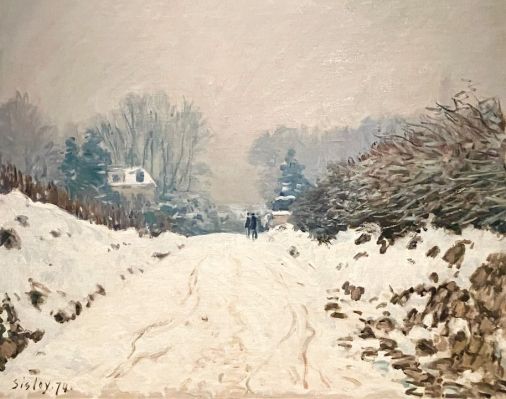
After his death, interest in his work surged, with paintings that once fetched nearly nothing now selling for tens of thousands. In February 2008, Snow at Louveciennes (1878) sold at Christie’s in London for £3.7 million, or roughly $7.8 million.
Posts like this can be found under #artrauflikes, and all 125 are available on beinginamerica.com in the “Art Rauf Likes section—unlike Facebook, which often overlooks nearly half of them.
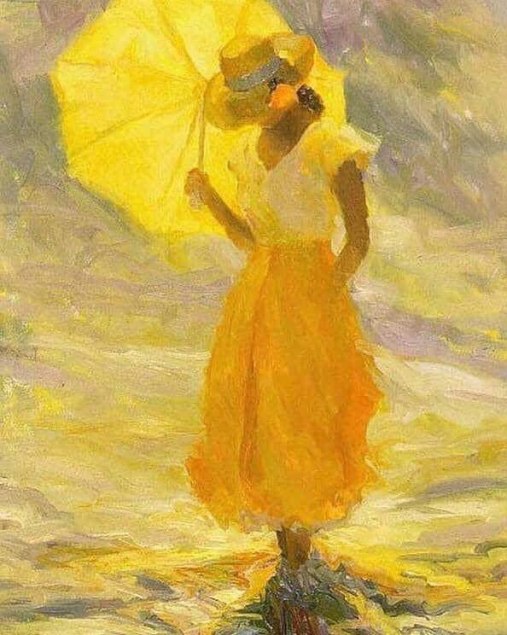
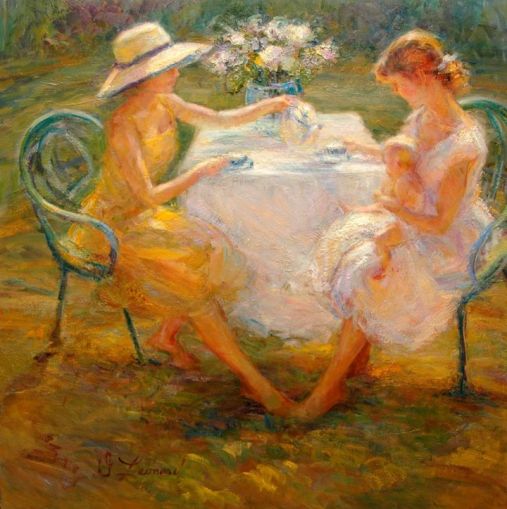
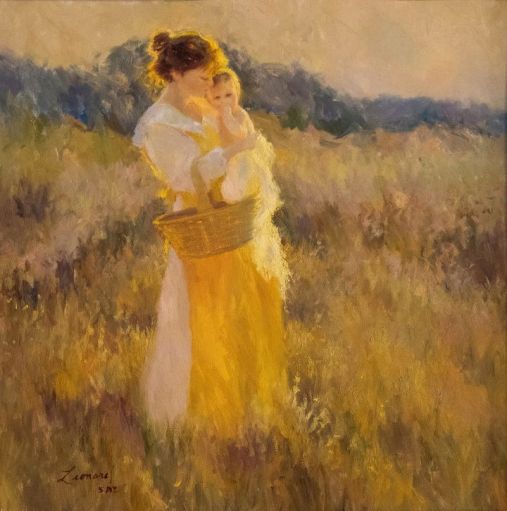
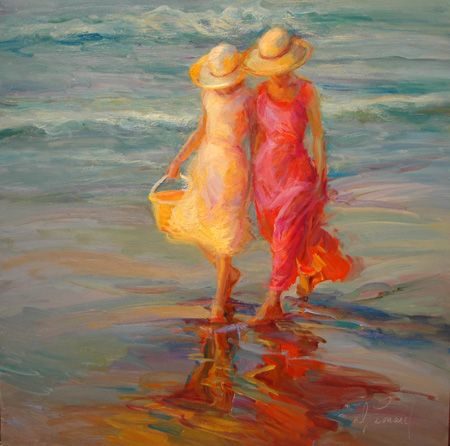
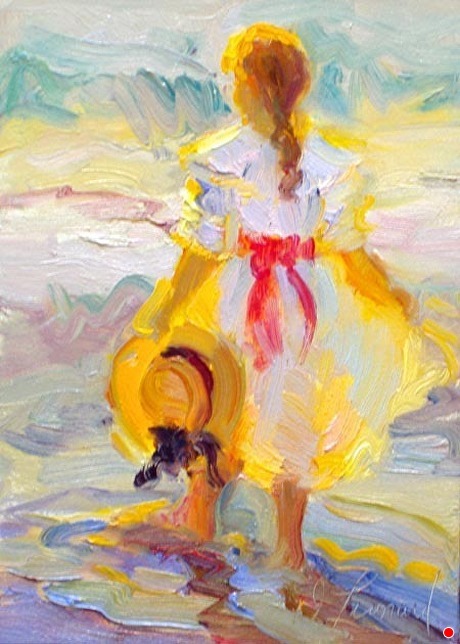
Today’s feature is the American impressionist painter Diane Leonard (b. 1949). Mothers, children, the sea, umbrellas, sunshine. It’s interesting how, for many artists, the journey to their style is nowhere to be found online. It’s as if they’ve spent their entire lives painting these same umbrellas, seasides, and families. But life doesn’t work that way. Marketing, however, thrives when an artist has a recognizable style. By the time you turn 75, only the works that support auction sales make it to the web—everything else stays hidden. As a result, we often see only a few paintings, and they tend to look similar. And that always leaves you wondering: what are we not seeing?
Posts like this are tagged under #artrauflikes, and you can find all 123 of them on beinginamerica.com under the “Art Rauf Likes” section (unlike Facebook, which forgets—or buries—nearly half of them).
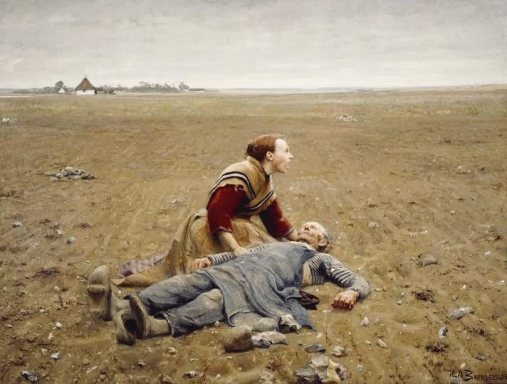
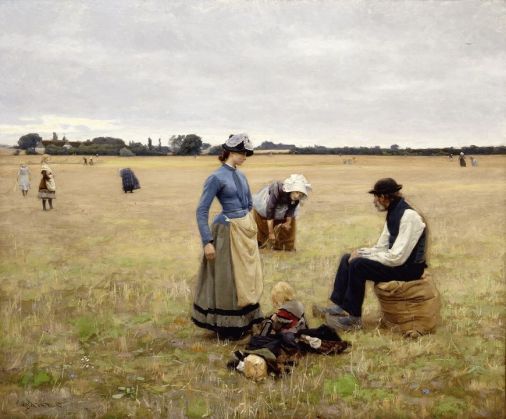
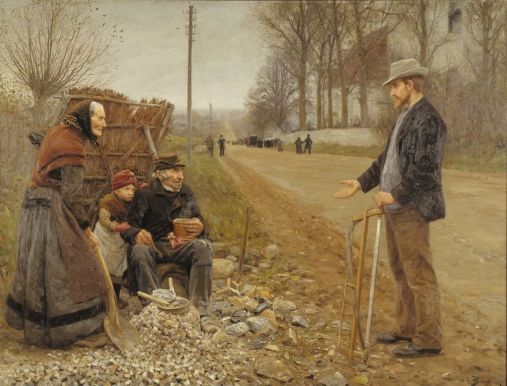
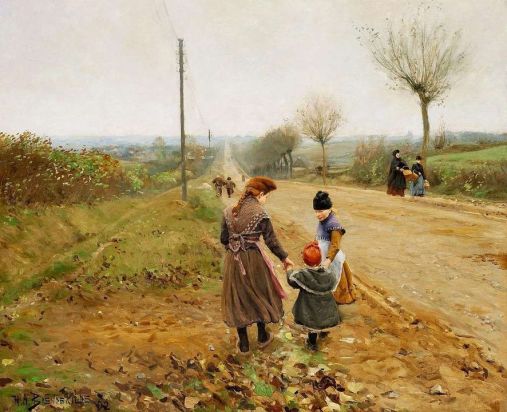
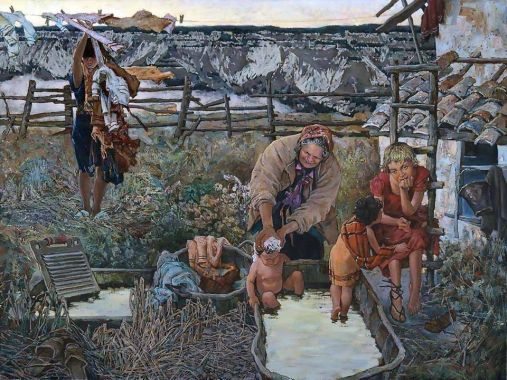
Today, I’m introducing the Danish artist Hans Andersen Brendekilde, one of the most renowned Danish painters of the late 19th and early 20th centuries. Brendekilde is best known as a master of landscapes and genre scenes. By his time, color photography was already well established, fundamentally changing the philosophy of oil painting and the reasons behind what artists chose to create. Take a look at Brendekilde’s paintings—there’s a kind of warmth and softness in the light, with countless small details of interiors, clothing, and surroundings lovingly selected. Something very hard to do with the photography at that time.
Personally, I prefer his genre scenes over his landscapes. His landscapes often feel too loud and garish in color, without evoking much emotion. They’re beautiful and bright, but somewhat ordinary. With people, though, it’s a different story—each painting seems to carry an entire narrative within it.
These kinds of posts are grouped under the hashtag #artrauflikes, and all 119 can be found in the “Art Rauf Likes section on beinginamerica.com (unlike Facebook, which tends to forget—or ignore—nearly half of them).
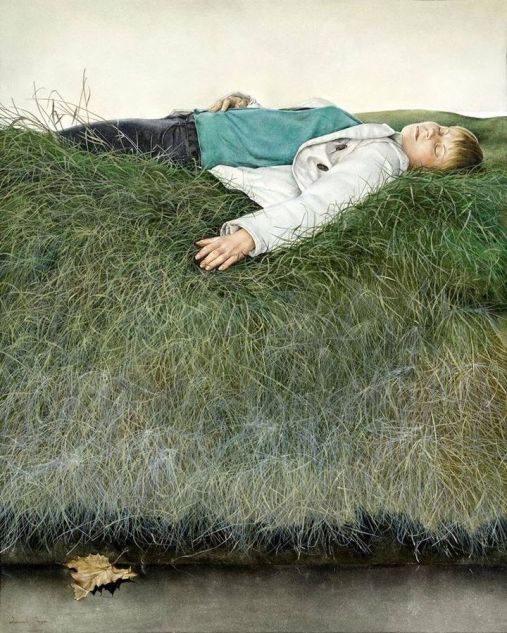
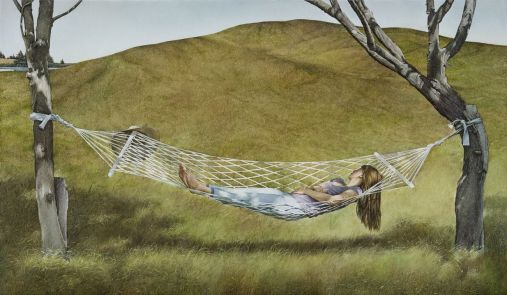
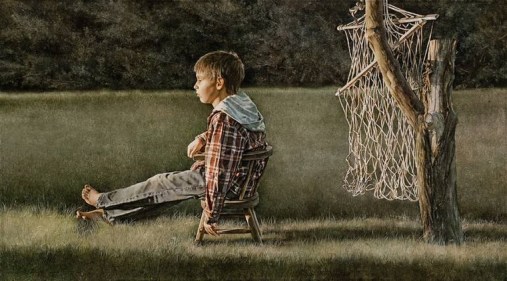
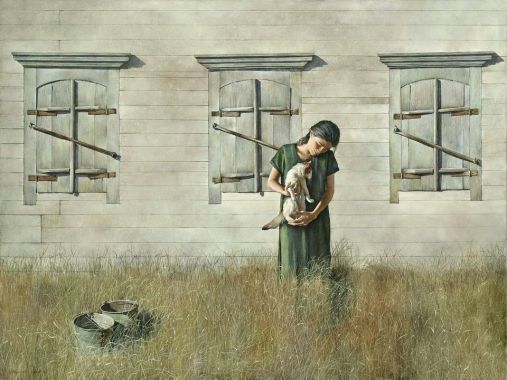
An intriguing Ukrainian artist, Eldar Eshaliev (b. 1984, Kharkiv). His oeuvre often reveals a marked alignment with Andrew Wyeth’s style, clearly by design. Perpetuating the legacy of celebrated artists is a formidable challenge. Should you lag behind, critics decry you for “imitating the master,” while success brings accolades of “continuing the tradition.” In either scenario, a certain derivative quality is inescapable.
The transition of the artist from a decidedly Impressionist style to one reminiscent of Wyeth remains somewhat enigmatic. Nonetheless, as evident, he has mastered it. Examine his first two pieces—they seem crafted by two distinct artists. Additionally, he maintains a series of cityscapes, equally grounded in Impressionism.
It is rumored that the grass depicted in some paintings showcases a unique technique devised by the artist himself, employing walnut oil instead of white paint.
Related posts are aggregated under the hashtag #artrauflikes, all 118 of which are accessible in the “Art Rauf Likes” category at beinginamerica.com (unlike Facebook, which tends to overlook—or ignore—nearly half of them).
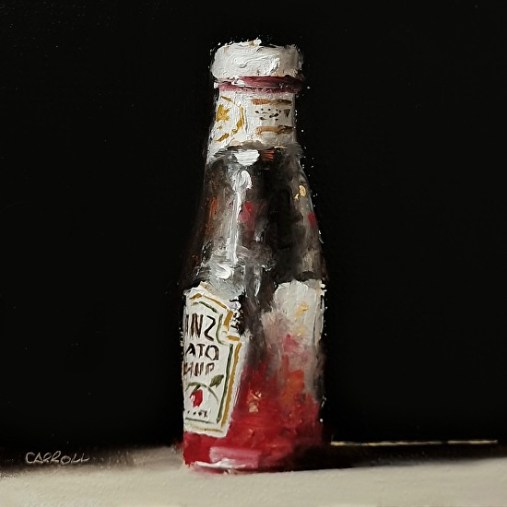
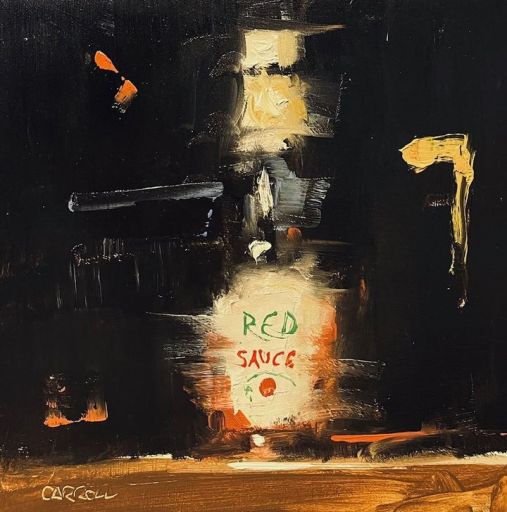
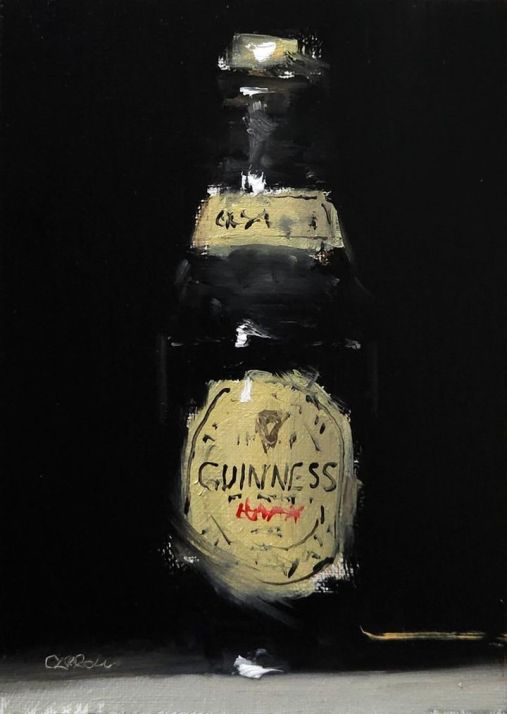
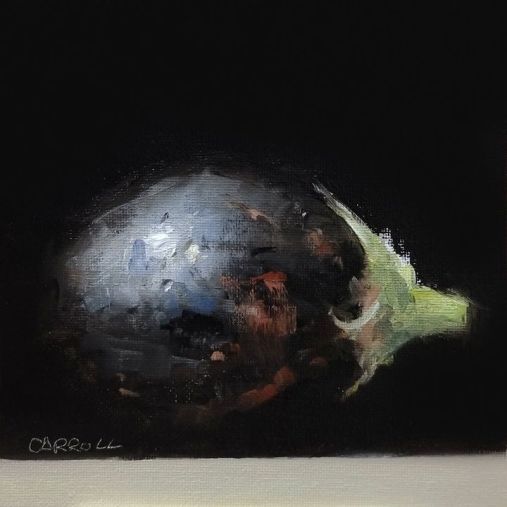
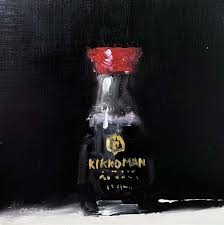
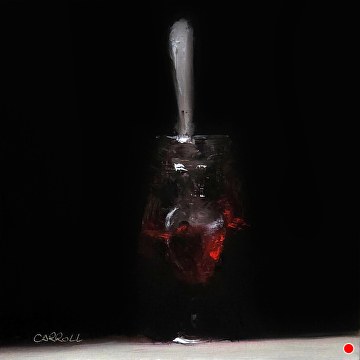
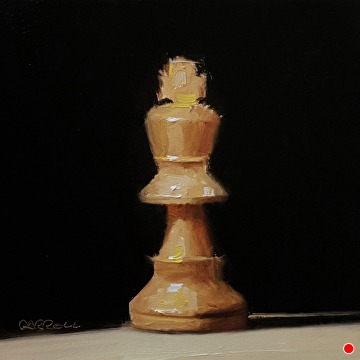
Today, I’m sharing these thematically simple paintings by British artist Neil Carroll. All of them depict everyday kitchen objects against a dark background. Many of them are quick sketches that likely didn’t take more than a few hours to complete (most canvases are about 6″ wide, give or take). Carroll has turned this into a steady output, and online, you can find hundreds of similar yet distinct paintings, all in a consistent style.
But what’s so special about a painting of an apple or a lemon with side lighting on a dark background? It’s practically a student sketch—art school students have piles of these gathering dust in the back of their closets. Yet once you gather at least a dozen of these uniform paintings, completed in a consistent style, suddenly it becomes “real” art, and the artist is lauded for carving out their niche. The more they create, the more firmly they establish themselves in that niche.
It’s a straightforward formula: do what you enjoy and remain consistent in your style and approach.
What’s also captivating about such simple objects is observing how the artist distinguishes between what’s significant and what’s not. I’ve gleaned a lot of intriguing insights and now I’m eager to try my hand at it having studied Carroll’s techniques. So, expect some ketchup paintings from me soon.
Posts like this are grouped under the hashtag #artrauflikes, and all 117 of them can be found on beinginamerica.com in the “Art Rauf Likes” section (unlike Facebook, which forgets—or neglects—almost half).
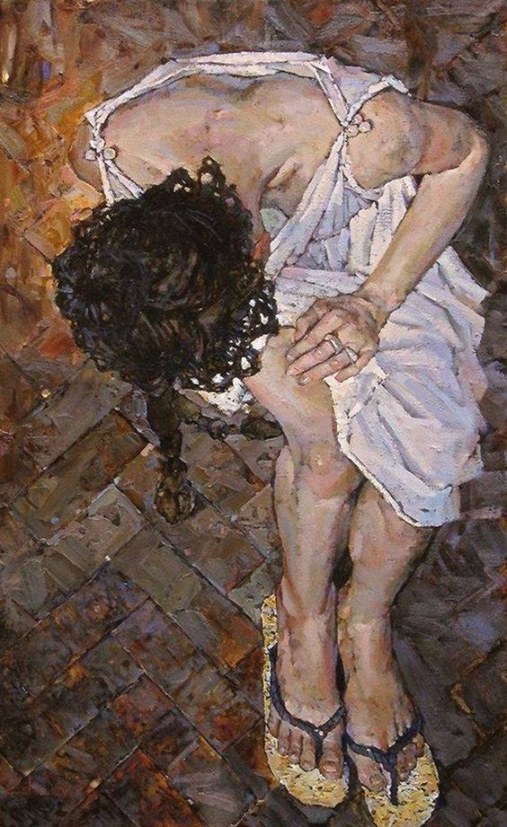
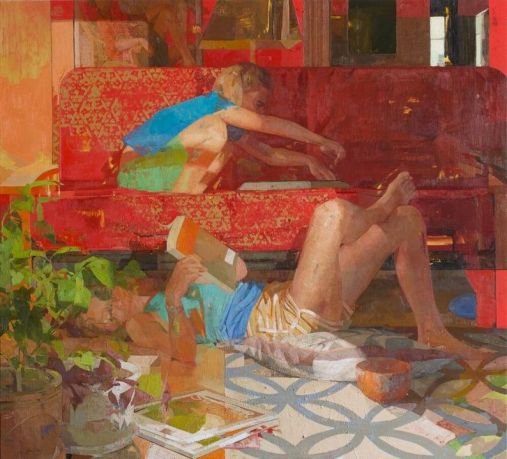
Wow, what an amazing artist today – Zoey Frank from the USA. Her works are incredibly unique, blending classical technique with hints of contemporary art — exactly in the proportion I love. Some pieces lean more into surrealism, others are dominated by abstraction, while a few are purely classical, reminiscent of the old masters. Yet almost none can be labeled as “just another painting.”
Posts like this are grouped under the tag #artrauflikes, and all 116 can be found in the “Art Rauf Likes” section on beinginamerica.com (unlike Facebook, which tends to forget or ignore nearly half of them).
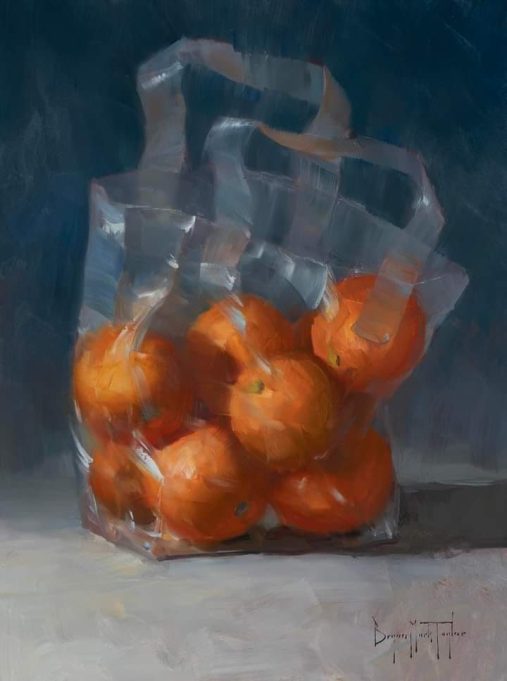
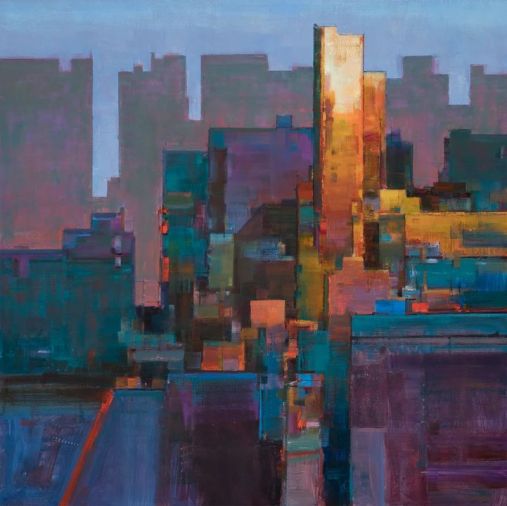
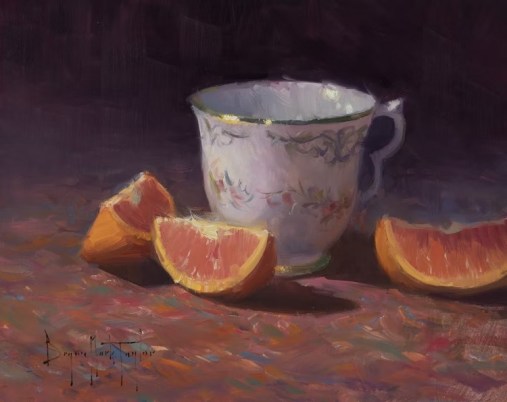
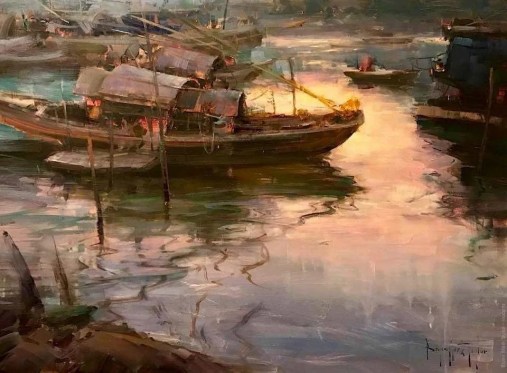
Today, I’m sharing the works of the American artist Bryan Mark Taylor. His paintings are incredibly diverse, with a lot of plein air pieces and quick impressionistic sketches. The only thing missing is people—there aren’t any, in any form, anywhere.
I firmly believe that if a person has the talent to capture the fleeting beauty of nature or cities or objects of any kind —whether through photography or landscape painting—then they should seize the opportunity to travel. Otherwise, that talent risks being locked away. Of course, you could argue, “And what about Andrew Wyeth, who spent his whole life in Pennsylvania and Maine, painting his neighbors on the porch?” Probably, Wyeth is the exception, he is the King anyway. A better example is John Singer Sargent, an American of the 19th century who traveled across half of Europe.
Bryan Mark Taylor is another excellent example. He’s just a year older than me, so the most exciting work is still ahead!
Posts like this are grouped under the hashtag #artrauflikes, and you can find all 115 posts in the “Art Rauf Likes” section on beinginamerica.com (unlike Facebook, which tends to forget—or neglect—nearly half of them)















































 Hi, I'm Rauf Aliev.