What happens when Chinese have to print in Russian (weird font) | June 19 2024, 15:26

Today, there were reports about a visit to the sun-great by the sun-great, and there were banners with text on the streets.

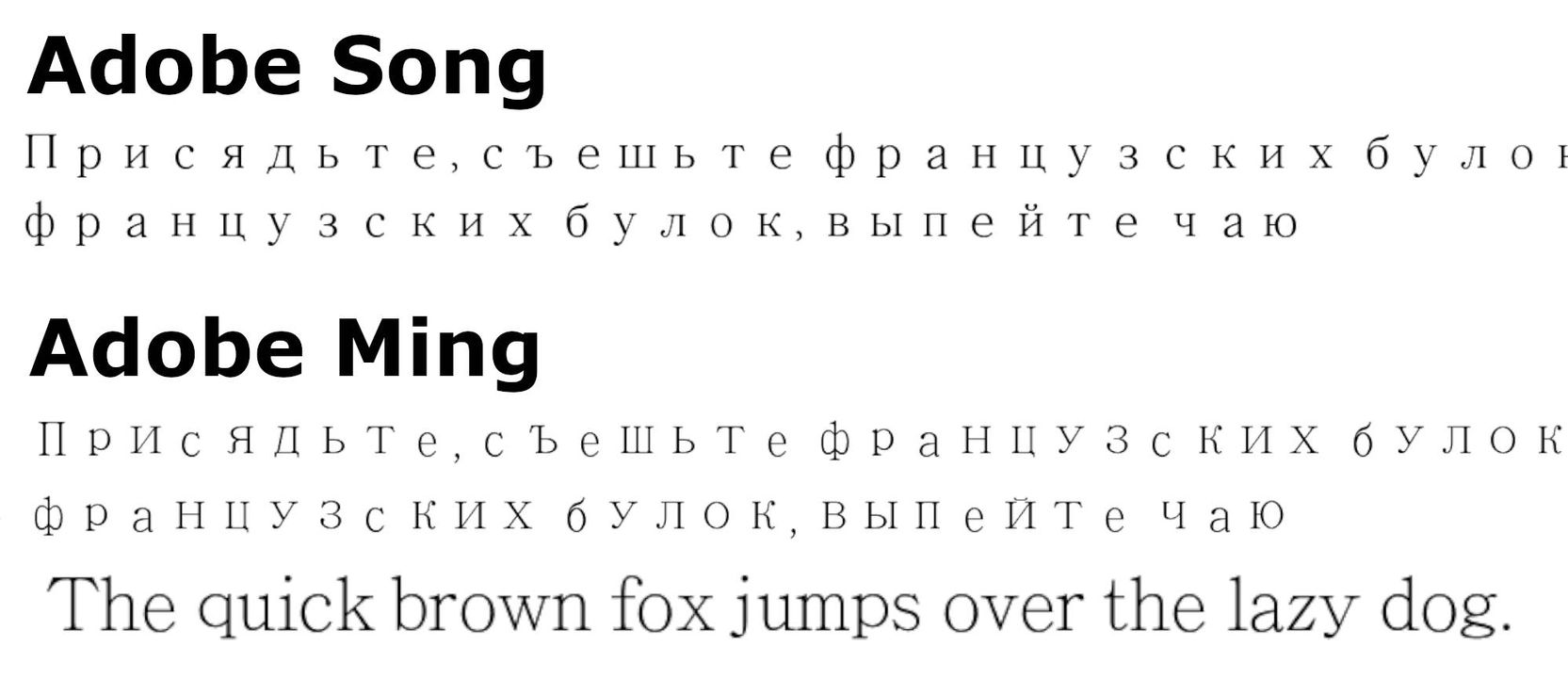
And it made me think, why do the Chinese love to write everything in Cyrillic with this idiotic font, and where did it even come from? There are so many fonts nowadays.

It turns out that Adobe and Microsoft are to blame. They included very poorly drawn fonts in their packages. And since the Chinese characters are of very good quality, the font is used everywhere, but the Cyrillic and even the Latin are just there for show. The main culprits are three – Adobe Ming Std L, Adobe Myungjo Std M (also called Adobe Ming), Adobe Song Std L. The most “eye-straining” one is Adobe Ming. With Latin, it’s more or less okay, but it seems that the Cyrillic was drawn by the Chinese themselves at the dawn of computer fonts, and it has not changed since then.

Exploring Max Ginsburg’s Signature Style and the Art of Museum Visits | June 19 2024, 02:37

Today, meet Max Ginsburg. He paints the everyday life of New York streets. His works vary greatly in mood, but notice that they all have the same “signature.”

It’s a fascinating exercise to find common elements in different works by the same artist. Not in the sense that if everyone, including women, looks like Putin, it’s Jan van Eyck; if there are huge backsides, it’s Rubens; if you see an Excel sheet with colored areas, it’s Mondrian, etc. But rather in the technique, brushstrokes, color, how contrast is conveyed, and so on. Unfortunately, these nuances are not always visible in digital reproductions.

I’ve long sought an engineer’s answer to why visit museums when everything is available online. Of course, someone who visits museums willingly probably doesn’t ask this question anymore. But still, let me explain. In past centuries, painting techniques often included the use of opaque pigments to create a monochrome underpainting (grisaille), over which layers of transparent colored glazes were applied (a varnish diluted to transparency with a lacquer-based medium, slightly tinted with pigments). This achieved depth of color and subtle transitions. The result was something like a very thin colored glass over a monochrome image. Light falling on it would reflect within this layer and become tinted. Such an effect can’t even be closely replicated in a photograph or on a computer screen.

Max Ginsburg’s technique doesn’t fall into this category, but his work conveys something no photograph can. And yes, his painting is very American. That too is part of his recognizable style.

Remember, similar posts are grouped under the tag #artrauflikes, and all 87 can be found on beinginamerica.com in the “Art Rauf Likes” section (unlike Facebook, which forgets about almost half of them).

Flash has been delivered | June 18 2024, 19:01

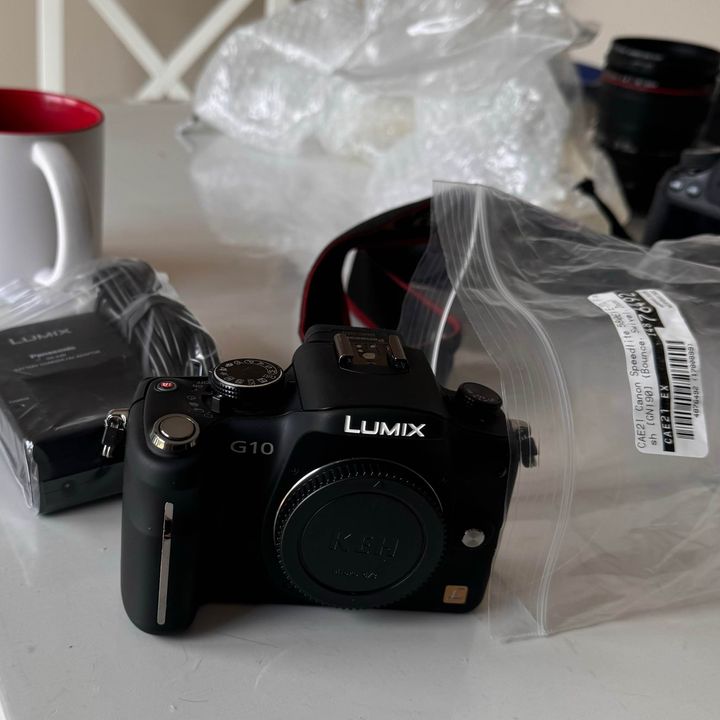
Received a package from KEH

Got a Canon 1:1.8 50mm lens for $33 (it’s brand-new/rf costs about $125-150, this one was sold “as is,” so no big loss if it doesn’t work, but it seems to be working so far)

I also ordered a Speedlight 580EX II for $43. It’s around $150 on FB Marketplace.

Received the flash.

Here it is.

Trying to figure out how to fit it into my Canon 6D

P.S. Placed another order.

Understanding Cathodic Protection and its Role in Preventing Corrosion | June 18 2024, 16:19

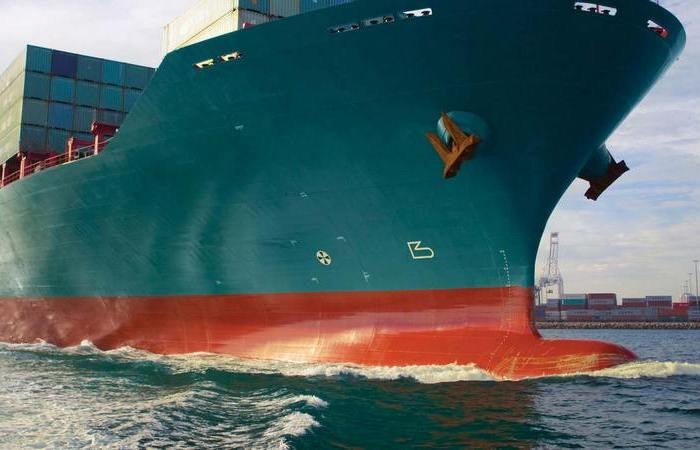
Today I learned about “sacrificial anodes” used for corrosion protection. This mechanism, called “cathodic protection,” safeguards the ship’s hull from rusting. It works by establishing an electrical current between two different metals, either via a conductor or directly, because electrons are held with varying strengths in different metals. Thus, electrons physically transfer from one metal to another. Incidentally, this is roughly the same principle on which batteries operate. So, special little bars, usually made of zinc, are attached to the ship’s hull, causing an electron flow from the zinc, effectively turning the entire ship into a huge battery. As a result, it’s not the hull that corrodes but the material of these bars. That’s why they’re called sacrificial anodes.

How does corrosion work anyway? It’s a redox reaction that occurs in two stages. First, the metal is oxidized, meaning its atoms lose electrons and become positively charged ions. Then comes the reduction: they bond with OH ions, which are abundantly found in water, resulting in rust. This is, of course, a simplified explanation.

The main point is that both these processes occur on the same area on the surface of the metal. Cathodic protection, however, spatially separates them. On the sacrificial anode, oxidation strictly occurs as electrons leave zinc atoms, while iron acts as the cathode where the surplus electrons are reduced. The ions from the water are reduced, but the iron atoms remain untouched—which is exactly the intended goal. The anode degrades over time, but it can always be replaced. As long as it’s present, no rust will form.

It’s truly impressive how these small bars can save such a massive machine by sacrificing themselves.

By the way, the cathodic protection system is also used, for example, in the Burj Khalifa in Dubai. There’s a titanium grid underground with pulsed current supplied to it. If this generator is shut down, they say the building won’t last long. Burj Khalifa is located in an area with high humidity and air salinity due to its proximity to the Persian Gulf, and generally, building skyscrapers there seems like a strange idea. But with such engineering ingenuity, it’s feasible.

The hull’s bottom is often painted (or was painted) red. It turns out that without this, the bottom of the ship would quickly become covered with sea organisms such as algae and shells (these are known as foulers). Historically, red paint was used in anti-fouling paints, containing copper oxide, red lead, and other components. Copper (Cu) and its compounds (copper oxide (CuO) and copper sulfate (CuSO4)) are toxic to many marine organisms. Copper ions (Cu²⁺), released from the coating, interfere with the metabolic processes of marine organisms, disrupting their ability to attach and grow. In addition, a protective oxide film forms on the surface of the copper, which prevents further oxidation. Nowadays, chemistry has advanced, and the color of the protective layer can be any color, but historically, red has been used. And the shells have already adapted.

Daniel Sprick | June 17 2024, 20:12

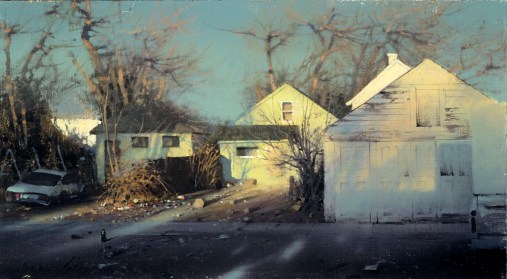
Meet Daniel Sprick (born 1953), an American artist. Yes, it’s hyperrealism again, but with a unique twist. His works deserve a closer look. If they were photographs and not oil paintings, they would still classify as art fit for the finest museums.

Remember that similar posts are compiled under the tag #artrauflikes, and on beinginamerica.com you can find all 86 posts in the “Art Rauf Likes section, unlike Facebook, which tends to forget (or clutter) nearly half.

Ultrasonic Remote| June 17 2024, 01:35

Today I learned that one of the first wireless remote controls was ULTRASONIC and BATTERY-FREE. A tiny hammer inside the remote would strike one of four aluminum plates, generating ultrasound that was picked up by sensors in the television.

They couldn’t use radio frequency because they hadn’t figured out how to pair devices with specific televisions. Integrated circuits and microprocessors did not appear until more than a decade later. The limited range of ultrasound addressed this issue, a problem that was solved in later products using infrared radiation.

Iman Maleki | June 16 2024, 14:05

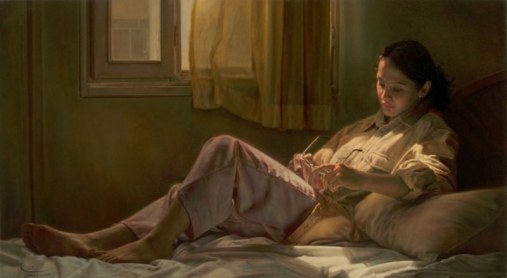
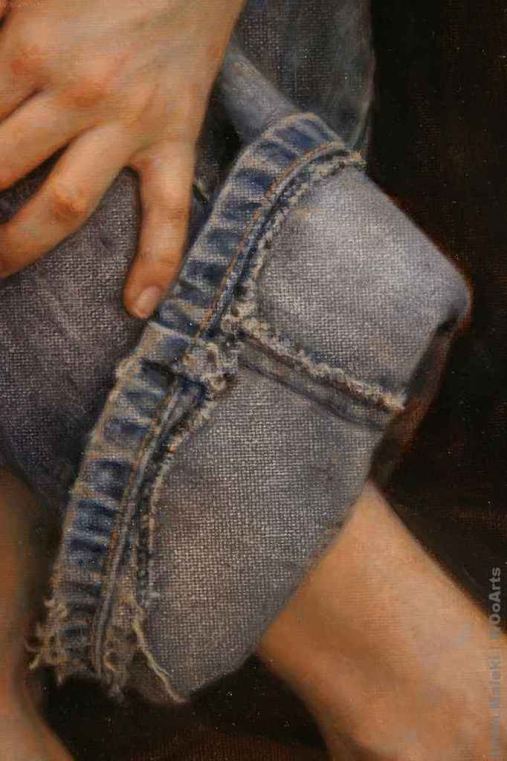
Today, I’m introducing you to the Iranian artist Iman Maleki (born in 1976). Since we’re delving into photorealism, he serves as an excellent example.

I remind you that similar posts are grouped under the hashtag #artrauflikes, and on beinginamerica.com, in the “Art Rauf Likes” section, you can find all 85 posts (unlike Facebook, which forgets about nearly half of them).