
You’re walking the dog at ten in the evening, it’s dark, and suddenly from behind there’s this sound (already familiar)

You’re walking the dog at ten in the evening, it’s dark, and suddenly from behind there’s this sound (already familiar)
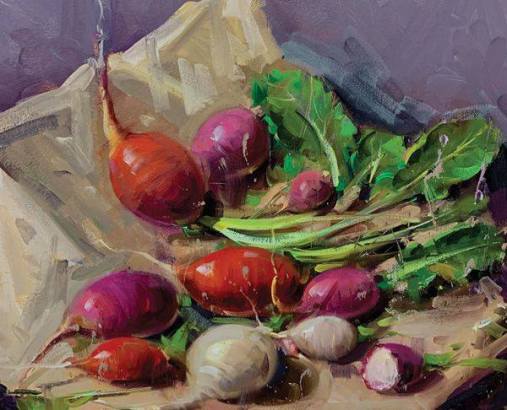
An interesting Canadian artist of Iranian descent, impressionist Mostafa Keyhani (born 1954). There is scant information available about him, yet each of his paintings narrates a tale—depicting cities, figures, emotions.
Similar entries are categorized under the tag #artrauflikes, and all 106 can be accessed in the “Art Rauf Likes” section at beinginamerica.com (in contrast to Facebook, which overlooks nearly half of them).










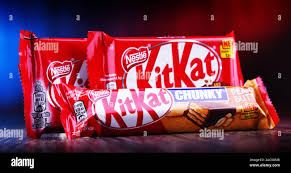
I’m reading At Home. There, Bryson talks about Kit-Cat, an elite political-literary club of 18th century London (c.1690s-c.1720). It turns out that the KitKat bar was indeed named after this club, although the spelling is slightly different.
Moreover, the olds should remember the TV commercial “Take a break – have a TWIX!”. Interestingly, Mars co-opted the competitor’s slogan :- ) Around the world, this slogan is used by Nestle for Kit-Kat: “Have a break. Have a Kit-Kat” (Take a break. Eat a Kit-Kat). When Kit-Kat was introduced in Russia, the slogan had to be changed to “Есть перерыв. Есть Kit-Kat”. By the way, Mars and Nestlé even sued over this matter.
And what does this elite club have to do with it all, and what is this club anyways? The club’s name originates from the tavern owner where its members initially gathered — Chris Katling, known among friends as Kit Cat.
It’s also interesting that KitKat in the USA is produced by Hershey’s, essentially a competitor of Nestlé.
If you think your toll roads are expensive, take a look at ours. $31 just to use a dedicated lane. And that’s not even the maximum; I’ve heard it can reach $40. Note that on I-395/95, it’s not a dedicated highway, but just a dedicated lane.
If there are three or more people in your car, you can go for free, but you have to activate a special mode on the Ez-Pass box (HOV). If there are fewer than three, you must definitely disable this mode, and then you pay according to the standard rates. Forgetting to turn off HOV when driving alone or with one passenger means a $125 fine for the first offense, $250 for the second, $500 for the third, and $1000 for the fourth and subsequent offenses. From the second offense, you also get three penalty points, which significantly increases insurance rates, and if unaddressed, the record stays for 11 years. So, if you want to use the toll highway, you need to be not only prepared to pay but also remember to switch the box to a different mode.
Truthfully, the cost indicated on the sign is the maximum possible toll at that moment for the full route. It’s the price for the entire journey on toll lanes, from one end to the other — about 60 miles, roughly an hour’s drive. But if you exit earlier, the system automatically recalculates the price based on your actual route.
Moreover, there are cameras on the road that somehow manage to detect if there are three people in the car. It’s easy to spot two in the front, but how do they detect an additional person at the back? Well, they don’t see children well, which is why the police periodically stop families and apologize. I’ll leave a link to one of the solutions in the comments. Understandably, there will be some false triggers, but at least the data set provided for human check and filtering will have fewer errors.
People on forums are asking if, now that abortions are considered murder in some states, from which month can you count two passengers in the seat of an expecting mother in the car. A valid question, indeed.

I’m reading something interesting
“His Temple of the Four Winds at Castle Howard was the first of its kind. To this, he added the most ingenious and transformative innovation: the ha-ha.
A ha-ha is a sunken fence, a sort of palisade, designed to separate the private part of an estate from the working areas without the visual interference of a fence or hedge. It was an idea adapted from French military fortifications. Since they were invisible until the very last moment, people often discovered them with a surprised exclamation, “Ha-ha!—and, it is said, hence the name. The ha-ha was not just a practical device for keeping cows away from the lawn, but an entirely new way of perceiving the world. Plots, garden, park, estate—everything became part of a unified whole. Suddenly, an attractive part of the property did not have to end at the edge of the lawn. It could continue up to the horizon.
in Wikipedia, it is called Aha or ah-ah.
this is what I’m reading at home by Bill Bryson

Very good, just don’t start watching if you don’t have 42 minutes to spare
https://youtu.be/SWxwPrluKcU?si=LkECUywdi_yE91FX
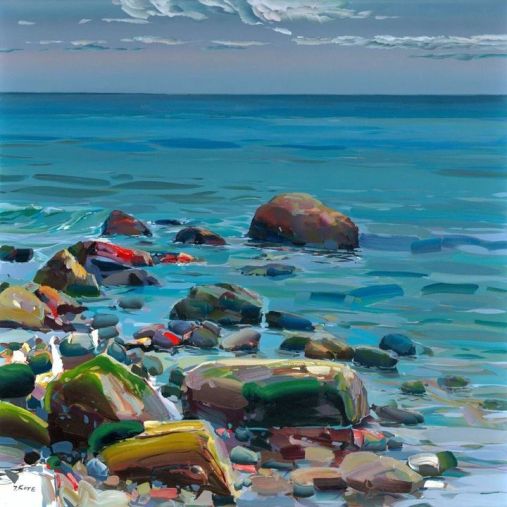
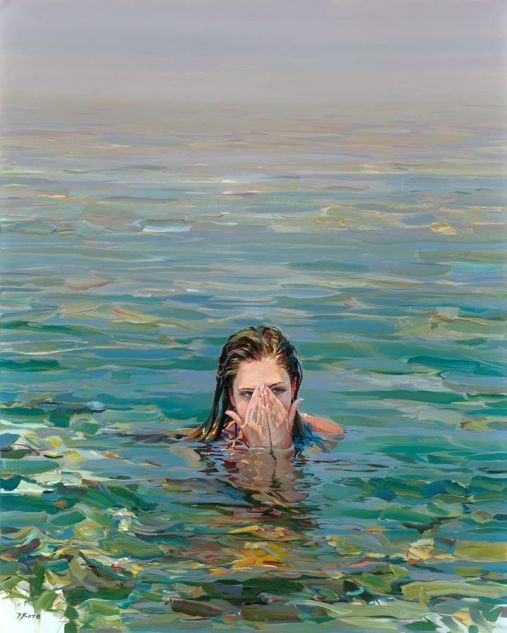
Josef Kote. While his subjects may seem simple, his unique technique and use of color immediately distinguish his works, making them highly recognizable. Essentially, his art revolves around four main themes—seascapes, cityscapes, landscapes, and what appears to be the same woman.
It also seems that he works exclusively with acrylic on canvas. Acrylic paints dry quickly, allowing the artist to layer strokes without waiting for them to dry. This means that blending, characteristic of oil painting, is almost nonexistent in acrylic unless special additives are used to slow drying. However, acrylics provide a brightness and color saturation that oil paints cannot achieve.
Similar posts are grouped under the hashtag #artrauflikes, and on beinginamerica.com in the “Art Rauf Likes” section, you can find all 105 of them, unlike Facebook, which seems to overlook nearly half.









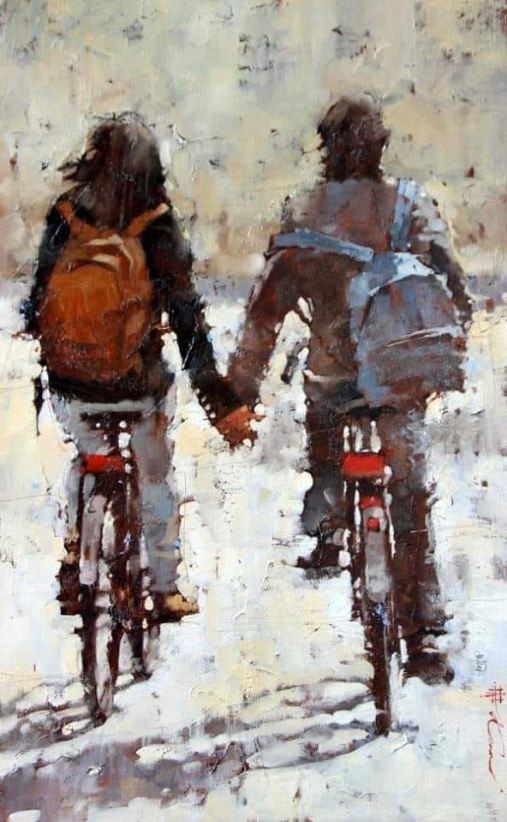
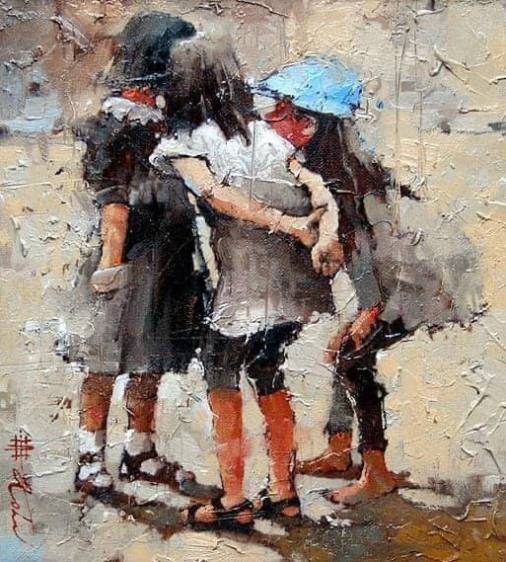
Andre Kohn is an athlete from Volgograd, who later became an impressionist painter in the United States. His works often depict solitary couples in a black, white, and red palette. Personally, I find it a bit dull—clichéd red hats and red umbrellas—but people seem to like it. For some reason, he also avoids painting faces. Yet, if you examine all his works, he is quite an interesting and unique artist.
Posts like this are tagged #artrauflikes, and all 105 can be found in the “Art Rauf Likes” section at beinginamerica.com (unlike Facebook, which forgets—or ignores—nearly half).








After my previous post, I checked out “how it is in Russia.” A document on threshold values for pollutants in food products.
I don’t really understand this well, and if anyone knows better—please correct me. But here’s what I see: for canned foods in tin containers—including condensed milk—the indicated threshold value for tin is 200 mg/kg, which is a lot; there should essentially be none when unpackaged. Indeed, the same canned foods not in tin containers won’t contain tin.
For tea, the tolerance for lead is 10 mg/kg and for copper—100 mg/kg. Additionally, according to the document, it may contain Escherichia coli, cesium-137 (400 Bq/kg), and strontium-90 (200 Bq/kg).
The threshold for zinc in egg powder is 200 mg/kg. The highest mercury levels are found in kidneys and their by-products, and also in the same egg powder. The most arsenic is found in spices and condiments—up to 1 mg/kg.
Interestingly, the highest permissible figures for nitrates are assigned to table beets (1400) and leafy vegetables (2000) – compare that to watermelons, for instance, which have just 60.
Various mollusks and crustaceans are rich in lead. And quite significantly so (10 mg/kg)—compare this with meat (0.5 mg/kg).
No conclusions here, as I’m not an expert. If anyone can provide them—I’d appreciate it 🙂
There’s a lot that can be extracted from the document, just requires more than a casual five-minute analysis like mine.
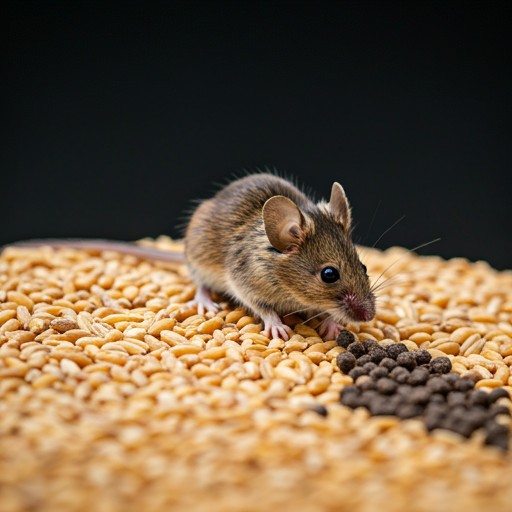
I am reading the book At Home by Bill Bryson and concurrently Googling. In the USA, the FDA has a standard called the Food Defect Levels Handbook, which sets threshold levels for food contaminants. Find out how much mouse excrement can be in flour!
I will post the link in the comments. Also, check out the next post about Russian standards.
Everywhere the word “permissible” appears, it refers to the DEFECT ACTION LEVEL. It is incorrect to believe that if the FDA sets a defect level for a food product, the manufacturer only needs to not exceed this level. Defect levels are not representative of the average defects found in any of the products—they are, in fact, much lower on average. These levels represent the limits at which the FDA will consider a food product “contaminated” and subject to enforcement under Section 402(a)(3) of the Food, Drug, and Cosmetic Act.
But it’s amusing to recognize that such contaminations do indeed exist and to understand their potential scale.
== Wheat ==
Mouse droppings (MPM-V15): not permissible more than 9 mg of rodent droppings per kilogram
== Wheat Flour ==
Insect contamination (AOAC 972.32): not permissible more than 75 insect fragments per 50 grams
== Chocolate and Chocolate Liquor ==
Insect contamination (AOAC 965.38): not permissible averaging 60 or more insect fragments per 100 grams when analyzing 6 samples of 100 grams EACH OR any sample containing 90 or more insect fragments
Mouse hairs (AOAC 965.38): not permissible averaging 1 or more rodent hairs per 100 grams when analyzing 6 samples of 100 grams EACH OR any sample containing 3 or more rodent hairs
Shell (AOAC 968.10-970.23): for chocolate liquor, shell content not permissible more than 2%, calculated on the basis of non-alkalized cocoa beans
== Pasta and Noodles ==
Insect contamination (AOAC 969.41): not permissible, if on average 225 or more insect fragments per 225 grams in 6 or more samples
Mouse hairs (AOAC 969.41): not permissible, if on average 4.5 or more rodent hairs per 225 grams in 6 or more samples
== Canned or Frozen Spinach ==
Insects and mites (AOAC 974.33): not permissible more than 50 aphids, thrips, and/or mites per 100 grams OR 2 or more larvae 3 mm in length or longer and/or larvae or caterpillar fragments longer than 12 mm per 24 pounds OR an average of 8 or more miners per 100 grams OR an average of 4 or more miners 3 mm in length per 100 grams
== Strawberries: Frozen Whole or Sliced ==
Mold (AOAC 952.22): the average level of mold should not exceed 45% and in half of the samples 55% or more
== Citrus Juices ==
Mold (AOAC 970.75): permissible average mold level <10%
Insects and insect eggs (AOAC 970.72): not permissible 5 or more Drosophila and other fly eggs per 250 ml OR 1 or more larvae per 250 ml
== Coffee (raw beans) ==
Insect contamination and insects (MPM-V1): not permissible on average 10% or more beans infested or damaged by insects
Mold (MPM-V1): not permissible on average 10% or more beans by count moldy
== Corn Flour ==
Insects (AOAC 981.19): not permissible on average 1 or more whole insects (or equivalent) per 50 grams
Insect contamination (AOAC 981.19): not permissible on average 25 or more insect fragments per 25 grams
Mouse hairs (AOAC 981.19): not permissible on average 1 or more rodent hairs per 25 grams OR an average 1 or more rodent dropping fragments per 50 grams
== Cocoa Beans ==
Mold (MPM-V18): not permissible to have more than 4% of beans by count moldy
Mammalian excreta (MPM-V18): not permissible on average 10 mg or more mammalian excreta per pound
== Hops (used in brewing) ==
Insects (AOAC 967.23): not permissible on average more than 2,500 aphids per 10 grams
== Ground Allspice ==
Insects (AOAC 981.21): not permissible: average — 30 or more insect fragments per 10 grams
Mouse hairs (AOAC 981.21): not permissible average — 1 or more rodent hairs per 10 grams
Source of defect: insect fragments — contamination before/after harvest and processing. Rodent hairs — contamination after harvest and/or processing.
…
== Canned and Frozen Berries (blackberries, raspberries, etc.) ==
Mold (AOAC 955.47): permissible average level of mold is 60% and less
Insect larvae (AOAC 981.20): permissible average — 4 or fewer larvae per 500 grams
OR
Average value — not permissible more than 10 whole insects or their equivalents per 500 grams (not including thrips, aphids, and mites)
== Frozen Broccoli ==
Insects and mites (AOAC 945.82): permissible average — 60 or fewer aphids and/or thrips and/or mites per 100 grams
== Frozen Brussels Sprouts ==
Insects (MPM-V95): permissible average — 30 or fewer aphids and/or thrips per 100 grams
== Whole Allspice ==
Mold (MPM-V32): permissible average — 5% or less of berries by weight moldy
Significance: potential health threat — may contain mold producing mycotoxins
== Ground Cinnamon ==
Insect contamination (AOAC 968.38b): permissible on average 400 or fewer insect fragments per 50 grams
Mouse hairs (AOAC 968.38b): permissible on average 11 or fewer rodent hairs per 50 grams
 Hi, I'm Rauf Aliev.