Enhancing “Lolita”: Automated Annotations for Easier Reading | October 27 2024, 03:40

After reading the first few dozen pages, I almost considered giving up on “Lolita” because I had to consult the dictionary way too often. Well, additionally, there was studying various sentence structures and references, but that’s actually interesting, although it does slow down the reading.

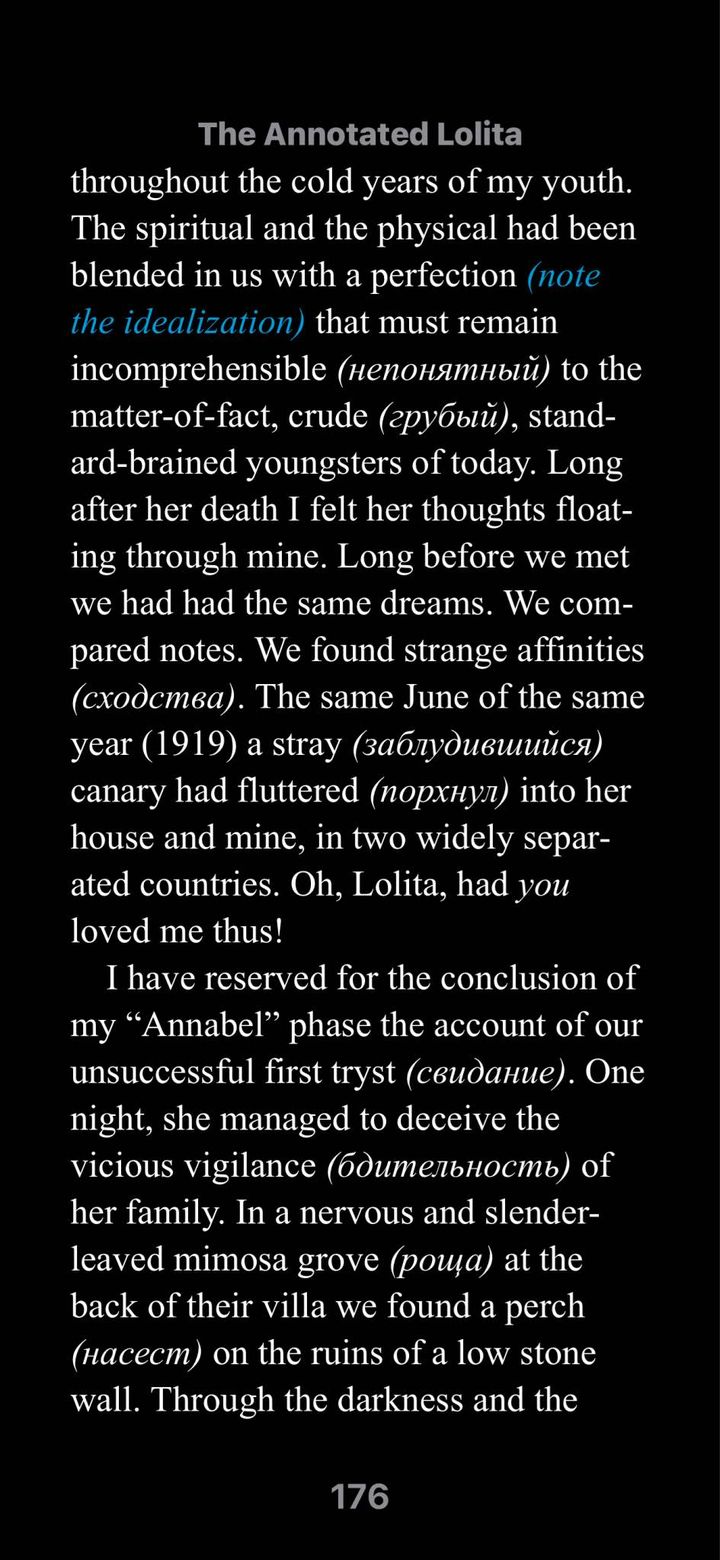
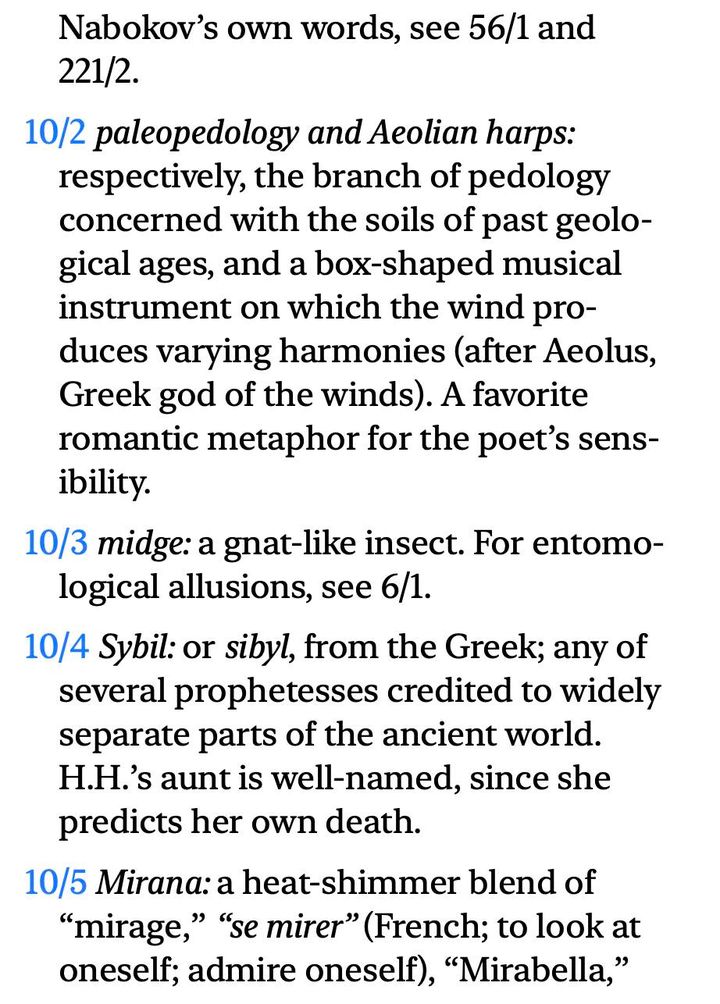
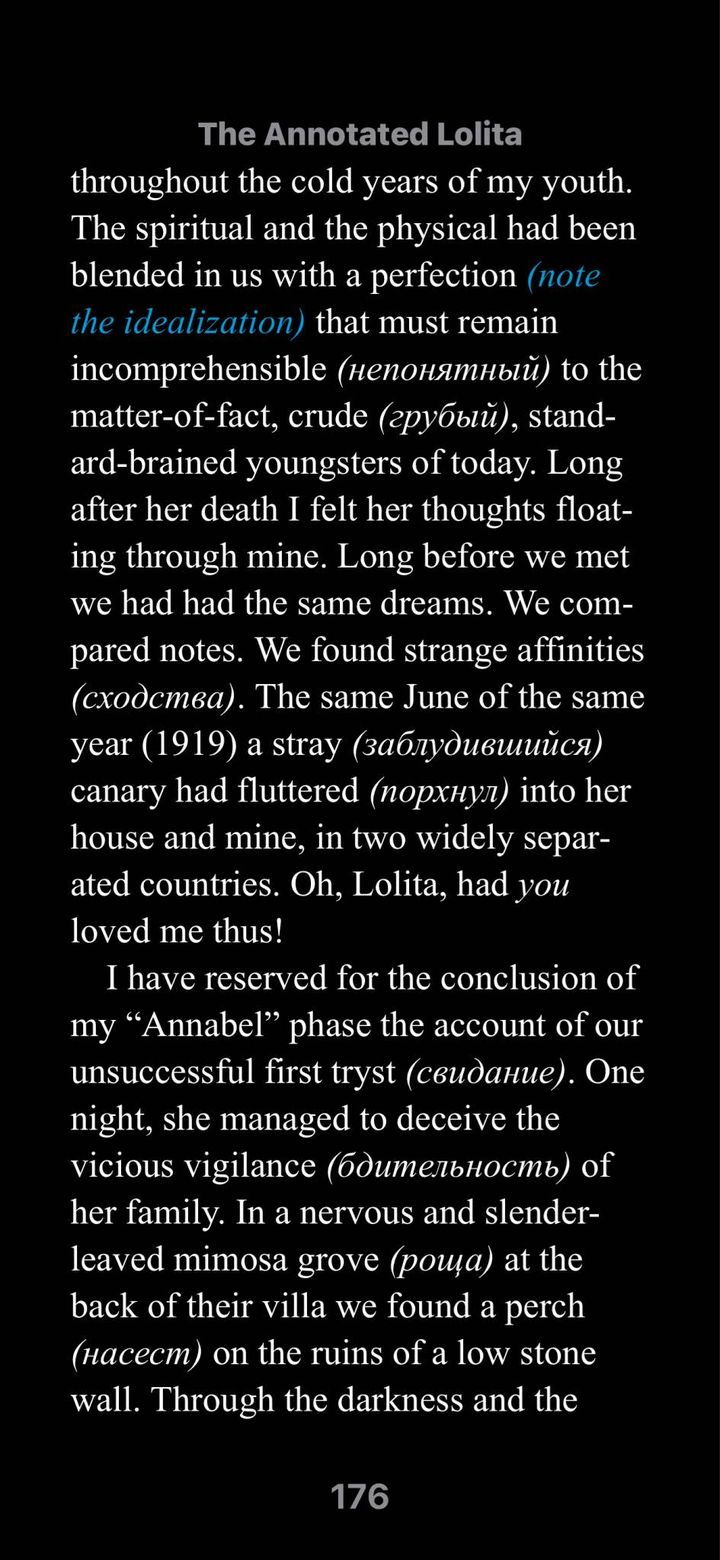
Then I thought, well, am I not a programmer or what. So together with ChatGPT, we created automated annotations. First off, it’s worth mentioning that “Lolita” has an annotated version with 200 pages and an extensive introduction of 100 pages. These annotations cover many topics, but they rarely clarify obscure words, assuming the reader is educated enough to understand that conspicuousness (/kənˈspɪkjuːəsnɪs/) means noticeability, thingamabob is a thingamajig, and callipygian means the same as callipygous, translating to “having perfect buttock form”. For instance, at the very start of the book, “My father was a gentle, easy-going person, a salad of racial genes: a Swiss citizen, of mixed French and Austrian descent with a dash of the Danube” — I wondered what this Danube was, and it turns out to be the river, Dunai in Russian, which in my version now appears in grey brackets after Danube.

Ultimately, in addition to the existing annotations, my script also adds translations into Russian in italic brackets, and it also includes some opinions on individual phrases and references — for this, after a sentence, something is added in brackets, which you need to click on.

With such enhancements, reading becomes much easier. And more interesting too

Nick Alm

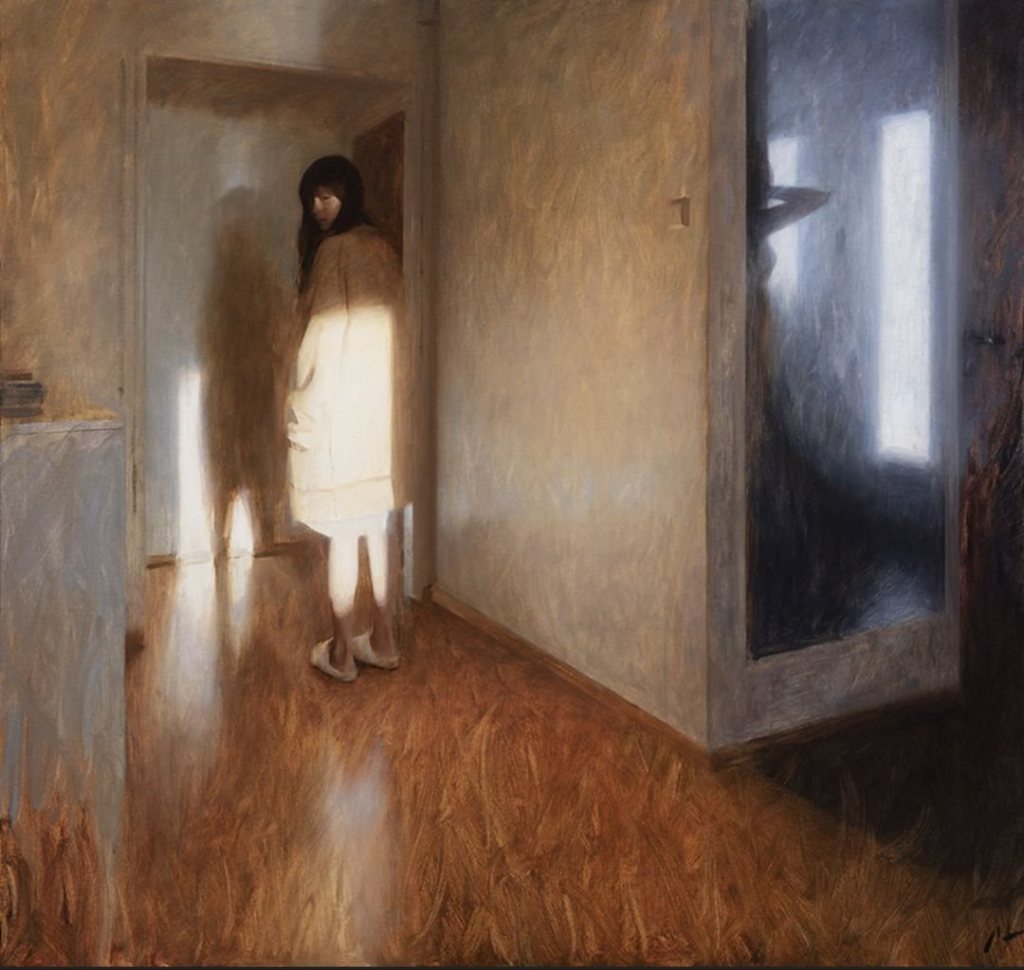
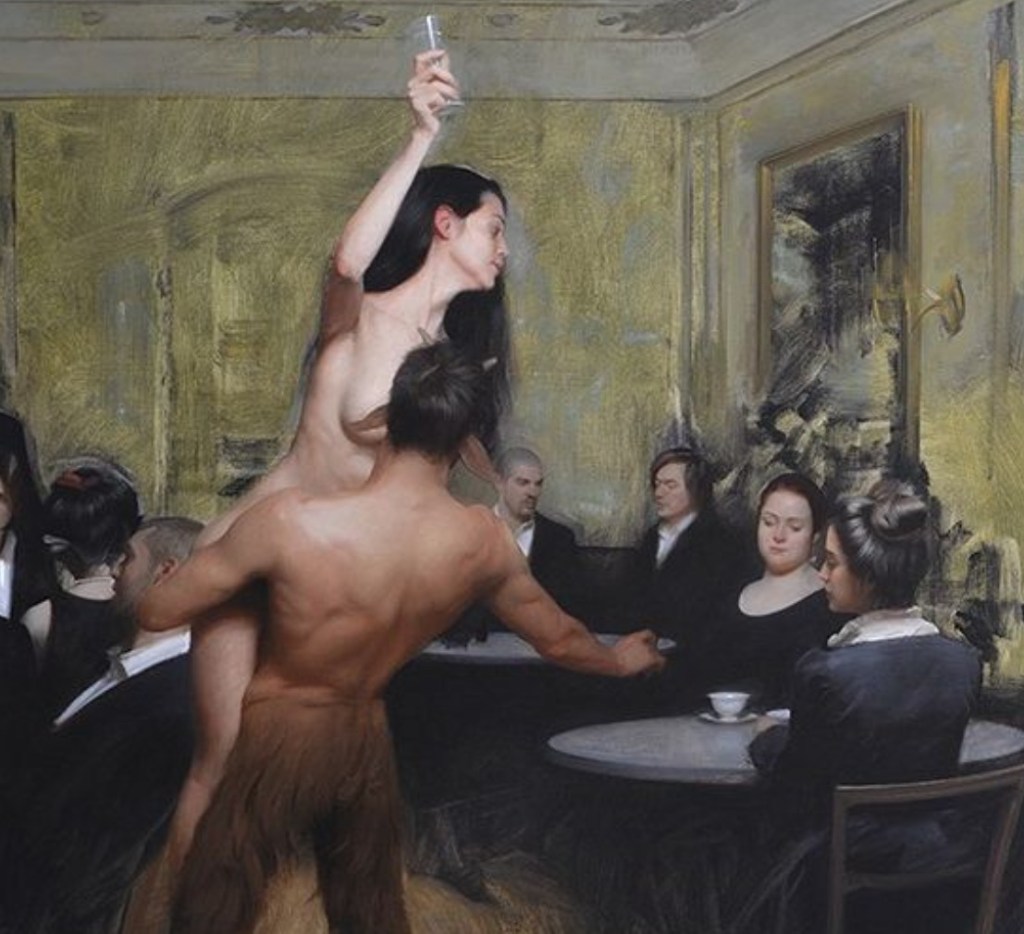
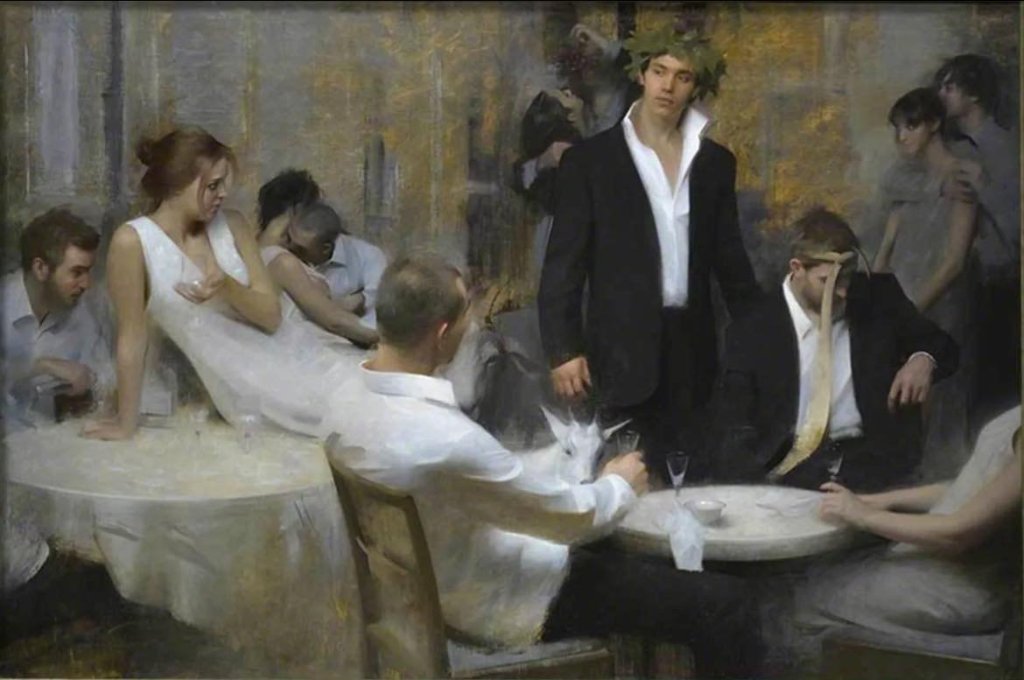
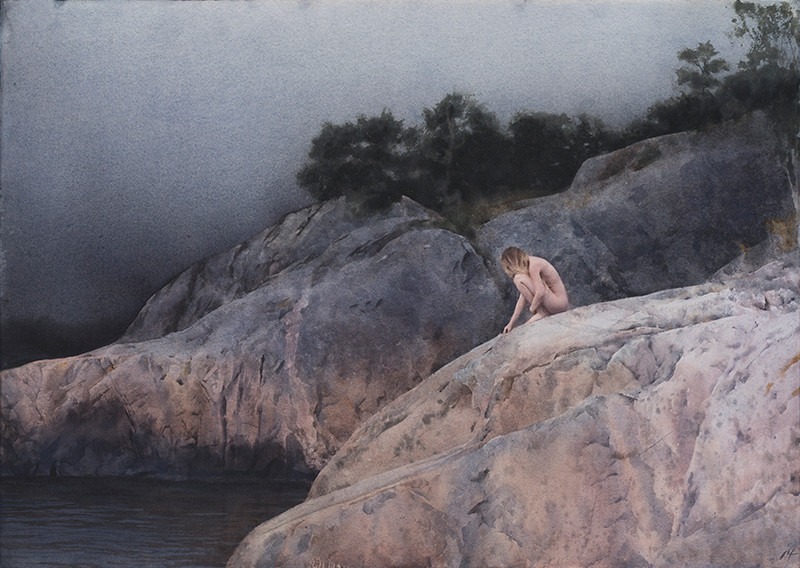
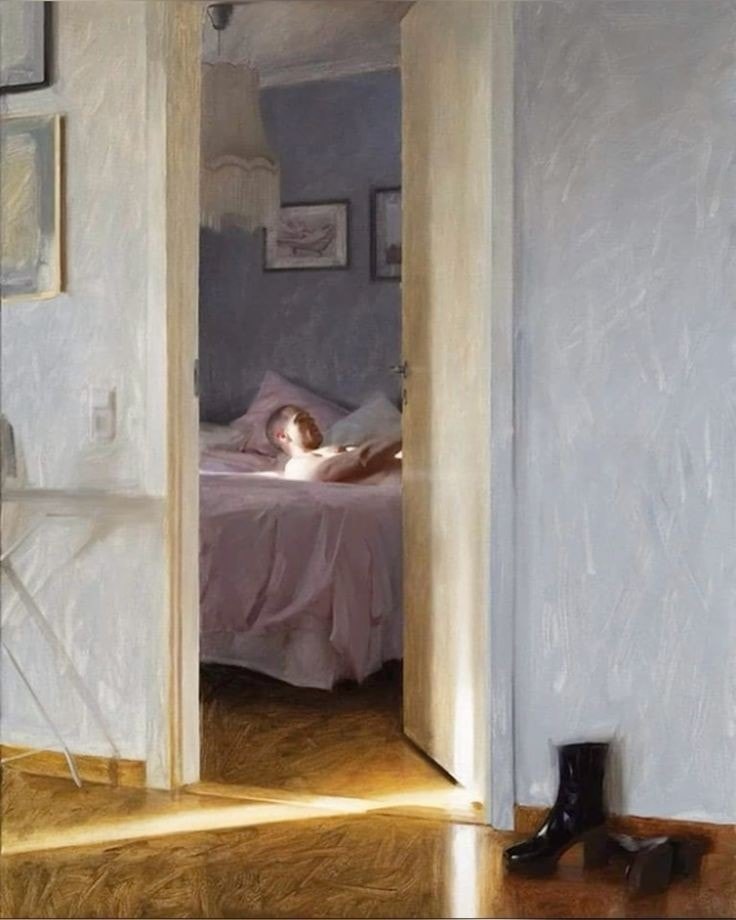
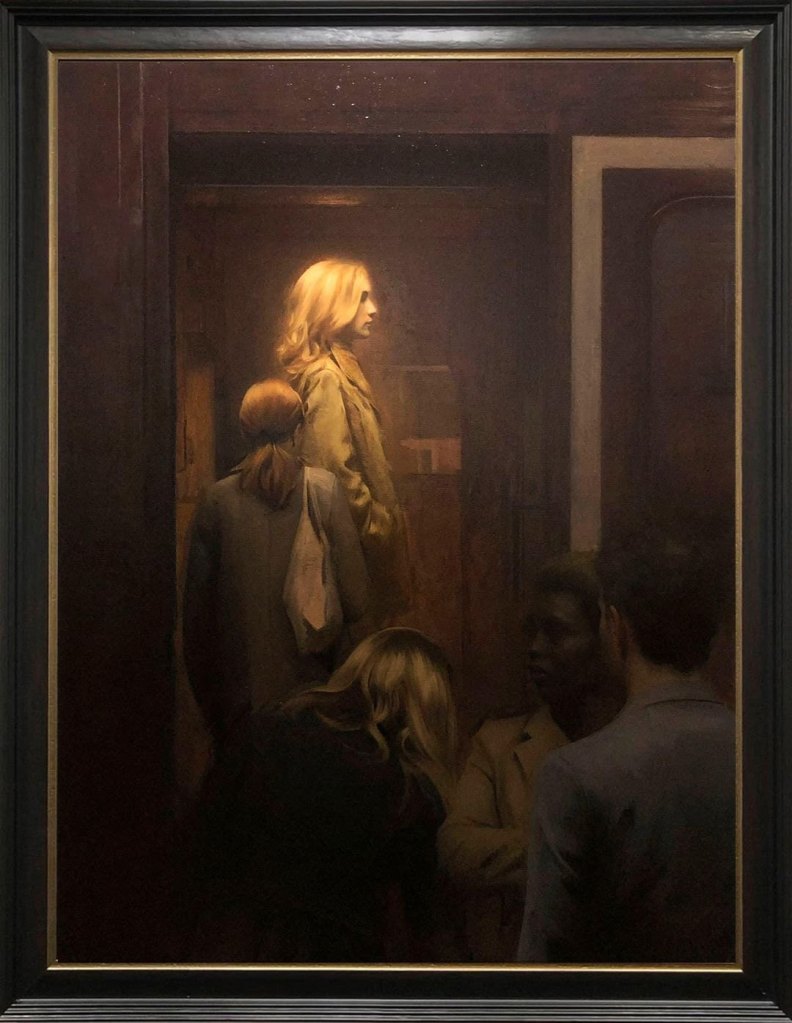
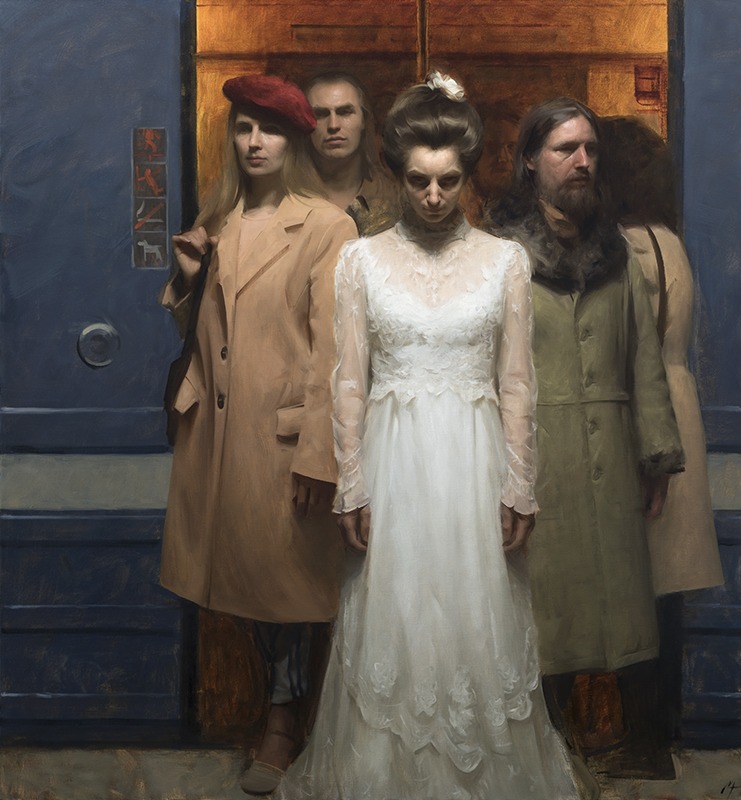
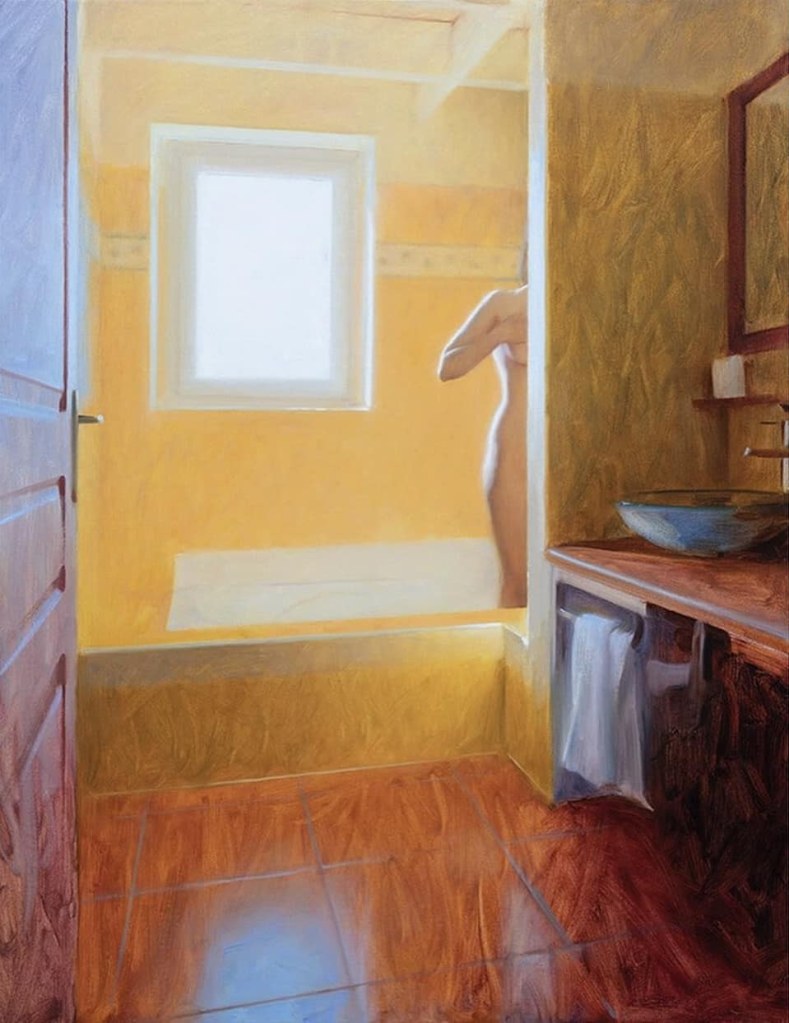
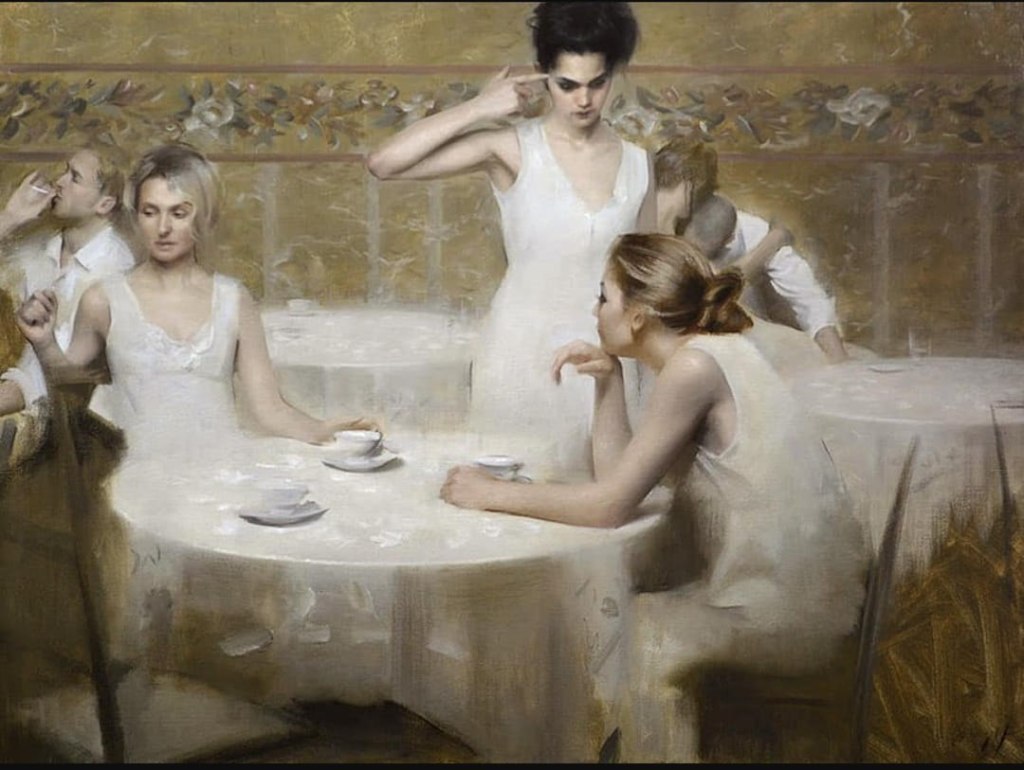
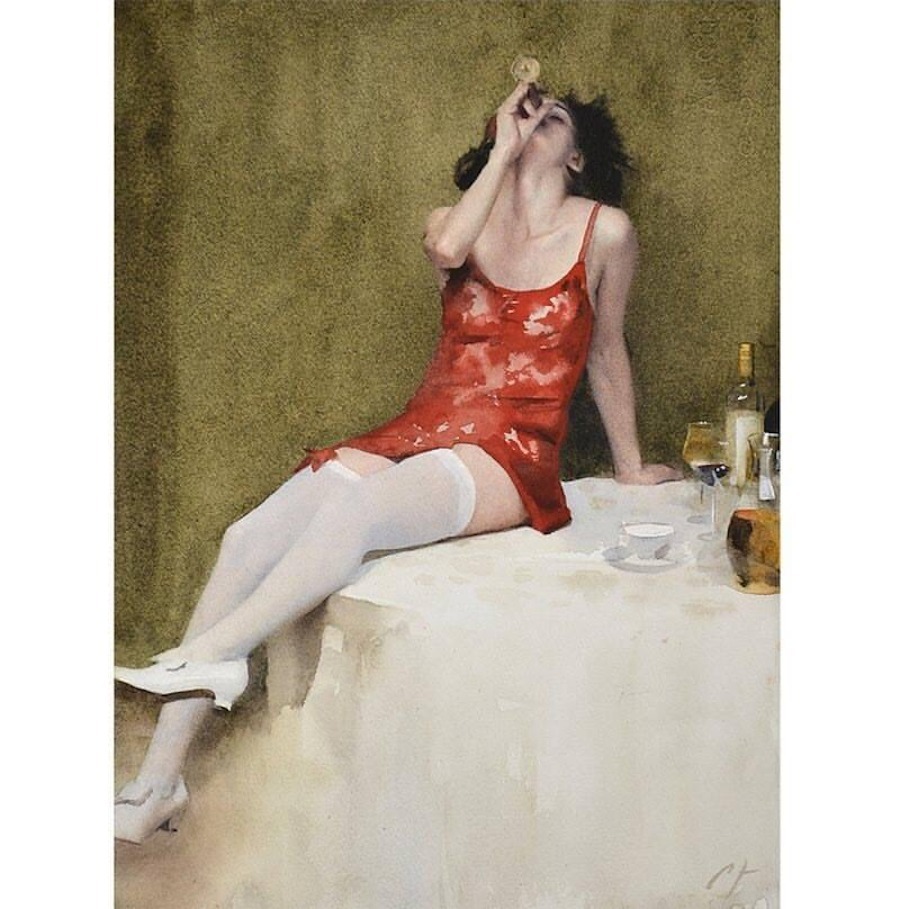
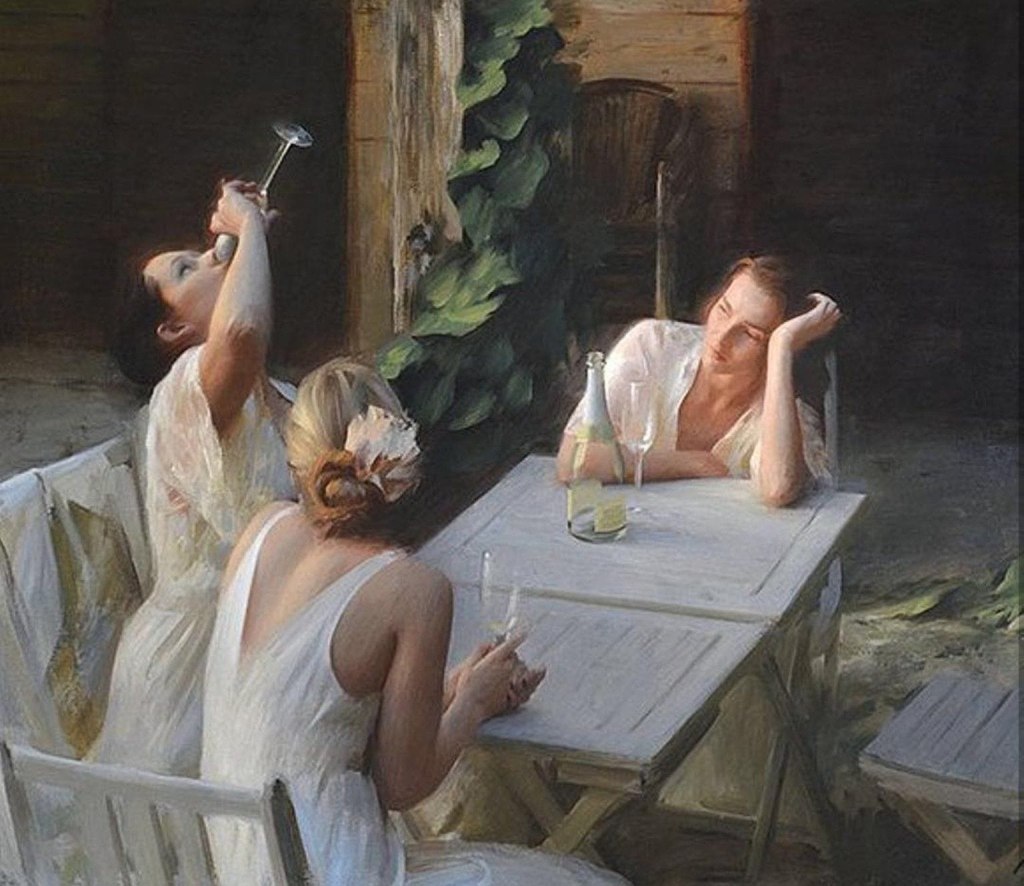
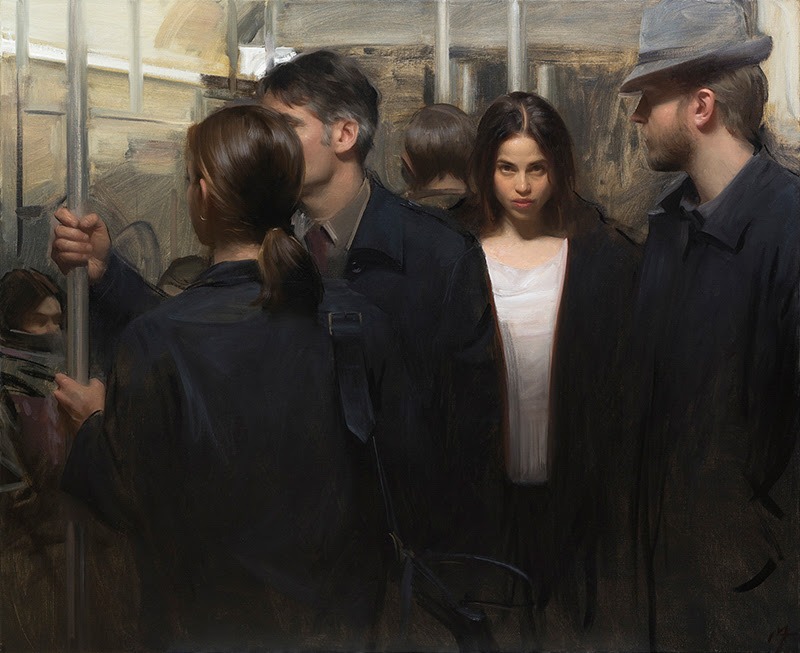
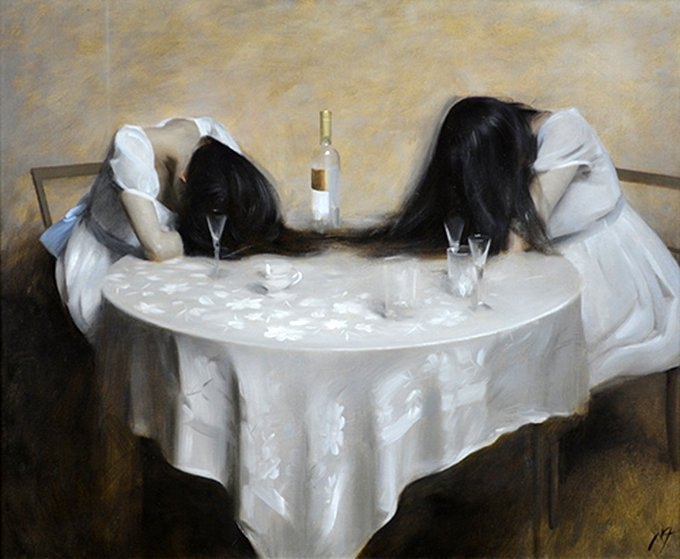
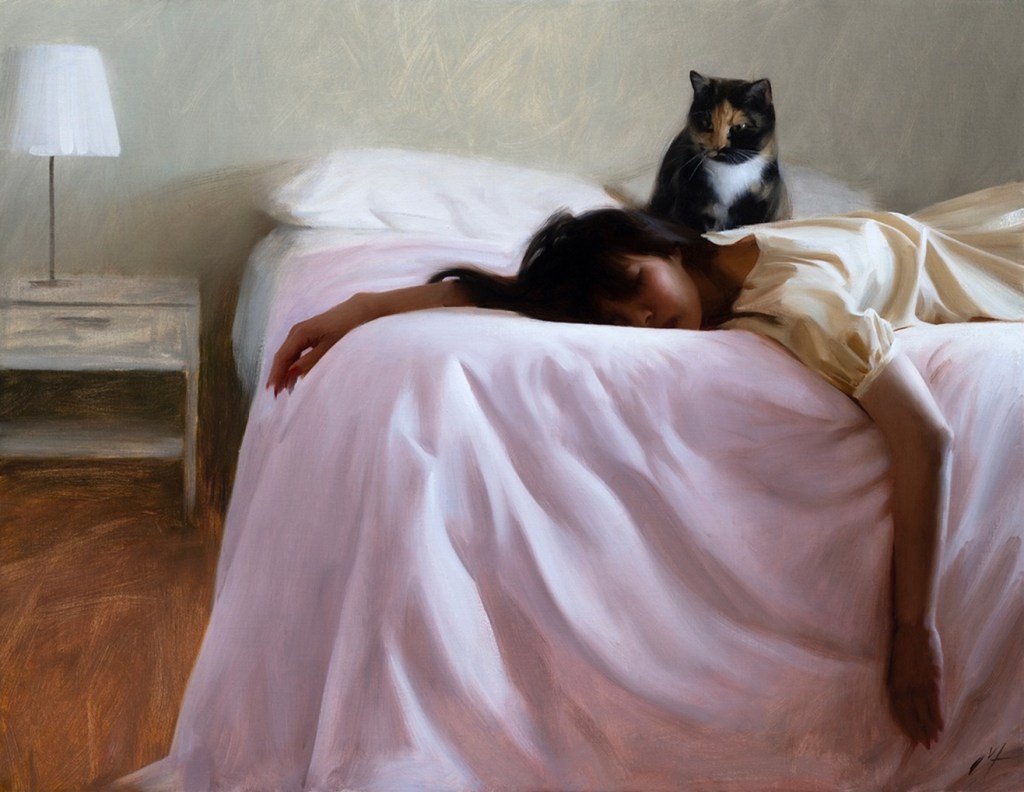
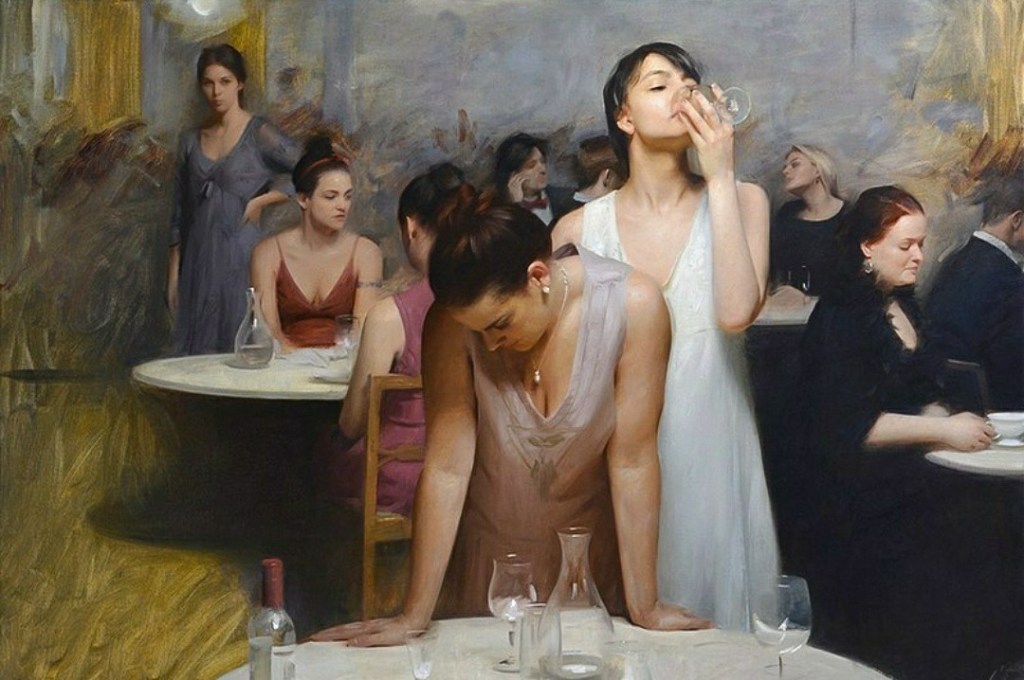
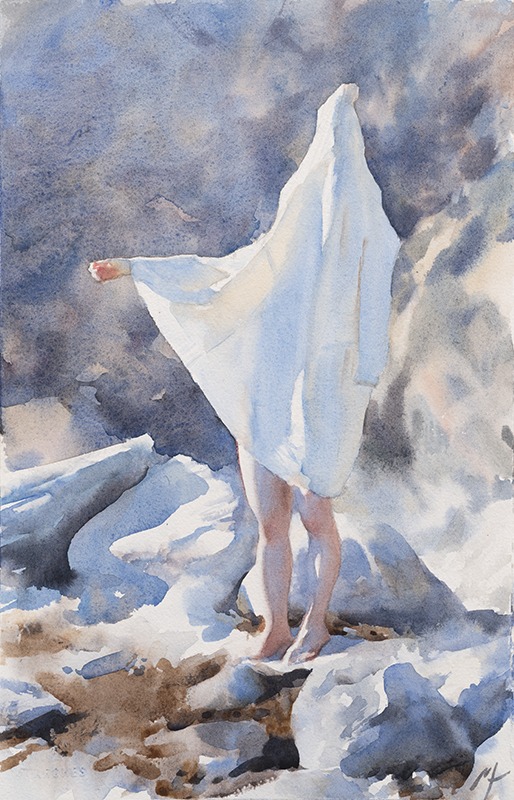
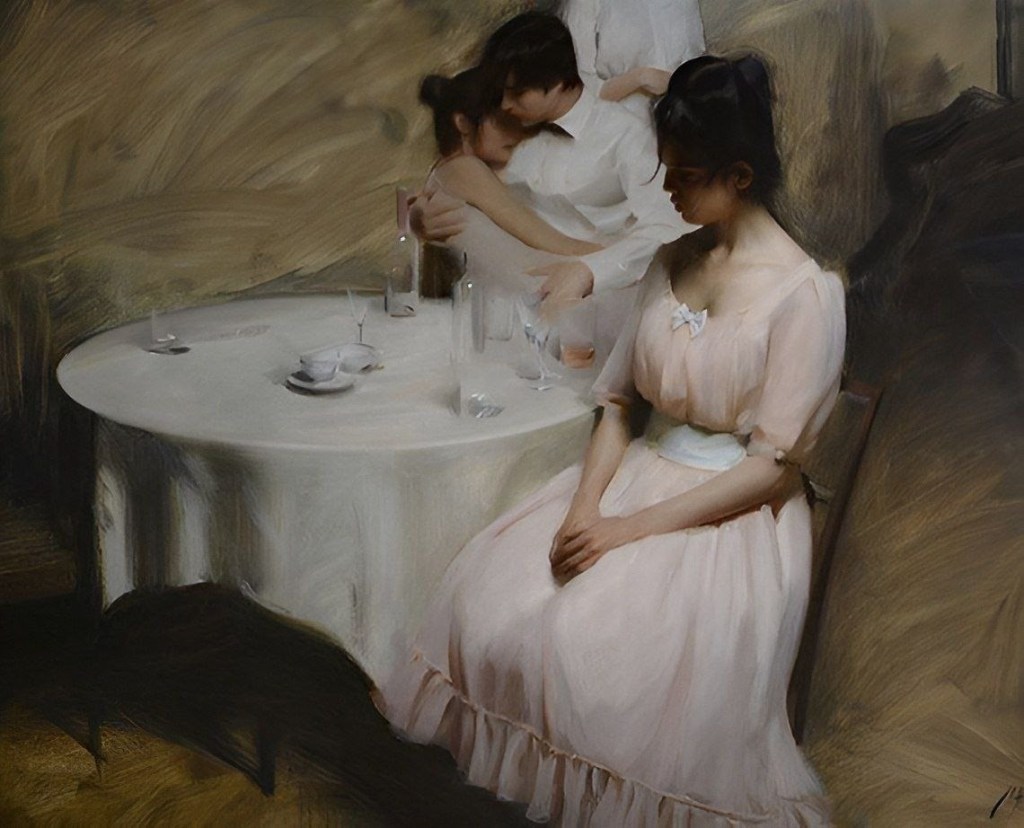
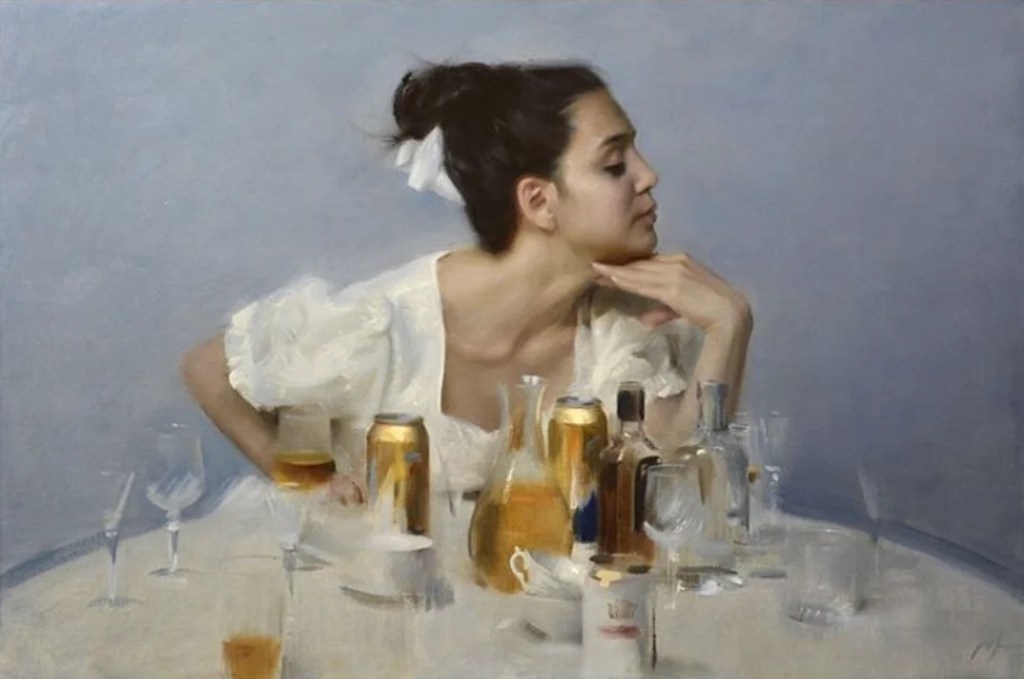
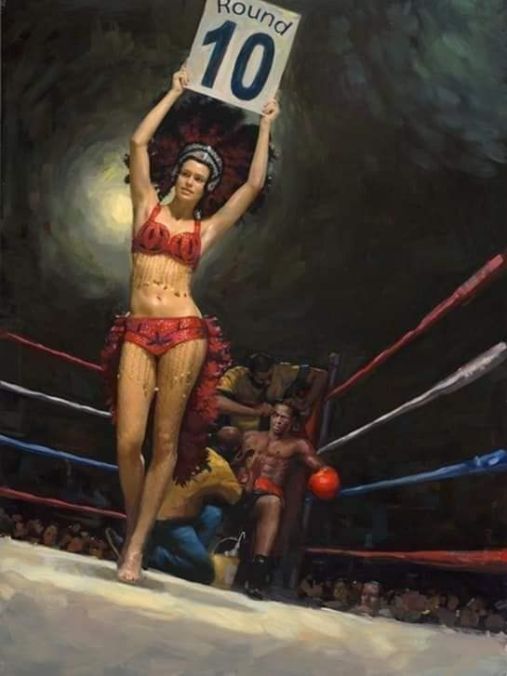
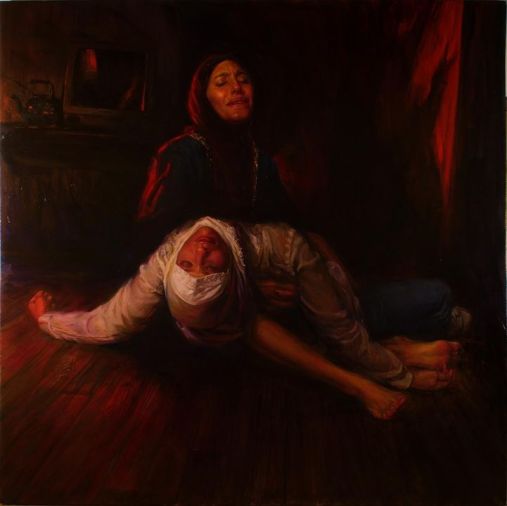
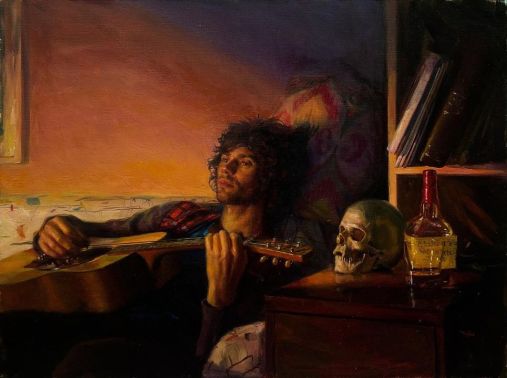
Nick Alm, a promising young artist from Sweden, paints women lost in moments of indulgence: sipping, smoking, or caught in mysterious, enigmatic scenes. Sometimes, it’s the artist himself who seems to be drifting into the smoke. Despite these often unconventional subjects, his paintings possess an undeniable magic. I could have easily shared hundreds more! His technique is a captivating. Oils and watercolors.

#artrauflikes

Exploring the Evocative Term “Night Shoes” Across Literature and Search Engines | October 25 2024, 14:06

I encountered the expression “night shoes” in “The Defense of Luzhin”. Interesting dialogue from Krotkov’s story “Stalin” and what Google shows for night shoes.

Moreover, everyone understands what night shoes are. But it has gone so far into the past that search engines show anything remotely close, since there’s nothing normal

Reevaluating Vereshchagin: Artistic Insights and Imperial Narratives | October 25 2024, 00:56

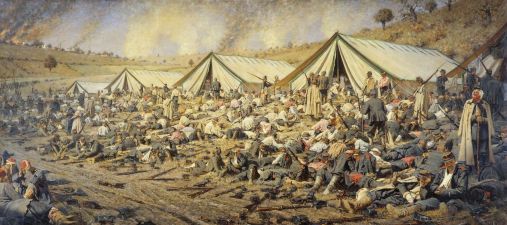
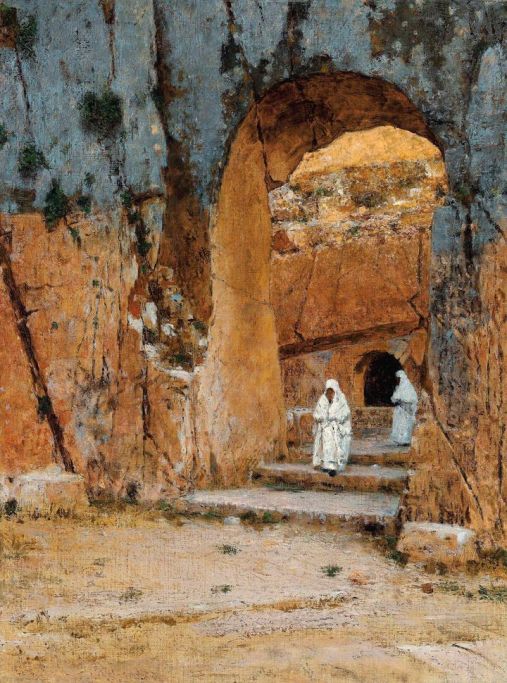
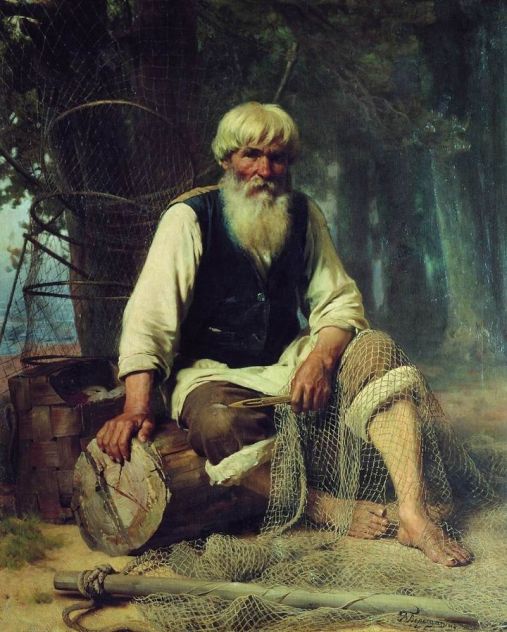
To diversify the collection of contemporary artists with the most compelling pieces, let’s turn to a well-known figure: Vasily Vereshchagin.

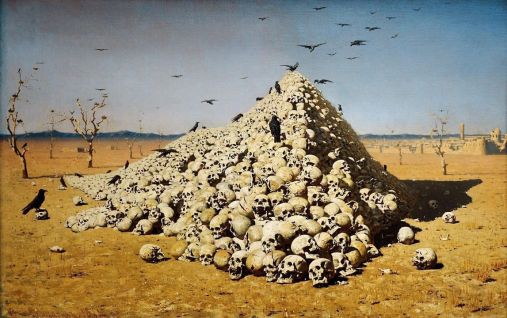
The first painting is “The Apotheosis of War, one of his most striking works. My research suggests that, contrary to its common interpretation as an anti-war manifesto—widely accepted by sources like Wikipedia—it wasn’t intended as such. Instead, the painting belongs to the “Barbarians cycle, depicting the brutality of Samarkand’s rulers and implicitly supporting Russian expansion in Central Asia.

Vereshchagin exhibited his Turkestan Series at the Crystal Palace in London. According to the English Digital Humanities Institute and several other sources, his introduction to the exhibition catalogue framed Russia’s conquest of Central Asia as a necessary civilizing mission. It was also intended to allay British doubts about who their true friends and neighbors in the region were.

Another work from the “Barbarians cycle is “Surrounded—Pursued (1872), which the artist himself later destroyed by burning it.

Vereshchagin wrote, “Whatever the cost, with full respect for law and justice, the question [of colonizing Turkestan] must be resolved without delay. This concerns not only Russia’s future in Asia, but above all the welfare of those under our rule. Frankly, they stand to benefit more from the final establishment of our authority than from a return to the old tyranny…

It seems the series was funded by Konstantin Kaufman, who oversaw the conquest and colonization of Central Asia. While I couldn’t confirm this directly, some sources suggest that the goal of exhibiting these paintings in London was to convince the British of the necessity of Russian control over Samarkand. The show, reportedly, had political undertones, aligning with ongoing negotiations over spheres of influence in the region.

Thus, while later interpretations of “The Apotheosis of War cast it as an anti-war statement, the painting originally served as a propaganda tool, reflecting the historical conflicts and imperial interests of Russia.

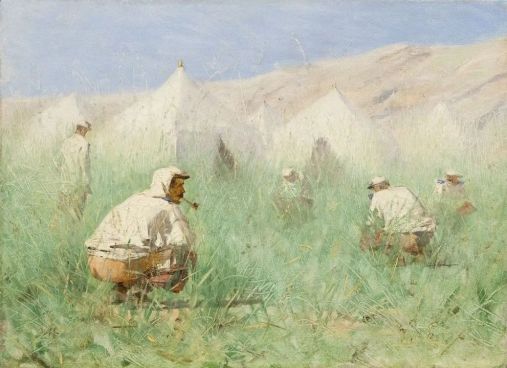
The second painting, featuring an eagle, is titled “Russian Camp in Turkestan.

In many ways, Vereshchagin resembles a photojournalist of his time—only instead of a camera, he wielded brushes, canvases, and paints.

Similar posts are grouped under the tag #artrauflikes, and the complete collection of all 121 entries can be found on beinginamerica.com under the “Art Rauf Likes section—unlike Facebook, which neglects nearly half of them

Assessing the ROI of Pursuing an American Degree After 30 | October 24 2024, 19:42

I’ll move my thoughts from the comments to the post regarding whether it’s worth pursuing a full 4-5 year degree at an American university at roughly 30 years old to earn more. I’m curious about your opinions, and maybe this will be useful to someone.

[UPDATE: someone correctly noted in the comments that one could go straight to a Master’s program, which means you could get your degree in 1-2 years. Less investment, divide all figures by 2-3]

I myself would gladly go back to school. The question is about the ROI.

I see two main reasons for obtaining an American education: networking and joining the “university graduates’ club.

Joining the club is useful so that an employer can roughly understand whether it’s worth their time to interview you. If a person has completed 4 years of an American university in person, they can at least speak English fluently, are used to working with deadlines and solving problems on their own, and perhaps can also distinguish what’s important and urgent from what is not, and possibly knows how to get along with people and speak their language. Without a U.S. education, all this might surprisingly differ in an interview, and then what, send them away after just two minutes of talking?

Networking — A typical student interacts with hundreds of people over 4 years who may potentially remember them. Besides, being from the same university as someone else is really cool. A motivated student manages to get noticed by a couple of thousand people, to varying degrees. They will of course collectively forget him, but if reminded, they might pretend to remember.

That’s it, I see no more reasons. Knowledge can be obtained otherwise.

Joining the club is necessary so that you are just considered for an interview as one of a hundred applicants. To pass it, other skills are needed, some of which are indeed obtained at university, although of course, one can learn them without university education too. For example, on the job.

Now about the ROI.

I think that a person post-30 with 10-15 years of experience after obtaining an American education will not see a salary increase sufficient to justify the costs of the education. Plus, by putting a hold on career development, he can certainly lose in “keeping up with the market”. Plus, the employer might decide to hire someone younger and more energetic. Of course, they won’t admit that this was a factor.

(It’s another matter entirely if there’s no job at all and new opportunities are hard to come by. There’s some logic in obtaining further education later in life. Also another matter if you want to be smarter and have the chance to disregard the career and money—day by day, food will come, we’ll figure it out. That’s also a valid reason.)

Here’s my calculation on ROI:

One year of study at a decent university that makes sense to add on top of a “home country’s normal one” (not at community college) costs about $25,000 at a minimum. Add another $5,000 for living and various direct educational expenses. A bachelor’s degree then costs $120,000. Since you can’t fully work while studying on campus, you’ll likely have to say goodbye to at least half-3/4 of your salary, though you’ll surely have some part-time jobs to cover the rest. Let’s assume, the salary of a recent immigrant with 20+ years of experience in the U.S. is around $150K, although I really underestimated that, plus it depends a lot on the location, but for simplicity, let’s stick with it. So, let’s say that’s another $100K per year lost. In total, education will cost nearly $600,000 over four years.

We started from the fact that a person had a $150K salary. He or she gave up 4 years of life and $600,000 to increase it by how much? Suppose this is a 30-year-old programmer. Would the same company hire them in the same position at the same time for a $100K higher salary just because they now have a 4-year bachelor’s degree compared to not having one? I personally doubt it. Would they have been hired for another job where a bachelor’s degree was absolutely necessary? Probably. Would they have been paid $100K more than at the job they had already found? That’s a big question. Let’s say they would have. Then it would take the person another six years to recoup the education costs through this higher salary. So, ten years after deciding “I’ll go study to earn more,” they break even and start earning a profit. Considering that during their studies they could potentially lose touch with the market, it might take more than 10 years. And then see my comment about age.

However, these considerations do not apply to all markets. There are licensed ones where you need specific education. If you don’t have it, you cannot proceed—you have to study. For example, if you have a medical degree from Russia, in the U.S. they won’t even let you stand next to a doctor. You need to obtain education, and fortunately, some universities take into account your existing knowledge (some do). There are many professions like this. I mainly write about IT because that’s all I know.

Exploring Nabokov’s “The Defense of Luzhin”: A Reader’s Journey | October 23 2024, 03:32

In just two days, I devoured Nabokov’s “The Defense of Luzhin.” A masterpiece! Next, I’ll be reading Lolita in English. While reading “The Defense,” I took notes. To avoid losing them, I’ll publish them here. My comments are in square brackets. Well, where they’re needed. Feel free to share, this is definitely interesting 🙂

…listening to the voice of his wife, coaxing silence to drink cocoa…

…and she had a turn of the head that hinted at possible harmony, promising true beauty, unfulfilled at the last moment…

…don’t mess up this table…

…a fire was burning, a fat man in white was shouting something, and a tower of plates ran on human legs…

…having sopped up the buldegomes, he asked if he could leave… [chatgpt told me that buldegomes are a hybrid of bullterrier and mastiffs 🙂 most likely, it’s boule de gomme – just gum]

…cut along the edge with round teeth, like petit-beurre biscuits… [petit-beurre – is a common cookie made by LU (Lefèvre-Utile)]

…music played, the small room was filled with light, blushing with a watermelon wound…

…he began to appear more frequently at literary evenings, organized by lawyers and ladies…

…a manufacturer, suffering from chronic constipation, about which he gladly spoke, a man with a single thought…

…mothballs emitted a sad, coarse smell. A doomed jacket hung in the hallway…

…A crystal ashtray settled between them, and, dipping their cigarettes into it simultaneously, their tips collided. “J’adoube,” Luzhin said amiably, straightening his bent cigarette… [j’adoube is French for “I adjust, a ritual phrase in chess, uttered to avoid a rule “if you touch a piece, you must move it. Literally, the verb adouber means “to dub [a knight]”)]

…the maid accepted Luzhin’s collapsible top hat. With a subtle smile, Luzhin demonstrated how it snaps shut… [this is a type of cylindrical hat, “chapeau-claque”. Note here ‘claque’ from claquer – to snap. Apparently, it’s not just any cylinder, but a collapsible cylinder. Google Opera hat, it’s the same thing]

…Luzhin in a dishabille, exuding simian passion, and her stubborn, cold, cold daughter… [apparently, dishabille isn’t just a state, but light, simple, home clothing worn after getting out of bed, not donned in front of guests]

…to the left of the corridor was a bathroom, beyond it, a maid’s room… [maid’s room — is a room for the servants]

…”such future is unknown, but sometimes it acquires a special opacity, as if another force joins the natural secrecy of fate, spreading this resilient mist from which thought bounces off…”

…a print hung on the wall… [wall-space — is a part of a wall between windows, door openings]

…the mercury, influenced by the environment, fell lower and lower… [useful if you suddenly feel like discussing the weather]

…he drew his mother-in-law, and she was offended; drew his wife in profile, and she said that if she looked like that, he should not have married her; but her father’s high starched collar turned out very well… [I’m drawing my wife and daughter right now]

…Having abandoned the typewriter, geography, drawing, now knowing that all this was part of a combination, an intricate repetition of moves recorded in childhood…

…the rooms dimmed as if the parts of a telescope had slid together, and Luzhin found himself in a bright corridor… In all three rooms, unfolded like a telescope, it was very bright.. [not very clear what this telescope is about. Most likely, Luzhin perceives the rooms as if they open and close one after another, similar to how sections of a spotting scope or telescope unfold. In one position, he sees one set of rooms, in another, they “shift,” disappear, and he finds himself in a new place.]

…on him was a shaky sector of silken gloss, like a moonlit boundary on the sea… [Gralitsa – turns out, it’s the reflection on the sea of sunlight or moonlight “by a column”]

…the panel slid, rose at a right angle, and swung back.. three people remained on the panel… [the German ‘Panel’ means sidewalk, referring to an event in Berlin. Separately, this and five pages back and forth beautiful descriptions of the brain’s suffering after a bar]

…”I knew one Luzhin,” said the gentleman slowly, squinting (because human memory is short-sighted)…

…from a store of talking and playing devices came chilly music, and someone closed the door so the music wouldn’t catch a cold…

…his fiancee brought him various casual light-hearted books — works by Gallic novelists…

…“But not in one day. There is another establishment. There we will hang on the wall for two weeks, and during this time, your wife will come from Palermo, look at the names, and say: it can’t be, Luzhin is mine … [Interesting. It seems that registries used to give two weeks to check feelings, like now a month is given for divorce]

…During those two weeks, while their names were displayed for all to see, – on the groom’s address, the bride’s address, proposals from various vigilant firms began arriving: coaches for weddings and funerals (with an image of a coach drawn by a pair of galloping horses), tuxedos for hire, top hats, furniture, wine, rental halls, pharmacy items. Luzhin diligently examined the illustrated price lists and stored them, amazed why the bride was so disdainful towards all these curious offers. There were offers of another kind. … [how similar this is to what happens today, if someone dies…]

…the clerk changed his jacket for a worn coat and pronounced the marriage sentence…

…And he remembered how … the word “fascha sounded in the tired priest’s mouth [I couldn’t figure out what this fascha was]

…she also fell silent, and started rummaging in her bag, painfully searching for a topic of conversation and finding only a broken comb…

…a manner, borrowed from a diplomat who spoke very gracefully “skoúl” [refers to the Scandinavian drinking toast skål – “cheers!”. Without googling, it’s impossible to know]

…“The window was empty, but a minute later, the darkness behind the front door parted, and a lit staircase appeared through the glass, marble up to the first landing, and before this newly born staircase could fully petrify, quick female steps appeared on it… Meanwhile, the staircase continued to give birth to people…

…and to say, she reasoned, our troubled times throw us off our game, and it’s understandable that from time to time, one turns to the green comforter… [green comforter — is likely green wine, that is, alcohol spiced with herbs, hops, St. John’s wort]

…you’ll be with him in a yellow house (…) in a yellow or blue. [yellow house — asylum, they were painted yellow. ]

…ageing actor, with a face, groped by many roles…

…at the top, the square night blackened with a mirrored sheen…

.. to hand over the seal coat.. [not from cats, precisely, from seals, but not those. It’s from sea lions]

…a gentle optical illusion occurred: he returned to life not from the side he had left, and the task of distributing his memories was taken over by that amazing happiness which first met him…

…well then, goodbye, – as they say in Soviet… [“Goodbye! as an independent farewell sign appears around the time of World War I and does not immediately become customary. Even the Soviet Explanatory Dictionary of Ushakov, published in the latter half of the 1930s, marks this meaning as “familiar. Let alone the émigrés: for them, the standalone “goodbye was a clear and very unpleasant Sovietism. – Dmitry Sichinava]

…I’ll give him a wafer, – she said. – That’s that.” The wafer didn’t work… [Wafer — this item was used in church rituals, for letters and in medicine. In ancient times, it referred to small ritual breads, with which Catholics and Protestants communed. Wafers also named thin shells made of starch dough or gelatin, in which a medicinal compound was placed, and medicines in this form. Postal wafers were circles of adhesive mass or glued paper. They sealed envelopes and stamped documents.]

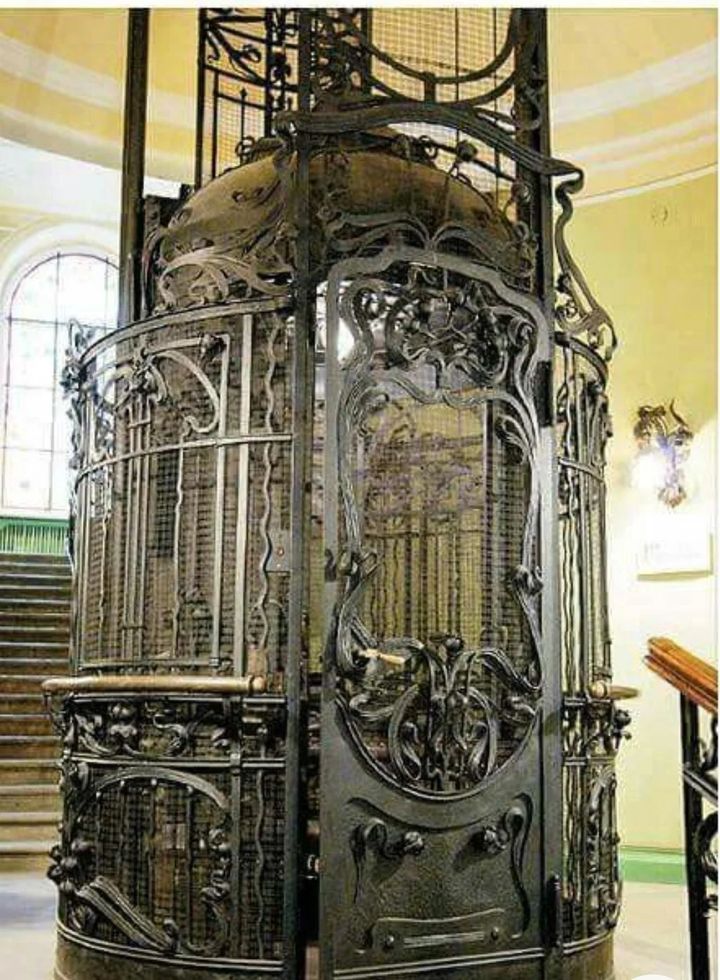
…he recalled how, in a Petersburg house, her asthmatic bulk preferred the elevator, old-fashioned, water-driven, which the concierge operated with a lever on the wall of the vestibule.. [interesting about water- and steam-powered elevators in Petersburg. I didn’t know about that. Attaching a picture]

…a puppet engineer, too large for the locomotive and therefore placed in the tender [tender — is a special wagon that is attached to a locomotive and designed to store fuel (coal or wood) and water, necessary for the locomotive’s operation]

…from the little Luzhin during that first school winter, tenderly smelled of garlic from arsenic injections, prescribed by the doctor. [interesting that even children were prescribed. This was probably “Duplex” — a solution of strychnine with arsenic for injections. A very popular remedy in the past, especially for asthenias, neuroses, impotence, and “anemia”]

…spots of light, scattered along the paths of the garden at the estate, merged into one warm, whole glow [estate — a manor house in the Baltic states, Latvian muiža, for example]

Exploring Konstantin Dvoretsky: Dynamic Paintings and Teaching at Max the Mutt | October 22 2024, 16:25

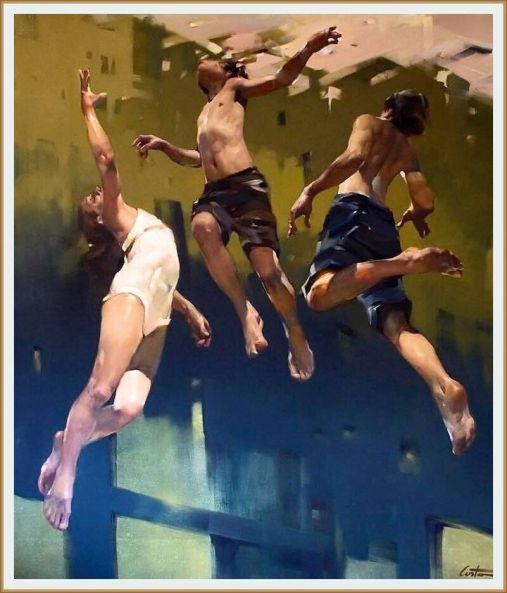
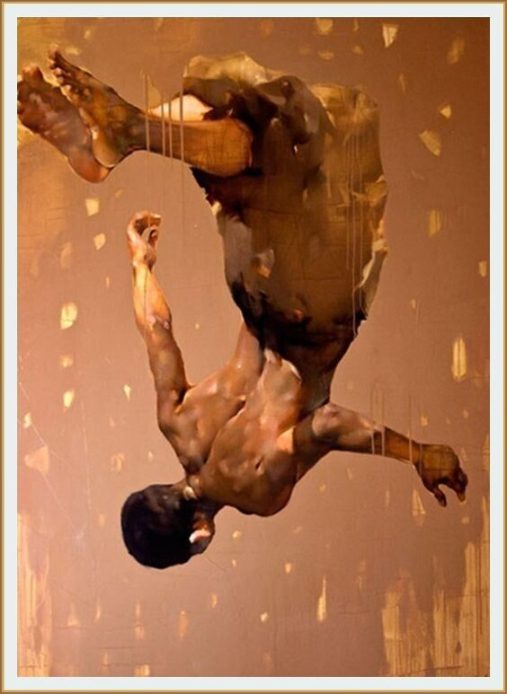
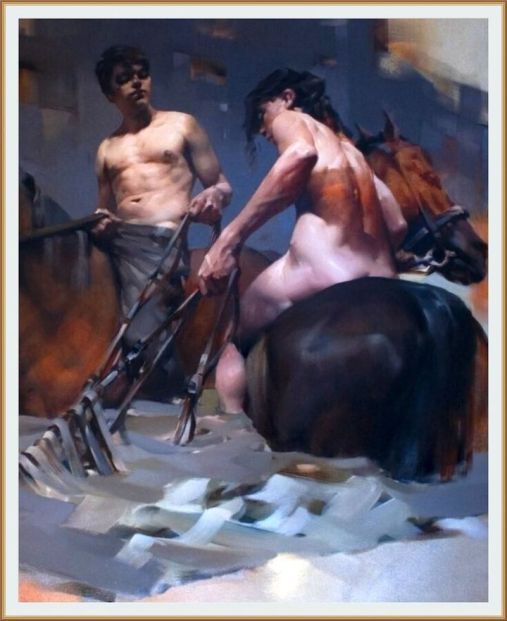
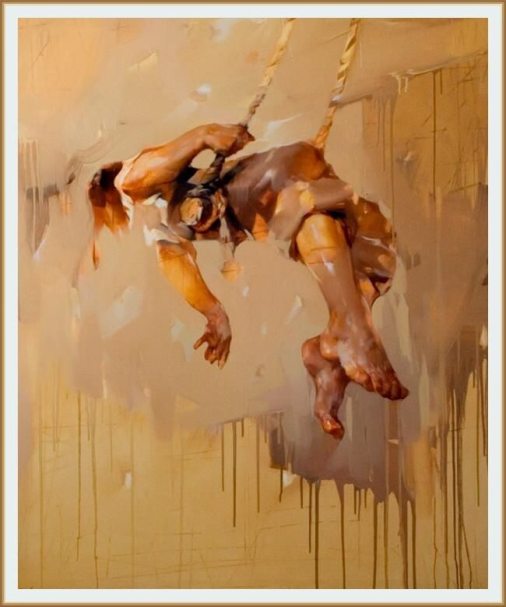
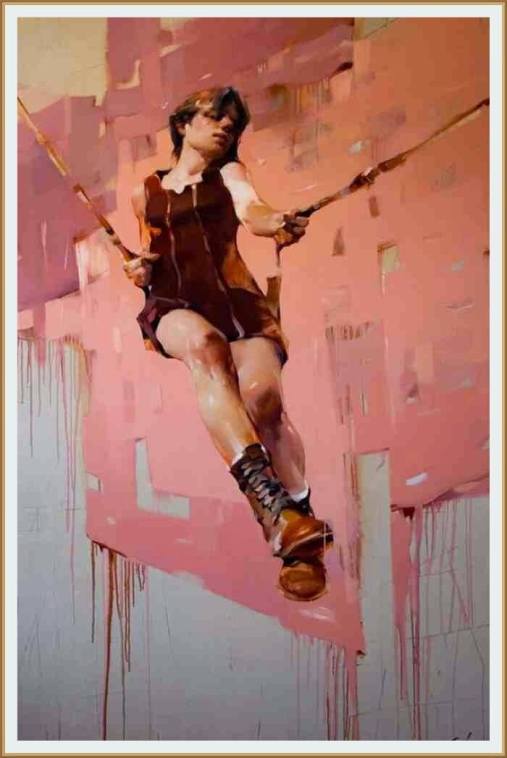
The Canadian artist of Russian origin, Konstantin Dvoretsky (Costa Dvorezky), resides in Toronto and teaches at Max the Mutt. His paintings are rarely static—his characters seem eager to escape the canvas and leap toward the viewer. “I’ve been creating art since early childhood; it’s a great way to escape reality, he says.

Posts like these are grouped under the hashtag #artrauflikes, and all 120 of them can be found in the “Art Rauf Likes section on beinginamerica.com—unlike Facebook, which overlooks nearly half.

Exploring Symbolism and Imagery in Nabokov’s “The Defense of Luzhin” | October 22 2024, 00:29

I am currently reading Nabokov’s “The Defense of Luzhin”, and in the preface by the author, there is a sentence of 269 words.

“Here, by the way, to save time and effort for the sworn reviewers – and generally for people who read with moving lips and from whom one cannot expect to engage with a novel devoid of dialogues, when so much can be gleaned from its preface – I would like to draw their attention to the first occurrence, already in the eleventh chapter, of the motif of matte (‘as if frosted’) window glass (connected with suicide or rather, a self-administered checkmate by Luzhin); or to how touchingly my gloomy grandmaster recalls his travels for professional needs: not in the form of sunny, colorful luggage labels or slides of a magic lantern, but in the form of tiled tiles in different hotel baths and toilets – such as, for example, the floor in white and blue squares, where, from the height of his throne, he found and tested imagined continuations of a tournament game begun; or irritably asymmetrical – called ‘agate’ in sale – pattern, in which three harlequin-vivid colors zigzag – like a knight’s move – here and there interrupting the neutral tone properly mapped out in the rest of the laid linoleum, spreading between our Rodin’s ‘Thinker’ and the door; or the large glossy-black and yellow rectangles with ‘h’ line, painfully cut by the ochre vertical of a hot water pipe; or that luxurious water closet, in the delightful marble mosaic of which he recognized a vague, but fully preserved outline of exactly the position that, propping his chin with his fist, he pondered over one night many years ago.”

Ricardo Jose Mujica: A Portrait of Controversy and Positivity | October 21 2024, 13:50

Today, I present the American artist of Cuban origin, Ricardo Jose Mujica (b. 1961). Born and residing in New York City.

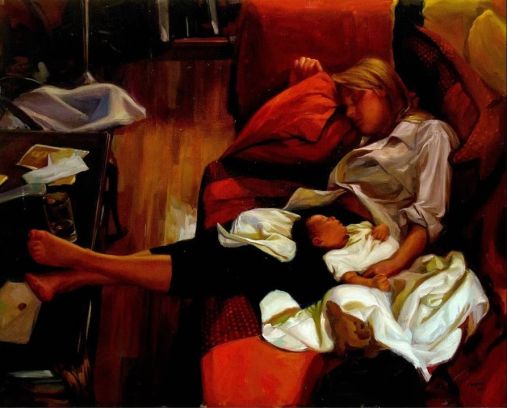
The first painting in the gallery is Multitasking (2012), a portrait of the artist’s wife and child. In the same year, Ricardo shared it on Facebook (having sold the canvas itself for next to nothing). As he mentions on his website, for many years since, he’s been receiving threats from angry women convinced that he had somehow obtained their photograph without consent, demanding either compensation or immediate removal. Meanwhile, many men, baffled by how and where Ricardo might have seen their wives naked, have threatened to break his legs.

Although his body of work isn’t extensive, his paintings are soft, kind, and filled with positivity.

Posts like these are grouped under the tag #artrauflikes, and all 119 works can be found in the “Art Rauf Likes section on beinginamerica.com—unlike Facebook, which either forgets or ignores nearly half of them.

Exploring the “Solnyshko”: A Glimpse into Unorthodox Soviet Physiotherapy Practices | October 20 2024, 20:20

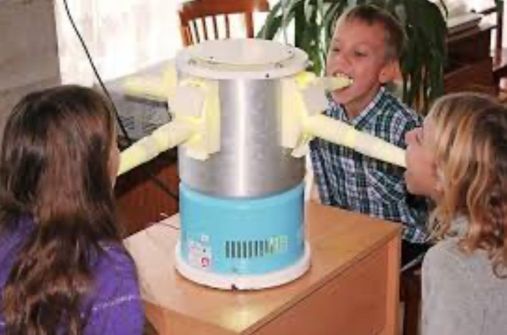
I just came across a device called “Solnyshko” that is still in use and available for sale in Russia. It commonly appears in memes about the first children’s hookah. A while back, I read about Soviet physiotherapy, which essentially differed from Western practices in that it involved testing all sorts of wild ideas on people without the usual processes required for legitimate medical devices.

So, what exactly is this “Solnyshko”? You can Google it by “OUFnu (UHN-1)”. Inside, there’s a DRT 240 lamp – a high-pressure mercury arc tube lamp used in sterilizers. The 240 in the name stands for 240 nm, which refers to the harsh UV radiation (100-280 nm). The device directs UV-C radiation towards the mucous membrane inside the mouth. The mucous membrane (excluding the eyes), as known, is not protected from UV rays (unlike skin and eyes), and here it is exposed to intense UV-C radiation, which, under normal circumstances without ozone holes, doesn’t even reach the Earth’s surface. Essentially, “treatment” is achieved by burning off the mucous membrane along with bacteria and viruses. Sterilizer radiation simply kills cells and, like any UV-C exposure, is proven to promote the development of cancer.

How did we ever survive all this in childhood 🙂 I just googled and it turns out that the arsenal of children’s health resorts also included UHF-therapy (ultra-high frequency electromagnetic fields), VLOK (intravascular laser blood irradiation), and electrophoresis (this is a type of drug delivery in a non-invasive way — without needles! — directly to the exact spot where it hurts, though it doesn’t work at all, but at least it doesn’t cause harm).

It’s madness overall, and if you search for the Solnyshko irradiator, for instance, you’ll find it in hundreds of places.