Neil Carroll | October 12 2024, 22:01

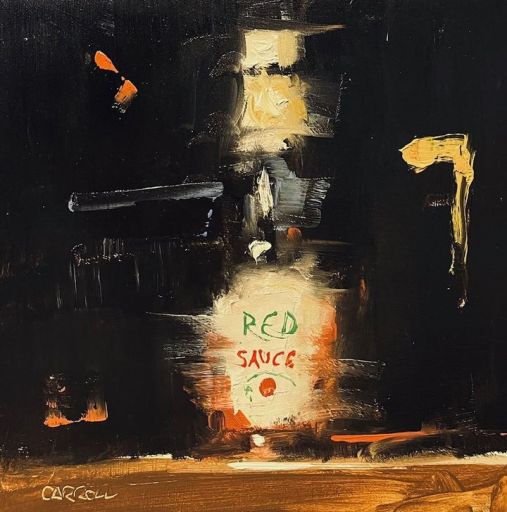
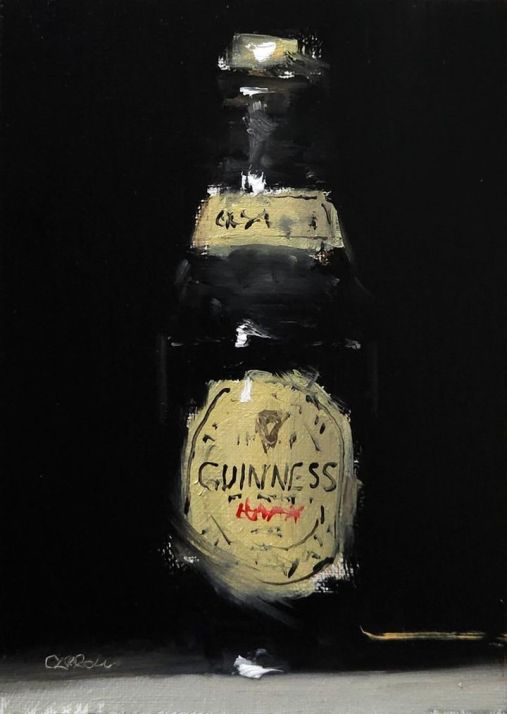
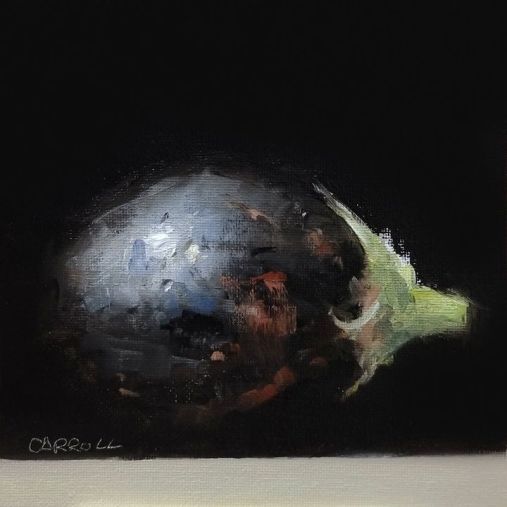
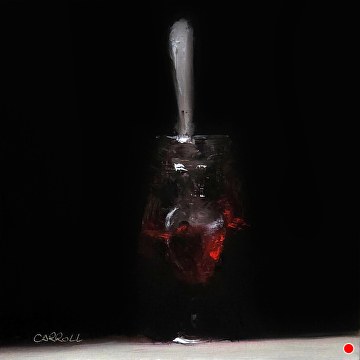
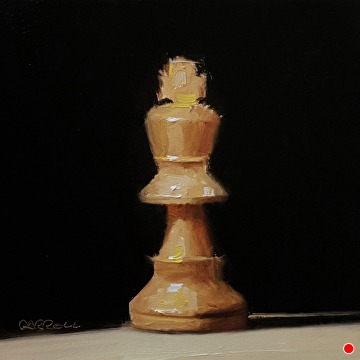
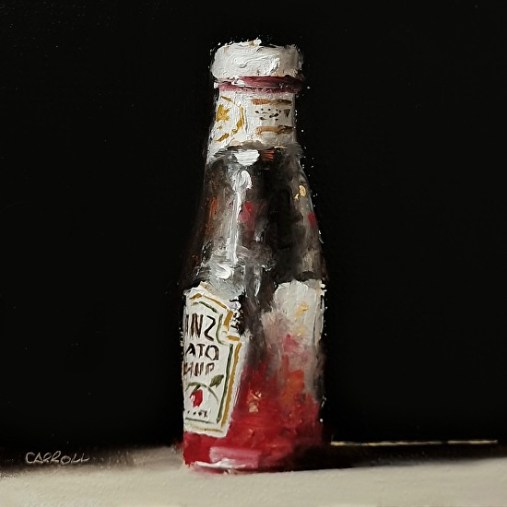
Today, I’m sharing these thematically simple paintings by British artist Neil Carroll. All of them depict everyday kitchen objects against a dark background. Many of them are quick sketches that likely didn’t take more than a few hours to complete (most canvases are about 6″ wide, give or take). Carroll has turned this into a steady output, and online, you can find hundreds of similar yet distinct paintings, all in a consistent style.

But what’s so special about a painting of an apple or a lemon with side lighting on a dark background? It’s practically a student sketch—art school students have piles of these gathering dust in the back of their closets. Yet once you gather at least a dozen of these uniform paintings, completed in a consistent style, suddenly it becomes “real” art, and the artist is lauded for carving out their niche. The more they create, the more firmly they establish themselves in that niche.

It’s a straightforward formula: do what you enjoy and remain consistent in your style and approach.

What’s also captivating about such simple objects is observing how the artist distinguishes between what’s significant and what’s not. I’ve gleaned a lot of intriguing insights and now I’m eager to try my hand at it having studied Carroll’s techniques. So, expect some ketchup paintings from me soon.

Posts like this are grouped under the hashtag #artrauflikes, and all 117 of them can be found on beinginamerica.com in the “Art Rauf Likes” section (unlike Facebook, which forgets—or neglects—almost half).

The Surprising Origins of the Word “Crap” | October 12 2024, 13:41

Here is the translated text with the style and HTML markup preserved:

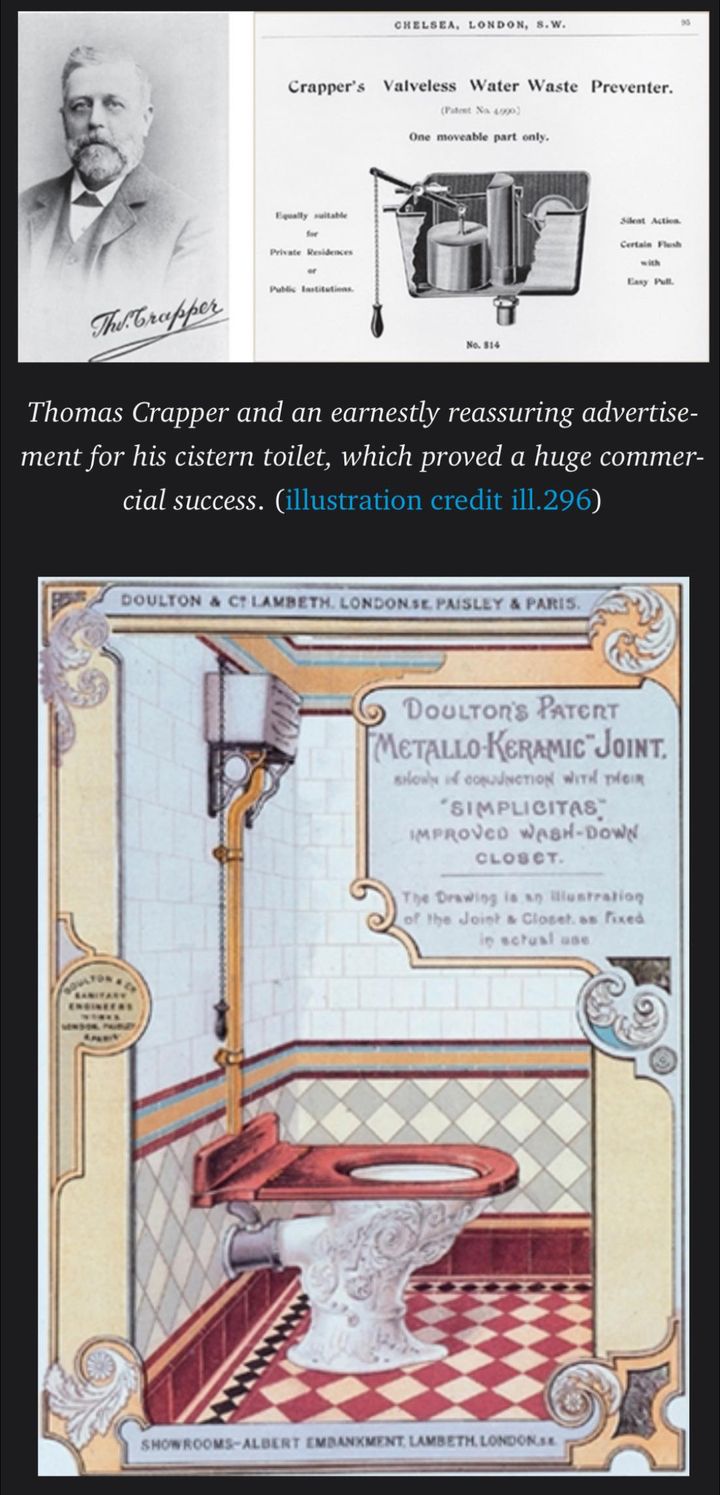
Interestingly, the first properly functioning toilet flush device was invented by a dude named Crapper. Moreover, the meaning of the word crap is actually due to the fact that every tank was branded T. Crapper & Co. Sanitary Engineers. Joseph-Ignace Guillotin, Rudolf Diesel, Étienne de Silhouette, Louis Pasteur, Pierre de Coubertin, and others are quietly envious.

Evolution of Personal Tech: A Nostalgic Journey Through Mobile Phones and PDAs | October 12 2024, 01:49

Do you remember your first mobile phones and PDAs? I wasn’t exactly making a lot of money, but somehow I managed to buy them.

My first was a Philips Aeon. 1999. Beeline, DAMPS. This little brick was eating up twenty-five cents per minute of talk. I was spending around 600 rubles a month, earning 1200 at the time. It had a green glowing screen. For lacking a mobile communication license, I ended up in a cell with prostitutes one night, arrested by the cops. This happened on my way to the store for some food from the office where I was overnighting, as it was farther to go home. I wasn’t released until I paid 100 rubles.

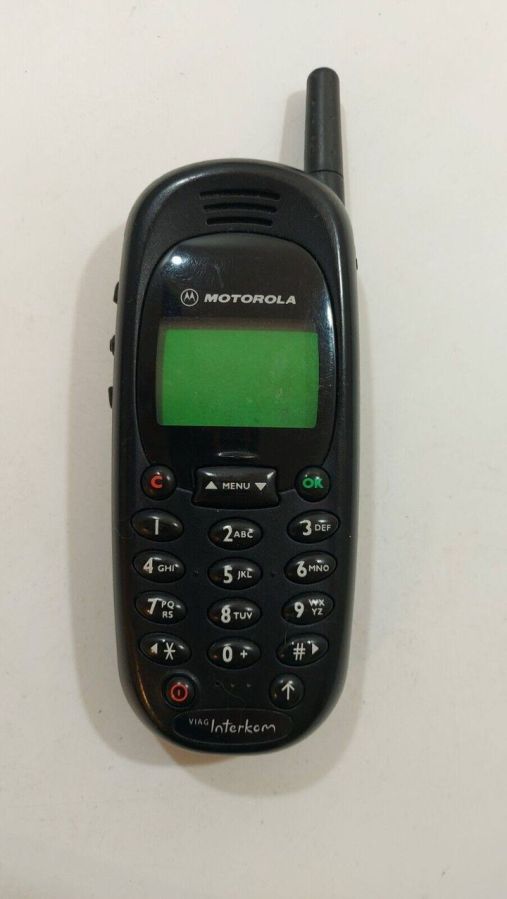
After that came the Motorola CD930. Heavy and indestructible.

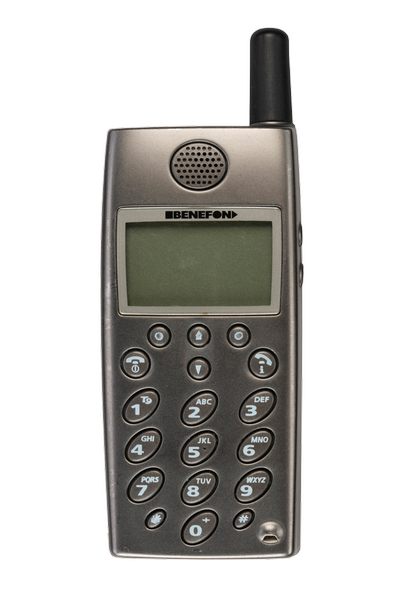
Next was the metallic Benefon Q. Stylish, beautiful, golden. It even had a browser 🙂 WAP.

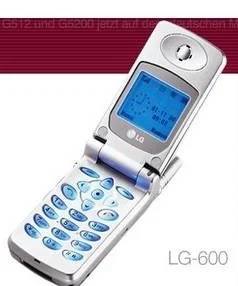
Then there was the LG 600 flip phone. With two screens, one on the lid and another inside. It had a great Korean joke — 70 characters in the address book for a number, and 10, I think, for a name.

Then came the chic Siemens S65. This one had a color screen.

After that was the wonderful Sony Ericsson K790i. It was the most comfortable phone as a phone. If only the buttons weren’t so close together.

Then came the era of touchscreens. I got a Glofiish X500+ (E-Ten). This was already a PDA with a stylus and GPS on Windows CE. And it had GPS!

Among PDAs, I had two Toshibas – e310 and e740. The latter could connect to the Internet via WiFi.

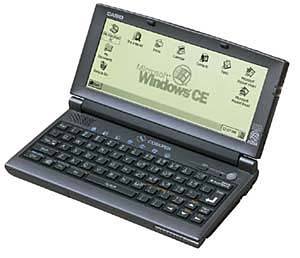
And before all that was a Casio Cassiopeia A-20. It was a precursor to laptops. It had Excel installed.

Among Android devices, I had the Samsung Galaxy Note II. There was also a Samsung Note 4.. With a fingerprint scanner, and the resolution back then was impressive. In 2015

Among tablets, there was the Samsung Galaxy Note 10.1, then iPads.

Then began the era of iPhones. I missed the first iPhone, the second – 3GS I drowned in tea. Then I bought an iPhone4.

Well, then came more iPhones. It’s boring to list them all. Probably updated every generation, now iPhone 15 Pro Max.

And before mobile communications, I spent a couple of years with a Midland Alan 42 radio station. It could be used as a phone. You had to call a special lady on 27MHz who would “connect” you to a telephone subscriber. I mean, she dialed the number and held the radio station to the phone. And vice versa. If they called her, she would shout to reach me. I paid monthly for this service.

And around that time, I also had a Motorola pager.

Cameras… Among digital ones there was a Canon PowerShot Pro 70, Sony Cyber-shot DSC F505, for a compact camera Canon PowerShot SD630, then Canon 40d, and I’m still using a Canon 6d

The Evolution of Sanitary Terms: From Toiletries to Restrooms | October 12 2024, 00:15

Finishing Bill Bryson’s At Home, I discovered that originally, around the year 1540, it was a word for fabric, a diminutive of “toile,” which is still used to describe a type of linen. Then, it came to denote fabric used for a dressing table. After that, the items on a dressing table (hence “toiletries”). Subsequently, the word came to mean the dressing table itself, then the process of dressing, then receiving guests while dressing, then the room for dressing, then any personal room next to the bedroom, then a room used for sanitary purposes, and, finally, the toilet itself. This explains why “eau de toilette” in English and French can mean both something women enjoy applying to their face and simultaneously “toilet water.”

Interesting note on the word “wardrobe,” exactly as garderobe. It was a combination of “guard” (“to keep”) and “robe” (“clothing”) and initially meant a storeroom, then any personal room, briefly (and briefly only) a bedroom, and finally, a toilet.

The “water closet” (WC) appeared in 1755 and originally designated a place where royal enemas were performed. From 1770, the French called the home toilet “un lieu à l’anglaise” (“an English place”), which might explain the origin of the English word “loo.” Online sources say that loo comes from “gardez l’eau,” meaning “watch out for the water,” as it was shouted before emptying chamber pots out the window.

Here in the USA, toilets are called restrooms—a true Americanism. I just googled that in the first half of the 20th century, many American workplaces and public buildings had rooms with chairs or sofas that employees or clients could use to take a break, sit down, and rest. In some jurisdictions, laws were passed requiring these restrooms to also have toilet facilities. In everyday life, people who didn’t have the time to sit on a sofa and relax still entered the restroom to use the toilet. Over time, the expression “I’m going to the restroom” became synonymous with using the toilet or sinks, rather than chairs and sofas. Even as rooms with sofas became less common, the phrase with its new meaning persisted. Thus, a room with toilet facilities came to be called a “restroom.”

Of course, we can also say bathroom, without, of course, expecting any actual baths there.

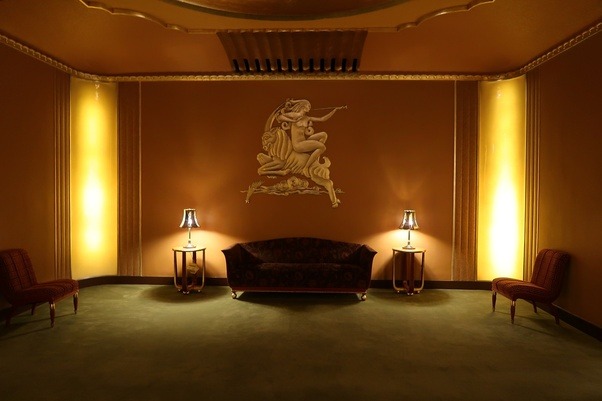
The photo — a restroom from the 1930s.

Sewing Struggles: A DIY Armrest Cover Saga | October 11 2024, 17:47

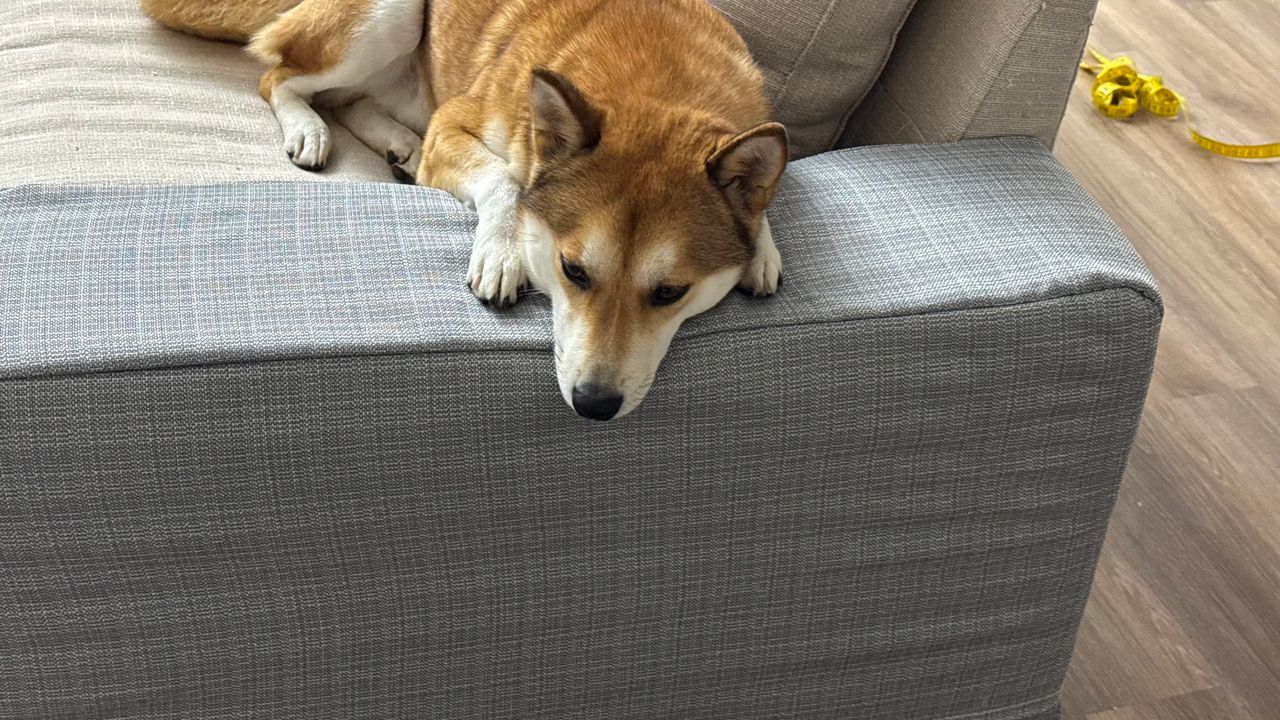
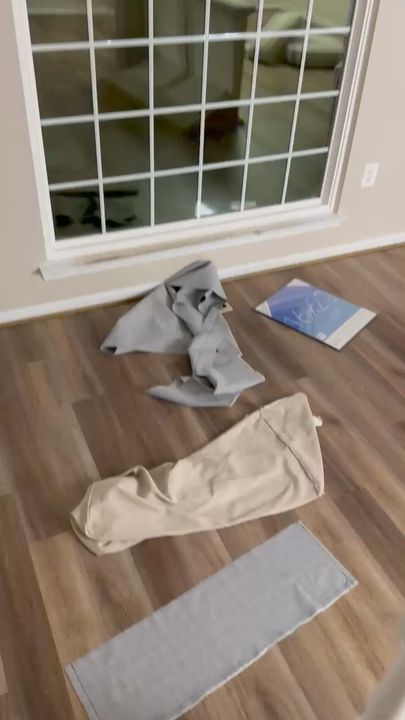
ME AND THE SEWING MACHINE. Yuki owns an Ikea sofa. I occasionally read on it too, but essentially, the sofa is truly his. He’s very meticulous with it (as with everything, really); we wash the covers, but over time, they began to look less presentable, and I decided instead of buying a new set for $99, I’d at least sew some armrest covers. So, it’s going to be two-tone.

Yesterday, I hopped on my scooter and zipped over to Hobby Lobby. Picked up 2 yards of fabric for 20 bucks.

Look, this isn’t my first rodeo, but I hate it every single time. How do seamstresses manage to love this kind of work? It took me 4 hours just to make one armrest cover. I’m definitely not continuing and am now switching back to the original and ordering a set.

This whole endeavor is an engineering feat, no simpler than programming, I swear. First, you have to reverse-engineer the reference item. That’s a major challenge, especially if you don’t want to cut up the item. In this case, it’s just a cover, which is simpler than, say, shorts. So, it became clear that I needed three pieces of fabric, 45×88 cm, 178×23 cm, and 30×88 cm, plus each piece must have at least 2 cm allowance on each side.

The first challenge is just drafting all of this on the fabric in order to cut it later. Especially if the fabric has a pattern. Overall, millimeter precision isn’t necessary, but what’s needed is a) straightness of the lines b) the same angle with the fabric fibers throughout the straight lines, ideally at a strict 0 or 90 degrees. This is all quite complicated to achieve, especially if you need to cut a piece 188 cm long. You spread it out on the floor, and if any section of the fabric shifts by a couple of millimeters, then there you have it, the line will be crooked. So ideally, you need to secure/stretch the fabric and then draw along it.

Then there’s the separate issue with the fabric itself. First, if you follow the fibers with your eyes, you realize the fabric, or the pattern, does indeed break up periodically, or zigzags, and you can’t see past ten centimeters. Second, the fabric might stretch. Besides that, when you try to smooth something out, it slightly increases or decreases in different places, so that straight lines aren’t straight anymore. After washing, everything will probably return, but it’s bothersome nonetheless.

Separately, what you draw with. Whatever draws on the fabric needs to be erasable afterward and thin enough so that the blade doesn’t wander. A marker might not work. Okay, if you’re drawing on the inner part, it might be okay, but it won’t work with transparent and semi-transparent fabrics.

Next, what to cut with. Scissors obviously don’t work, unless you use them as a knife, not as scissors. There is a special knife. Pretty convenient, I must say.

So, we cut it. That’s half the job, but it takes a lot of time. The rest is technically simple – sewing these pieces together. But that’s if it’s just simple sewing. Any cheapest Chinese product is five times more complex than this “simple sewing.” At least, you need an overlocker (I have one). Plus, you need perfectly straight seams, and for that, you need more skill, as at slow speeds they don’t come out right (my skill is so-so, but if not rushed, generally what’s needed is achieved).

In general, the hassle with this is such that it’s easier to give up. Ultimately, I’ll be ordering a new set. If I ever think of sitting down at the sewing machine again, please remind me that there are far more interesting things in the world, and I definitely underestimated something.

But on the plus side – I can now say that, overall, superficially, I understand how it all works. Now I’d be interested in seeing how this is automated. How they manage to produce shirts for a dollar — it’s definitely not just because the Vietnamese in the factory are working for food. Surely there’s a lot of automation involved, where problems mentioned above were solved ages ago.

Zoey Frank | October 11 2024, 14:09

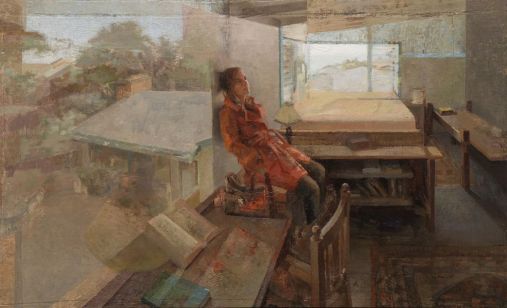
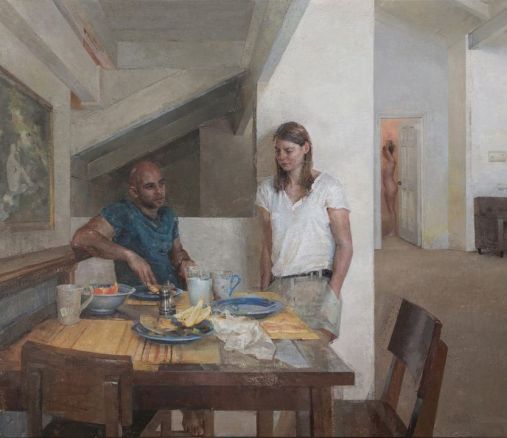
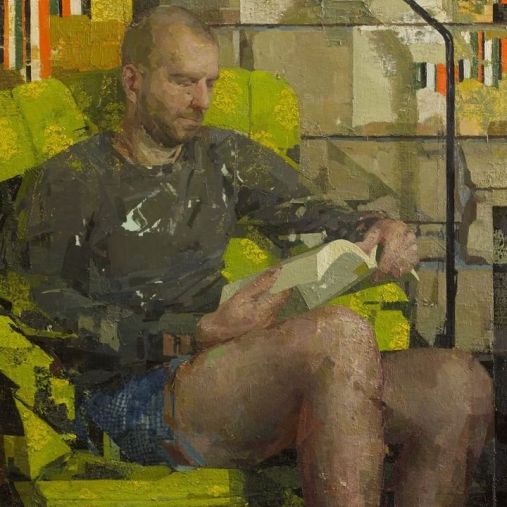
Wow, what an amazing artist today – Zoey Frank from the USA. Her works are incredibly unique, blending classical technique with hints of contemporary art — exactly in the proportion I love. Some pieces lean more into surrealism, others are dominated by abstraction, while a few are purely classical, reminiscent of the old masters. Yet almost none can be labeled as “just another painting.”

Posts like this are grouped under the tag #artrauflikes, and all 116 can be found in the “Art Rauf Likes” section on beinginamerica.com (unlike Facebook, which tends to forget or ignore nearly half of them).

Exploring the Vast World of Clothing Terms | October 10 2024, 14:24

In “Monday Begins on Saturday,” I came across the word “culotte” and realized that I have a very vague idea of various clothing names in Russian, except for the most basic ones.

This is pretty much a whole new language for me. I don’t know, maybe those who go shopping for clothes have a better grasp of it.

Great source with pictures: https://lookso.ru/vidy-odezhdy/.

Following this link, you’ll encounter Balmacaan, Bushlat, Duster, Duffle coat, Sheepskin coat, Inverness, Cape, Covercoat, Cocoon, Coper, Crombie, Manto, Ulster, Pardessus, Polo, Poncho, Puffer, Raglan, Riding coat, Swinger, Trench coat, Chesterfield, Greatcoat, Hubertus, Raincoat, Mackintosh, Coat-robe, Trench, Anorak, Blouson, Bomber, Leather jacket, Cape jacket, Norfolk, Parka, Spencer, Blazer, Jumper, Cardigan, Kittel, Top, Afghan, Baggy, Bamster, Bananas, Bermudas, Boyfriends, Breeches, Galife, Gaucho, Jeans, Joggers, Pipers, Capri, Cargo, Carrot, Flared, Culottes, Leggings, Palazzo, Skinny, Slacks, Tubes, Chinos, Churidar, Shalwar, Shorts, Bodysuit, Boxers, Briefs, Bustier, Combidress, Negligee, Peignoir, Pajamas, Slip, Thong, Trunks.

No need to read the text below carefully because it’s pretty much impossible to understand.

Here’s an example of what I didn’t know:

I wouldn’t have been able to explain what a tunic, pashmina, cape, cardigan, parka, trench, bomber, or anorak is even though a Google search shows that all these terms are used.

Tunic – a long or short women’s blouse or dress, I don’t know how else to define it.

Pashmina – a wide scarf often used as a shoulder wrap.

Cardigan – a knitted sweater with buttons or without any fastenings.

Parka – a long jacket with a hood, often insulated.

Trench – a classic long coat with a belt and double-breasted buttoning, with a lapel collar.

Bomber – a short jacket with elastic at the waist and sleeves.

Anorak – a lightweight hooded jacket that fastens only halfway up.

Here are just a few coats from the list above:

Balmacaan — a single-breasted long coat model with raglan sleeves and a placket completely hiding the buttons.

Bushlat — a shortened double-breasted coat adorned with two rows of buttons and a turned-down English collar with lapels

Duster — a women’s lightweight, long, loose-fitting coat model with a belt instead of fastenings, worn like a robe

Duffle Coat — informal single-breasted coat of straight cut above the knee. Recognizable attributes of the model: patch pockets, hood, and toggle closures instead of traditional buttons.

Inverness — a vintage-style elongated coat with loose fit and sleeves covered with a cape.

Cape – a sleeveless cloak that fastens at the throat.

Covercoat — a single-breasted coat made from a namesake dense fabric. Recognizable for its pointed lapels and traditional decoration of four or five parallel rows of stitching at the bottom of the garment and on the sleeve edges.

Cocoon — a model of men’s or women’s oversized coat that narrows towards the bottom and broadens at the waist with dropped shoulders and a rounded silhouette.

But I started with culottes. It’s somewhat historical, but a Google search shows that not always, and there’s plenty of such items in marketplaces. So, there are certainly loads of unknown words to me. Starting with short-pants

Culotte – short or wide knee-length trousers. Nowadays, these are wide-legged women’s trousers, usually longer than the knee.

Coper — a long leather coat with a belt, visually resembling a raincoat. Most popular in men’s wardrobe, but women’s models are also available.

Manto — a spacious trapezoidal coat-wrap with no through fastenings, made of fur or with corresponding trim.

Capri are essentially the same as trousers, the difference being only that their length reaches the mid-calfement.hasMore …

Tech Tool Shortcomings: Seeking Simple Solutions for Mac Users | October 09 2024, 16:13

So by the way, when I was cutting out this piece, I realized that even with my experience working on Macs and online, I can’t find two simple tools: 1) to download just a segment from YouTube. Not the whole multi-hour video, just from 9:30 to 9:45. Somehow no one can do this, they all offer to download the whole thing. 2) Screen recording with system sounds, not microphone sounds. Sounds from the microphone are recorded, but not the system sounds. I know that maybe you could use Zoom and turn on the recording there. But that seems like a rather convoluted way to do it.

In short, if anyone wants some fame (not sure about the money), write a utility for Macs that records a screen or screen segment with subsequent crop/trim, and a tool to download video segments from video hosting services like YT/VK as video files.

It turned out easier for me to download an hour-long video and trim it using QuickTime.

Exploring Milk as an Alternative to Water in Espresso Making | October 08 2024, 20:33

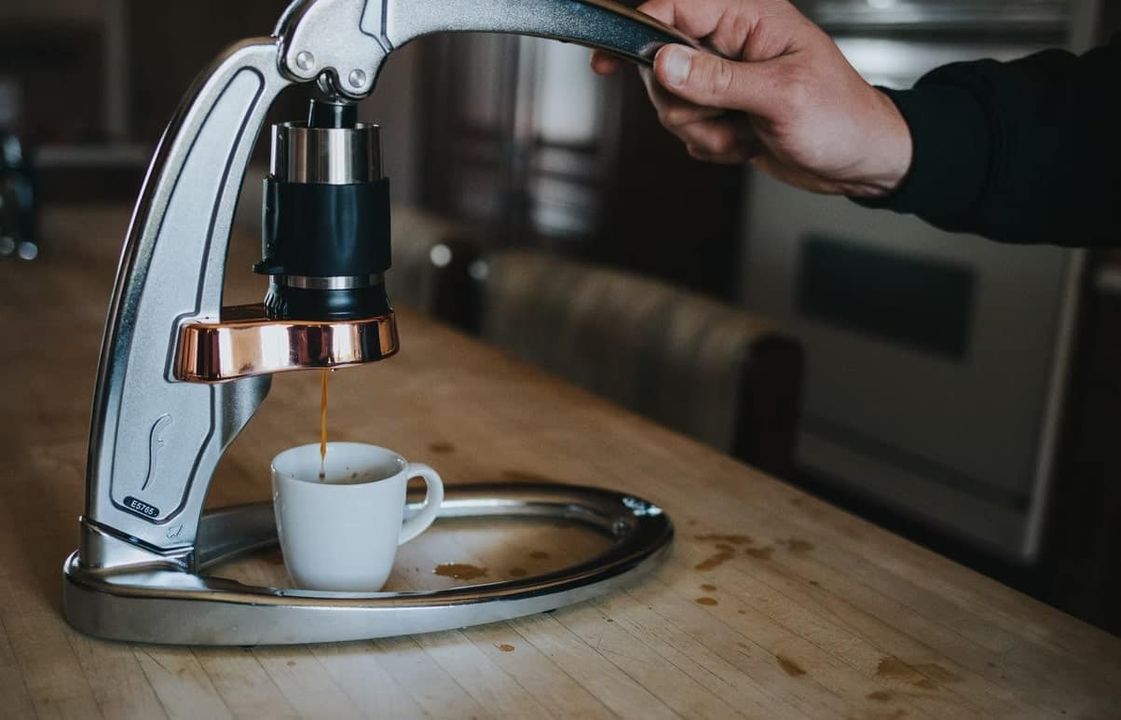
I wonder, what if instead of water we used milk to make espresso?

(From the image it seems unclear to many – there is no heating, no way for it to burn. Plus, there are different kinds of milk – like oat milk, for example)