
sketched in a hurry. that’s our Masha who’s come.
haven’t picked up brushes for a while, mustn’t give it up

sketched in a hurry. that’s our Masha who’s come.
haven’t picked up brushes for a while, mustn’t give it up
Today, I’m sharing the works of the American artist Bryan Mark Taylor. His paintings are incredibly diverse, with a lot of plein air pieces and quick impressionistic sketches. The only thing missing is people—there aren’t any, in any form, anywhere.
I firmly believe that if a person has the talent to capture the fleeting beauty of nature or cities or objects of any kind —whether through photography or landscape painting—then they should seize the opportunity to travel. Otherwise, that talent risks being locked away. Of course, you could argue, “And what about Andrew Wyeth, who spent his whole life in Pennsylvania and Maine, painting his neighbors on the porch?” Probably, Wyeth is the exception, he is the King anyway. A better example is John Singer Sargent, an American of the 19th century who traveled across half of Europe.
Bryan Mark Taylor is another excellent example. He’s just a year older than me, so the most exciting work is still ahead!
Posts like this are grouped under the hashtag #artrauflikes, and you can find all 115 posts in the “Art Rauf Likes” section on beinginamerica.com (unlike Facebook, which tends to forget—or neglect—nearly half of them)









This picture is often mentioned in the same breath as “Who does Kiss harmonize with?”, “victims of pseudo-music”, and “Liverpool ‘idols’ shearing sheep”. The text is of terrible quality, unreadable, but if you manage to decipher it, it actually turns out to be an advertisement for the upcoming Soviet-Polish festival “Thrash Epidemic” at the Gorbunov House of Culture, featuring “Master”, “Hellraiser”, “Black Obelisk”, “Abaddon”, “Mass” and other hard rock bands. So, the freedom of the nineties was still something to behold.
Text from the picture below
* * *
A familiar journalist named John, originally from foggy Ireland, with an astonished lift of his eyebrows watched the trash-metal-sex-show “Corrosion of Metal” and asked Spider (real name Sergey Troitsky) about the age restriction for attending his performances. This time, it was Spider’s eyebrows that flew up in surprise, and in righteous anger he made a historic speech about how his show is primarily meant for Soviet teenagers.
It should be noted that all of Spider’s speeches hold historical value, and if there’s a biographer who decides to follow his every step, that biographer might make a killing on the memoirs. Because history has not yet witnessed anything similar.
Spider said that children are shielded from the truth about sex, hence “Corrosion of Metal” had to take up the heavy burden of enlightenment.
WHEN all this was just beginning, Spider openly stated that Soviet education only increases the risk of naive teenagers contracting syphilis, gonorrhea, and AIDS. “Prevent this,” Spider called out and brought onto the stage a group of desperate girls tasked not only with showing an orgasm but actually achieving it on stage.
“The truth and nothing but the truth,” says Spider and adds, “the truth cannot be vulgar…”. To him, thrash appears to be the most natural musical form capable of conveying the full extent of hypersexual teenagers’ feelings.
With all this, they will take the stage the day after tomorrow at the Gorbunov House of Culture during the Soviet-Polish festival “Thrash Epidemic” (thank God it’s only – thrash!). Also there, as “ZD” already reported, will be “Master”, “Hellraiser”, “Black Obelisk”, “Abaddon”, “Mass”, and Polish peers “Vader”, “Bloodlust”, and “Slashing Death”. Starts at 15:00 and 19:30.
MEANWHILE, with the help of our photojournalist Alexander Astafyev, “ZD” offers a look not only at the stage but also behind the scenes of such a cool team as “Cor-r-rrosion of Metal”…
Photos by Alexander ASTAFYEV.
“Moskovsky Komsomolets” 29.11.1990

Today — meet Revello de Toro, a mid-20th-century Spanish painter. He primarily painted women in white, deep in thought, in various poses and life situations. But he did so—perfectly. If I ever make it to Málaga, I must visit his museum. There, they have about 150 of his works.
Posts like this are grouped under the tag #artrauflikes, and on beinginamerica.com, in the “Art Rauf Likes” section, you can find all 114 (unlike Facebook, which forgets or overlooks nearly half of them).










1) It turns out the MacOS notification sound had a name, and it was Sosumi. It was used from 1991 to 2020, after which it was replaced with Sonumi. There’s a funny story behind the name.
2) These sounds have a creator. It’s Jim Reekes—Apple’s sound designer, and there’s a secret that wasn’t disclosed for about 10 years after his departure from the company.
3) The Beatles are partly the authors of the MacOS startup sound.
Now for the full story. There was a company called Apple Corps, organized by the Beatles. Its logo was also an apple (of course), hence there was a legal dispute with Apple, which ended, as the joke goes, with the agreement “I don’t give loans, and the bank doesn’t sell seeds.” Apple Inc. could use its name but was not allowed to venture into the music industry and use music-related names in its products.
Accordingly, any Apple ventures into music immediately alarmed lawyers from both sides. When it came to creating system sounds, the lawyers tensed up and asked Reekes to first, not use the name “Chime,” and second, please no melodies in the sounds. As a result, operating system sounds like Frog, Funk, Glass, and Hero appeared.
Eventually, Reekes worked hard on the startup sound and created a C major chord.
Reekes assures that while creating the C major chord, he was inspired by The Beatles’ song “A Day in the Life. I don’t know why I’m laughing here.
Returning to notifications. After much deliberation and attempts to find a neutral name, Reekes proposed the playful name “Let it Beep” in the style of The Beatles’ song “Let it Be”, but his colleagues thought it would be hard to accept. When someone suggested such a name would lead to legal disputes, Reekes jokingly replied: “So sue me,” and suddenly realized that this phrase would be perfect for the sound name. Eventually, they decided to rename the sound to “Sosumi. He told his bosses it was a Japanese word having nothing to do with music.
In macOS Big Sur, the original chime was replaced with another, which was named Sonumi. The original name was retained in the first public version of the OS, but later changed to “Sonumi. The sound file itself /System/Library/Sounds/ is still named Sosumi.aiff.
Now, the OS startup sound is completely removed. It seems you can enable it in the settings.

There’s no need to put a muzzle on a bull terrier when you can just put on a hat. Took a photo today in Frederick, MD. A very pleasant town, and it turns out it’s even closer to me than Washington.

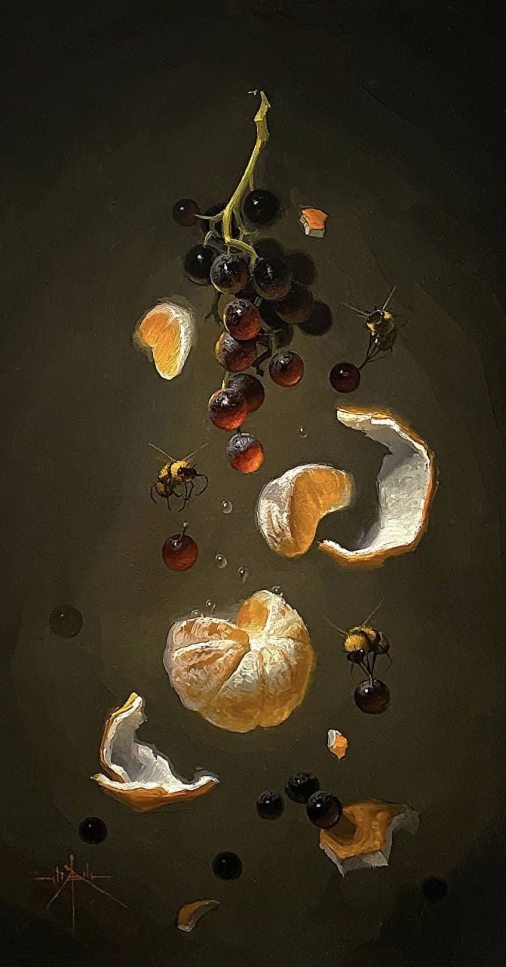
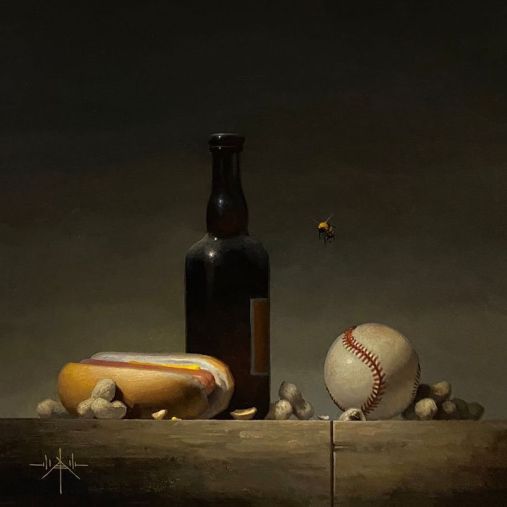
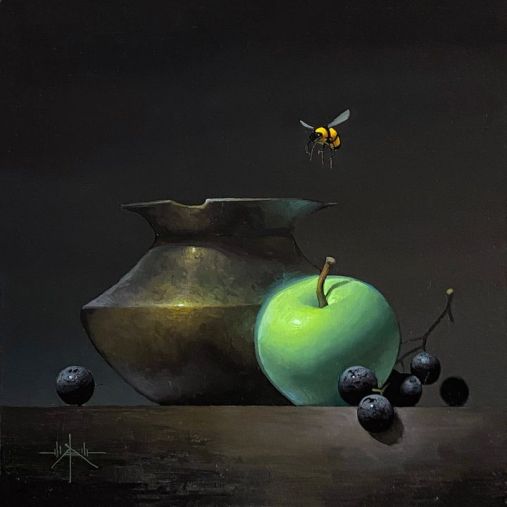
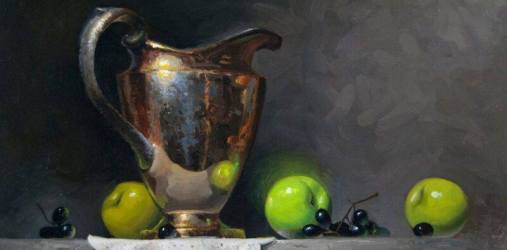
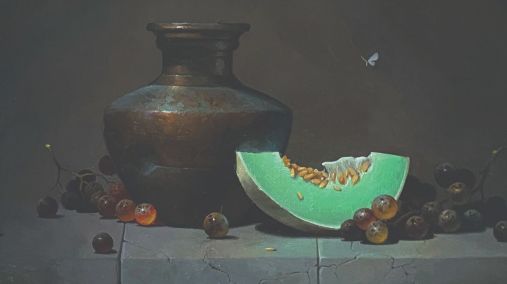
Today I introduce you to the American artist, Blair Atherholt. He works in the genre of realistic oil painting, specializing in still lifes, drawing inspiration from the canvases and techniques of the old masters. His paintings are highly distinctive and memorable, almost glowing from within. Yet, it’s just oil paint, which can often appear quite dull if used carelessly.
His works provide a fascinating study of how to achieve this glowing effect. Atherholt plays with contrasts between low and high color saturation, guiding the viewer’s eye to specific parts of the composition while maintaining the natural feel of the whole—a technique reminiscent of Caravaggio’s chiaroscuro. He also expertly employs “lost edges,” creating a soft, blurred effect that encourages the viewer to focus on key elements rather than on every object at once. This gives his work a lively, dynamic quality, despite its static subject matter.
Occasionally, he’s commissioned to paint cats and dogs, but even those end up looking like still lifes!
You can find similar posts grouped under the tag #artrauflikes, and all 113 can be viewed at beinginamerica.com in the “Art Rauf Likes” section (unlike Facebook, which forgets— or neglects—nearly half of them).






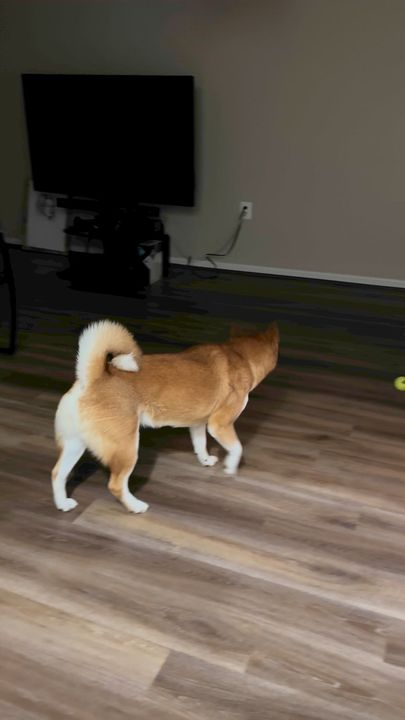
Sitting here, pressing the black-and-white keys on the first floor. Above, there is barking. Yuka, as a Shiba Inu, normally doesn’t bark at all. Well, like maybe once a year for various reasons. And now he’s giving a full serenade. I go to check, turning on the camera. It turned out that he had suddenly discovered a newly-purchased pack of printer paper opposite his couch, in a room where nothing new had appeared in his presence before. And there it was, such an aggressively white pack of paper with a whole 1000 sheets from Costco by the TV, clearly encroaching on his territory. He remained upset for quite a long time until I removed it. Later on, Yuka got to know it better. If it had been outside, he would definitely have peed on it, but inside, he just sniffed it for a long time, then cataloged it in his mind and no longer barks. That’s his exciting life.
Yesterday, as night was nearly falling, I was returning on my bicycle and passed by a house under construction (photo 1). It was barely visible in the darkness, but my phone managed to capture it. Almost all of our buildings under 5 floors are of this frame type. The frame is made of wood, and the walls are usually made of OSB boards, and less frequently of CLT boards.
An OSB board is made of chips/flakes bonded with resins and compressed under pressure and heat. The chips are layered so that the top and bottom layers run along the board, while the middle layer runs across. It’s cheaper than plywood. The foundation of the building is always concrete. The elevator shaft is also made of concrete. Later, the exterior walls will be covered with finishing materials for the facade—siding and/or brick, and the interior will be lined with drywall. In terms of fire resistance, it’s all up to standard—drywall can withstand flames for a minimum of one hour, enough time for the fire services to not only arrive but definitely extinguish the fire.
Despite the apparent vulnerability of wood to fire, treated wooden supports can also be safer in the event of a fire than it seems. Their greater thickness (plus impregnation) allows them to burn slowly and evenly, and they can remain standing even during severe fires, unlike steel supports, which can deform and collapse at high temperatures.
There are also wooden poles along the road. Nowadays, cables are increasingly laid underground, but where supports are needed (up to 10kV), they are often wooden.
The cost of a wooden pole is less than that of a similar item made from concrete or steel. Wooden poles are lighter, meaning they’re easier to transport, and naturally, easier to install on-site. A standard timber truck can transport about 40-50 tree trunks, while the number drops by half with concrete piles. A wooden support has a certain flexibility, which is a major advantage in regions with strong winds. If a line is made of such supports and one pole is damaged, it won’t pull the others down with it, creating a “domino effect”. Moreover, mounting something on a wooden support is simpler than on a concrete or steel one.
The lifespan of a wooden support ranges from 40 to 80 years. To ensure its durability, it is treated in dryers, submerged in a special pressure chamber where air is evacuated and a solution containing chromium, copper, and arsenic (CCA — chromated copper arsenate) is injected, and because the substances are absorbed deep into the wood up to 9 centimeters, it’s no longer quite the same wood 🙂 In contrast, the lifespan of iron-concrete supports ranges from 35 to 50 years.
Moreover, in the event of disasters or accidents, it is easier to remove a support from the road. Simply by sawing it into pieces with a manual chainsaw. Which, for obvious reasons, is not as feasible with a support made from metal or iron-concrete.
Such are the advantages of what seems like a quite archaic item as a wooden utility pole. Apparently, the engineers in the states are quite conservative, for whom all the aforementioned benefits are far more important than appearance.


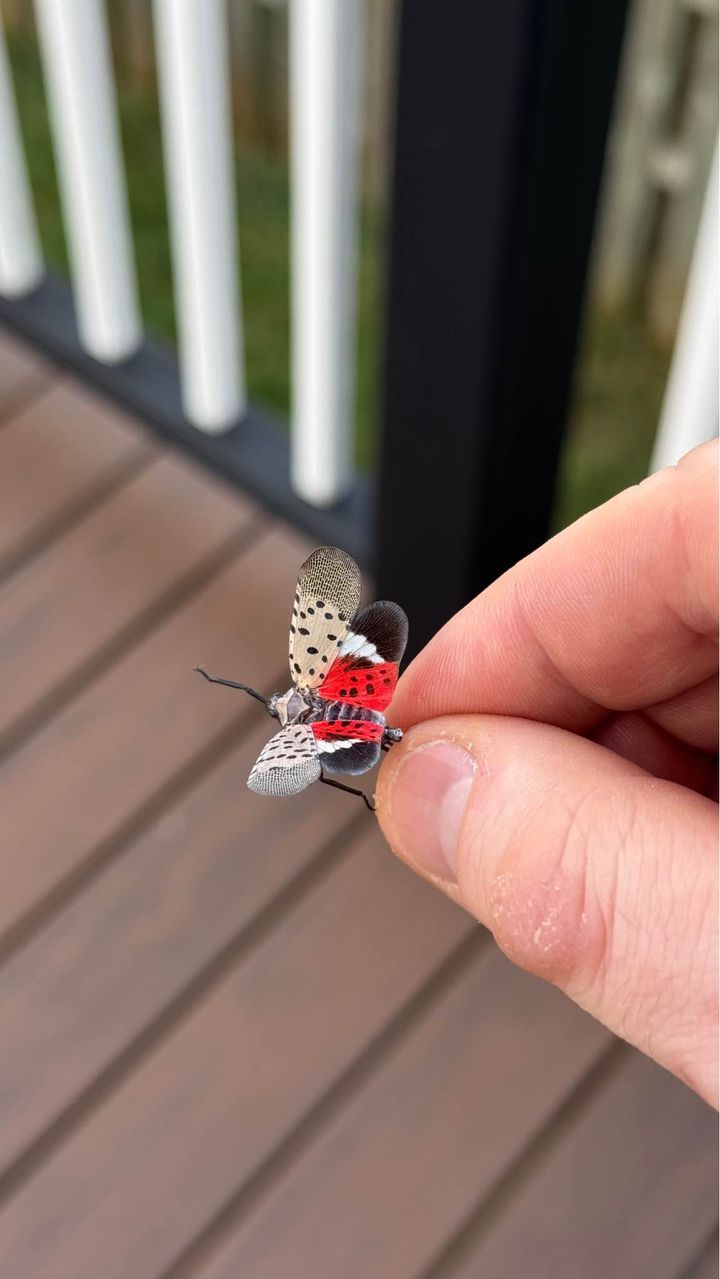
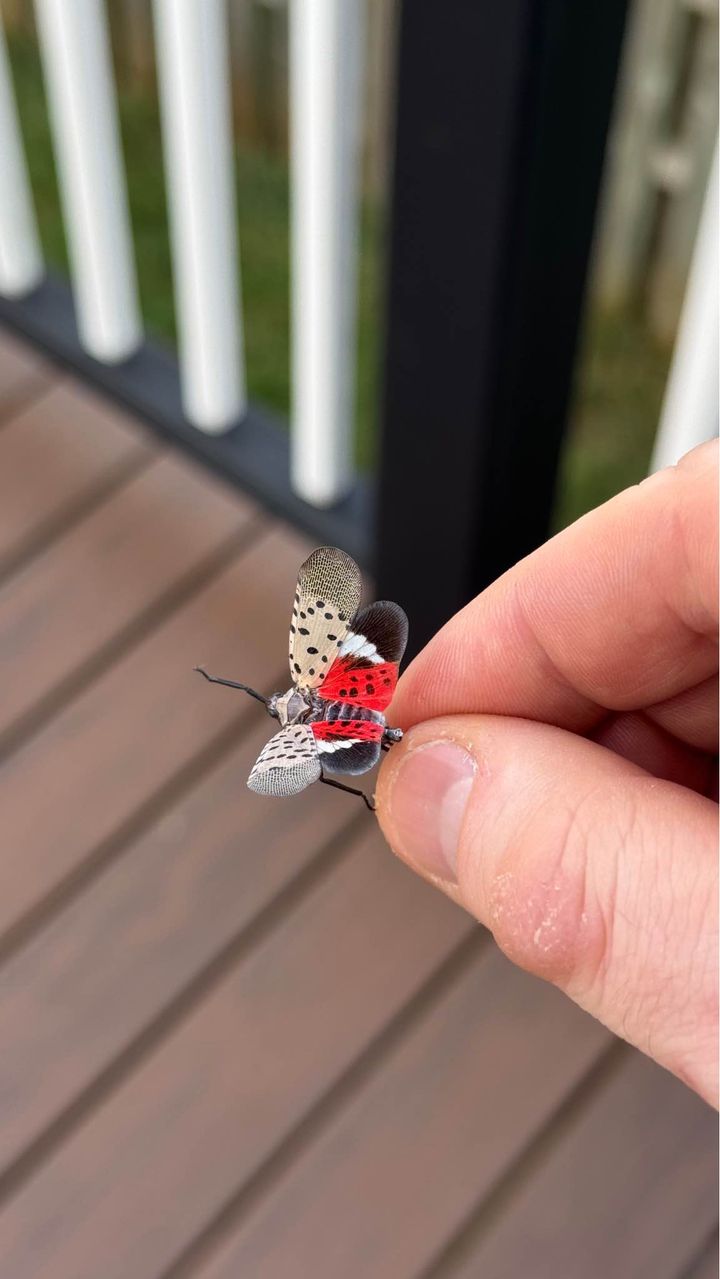
We currently have about a dozen Spotted Lanternflies on our porch — Spotted Lanternfly. Here’s a photo of one I’m holding. It’s an insect from the cicada family, about the size of a thumb phalanx. Generally harmless, although, of course, it depends on how you look at it, since at home, it periodically annoys the dog, and it also drains vineyards, not disdaining apples, peaches, cherries, maple, oak, and birch.
This creature is actually an immigrant from China. And it brought its whole ecosystem from China with it. So, listen up.
Until 2013, we didn’t have Lanternflies in the U.S. They arrived from China. But generally, animals always have some environmental dependencies, which is why they don’t just colonize the entire world, but stick to familiar habitats. The Lanternfly’s preferred tree is beautifully called the “Tree of Heaven” because of its ability to grow 20-30 meters tall. The botanical name of this tree is also telling — Ailanthus altissima. And this tree is native to China, where they used it to breed silkworms. Actually, it grows in many places, including Russia and Ukraine. And these Lanternflies really love this tree.
It was introduced to the U.S., where it has become a weed. And for the Lanternflies — it’s a feast. They lay their eggs on it, and each year there are more than the last. How to deal with this, it’s unclear, as the typical recommendation of “scrape the eggs off the trees, putting them in two bags with alcohol” obviously won’t be applied.
One option is to bring in the combat wasp, Anastatus orientalis, from China, which greedily devours Lanternfly eggs. Quite an amusing method. They lay their eggs inside the egg masses of the lanternfly. The larvae of the wasp develop inside the eggs of the lanternfly, consuming them from within, which prevents the hatching of the lanternflies.
However, scientists suspect that if the combat wasps proliferate and start eating more than just Lanternflies, we might have to bring in yet someone else from China who eats the wasps themselves.

 Hi, I'm Rauf Aliev.