The Destructive Genius of Yuri Pimenov: A Forgotten Moscow Artist | November 04 2024, 01:29

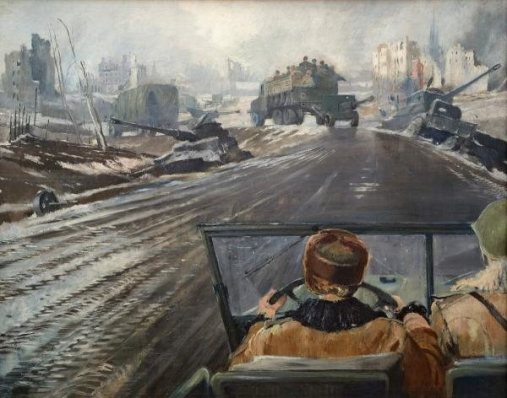
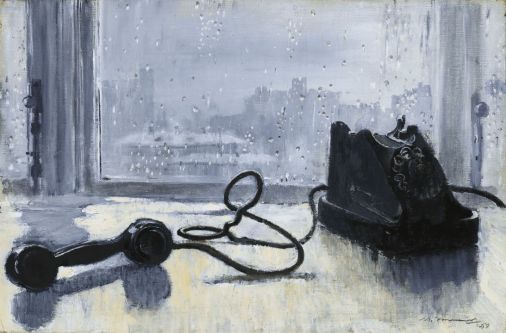
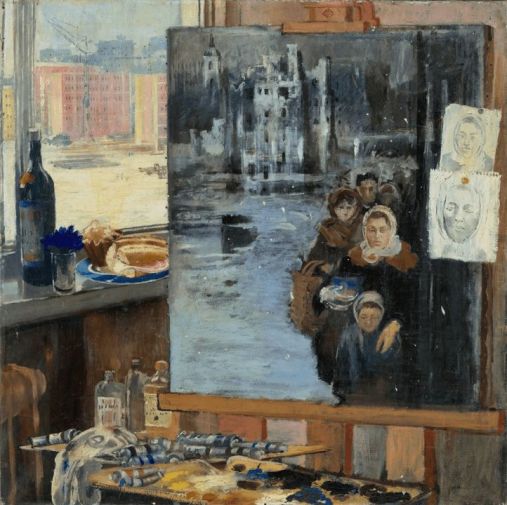
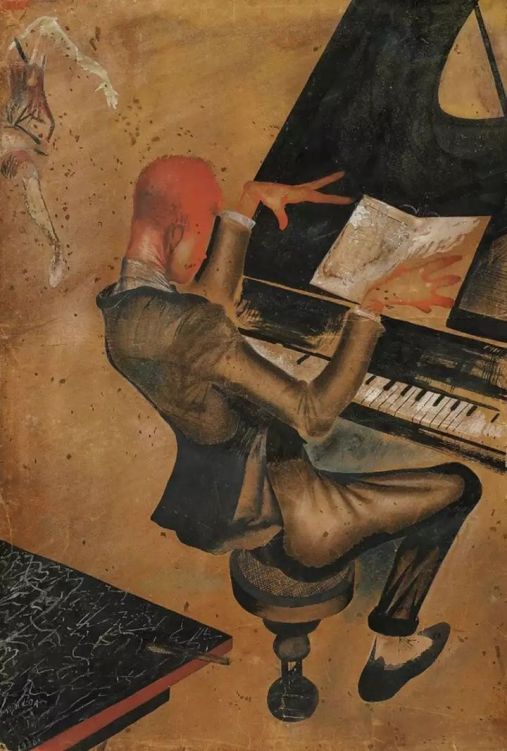
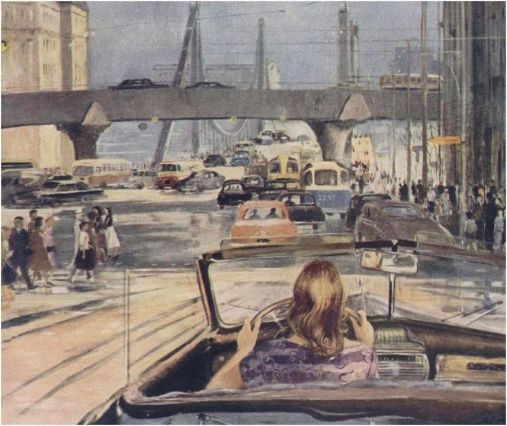
(ENG below) Today I introduce you to a Moscow artist of the 1930s, Yuri Pimenov (Yuri Pimenov). The first painting in the gallery—his “calling card”—is “New Moscow” (1937). However, it merely opens the series. Seven years later, Pimenov painted “Frontline Road,” in which, according to some art critics, the same young woman is depicted. Another appears sixteen years later.

One might wonder, what should an artist do, having found his creative path after all the hurdles and earned fame? Yuri Ivanovich behaved unconventionally: he began destroying all his previous paintings in his possession, and even took home museum pieces he had created, promising to return or bring new ones, and destroyed those as well.

In the end, many of his paintings remain only in photographs…

Similar posts are grouped under the tag #artrauflikes, and on beinginamerica.com in the “Art Rauf Likes” section, all 126 are available (unlike Facebook, which forgets about nearly half of them).

(ENG) Today, a Moscow artist of the 1930s, Yuri Pimenov. The first painting in the gallery, his “calling card,” is *New Moscow* (1937). Yet this work merely opens the series. Seven years later, Pimenov painted *Frontline Road*, in which, according to some art critics, the same young woman appears.

One might think that an artist who has found his creative path after all his struggles and gained renown would settle into his success. But Yuri Ivanovich took an unconventional route: he began to destroy all his earlier works that he still possessed. He even reclaimed pieces from museums, promising to return or replace them with new ones, only to destroy those as well.

As a result, many of his paintings now exist solely in photographs…

Posts like this are grouped under the hashtag #artrauflikes, and all 126 can be found on beinginamerica.com in the “Art Rauf Likes section (unlike Facebook, which tends to overlook almost half of them).

Decoding Betteridge’s Law of Headlines | November 03 2024, 21:12

Today I learned about Betteridge’s Law of Headlines: the rule that posits “If a headline ends with a question mark, the answer is ‘no’.” This law is named after British journalist Ian Betteridge who mentioned it in 2009, though the principle itself has long been in existence. The gist is that if the publisher was confident about a positive answer, they would have phrased it as a statement rather than a question. By framing it as a question, they dodge the responsibility for its accuracy. This sets up automatic expectations for the reader based on the article’s headline, functioning as positive feedback, and headlines are now phrased in this manner not because there’s some psychological explanation, but because it has become customary that a question in the headline implies an unconventional “yes” answer.

I hope I’ve saved you time on reading pre-election articles.

Discovering Sergey Minaev: A Treasure Trove of Engaging YouTube Content | November 03 2024, 15:54

For some reason, Sergey Minaev was on some kind of gray list for a long time, but I’ve started listening to him and I must say, he has some really cool content on YouTube. I would even say one of the best, by my standards. There’s a great series called “Personalities,” where they fascinatingly narrate the biographies of famous people. Just yesterday, I binge-listened to episodes about Margaret Thatcher, Churchill, Bunin, Gagarin, and Clinton->Lewinsky. There’s also a decent series “Simple Things” where they talk about a single thing, like perfume, fur, money, or coal. From the historical series, I enjoyed watching the story of the BCCI bank, which became famously embroiled in a major scandal involving money laundering, financing terrorism, and fraud, leading to one of the biggest banking collapses of the 20th century. The average video lasts about an hour and the content is generally optimized for listening without a screen, which is very convenient in the car. Overall, Minaev has now moved into my very white list, worthy of a recommendation on Facebook (something I rarely do).

Unveiling a Lost Chopin Waltz: Discovery, Recording, and Mystery | November 01 2024, 14:52

So, here Chopin has released a new single.

This year, in the New York library and the Morgan museum’s vault, a manuscript of a previously unknown waltz was found—short and likely unfinished. After thorough analysis, experts concluded that it indeed belongs to Chopin, identified by his handwriting, specific features, dating, etc. Chopin has roughly 250 works and up to 28 waltzes, of which only nine were published; the rest were lost or destroyed, making this newly discovered piece incredibly rare.

The unsigned waltz was never officially acknowledged by Chopin, remaining unpublished and out of the public eye. Little is known about its origin and its possible acquisition by A. Sherrill Whiting Jr., the director of the New York School of Interior Design. From there, a close friend, Arthur Sacks, bought the piece from Whiting’s wife, Jean, and donated it to Morgan in 2019. It has only recently undergone expert examination.

Lang Lang recorded and posted the performance.

https://youtu.be/Poq0VrCF2vo?si=cD8zAyGbG36UW3c_