
Well, here we go

Well, here we go
One of those who was against the spontaneous Christmas truce of 1914 (which involved about 100,000 soldiers from both sides) was a young corporal of the 16th Bavarian Reserve Infantry Regiment, Adolf Hitler.

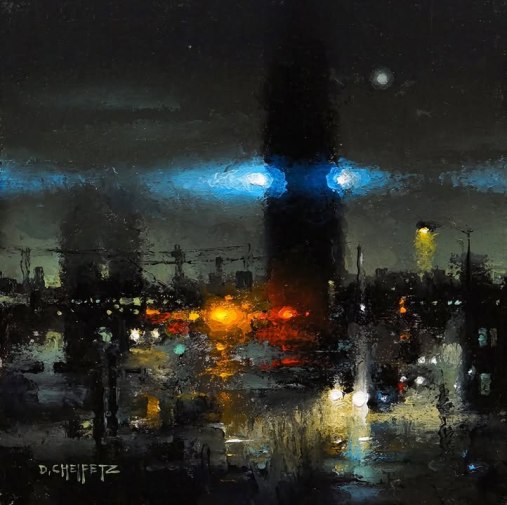
David Cheifetz primarily explores still lifes, urban landscapes, and unconventional portraiture featuring female models paired with various insects. His works stand out for their remarkable texture, vivid colors, and a masterful play of materials. The paintings often have a mysterious quality, frequently illuminated by candlelight, creating a captivating atmosphere. There’s a striking resonance in his art through the contrast of richly detailed elements against abstract backgrounds.
Posts like these are grouped under the tag #artrauflikes, and the full collection of 136 entries can be found on beinginamerica.com in the “Art Rauf Likes section—unlike Facebook, which tends to neglect nearly half of them.








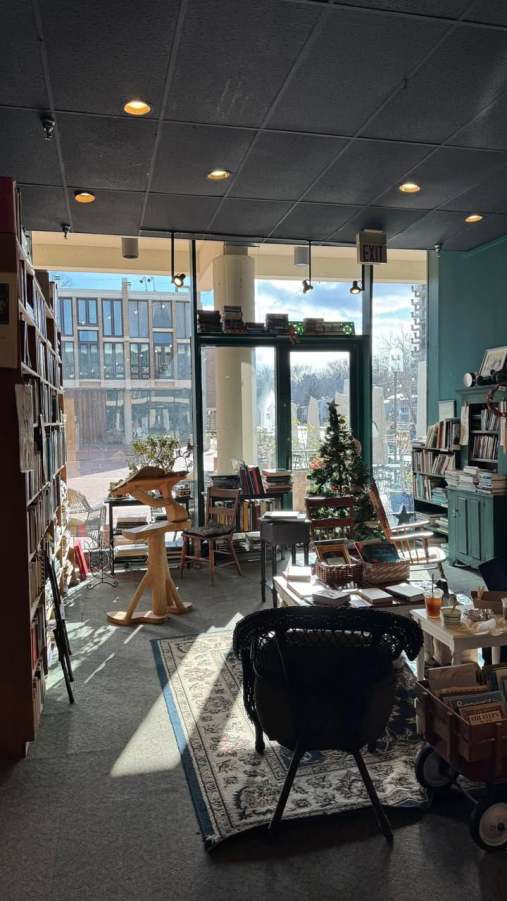
Finally found a tea shop! And a bit of a bookstore too. Stocked up a little to try out.





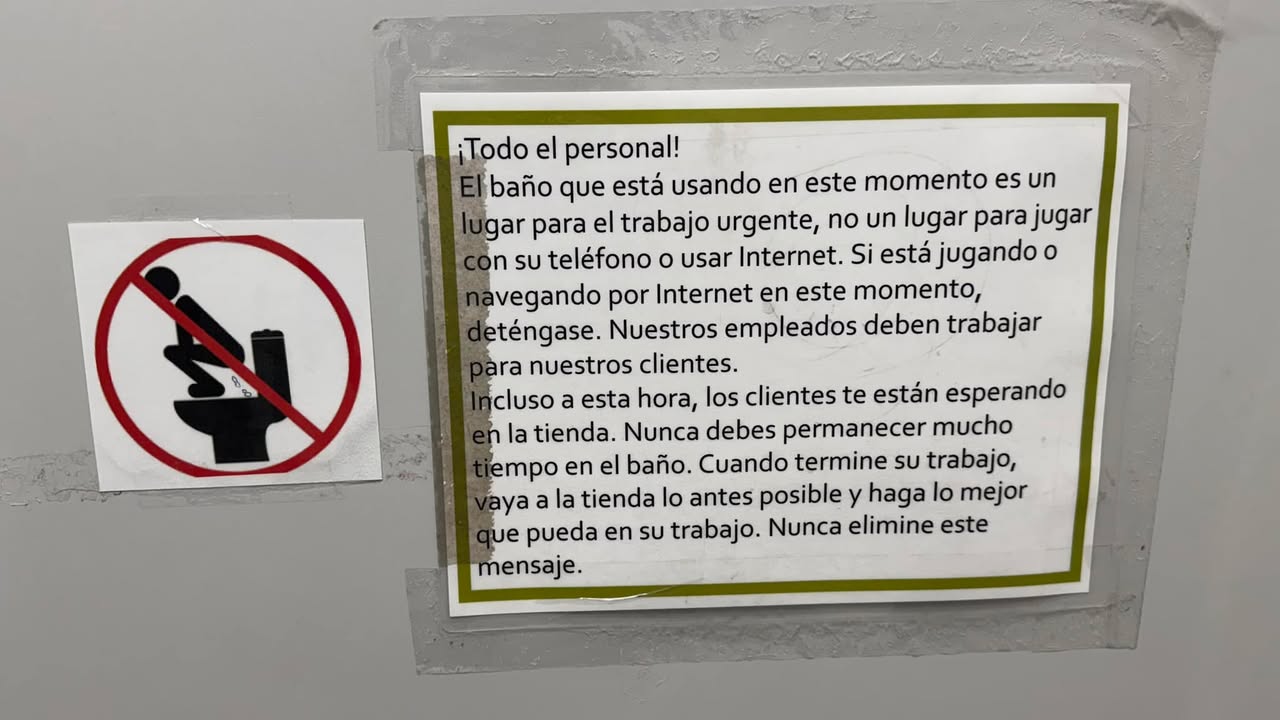
In each stall: (Translation)
Staff, attention!
The toilet you are using right now is intended for urgent matters, not for playing on your phone or surfing the web. If you are currently playing or browsing the internet, stop. Our employees need to be working in the store, not lingering in the bathroom. Yes, even now, customers are waiting for you in the store. When you finish, return to the store as quickly as possible and do your best at your work. And never delete this message.
Clearly, they have a serious problem.
There is a wide variety of teas at our Wegmans. Here in the photo are all the teas from left to right. But, there’s not a single loose leaf tea. Only various teas for weight loss, in bags, some grains in jars labeled tea. However, a tea ball is sold in the same section — for brewing loose leaf in a cup, and I bought one. But you have to specifically look for loose leaf tea. It’s not popular in the USA.

I’m exchanging tickets for The Nutcracker over the phone.
– What is your card number?
– Five quadrillion three hundred seventy-three trillion six hundred sixty billion two hundred sixty-three million three hundred thirty-four thousand eight hundred seventy.
– Expiration date?
– October twenty-eighth. That’s basically half of October.
– Done!
Turns out, you can exchange the tickets, and now we are not going to the ballet on Sunday, but on Saturday.
I’m currently reading Yuval Noah Harari’s “Nexus,” where an interesting story about a Romanian computer scientist named George Iosifescu is described (see my previous notes on the topic – #raufnexus). In 1976, Iosifescu came to his office and found a man sitting at his desk. Iosifescu introduced himself, but the man did not respond. He went about his business while the man just quietly sat, watched the computer screen, and made notes. Overall, it was apparent that he had arrived from the Romanian secret police.
It’s intriguing to look at work through the eyes of this agent. Imagine you have breakfast and then go spend your entire day in someone else’s office in silence, jotting things down. And so for thirteen years! Thirteen, Karl!
For thirteen years, Iosifescu came to work, and the man was always there, at the desk, to observe and record something. It all ended only with the fall of the Romanian government. Harari writes that Iosifescu never found out the man’s name.
But if you think about it, by 2024 we essentially have the same situation, only our agents are digital, numerous, and the data they collect are somewhat scattered and disconnected. Harari quite rightly notes that we are approaching the moment when a pervasive computer network will be able to monitor the population of entire countries around the clock.
Harari also has an interesting story about the mass collection of handwriting samples in Romania. When the Romanian regime discovered anonymous letters criticizing them, sent to Radio Free Europe, Ceaușescu ordered handwriting samples to be collected from all 20 million citizens. Students wrote essays, and adults wrote autobiographies, which were then passed to the Securitate archives. Even typewriter owners were required to register them and provide sample texts.
It’s interesting—they collected them, but how were they supposed to search through such a volume of information? It was probably not intended at all. Perhaps this database was used to create evidence—if someone was suspected, data from various databases were collected about them, and attempts were made to use it in their case. If something accidentally or not coincidentally matched, then that’s it, case closed, person imprisoned.
* * *
I also liked the idea of information networks.
In tribal societies, where there were no written documents or bureaucracy, the human network consisted only of two chains:
1) “person-person” and
2) “person-story” (forming the chain person-story-person).
Power belongs to those who control the nodes connecting different chains. These nodes are the tribe’s foundational myths. Charismatic leaders, orators, and creators of myths were adept at using these stories to shape identity, create alliances, and impact emotions.
In human networks associated with written documents and bureaucratic procedures, society is partly based on interactions between people and documents. In addition to the chains “person-person” and “person-story,” such societies are held together by the chains “person-document.”
Thus, there are three types of chains:
1) person-person
2) person-story
3) person-document
This has led to changes in the distribution of power. Since documents became an important node linking many social chains, significant power was vested in them, and experts in the complex logic of working with documents became new authoritative figures. Administrators, accountants, and lawyers mastered not only reading and writing skills but also the ability to create forms, organize archives, and manage bureaucratic processes.
The person-person chain can be related to the family, the person-document—to the church.
But there are two more chains that have emerged quite recently:
4) computer-person
5) computer-computer
An example of “computer-person” includes social networks like Facebook and TikTok. These chains differ from traditional “person-document” chains because computers can use their power to make decisions, create ideas, and deeply manipulate proximity to influence people in a way that no document could. The Bible has had a profound influence on billions of people, even as a silent document. Now imagine a sacred book that can not only speak and listen but also recognize your deepest fears and hopes and continuously shape them. Indeed, algorithms on social networks (and not only), according to Harari, can influence human behavior on their own, not because the authors of these algorithms embedded such behavior in them. A good example is the accusations against Facebook for inciting hatred in Myanmar, as the social network promoted posts that gained popularity, which were actually about genocide.
Secondly, Harari writes, “computer-computer” chains are emerging, in which computers interact with each other autonomously, and this interaction is rapidly gaining complexity, which can no longer be untangled without the help of other algorithms. Algorithms of this interaction were developed and debugged on volumes that were still understandable and could be troubleshooted, but then it starts “magic”. An example is trading bots and algorithmic trading in general, and for instance, the “flash crash” of 2010, when the U.S. stock market crashed by trillions of dollars within minutes, only to recover just as quickly. The causes of this flash crash were later found, but it was not easy (and there were several reasons).

Updated the electric ride. Now, the old (dead) ecoreco l5+ will head to the dump, and the new kukirin G2 Max will take its place. 1000W, claims a range of 80 km on a single charge, but realistically, if it gets 30-35km with my weight, that would already be very good. People on Reddit write 20% battery for every 10km. Rides swiftly, can accelerate up to 55km/h, but again, weight, terrain, slope, and a sense of self-preservation matter. By the way, it handles grass and other irregularities quite well. The previous one couldn’t at all.




Remember how I mentioned needing to digitize old tapes brought from Russia? A solution was found. Maybe it will be useful to someone, so here’s the story.
First off, it turns out you can digitize tapes for free by just visiting the local Leesburg library. They have a bunch of equipment available for free use, from engravers to 3D printers; you only pay for consumables. There are no consumables needed for tape transfer, so it’s completely free.
However, it turned out that this doesn’t work with tapes from Russia. Because in Europe it’s PAL/SECAM, and the equipment in the USA is NTSC. So, they just aren’t compatible.
Friends let me know that they have a PAL/SECAM standard VHS player and video capture equipment with HDMI. Hurray! That solved half the problem—I managed to digitize all the “big” tapes. But there were still MINIDV tapes. Technically, MINIDV is a digital format, and ostensibly PAL/SECAM/NTSC shouldn’t matter, but it turns out MINIDV cameras are still region-dependent and can only play tapes recorded in their native format.
Finding a PAL/SECAM camera in the USA was not easy, and shipping one from Europe was too pricey. So, I just went to Istanbul.
Of course, I didn’t go there just for the camera. But I did buy one. Istanbul’s market setup is very convenient. The whole city is like a market. If you need electronics, there are at least two places that sell only electronics, and there are places that sell only photo-video equipment, both new and used, and they also offer repairs. In one such place, there are three floors, each large, in another—six, but each smaller.
The lowest price for a MINIDV camera was 3,500 lira, which is roughly 100 dollars. Nobody is willing to drop even 10%. I found about 10 cameras in different places. Eventually, I managed to get a slightly flawed one (minor issue) for 2,000 lira—about 57 dollars. Samsung Duocam VP-D6550i PAL. It’s a model from 2004 (21 years ago!) with a cassette and SD cards. And it seems like all these cameras are new. I don’t know how that works—maybe the Turks have learned to restore old cameras to perfect condition, but more likely, the Chinese just never stopped making them.
As I write this post, the third tape is being copied. But it wasn’t all smooth sailing. The power supply, although it says 100-220V, does not work on 110 volts—it does not output the necessary 7.2V. I had to buy an additional camera battery charger for 10 dollars, which is universal at all markets.
For video capture, a combination of AVERMEDIA LiveGamer GC311 (thanks, Misha!) and a simple RCA to HDMI Converter is used. The AVERMEDIA software is very good—it works “like clockwork.”
The camera is quite remarkable for 2004. It has a separate lens for photos and—separately—a telescopic lens for video. There’s even a built-in flash. In short, the task is accomplished.

 Hi, I'm Rauf Aliev.