Marveling at a Lunar Halo: A Night Under the Moon’s Circle | December 14 2024, 03:16

Walking the dog, above my head there’s a beautiful atmospheric phenomenon. A lunar halo. This circle around the Moon—it’s not lens optical aberrations, but a real circle overhead, visible to the naked eye, though it doesn’t come out well in photos (just like the Moon). A lunar halo. It appears when Moonlight passes through thin clouds high in the atmosphere. These clouds are made up of tiny ice crystals that refract (bend) and scatter the moonlight.

Exploring Eccentricity: Frances Featherstone and the British Artistic Influence | December 13 2024, 11:55

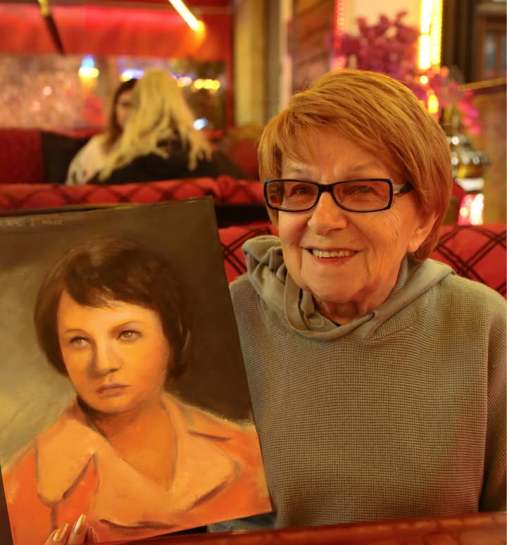
An intriguing British artist, Frances Featherstone, is renowned for her series “Girl in Bed Under a Blanket with Stuff,” where the girls, blankets, and “stuff” vary. Her work often explores the interplay of people and interiors from an unconventional perspective. British artists, in general, tend to be a bit eccentric—in the best possible way—and the influence of their peers like Lucian Freud, David Hockney, and Francis Bacon is unmistakable.

Posts like these are grouped under the tag #artrauflikes, and all 134 entries can be found in the “Art Rauf Likes” section on beinginamerica.com (unlike Facebook, which neglects—or outright omits—nearly half of them).

Unpacking Stalin’s Great Terror: A Critical Analysis | December 12 2024, 23:35

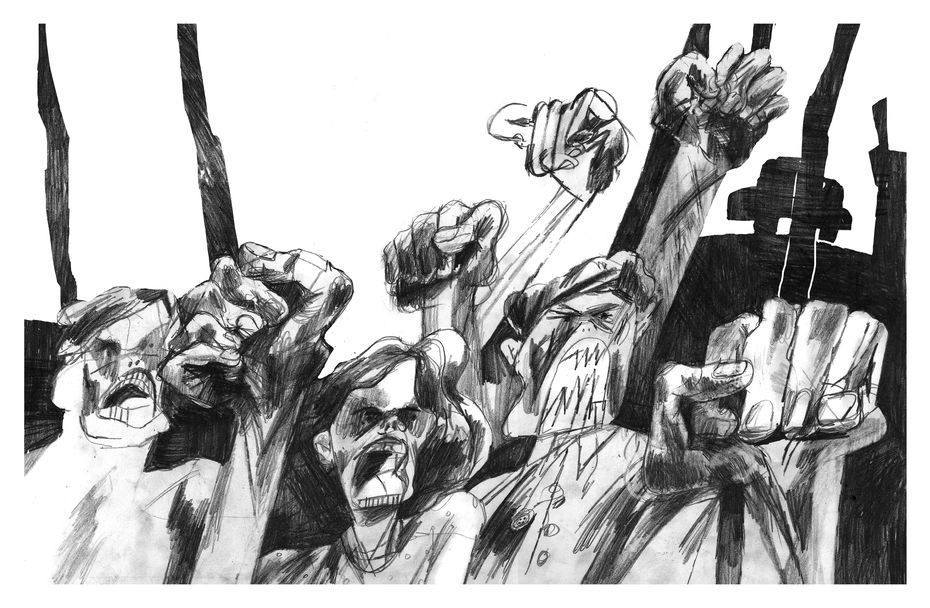
Reading Harari on Stalin’s Great Terror #raufnexus. Indeed, it is one of the most gruesome chapters in the history of totalitarianism.

Main theses and figures:

The system consisted of three branches: the state apparatus (1.6 million people), the party (2.4 million members) and the secret police (270,000 employees + millions of informants).

Everyone watched each other: the governor was under the supervision of the party commissar, followed by the NKVD, and the NKVD was divided into competing units. This almost completely prevented rebellions against the center.

Party leadership:

Out of 33 members of the Politburo (1919–1938), 14 were executed (42%).

Out of 139 members of the Central Committee of the party (1934) — 98 were executed (70%).

At the XVIII Congress (1939) only 2% of the delegates from the XVII Congress (1934) were able to attend, the rest had been repressed.

Secret police:

The system destroyed itself from within. Genrikh Yagoda, who started the terror, was executed. His successor Nikolai Yezhov was also executed two years later.

By 1941, of the 39 NKVD generals (1935), only two remained alive. One was executed after Stalin’s death, the other died in a mental hospital. It turned out that the profession “NKVD general” was one of the most dangerous in the world.

Red Army:

In the 1930s, 10% of officers were repressed. Among them:

– 83% of division commanders,

– 89% of admirals,

– 87% of army generals,

– 60% of marshals.

Boeing 777 Chess Speeds: Quick Losses on Level Two, Slow Plays on Level Three | December 11 2024, 15:57

In the whole wide Boeing 777, chess on the second level is undoubtedly lost in 20 seconds, and on the third, each move is given a minimum of three seconds. Even the first one;) and then the time only increases.

Exploring Information Networks and Governance in Harari’s Nexus | December 11 2024, 14:29

Continuing (this is part 3) to share the main theses of the new book Nexus by Harari. See previous parts here #raufnexus

The first part of the book explores concepts of information and information networks, examining them through the lens of memetics. Harari describes information as a tool that unites people and forms common myths or worldviews. Well, I’ve mentioned this in previous posts.

Moving on, he discusses forms of governance. Harari proposes a model where democracies and autocracies differ in how they manage information:

1) Autocracies centralize information, suppress dissent, prioritizing order over the pursuit of truth.

2) Democracies decentralize information flows, allowing for error correction and a closer approach to truth, even at the cost of some chaos. The main feature of democracies is the recognition that people can make mistakes and have mechanisms for self-correction. And it’s not just majority rule or elections. It includes various human rights and civil liberties that the majority cannot infringe upon. While different among democracies, they generally come from the same pool.

Dictatorships, in contrast to democracies, view the Center as infallible, weakening independent verification mechanisms.

He writes that democracies were long limited by small scales until telecommunications enabled the development of modern democratic institutions. Well, how do you gather people from a large territory, many of whom speak their own languages and live with local issues, knowing nothing about the problems of their neighbors, much less about the issues of an entire country or empire.

And that autocracy often emerged not because the ruler was so inclined, but because anything else technically could not work. Example — the Roman Empire. Without the Internet and media, there’s just no way to establish democracy there. Democracies worked in small Greek cities and even those with “asterisks.”

In short, without the media, internet, and TV, democracies in any sizeable communities are impossible in the modern world.

Harari believes that progress in AI disproportionately strengthens totalitarian systems by enabling mass surveillance and suppression of dissenters. In other words, AI gives less to democracies than to autocracies. Technologies often amplify the spread of disinformation rather than truth, leading to catastrophic consequences like Europe’s witch hunts or ethnic cleansings in Myanmar.

About social networks: Social network algorithms optimizing engagement provoke polarization and the rise of populism, weakening democratic systems. This is not an accidental outcome of the technologies but a systemic problem. How to solve it, Harari has not yet proposed, but I haven’t finished reading yet.

Harari provides an interesting example (although very well-known):

He writes that a far more ambitious project of totalitarianism could have been implemented by the Qin dynasty in ancient China (221–206 BC). Why it could have, and not was implemented is because there’s little information on the results, only the process. To consolidate power, Qin Shi Huang aimed to destroy any regional forces that could challenge him. Local aristocracy’s lands and wealth were confiscated, and regional elites were relocated to the empire’s capital, Xianyang.

Look what he came up with:

On the bright side — he introduced a new simplified script, standardized coins, measures of weight, and length. A road network was built, radiating from Xianyang (the capital), with uniform inns, stations, and military posts.

But at the same time, a very deep militarization of society was carried out:

Each man was assigned a military rank, and the population was divided into groups of five. People were not allowed to change their residence without permission; even sleeping at a friend’s required identification (remember, you had to register if you moved to a new city for more than 3 days in the USSR and early Russia?).

The official ideology became legalism, asserting that people are inherently selfish, requiring strict laws and punishments to manage them. Like in “Election Day 2” — “the people are wonderful! But individuals are crap!”

Confucianism and Taoism were banned, books with ‘soft’ views were destroyed. No relaxation allowed!

Literature criticizing the dynasty was confiscated, and dissenting scholars were persecuted.

Total militarization and the concentration of resources for military purposes led to economic problems, wastefulness, and public discontent. Harsh laws, huge taxes, and a hostile attitude toward regional elites exacerbated this dissatisfaction. Limited resources of agrarian societies and the low efficiency of information technologies made it impossible to control the entire empire. As a result, in 209 BC, uprisings began by discontented peasants, regional elites, and even officials. Fifteen years after its foundation, the Qin dynasty fell.

After a series of wars, power was transferred to the Han dynasty, which abandoned totalitarian methods in favor of a softer, autocratic system based on Confucian principles. Emperors of Han, like their Roman contemporaries, managed only key aspects of society, allowing regions significant autonomy. Full-scale totalitarianism remained a dream of ancient rulers, whose realization became possible only with the development of modern technologies.

(Reading on, can write more if interested. Just keep supporting with likes and shares (especially!) for motivation)

#raufnexus

From Myth to Bureaucracy: The Evolution of Information Networks | December 10 2024, 11:39

In the previous post, I wrote about the role of information according to Harari, discussing the idea that information unites people through myths and creates intersubjective realities. Click here — #raufnexus

Today, about how humanity came to document stories and the complexities encountered along the way. The text is long, pour yourself some coffee.

The book mentions a great example of the importance of stories with the Ramayana, which was previously unknown to me — an ancient Indian epic, familiar to roughly a billion Hindus (and probably unknown to everyone else). It has 24,000 verses (originally, in Sanskrit, 480,002 words — about one quarter of the text of the “Mahabharata,” which is four times larger than the “Iliad”), spread across seven books and 500 songs. And somehow, generations of Hindus memorized all of this. So, in India, they made a film adaptation (not the first and probably not the last time) — a series of 78 episodes. This series was shown in 55 countries and gathered a total audience of 650 million viewers. During a re-airing (from March 24 to April 18, 2020), it reached 2.5 billion views in just 25 days, becoming the most popular Indian television series by a long shot and one of the most-watched series globally.

Understandably, few now try to memorize all the twists and turns of the Ramayana plot, but overall, the series served as a “document, packaging knowledge in a very audience-friendly form.

Today’s notes logically continue this theme: Harari reveals how written documents, and then bureaucracy, became the next step in the evolution of information networks.

I’ll start with the second part because it’s filled with more intriguing moments. About errors in documentary transmission of ideas.

Harari rightly asserts that the entire evolution is built on the fact that errors exist. They are also a central part of human experience, from mythology to bureaucracy. Indeed, the whole evolutionary process is based on errors in DNA replication.

Religions aimed to eliminate human fallibility, presenting their teachings as given by divine forces. In practice, however, it always required trusting human interpreters: prophets, priests, clergymen. The creation of religious institutions was an attempt to regulate divine revelations, but it remained dependent on people.

How to prevent uncontrolled changes in what these institutions considered the only correct version? Harari here compares the spread of Bible copies to blockchain 🙂 Basically, friends, it was all invented before you.

Like blockchain, where each new transaction is verified by a network of decentralized nodes, sacred texts were preserved in unchanged form thanks to numerous identical copies in different communities. This guaranteed the democracy and security of the text: even the most influential leaders could not alter the sacred words, because any discrepancies would become obvious.

It’s clear that errors could creep in at three levels — one misunderstood, then incorrectly recorded, and another misinterpreted what was first recorded. Then the cycle closed. Through many such cycles, you get something like the game of “Chinese whispers.”

But how did sacred writing as a book come about? This is quite an interesting topic.

During the 1st millennium BC, Jewish prophets, priests, and scholars created many texts: stories, prophecies, prayers, poems, and chronicles. A bunch of them even contradicted each other. And of course, during biblical times, there was no such thing as the Bible.

Harari provides many examples of how stories from original sources are greatly distorted by the time they are canonized. In the early centuries of Christianity, there were many texts claiming sanctity, including different Gospels, epistles, and apocalypses. In the 4th century, Christian leaders began the process of selecting “canonical” texts. This process concluded at the councils in Hippo (393 AD) and Carthage (397 AD), where a list of 27 books of the New Testament was established. Moreover, the texts themselves are often contradictory, and it meant a lot which ones were included in the Canon. Many texts were rejected as heretical (e.g., Gnostic gospels) or dubious in origin.

Jews do not recognize the New Testament, and when they say “Bible,” they mean the Old Testament, as well as the Mishna and Talmud. But for the Christian Bible, as Harari writes, Jews don’t even have a word 🙂

For example, the Bible includes 1 Timothy, where it mentions “Let a woman learn in silence with full submission; I permit no woman to teach or to have authority over a man; she is to keep silent. For Adam was formed first, then Eve; and Adam was not deceived, but the woman was deceived and became a transgressor. Yet she will be saved through childbearing, provided they continue in faith and love and holiness, with modesty.” Harari writes that contemporary scholars, as well as some ancient Christian leaders like Marcion, considered this epistle a 2nd-century forgery, attributed to Saint Paul but actually written by someone else.

In contrast to 1 Timothy, in the 2nd, 3rd, and 4th centuries AD, there were important Christian texts that regarded women as equals to men and even allowed them leadership roles, such as the Gospel of Mary and The Acts of Paul and Thecla. The latter text was written around the same time as 1 Timothy and for a time enjoyed enormous popularity. It tells the adventures of the apostle Paul and his disciple Thecla, describes how Thecla performed numerous miracles, baptized herself with her own hands, and often preached. Throughout the centuries, Thecla was regarded as one of the most venerated Christian saints and served as proof that women could baptize, preach, and lead Christian communities.

Before the Councils of Hippo and Carthage, it was not clear that 1 Timothy had greater authority than The Acts of Paul and Thecla. However, by including 1 Timothy in the recommended text list and rejecting The Acts of Paul and Thecla, the assembled bishops and theologians shaped the Christian attitude towards women, which persists to this day. One can only wonder what Christianity might have been like if the New Testament included The Acts of Paul and Thecla instead of 1 Timothy. Perhaps, alongside the “fathers of the church,” such as Athanasius, church history might have featured “mothers,” and misogyny would have been condemned as a dangerous heresy, distorting Jesus’ message of universal love.

So although sacred books became the foundation of Christianity, the real power was concentrated in the hands of church leaders interpreting the texts. Canonization has always been a human process, despite claims of divine inspiration.

About interpretations. The sacred book, for example, says you must not cook a young goat in its mother’s milk (Exodus 23:19). Some people interpreted this literally: if you have killed a young goat, do not cook it in the milk of its mother. However, cooking it in the milk of another goat or a cow is perfectly acceptable. Others interpreted this prohibition much more broadly, arguing that meat and dairy products should never be mixed, so, for instance, you cannot drink a milkshake after eating fried chicken. As strange as it might sound, most rabbis decreed that the broader interpretation is correct, even though chickens do not produce milk.

Or about the Sabbath. Here, the sacred scripture prohibits work on the Sabbath, and rabbis asserted that pressing an electric button counts as “work,” since electricity is akin to fire, and lighting a fire has long been considered “work.” Does this mean that elderly Jews living in multi-storey buildings in Brooklyn must climb hundreds of steps to reach their apartments and avoid work on the Sabbath? It turns out that Orthodox Jews even invented the “Sabbath elevator,” which automatically moves up and down the building, stopping at each floor, so you don’t need to perform any “work” by pressing a button.

Harari adds that with the advent of artificial intelligence, this story has taken a new twist. A facial recognition system allows AI to quickly send the elevator to your floor, not making you violate the Sabbath. Is this work or not?

If myths inspire and unite, then documents and bureaucracy organize and manage.

Bureaucracy includes various lists, tax records, budgets, property inventories. They are terribly boring to remember (because the brain isn’t designed for this), but critically important for management. And the invention of documents in general (including clay tablets) helped scale this process. There’s actually a lot of this organizing bureaucracy—we just don’t think about it. For example, universities divide knowledge into faculties, which limits interdisciplinary understanding, as in the study of pandemics (biology, history, mathematics).

Then there are reflections on what freed thought from the influence of the church—the process took quite a while, and Harari asserts that the invention of the printing press here played not a major role.

An interesting fact: In the 13th century, the library of the University of Oxford consisted of only a few books, stored in a chest under the Church of Saint Mary. In 1424, the library of Cambridge University had only 122 books. So when you hear “medieval library,” you can’t imagine shelves packed with books.

Above are some theses only about documenting religious stories and norms, but the topic there is much broader, but that’s a lot for one post.

I can write more if interested. Write if needed

Exploring Istanbul: A Personal Travelogue | December 09 2024, 08:06

The one who covered 39 km in Istanbul in a single day is me. Met my mom for the first time since COVID. Very happy! And for her, it was even the first trip abroad.

Today’s my last day here, half of which I need to spend working. So I’ll jot down some impressions. I’m sure most of you have been here, but still, a refresher.

The first unusual thing — everyone smokes a lot. I haven’t seen so many people smoking cigarettes (especially girls and women) in ten years.

You can’t cross the road where there’s a fence. Although if a crowd does it, it’s okay. Trams and taxis assume a pedestrian would generally prefer to live, so it’s in their interest to leap aside in time. Taxi drivers seem to feel the dimensions of their car down to the millimeter. For comparison, when I cycle on a (narrow for us) road in the States, a queue forms behind me, even though there’s space for 2.5 cars in width beside me.

There are a lot of men everywhere. In my hotel, for instance, young guys do the room cleaning. In restaurants, it’s also mostly guys, both in service and cooking. On the streets, the male to female ratio looks about three to one.

The seagulls scream differently than I’m used to. Sometimes their cry resembles a human scream.

Oddly, people don’t play backgammon or chess on the streets here. I don’t know if it’s a Turkish characteristic or just the times.

Everyone knows about the cats, but for some reason, during this visit, dogs caught my attention. I encountered three chow chows in just a few days – apparently, a popular breed here. But also, there are very cute strays. Mom didn’t miss a single one. They look clean, well-fed, and are very affectionate towards people and attention.

Almost no electric cars. Saw just one Tesla and one local “brew (Togg). In general, electric transport isn’t popular. There are very few private scooters and bicycles, probably just because for the overwhelming majority of working people here, they are seen as pointless luxury: you can buy a cheaper motorbike that travels faster and can even carry a load. And of course, hills play a part too.

Also, I noticed that in some languages, “Hello on the phone sounds exactly like it does in Russian, no accent at all. And Turkish is among them. Turns your head every time someone responds in ‘perfect Russian,’ and there’s a natural dark-haired, mustachioed Turk on the phone.

The water in glass bottles is very tasty, like HAYAT, for example.

It’s quite unusual to see so many cafés without people with laptops inside. They even talk to each other!

Exploring the Implications of Surveillance in Public Bathrooms | December 08 2024, 07:36

“Cameras in the bathrooms are for your safety”

It’s interesting, are these sensor-equipped bathrooms found only here or elsewhere as well? Do they accidentally display the stall number of someone who has been in there too long?

Exploring Reality and Fiction in Harari’s “Nexus” | December 07 2024, 21:31

I bought a book by Harari called Nexus at the airport. Lately, his public appearances have drifted into something odd, and I initially didn’t want to buy the book, but I got engrossed in the first chapter at the store and ended up getting it. And just like that, the first 100 pages flew by unnoticed.

It presents a very interesting view of the world and thoughts and facts in general. I’ll be taking notes for myself, sharing here, in case you find it interesting too.

For example, his reflections on what information is.

According to Harari, information is not what informs us about things, but rather what forms connections between what is already in the brain, and Harari introduces a succinct description of this — putting things “in formation.” “Horoscopes put lovers in astrological formations, propaganda broadcasts put voters in political formations, and march songs put soldiers in military formations.”

In other words, information allows us to create a new reality where masses of people agree on the value of a concept or create new ways to generate information.

Information sometimes represents reality, and sometimes it doesn’t. But it always connects the dots into a network — this is its fundamental characteristic.

About reality. According to Harari, truth is the accurate representation of certain aspects of reality. Reality is objective, but complex and includes at least multiple points of view.

No information can fully represent reality because any description focuses on certain aspects while ignoring others.

This, by the way, answers the question of what history then studies. Think about it, each event had a huge number of eyes and ears connected to it, not to mention the brains that only complicate the information from the multitude of eyes and ears.

According to his theory, the main function of information is to create connections among people and form networks (religious, social, political, etc.). An example given is the Bible, which, despite numerous errors in describing reality, has united billions of people, creating religious communities.

Harari believes that technologies increase the volume and speed of information, but do not guarantee the growth of truth and wisdom.

In the second chapter, he writes about the importance of stories and about the balance between truth and order.

According to Harari, it is stories that allowed early humans to cooperate through “man-story” chains, not just through personal connections, as is still the case with monkeys, for example. It’s a complex thought, but the examples explain it: the Catholic Church (1.4 billion people united by the Bible), global trade (stories about currencies, brands, corporations, etc.).

Brands are stories that associate a product or persona with certain values or emotions. Example: Coca-Cola is associated with joy and youth, despite issues like obesity or pollution.

Harari introduces a new term — intersubjective reality as an extension of objective (rocks, mountains, asteroids) and subjective (emotions, pain, pleasure). The thing is, stories may not be (and often aren’t) truthful. But they create a reality that people begin to believe in. Religion thrives on this. Obviously, nothing is known about Jesus as a historical figure, but as an intersubjective reality, he is known to billions.

He introduces a “formula” for the balance of truth (laws of nature, incontrovertible facts, etc.) and order (political, economic, cultural). For survival, informational networks must maintain it. He asserts that often order is easier to maintain through fictions and myths than through truth. For example, the obviously “truthful” Darwinian theory of evolution undermines religious myths, which causes resistance.

Prioritizing order over truth can lead to powerful, but dangerous networks (for example, Nazi Germany). Accordingly, truth is compensated by different types of fiction: religious dogmas, national myths, legends, ideologies.

About fictions: Harari asserts that all human political systems are based on fictions, which help maintain social order. Recognizing fiction as a human-made construct simplifies its change, but complicates its acceptance, as people might ask: “Why should I follow this if it’s just a human invention?”

From the interesting examples — the U.S. Constitution, which begins with the words that it was created by people. This approach allows for its amendment. For example, it allowed the abolition of slavery with the 13th Amendment 100 years later. But the Ten Commandments, for example, begin with the words that their origin is divine. This excludes the possibility of changes, as any revision is perceived as blasphemy. For instance, in the Ten Commandments, slavery is recognized as the norm (the 10th Commandment only prohibits envying a neighbor’s slaves, but not the institution of slavery itself).

Russian tsars, for example, claimed they ruled by the will of God. Muslim caliphs relied on the Quran as the supreme source of law. Chinese emperors proclaimed themselves “sons of heaven”.

He writes that truth is necessary for progress, but it must be combined with fictions that unite people and that successful societies are those that use truth for adaptation and progress, but at the same time maintain order through inspiring and uniting fictions.

Should I share more of this? I’m already several chapters ahead, and it gets even more interesting there.

#raufnexus

(there’s more — click on the tag)