Plumbing Repairs | January 03 2025, 17:12

Called a plumber for the first time in nine years of living in the USA (yesterday marked exactly nine years!). A threaded connection at the entrance to the water heater burst. Forked out almost 500 bucks for the repair. No birthday discounts were available. Watched the process. Noticed a new tool I hadn’t seen before. It’s a portable pipe press. Asked about it. Costs $4500. The technician says he has three more, slightly different in size and purpose, totaling nearly 10K. Greatly speeds up installation and generally increases reliability due to the absence of threaded connections (though, if something happens, again you’ll need a technician with cutting and crimping equipment).

Unexpected Discoveries from a Pair of Tights | January 02 2025, 22:17

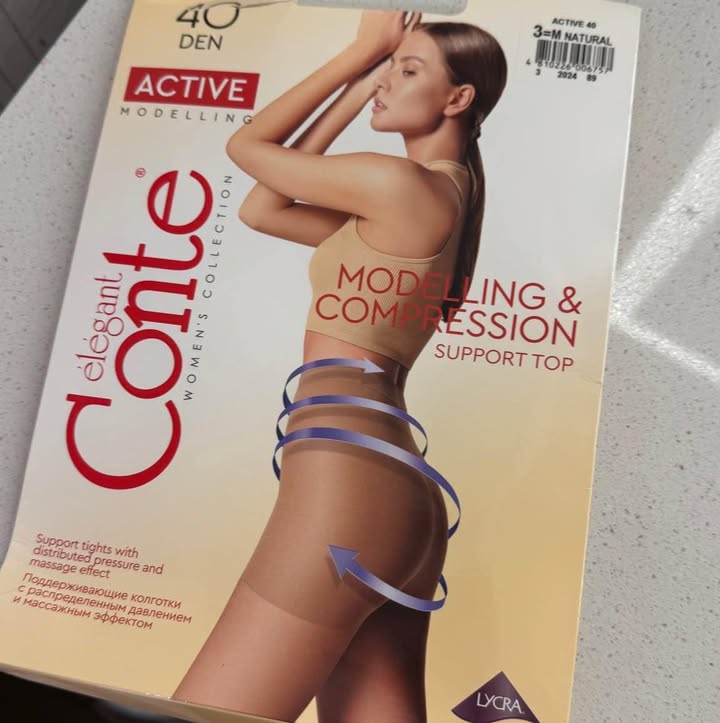
The last thing you expect to find in a package of women’s tights is a salad recipe. With mozzarella and avocado, no less.

So, I delved into a new topic for me and uncovered quite a lot.

For instance, it turns out that lycra is not the name of the fabric, as I always thought, but a brand name for the fabric known as spandex, which I would have guessed was the brand name. And by the way, spandex is officially an anagram of the word expands. In Europe, spandex is also known as elastane. There is a brand of elastane called Elaspan belonging to The Lycra Company. All in all, it’s complicated.

By the way, this spandex was invented by Joseph Shivers, just two hours away from me, in Waynesboro, VA.

In the USA, tights are extremely unpopular. Moreover, if they are worn, they tend to be black and nearly opaque. It’s almost impossible to find nude and sheer ones (at least around here). You can buy anything on Amazon, but you’ll never find them in stores. Apparently no one is interested in salad recipes. However, leggings have conquered the market. Especially lululemon. Meanwhile, women’s high-heeled shoes and tight mini-dresses are also extremely unpopular and are only worn about three times a year. For example, by schoolgirls for Prom and Homecoming—but even then, without tights. Both the shoes and dresses are often of very poor quality, but they suffice for two or three times a year, after which new ones are simply bought.

That same day in New Orleans at the antique M.S. Rau I saw a thing, the name (darner) and appearance of which seemed very perplexing to me. I went to Google it, and searches for darner only show dragonflies. Turns out, a stocking darner is a tool for darning stockings. Specifically, this glass darner, looking like a ball on a handle, was being sold at M.S. Rau for $4400. Google shows mostly metal darners, looking like a hoop with brackets. In Soviet times, they were “mushrooms”.

There’s also a linguistic aspect. In English, tights are called both tights and pantyhose. Generally, pantyhose are considered to be thin (8-40), and tights—are thick (40+). In British English, the word “tights” covers the entire spectrum of tights, unlike in American English.

Interestingly, back in 1972, Australian lifeguards came up with the idea of wearing tights to protect against potentially fatal stings from box jellyfish (sea wasps). Funny, but it’s supposed to help.

All in all, at 47, I’m discovering new horizons, and I hope you found this interesting too.
Exploring “Life of Pi”: From Book to Play | January 02 2025, 05:11

The performance of “Life of Pi” was something I couldn’t miss. I read Yann Martel’s book in Russian, then—for educational purposes—in English, later I listened to the audiobook in English for the same reasons, then spent time during a long family car trip listening to the audiobook in Russian, and eventually watched Ang Lee’s film. And now, I’ve finally gotten around to the play.

I always thought of a play as something much simpler than the show we just came from. The “Broadway standard” keeps the audience awake not only with an interesting script (which reflects the book 99% of the time) but also with some amazing audiovisual effects: projections on four walls, intricate set designs, actors’ movements synchronized with programmed effects. The use of puppetry was particularly impressive; considering the story involves many animals, all of which are crucial, transferring this to the stage always seemed to me an incredibly challenging task.

The plot is as follows: after a shipwreck in the middle of the Pacific Ocean, an Indian boy named Pi Patel survives on a lifeboat with four companions—a hyena, a zebra, an orangutan, and a Royal Bengal tiger.

When I first read the book, I didn’t even know that somewhere at the end of the first third the “intensity” with the shipwreck and the struggle with hunger and fear would begin. Because the first third is philosophical—about religion and how the young Pi simultaneously combines several beliefs in himself. For me, it was almost a meditative reading: measured, thoughtful, with reflections on God, the meaning of life, and how to find one’s place in the world. It seemed that the book was moving towards something profound but unhurried. And then suddenly—shipwreck. Pi’s life is turned upside down, and a completely different story begins—harsh, severe, filled with despair and the struggle for survival. But there is also a third part, quite psychedelic, but I won’t spoil it. This third part was compressed into one minute in the play, but it was done very organically.

Perhaps, the play added new shades to my perception of this story. If the book and film focused more on emotions and philosophy, the play emphasized visual and emotional shock. However, all of them highlight the main question: where does reality end, and fiction begin? What part of what Pi experienced was reality, and what was a product of his imagination, trying to cope with the horror?

After the play, I thought again that each art form shows this story in its own way. The book is about reflections, and the play is a visual explosion, perhaps even stronger than the film of 2012. But the main thing is that after all versions of “Life of Pi,” I realized one thing: sometimes a well-told story is enough to step out of the theater and discuss it over dinner, recalling the brightest moments. This play is definitely worth seeing.

Chichvarkin on Children’s Ambitions and Identity | January 02 2025, 00:36

Chichvarkin had a good point about children in his last interview:

“Here’s what my Alice says: ‘I will do ballet, but I want to be an actress!’

For God’s sake! You can be absolutely anyone you want! I wouldn’t want you to be nobody. I don’t understand, I can’t comprehend, I can’t respect people, I generally can’t interact without disgust if someone is nobody.”

There is something to it.

Tragedy and Turmoil on Bourbon Street | January 01 2025, 17:47

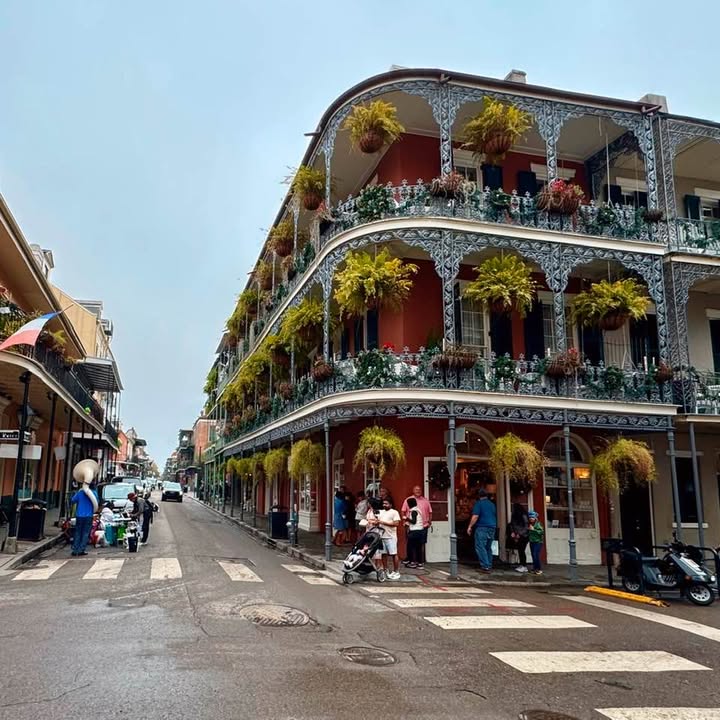
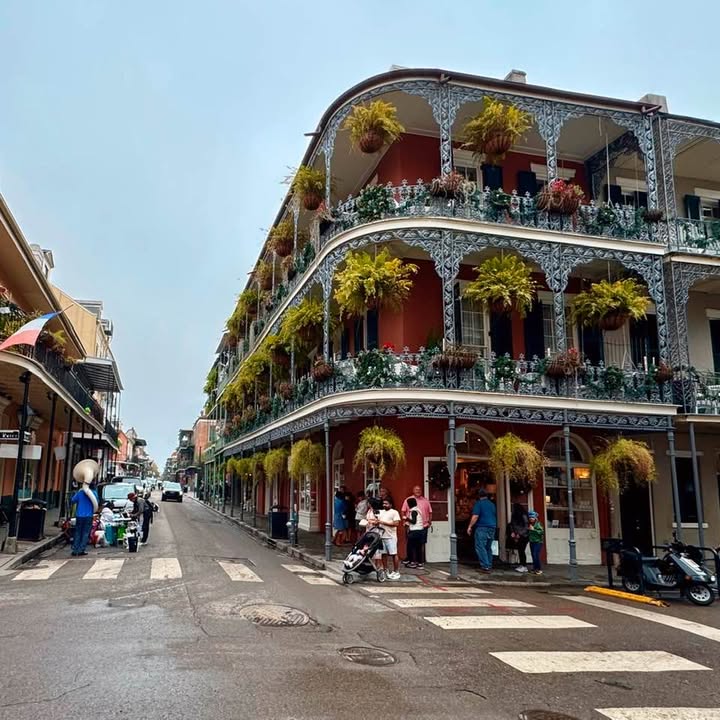
We just returned from New Orleans, where we stayed right in the French Quarter close to that bourbon street. The photo isn’t of it: there’s nothing to photograph on bourbon street, just bars and nightclubs, and honestly, it’s baffling how on that narrow street, perpetually under road construction, anyone could speed up enough for ten people to die. But it seems a dead idiot had everything planned out. Reports say the FBI found explosive devices there and that there was an active shootout.