From Volgograd to Canvas: The Artistic Journey of Andre Kohn | September 13 2024, 18:12

Andre Kohn is an athlete from Volgograd, who later became an impressionist painter in the United States. His works often depict solitary couples in a black, white, and red palette. Personally, I find it a bit dull—clichéd red hats and red umbrellas—but people seem to like it. For some reason, he also avoids painting faces. Yet, if you examine all his works, he is quite an interesting and unique artist.

Posts like this are tagged #artrauflikes, and all 105 can be found in the “Art Rauf Likes” section at beinginamerica.com (unlike Facebook, which forgets—or ignores—nearly half).

Exploring Russia’s Food Safety Standards for Pollutants | September 13 2024, 01:42

After my previous post, I checked out “how it is in Russia.” A document on threshold values for pollutants in food products.

I don’t really understand this well, and if anyone knows better—please correct me. But here’s what I see: for canned foods in tin containers—including condensed milk—the indicated threshold value for tin is 200 mg/kg, which is a lot; there should essentially be none when unpackaged. Indeed, the same canned foods not in tin containers won’t contain tin.

For tea, the tolerance for lead is 10 mg/kg and for copper—100 mg/kg. Additionally, according to the document, it may contain Escherichia coli, cesium-137 (400 Bq/kg), and strontium-90 (200 Bq/kg).

The threshold for zinc in egg powder is 200 mg/kg. The highest mercury levels are found in kidneys and their by-products, and also in the same egg powder. The most arsenic is found in spices and condiments—up to 1 mg/kg.

Interestingly, the highest permissible figures for nitrates are assigned to table beets (1400) and leafy vegetables (2000) – compare that to watermelons, for instance, which have just 60.

Various mollusks and crustaceans are rich in lead. And quite significantly so (10 mg/kg)—compare this with meat (0.5 mg/kg).

No conclusions here, as I’m not an expert. If anyone can provide them—I’d appreciate it 🙂

There’s a lot that can be extracted from the document, just requires more than a casual five-minute analysis like mine.

Exploring FDA Food Contamination Standards and Defect Action Levels | September 13 2024, 01:14

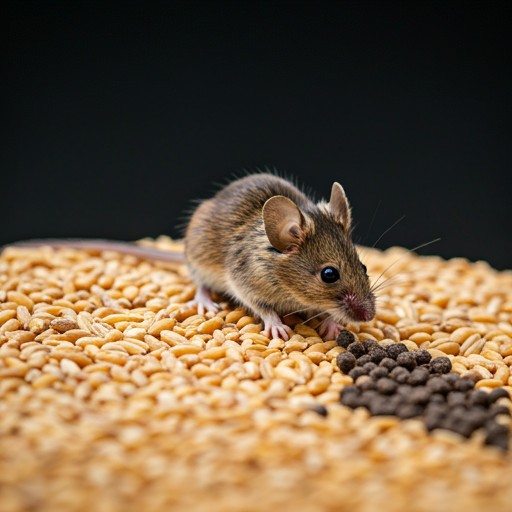
I am reading the book At Home by Bill Bryson and concurrently Googling. In the USA, the FDA has a standard called the Food Defect Levels Handbook, which sets threshold levels for food contaminants. Find out how much mouse excrement can be in flour!

I will post the link in the comments. Also, check out the next post about Russian standards.

Everywhere the word “permissible” appears, it refers to the DEFECT ACTION LEVEL. It is incorrect to believe that if the FDA sets a defect level for a food product, the manufacturer only needs to not exceed this level. Defect levels are not representative of the average defects found in any of the products—they are, in fact, much lower on average. These levels represent the limits at which the FDA will consider a food product “contaminated” and subject to enforcement under Section 402(a)(3) of the Food, Drug, and Cosmetic Act.

But it’s amusing to recognize that such contaminations do indeed exist and to understand their potential scale.

== Wheat ==

Mouse droppings (MPM-V15): not permissible more than 9 mg of rodent droppings per kilogram

== Wheat Flour ==

Insect contamination (AOAC 972.32): not permissible more than 75 insect fragments per 50 grams

== Chocolate and Chocolate Liquor ==

Insect contamination (AOAC 965.38): not permissible averaging 60 or more insect fragments per 100 grams when analyzing 6 samples of 100 grams EACH OR any sample containing 90 or more insect fragments

Mouse hairs (AOAC 965.38): not permissible averaging 1 or more rodent hairs per 100 grams when analyzing 6 samples of 100 grams EACH OR any sample containing 3 or more rodent hairs

Shell (AOAC 968.10-970.23): for chocolate liquor, shell content not permissible more than 2%, calculated on the basis of non-alkalized cocoa beans

== Pasta and Noodles ==

Insect contamination (AOAC 969.41): not permissible, if on average 225 or more insect fragments per 225 grams in 6 or more samples

Mouse hairs (AOAC 969.41): not permissible, if on average 4.5 or more rodent hairs per 225 grams in 6 or more samples

== Canned or Frozen Spinach ==

Insects and mites (AOAC 974.33): not permissible more than 50 aphids, thrips, and/or mites per 100 grams OR 2 or more larvae 3 mm in length or longer and/or larvae or caterpillar fragments longer than 12 mm per 24 pounds OR an average of 8 or more miners per 100 grams OR an average of 4 or more miners 3 mm in length per 100 grams

== Strawberries: Frozen Whole or Sliced ==

Mold (AOAC 952.22): the average level of mold should not exceed 45% and in half of the samples 55% or more

== Citrus Juices ==

Mold (AOAC 970.75): permissible average mold level <10%

Insects and insect eggs (AOAC 970.72): not permissible 5 or more Drosophila and other fly eggs per 250 ml OR 1 or more larvae per 250 ml

== Coffee (raw beans) ==

Insect contamination and insects (MPM-V1): not permissible on average 10% or more beans infested or damaged by insects

Mold (MPM-V1): not permissible on average 10% or more beans by count moldy

== Corn Flour ==

Insects (AOAC 981.19): not permissible on average 1 or more whole insects (or equivalent) per 50 grams

Insect contamination (AOAC 981.19): not permissible on average 25 or more insect fragments per 25 grams

Mouse hairs (AOAC 981.19): not permissible on average 1 or more rodent hairs per 25 grams OR an average 1 or more rodent dropping fragments per 50 grams

== Cocoa Beans ==

Mold (MPM-V18): not permissible to have more than 4% of beans by count moldy

Mammalian excreta (MPM-V18): not permissible on average 10 mg or more mammalian excreta per pound

== Hops (used in brewing) ==

Insects (AOAC 967.23): not permissible on average more than 2,500 aphids per 10 grams

== Ground Allspice ==

Insects (AOAC 981.21): not permissible: average — 30 or more insect fragments per 10 grams

Mouse hairs (AOAC 981.21): not permissible average — 1 or more rodent hairs per 10 grams

Source of defect: insect fragments — contamination before/after harvest and processing. Rodent hairs — contamination after harvest and/or processing.

== Canned and Frozen Berries (blackberries, raspberries, etc.) ==

Mold (AOAC 955.47): permissible average level of mold is 60% and less

Insect larvae (AOAC 981.20): permissible average — 4 or fewer larvae per 500 grams

OR

Average value — not permissible more than 10 whole insects or their equivalents per 500 grams (not including thrips, aphids, and mites)

== Frozen Broccoli ==

Insects and mites (AOAC 945.82): permissible average — 60 or fewer aphids and/or thrips and/or mites per 100 grams

== Frozen Brussels Sprouts ==

Insects (MPM-V95): permissible average — 30 or fewer aphids and/or thrips per 100 grams

== Whole Allspice ==

Mold (MPM-V32): permissible average — 5% or less of berries by weight moldy

Significance: potential health threat — may contain mold producing mycotoxins

== Ground Cinnamon ==

Insect contamination (AOAC 968.38b): permissible on average 400 or fewer insect fragments per 50 grams

Mouse hairs (AOAC 968.38b): permissible on average 11 or fewer rodent hairs per 50 grams
Seeking Advice on Business Administration Education for Masha in Italy | September 12 2024, 13:02

Help! Who knows about Business Administration education in Europe, specifically in Italy? Know someone who knows? Tag your acquaintances in the comments if there are any. My Masha wants and can study in Italy. She almost has a national annual visa (passport with the visa should arrive within a couple of weeks), and she wants to get her first onsite education in a major city like Milan or Rome. She wants a business education, though there is some flexibility here. In English. Such offers exist, but it’s hard for me to evaluate them.

She is currently making calls to universities, and has already spoken to several. The price range is $3,000 to $40,000 per year. Ideally, she’d be able to jump into this semester 2024-2025 or at most the next one, and in some places, this is even possible, but these are small private institutions that sometimes give a dodgy impression. For example, there is the virtually unknown Scoula Politecnica di Design with tuition fees of 10-15K euros, and there’s the seemingly much better Swiss School of Management with tuition fees of 8.5-10K euros per year. Larger universities, like the University of Pavia or the University of Bologna (UNIBO), offer BBA/eng for a few thousand dollars per year, but there’s almost no chance to start in mid-September. Or am I mistaken? We’re figuring it out.

Business programs roughly divide into MBA and BBA. Let’s put MBA aside, and focus on BBA (Bachelor of Business Administration) — it’s a _three-year_ program in English, also referred to as a Bachelor. Perhaps it will eventually add a line to the resume, and will surely add knowledge, but as we understand, nearly 100% of students are a mix from third world countries, like Thailand and countries in Africa. Not that it’s a bad thing, but it feels like it somehow reflects the level. Many from the USA actually go to Europe for education, but apparently, nobody goes to these universities 🙂 Maybe we need to keep looking.

As an alternative — study for a year in BBA, then drop it to go to a larger university for a four-year program, and try to transfer the credits if possible. And if it doesn’t work out — so be it. Our Liz has been studying for five years norm, why shouldn’t Masha study for five years too.

If anyone is knowledgeable on this topic, please tag them in the comments. If you have dealt with a similar issue — please share what you know about BBA and about obtaining a first higher education in Italy.

Curating a Must-Follow List of Science Voices on YouTube | September 12 2024, 04:06

I recently started making a list of scientists and science journalists across various fields who are interesting to me and worth listening to on YouTube, and who generally have a good reputation. The list is at the link. Who have I forgotten? Surely a lot of others. Send them in, I’ll keep updating. Hope it’s not just useful for me.

https://beinginamerica.com/science-who-to-follow/

Exploring the Shift in Meaning of “Ambition” in Russian Culture | September 11 2024, 17:46

Currently reading “Russian with a Dictionary” by Irina Levontina.

It turns out that the modern meaning of “ambitious” when applied to a person has shifted quite significantly from its previous connotations.

The word “ambition” both in the USSR and earlier was predominantly associated with an inflated self-esteem and baseless claims. This interpretation was also reflected in dictionaries: ambition – “heightened self-love, excessive conceit.”

Interestingly, in the Russian language, nearly all words that denote a high self-regard by a person are negatively connoted: pretension, aplomb, haughtiness, arrogance, airs, self-assurance, overconfidence. The list goes on. This reflects the deep-rooted notion in Russian culture that a proud person ought to be humble. And yet, we understand that sometimes a person soberly assesses their capabilities, is ready to tackle a task, and speaks of it without any affectation, and this is good. However, it is impossible to use the word overconfidence even with a clarification that it is meant in a good sense in such a case.

A word needs to be torn apart and reassembled in a different order – confidence in oneself. Otherwise, the negative connotation remains inescapable.

When the word ambition was borrowed into the Russian language, it quickly acquired this shade. And during Soviet times, it was even harder to use the word ambition outside of a negative context.

The Big Explanatory Dictionary of the Russian Language, Kuznetsov’s Dictionary:

ambition

1. Heightened self-love, excessive conceit.

Example: To prove, to argue with ambition.

2. ambitions, -ций. disapproving

Claims, pretensions to something.

Example: To set aside one’s political ambitions.

By the way, “Russian with a Dictionary” is an interesting book.

Innovative Dog Training Device to Deter Pulling | September 11 2024, 13:33

I have an idea for a new product. A small box that can be attached between any leash and any collar, with two carabiners. It emits an unpleasant high-frequency sound if the dog pulls, either continuously or suddenly. The sound stops instantly as soon as the tension is released, or with a slight adjustable delay.