
Sometimes Yuki and I watch animal movies (the videos are boring and monotonous, no need to watch more than a couple of seconds)

Sometimes Yuki and I watch animal movies (the videos are boring and monotonous, no need to watch more than a couple of seconds)
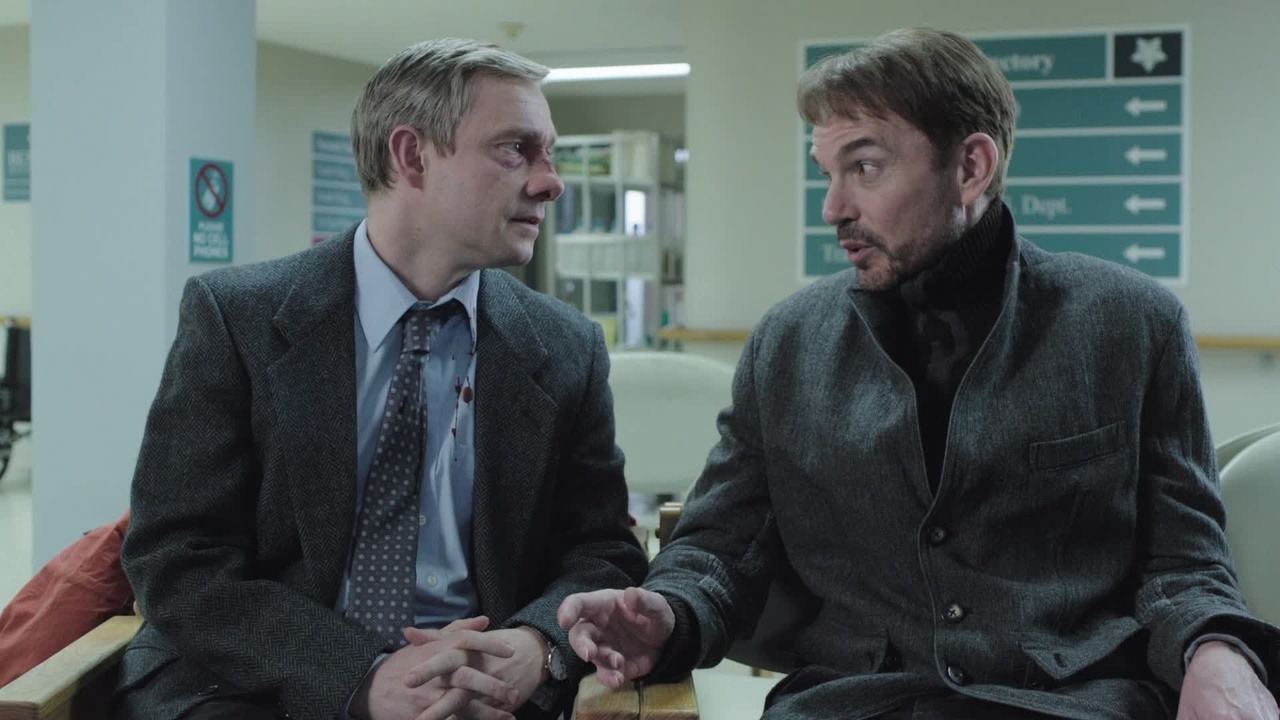
We’re revisiting the first season of Fargo. You know who Lorne Malvo (the one on the right in the photo) reminds me of? Woland.
Just look. He awakens the evil he sees in people and tempts them to act upon this evil, which is characteristic of Satan in Abrahamic religions—to tempt and entice people into sin. His collection of tapes can be seen as a symbol of “soul collecting”.
He creates chaos literally without any reason, like when he incites a kid to pee in a gas tank and then reports him, just like Satan, who perpetrates evil simply because he is evil, and to have a bit of fun. He phones Hess’s sons, lies to them and manipulates them into fighting, again, for no apparent reason. Or he scares the children living in Lester’s old house.
Somehow, he managed to escape from Lester’s basement, although there was no exit—a normal person couldn’t have done that. The character is often linked with religion: he pretends to be a priest, quotes biblical verses to manipulate a wealthy man, etc.
I barely remember the second half of the season, we are still watching it. But it seems to me that there will be even more evidence that Lorne is Woland 🙂
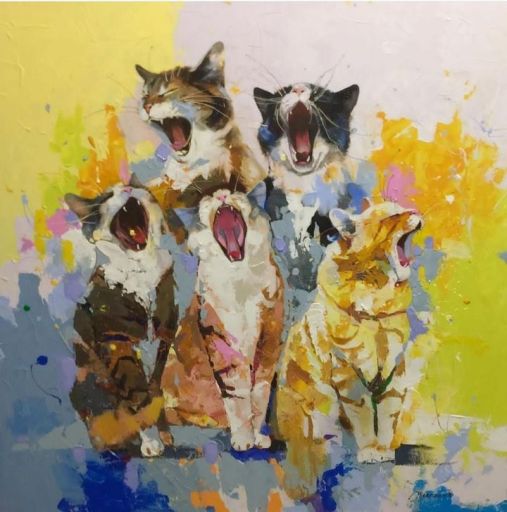
An intriguing artist — Inessa Morozova, Moscow, Russia.
The first painting in her gallery is titled ЖОРА. ЖОРА is a male name. The humor of the artwork stems from the fact that only half of the name is displayed, and what initially springs to mind is something akin to “ass” (in Russian, ЖОПА). However, the painting is indeed named ЖОРА, and therein lies its wit.
The principal motifs are children and childhood. Its tone bears a slight resemblance to Nastasya Chudakova, yet the technique veers more towards impressionism. She boasts numerous paintings, each surpassing the previous. I have selected what I believe to be the masterpiece.
Similar posts are aggregated under the hashtag #artrauflikes, and all 103 of them can be explored on beinginamerica.com in the “Art Rauf Likes section (unlike Facebook, which overlooks (or neglects) nearly half of them).







TILL LINDEMANN recently visited us on tour. For the promotion of his American tour, they featured his performance at Red Square with the song “Любимый Город” (in Russian, of course). It was during the military-music festival “Spasskaya Tower”, September 2021. In a white jacket and bow tie, he looked like an eccentric.

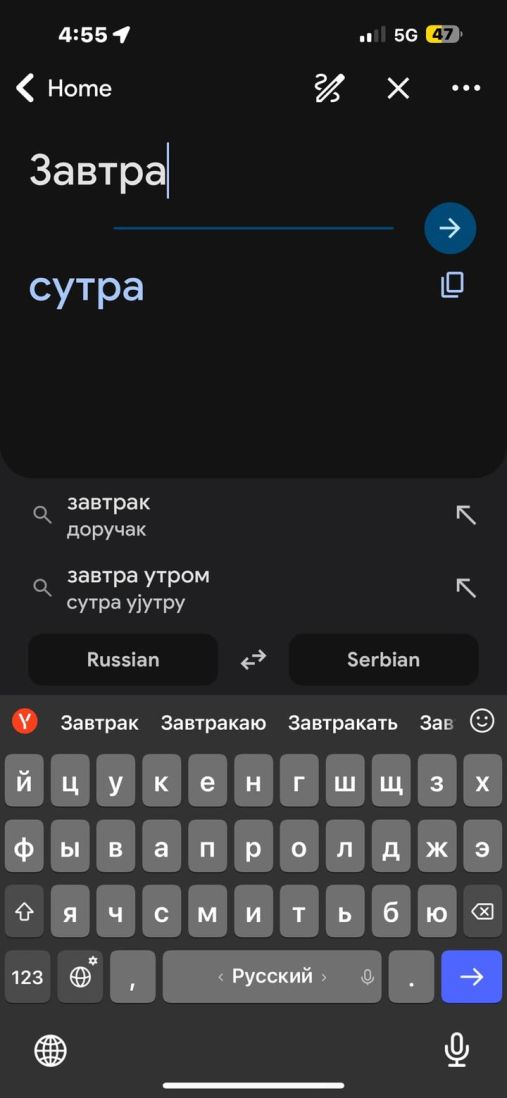
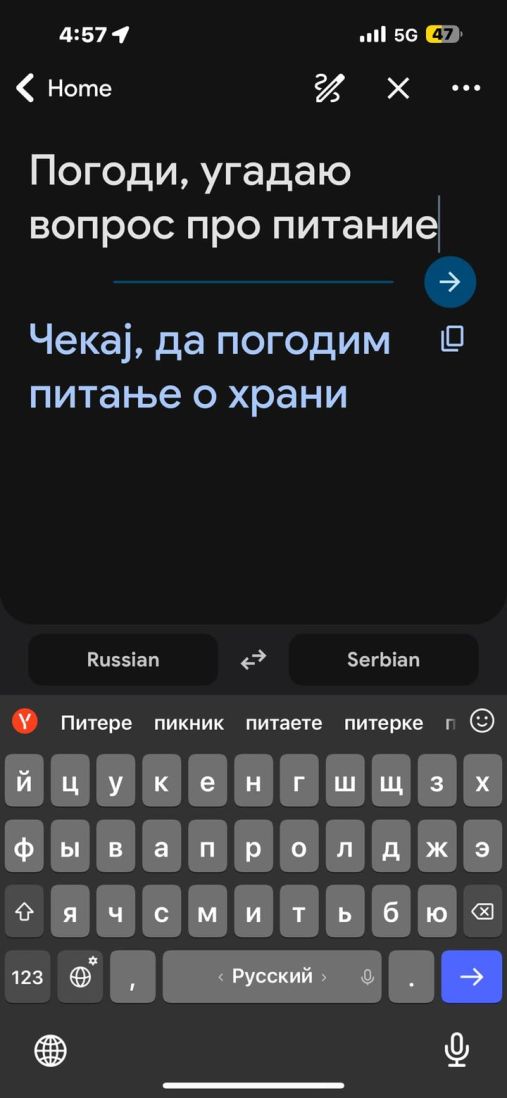
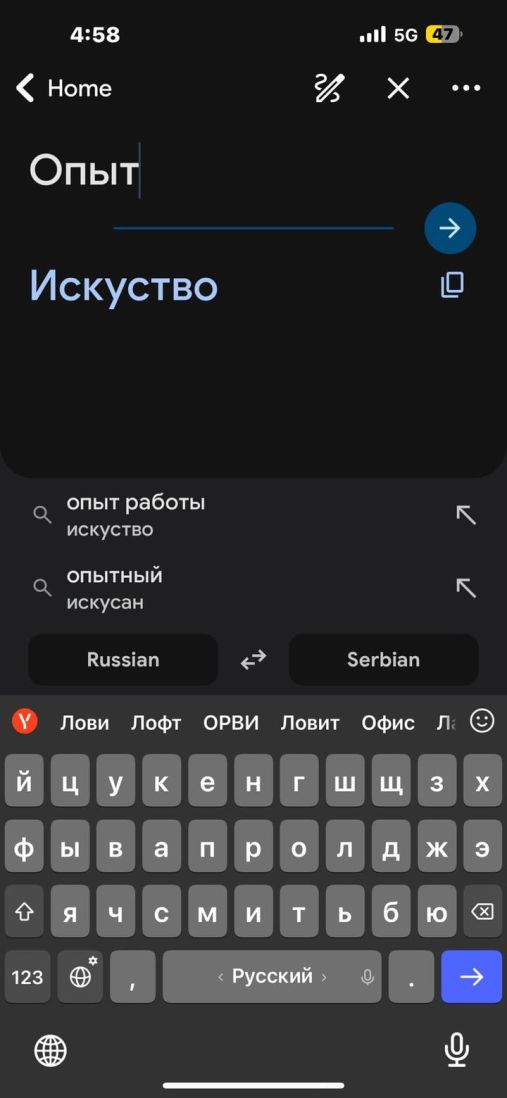
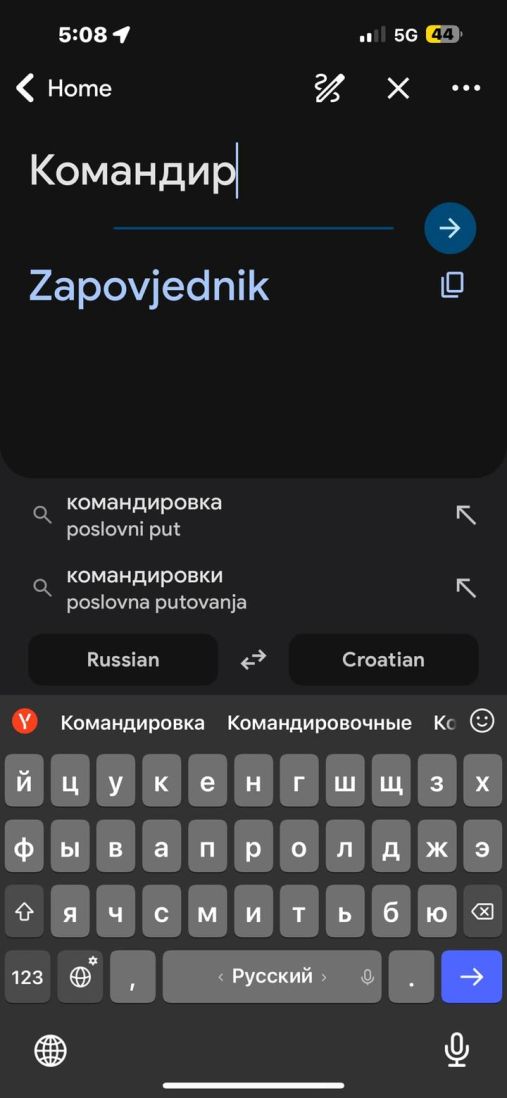
Wanted to read a smart book in the subway, but ended up discovering Croatian for myself




Driving past a construction site. In the photo — the process of erecting walls using a method called panel lifting or tilt-up construction. This method is widely used in the construction of industrial buildings, warehouses, and shopping centers. The essence is that reinforced concrete panels are cast horizontally on the construction site, and then raised to a vertical position using a crane. The braces are removed later, once other structural elements are assembled. I’ve only seen this in the USA.




Yuki first saw how “parents” buy a ball for themselves and play with it. He is impressed by the day. So we’ve made it to pickleball. Now we need to make it to the court. It’s right in front of our house, but still, we need to get there! For instance, the pool, which is also in front of the house, I managed to go only once this year, and last year—not at all.

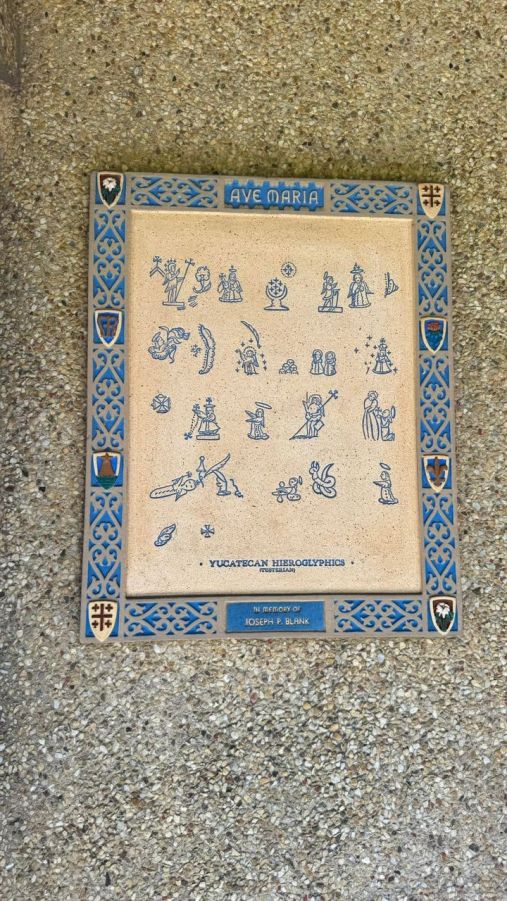
We stopped by the Franciscan Monastery, where around the perimeter there are signs with ave maria in different languages. Very enlightening indeed; of course, I had imagined how diverse scripts could be, but the signs still surprised me. It seems there are over a hundred signs; I only photographed a few.
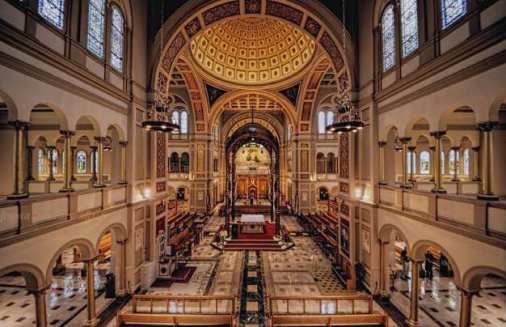
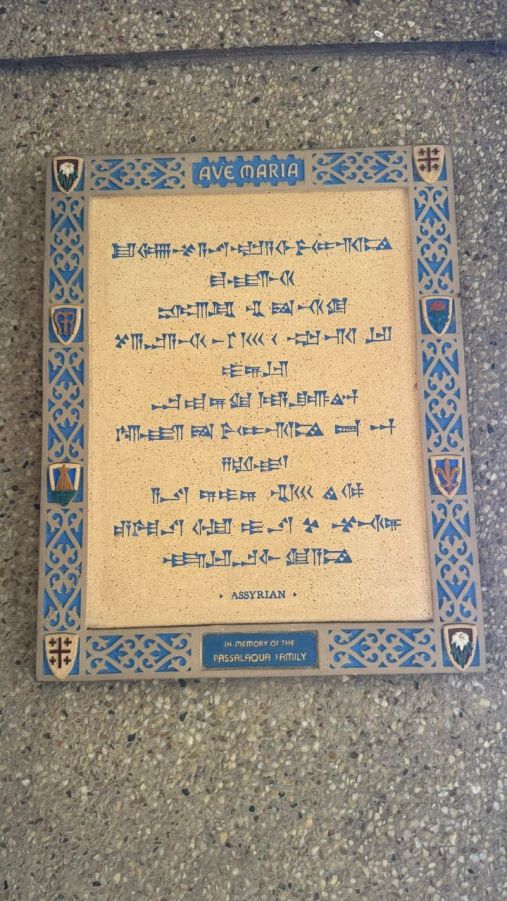


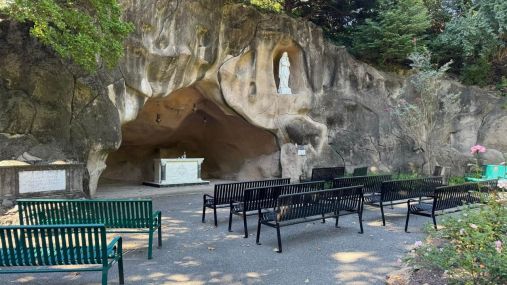
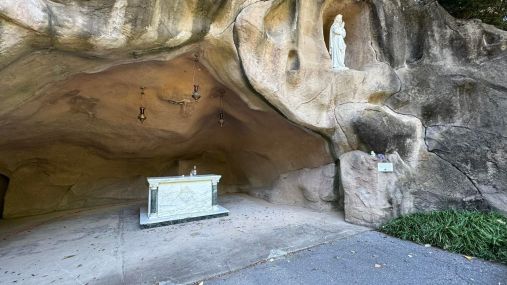
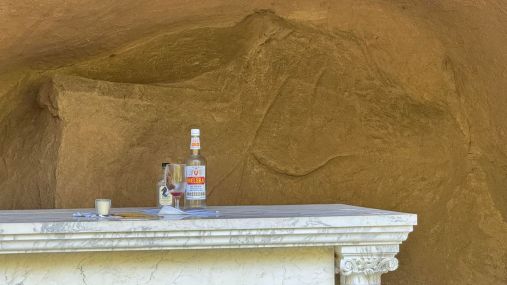

POSITIVELY NO ADMITTANCE. Captured today in the center of the hall of the largest Catholic church in North America.
Another linguistic puzzle. Why POSITIVELY?
The correct translation is “ENTRANCE STRICTLY FORBIDDEN TO WHOMEVER.” But why not ABSOLUTELY NO ADMITTANCE?
“Positively” in the phrase “positively no admittance” (strictly prohibited entrance) is easiest understood as employing its primary meaning: it emphasizes “no admittance” (prohibition of entry to whomever).
But why positively?
I read that there was an assumption that this word in its early uses was employed to describe positive law, that is, law established or recognized by state authority, as opposed to natural law — those “laws” that seemingly are naturally understood by people as applicable to all, such as “do not kill.” “Positive” in the context of positive law means “officially established or imposed”; it is a synonym for “prescribed.” So, could the expressions “positively no trespassing” and “positively no admittance” fundamentally mean “as officially established or prescribed, entry is forbidden” or “by law, entry is forbidden”?
As attractive as this theory may sound, early evidence of the phrases “positively no trespassing” and “positively no admittance” does not show such a direct link to positive law; therefore, this explanation falls apart.
A more probable explanation for the odd sound of modern cases of “positively no trespassing/admittance” is that the word “positively” is now so readily applied in contexts unrelated to law that it has lost some of its forcefulness, although, perhaps, it never had a legal meaning.
In short, it’s not clear at all; what’s clear is that it is used for emphasis.

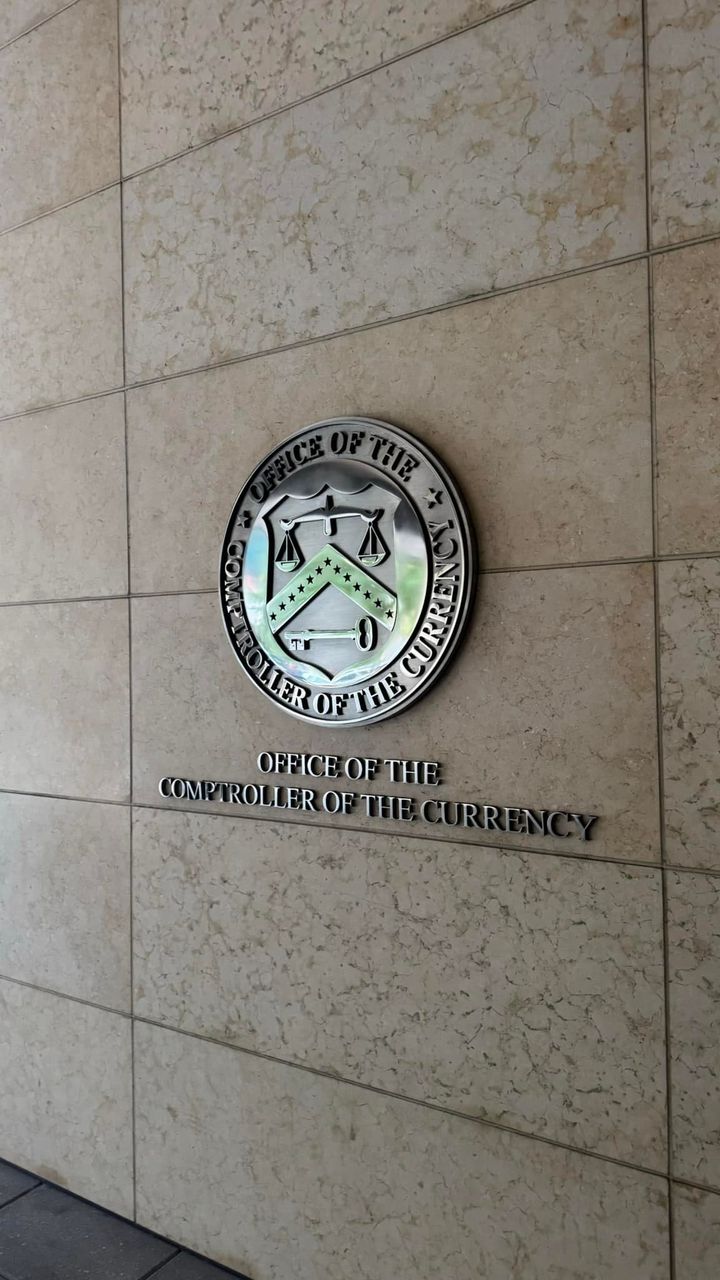
Today at the subway, I saw the Office of the Comptroller of the Currency logo on a wall. I was surprised by the word comptroller. Riding the subway now, researching. Interesting.
Interestingly, it’s pronounced the same as “controller” and essentially means the same thing.
According to some sources, the term “comptroller” emerged in the 1800s due to a careless spelling mistake when writing the word “controller”. Ever since, this spelling stuck, and comptroller began to be used to describe a financial officer in the public sector.
But there’s also reason to believe that the mistake was not accidental.
It is written that “controller” originates from the Latin word “contrarotulator” or the French “countreroller”, which means “keeper of the duplicate register”. Apparently, people mistakenly associated this title with the French word “computer” (not related to computers; it refers to someone who counts). As a result, a needless word-bug was born, yet it has stuck around, at least for naming a government office.


 Hi, I'm Rauf Aliev.