
The sign on the poster to the right reads: “Yes, we have a little place for you! The crematorium.” And this castle—that’s its entrance.

The sign on the poster to the right reads: “Yes, we have a little place for you! The crematorium.” And this castle—that’s its entrance.
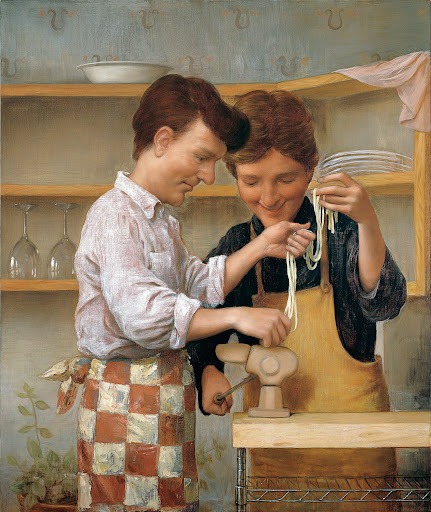
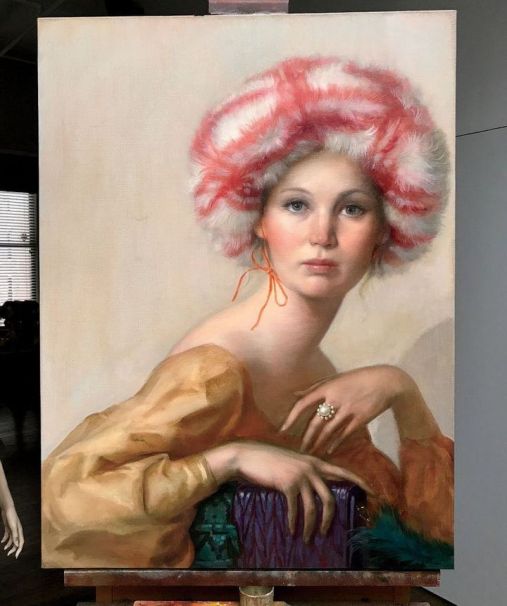
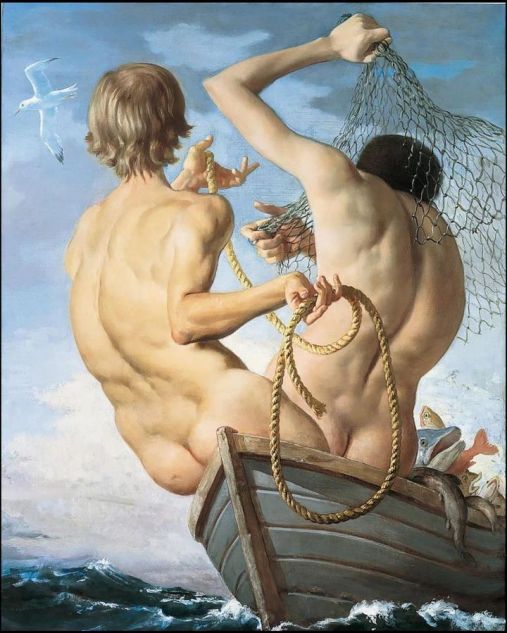
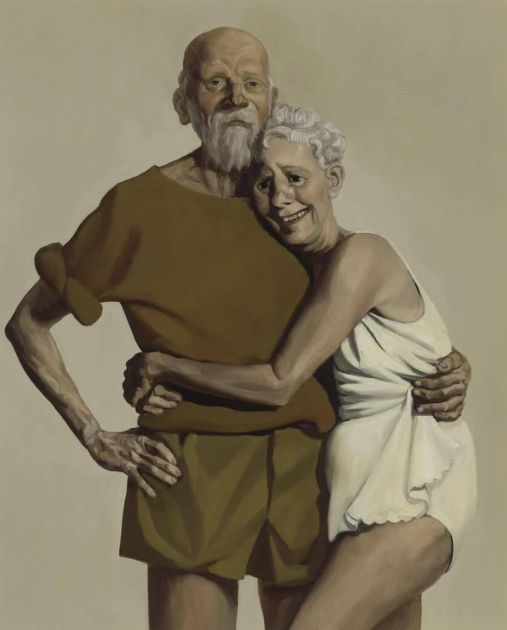
Today, I’m introducing John Currin, one of the most renowned contemporary American artists. His paintings simultaneously evoke laughter and admiration, blending coarse elements of popular culture with the refinement of high art. This contrast grabs attention and elicits mixed feelings of disgust and fascination. 🙂
There are artists who cannot draw a person without a reference. A reference can be in the form of a photograph or having the person sitting in front of them as they draw/paint them from life. But take away the reference and ask them to draw from memory—nothing comes out. Most of us don’t retain a clear picture in our memory, especially not the details that are unimportant to us but important to recreate an image on the canvas. However, there are artists who don’t need a reference because they already have an image in their head and just need to transfer it to the canvas. All the artists above can be divided into those who know and use anatomy and those who don’t need it much, as their task is simply to transfer color patches from their head to the painting, and if done accurately, everything falls into place. The academic approach is to reconstruct the structure and then overlay the color patches. In practice, it all happens simultaneously, but nevertheless, there are “academists” and “visuals” (terms I coined for lack of better ones). Artists specializing in caricature must master all these skills at the highest level. They obviously don’t copy references (model or photograph) but build a structure distorted in just the right way to produce the desired impression.
Technically, John Currin is not a caricaturist. Although his paintings may include grotesque and satirical elements, they are done in a classical style and with high quality. This creates a contrast that elicits strong emotions from viewers.
Another observation: some artists find a style and start “churning out” a whole series in it, likely because it sells well. An example is Laurent Parcelier. I don’t make separate posts about such artists, though they are certainly talented. It’s just boring; all of Laurent’s paintings are “the same,” with sunlight filtering through leaves to form a pattern on the wall of a Mediterranean house. It’s much more interesting when an artist’s style is hidden deeper, in technique rather than in the ability to convey one thing.
I remind you that similar posts are grouped under the tag #artrauflikes, and on beinginamerica.com in the “Art Rauf Likes” section, all 68 (at the moment) are available (unlike Facebook, which forgets (ignores) almost half).








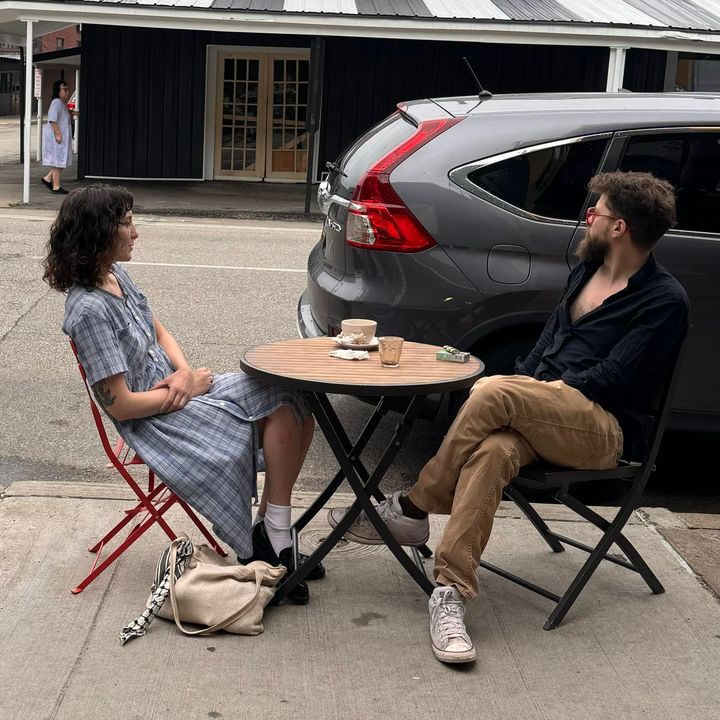
The bearded man on the right is a barista. Yesterday he had a beard too. It’s just that for some reason they always pick a girl without a bun.

Two fun stories about the daily life of programmers.
The first one:
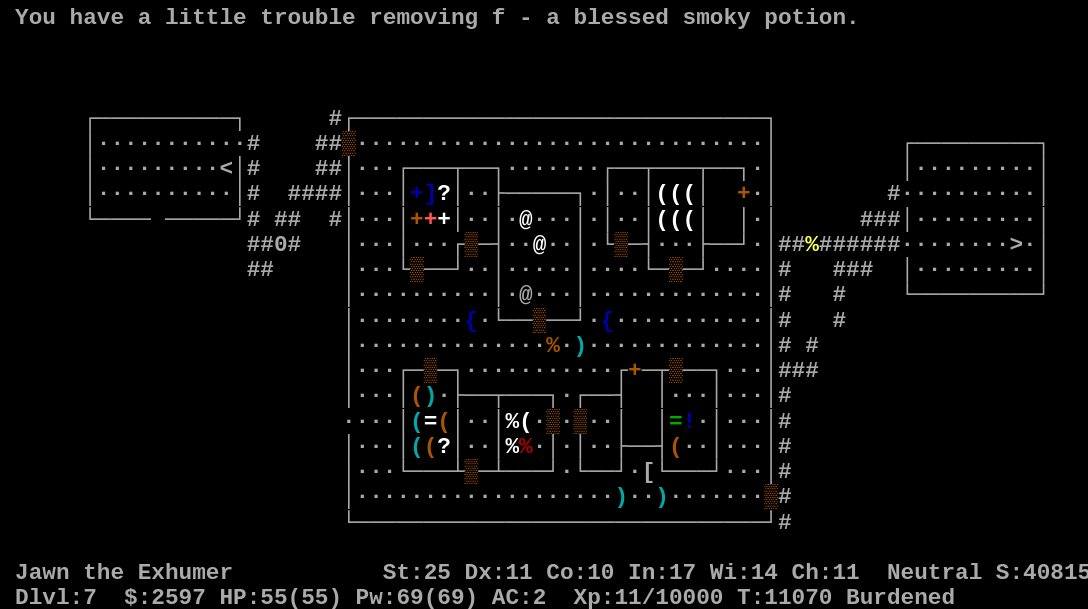
Researchers (@maciejwolczyk, @CupiaBart) trained a neural network to play NetHack, an old role-playing game where everything is represented by text characters. It’s a very old RPG from the days (1987) when there were no normal user interfaces, and everything happened in the console. The player goes through levels, collects items and rewards, participates in battles, and scores points — all expressed through the simplest characters.
In general, they trained it. The model consistently scored 5000 points. However, suddenly something went wrong — the model started scoring only 3000 points. That is, it showed a significantly worse result. Debugging solutions is always fun, so the thread author tried:
— to find a problem in the agent model loading code
— to roll back the code a few days ago
— to roll back the code several weeks ago (well, surely everything works there?)
— to rebuild the environment
— to change the version of CUDA (drivers for running neural networks on a video card)
— to run the code on a personal laptop, not a server
Nothing helped — the model consistently showed 3000 points.
In desperation, the author wrote to the creator of the model @JensTuyls, and received an unexpected response:
— Maybe it’s a full moon today 🌕
What?? 😑
Upon checking the lunar calendar, it turned out that indeed it was a full moon that day. The author launched the game and saw the message: “You’re lucky! It’s a full moon today.”
In NetHack, there is a mechanic that changes the gameplay during a full moon, based on the system time. The character becomes luckier, werewolves appear in their beastly guise, and dogs start howling. The model was not trained with data from the full moon, so its scores dropped to 3000 points. By changing the system time, the author confirmed that the model again scored 5000 points.
This did not make the game more difficult, but the model simply did not understand how the rules had changed and tried to play as usual — hence the drop in points. To check, you can change the time on your computer — and the model again scores 5000 points.
Moral: When faced with an unexpected error, don’t forget to check the lunar calendar.
* * *
The second story is about the ‘man’ command in the console.
This is a command that outputs documentation about what is entered as the second parameter. For example, “man ls” provides documentation on ls, which shows a list of files and subdirectories of the current directory, and “man man” provides documentation about itself.
On StackExchange, someone was wondering why their tests were failing. Answers
Marnanel Thurman:
“Uh, that’s my fault, I suggested it. Sorry. Almost the entire story is outlined in the commit. The programmer maintaining the ‘man’, a good friend of mine, and one day, six years ago, I jokingly told him that if you called ‘man’ after midnight, it should print “gimme gimme gimme”, because of the Abba song “Gimme gimme gimme a man after midnight”:
Well, he actually added it. It was fun for someone to discover this, and we mostly forgot about it until today.
I can’t speak for Cola, of course, but I never expected that it would ever cause any issues: what test would break down parsing man output with no specified page? I suppose I shouldn’t have been surprised that such a test was eventually found, but it took six years.”
I’m in Pittsburgh, Pennsylvania. Today, I felt like having some draft Guinness. A Google search showed that there’s only one place within a half-hour walk. It’s a bar, the food is so-so, but I also wanted to have dinner. I asked if they do takeout. They told me that the law states you can only drink inside. Decided to find out how it differs from our Virginia.
Grocery stores here don’t sell any alcohol at all (my readers from Russia probably wonder why even open a grocery store, since alcohol boosts sales). So, no beer or wine here.
Beer is sold in a separate store, which has all kinds of beers (there were four varieties of Guinness, including imported), but no wine or chips (my readers from Russia probably wonder how you can sell beer and not sell anything to go with it).
Wine is sold in dedicated stores, along with spirits. This is the Fine Wine & Good Spirits network, managed by the Pennsylvania Liquor Control Board (PLCB). These stores close at 5-6 PM (my readers from Russia probably wonder why sell vodka and wine until 5 PM, when it’s usually needed well after 5).
Theoretically, as of relatively recently, groceries can sell wine and beer with restrictions, but it seems most of them prefer not to change anything. Probably, it requires not only acquiring a license but also organizing more stringent processes for control, management, and reporting within the store, and it’s easier for them to keep things as they are.
Attached is a map marking “dry” counties in red, where no alcohol can be purchased at all, as well as “moist” counties in blue and “wet” counties in yellow. In a “wet” county, alcohol sales are fully permitted. This means that alcoholic beverages can be purchased in stores, bars, restaurants, and other licensed establishments without significant restrictions. Most of the territory is painted blue on the map. Yellow marked areas are “moist” counties, where alcohol sales are permitted with certain restrictions, a kind of compromise between “dry” and “wet” counties. Restrictions might include selling alcohol only in specific types of establishments (e.g., only in restaurants), time restrictions on sales, or a ban on selling spirits while allowing the sale of beer and wine. I’ve described the restrictions in Pittsburgh above, but each state has its specifics.
Virginia, where I live, contains moist and wet counties, and no dry counties. Specifically in Leesburg, beer and wine are indeed sold in groceries. For spirits, however, you have to go to the ABC stores, which are managed by a state-affiliated organization (Virginia Alcoholic Beverage Control Authority).


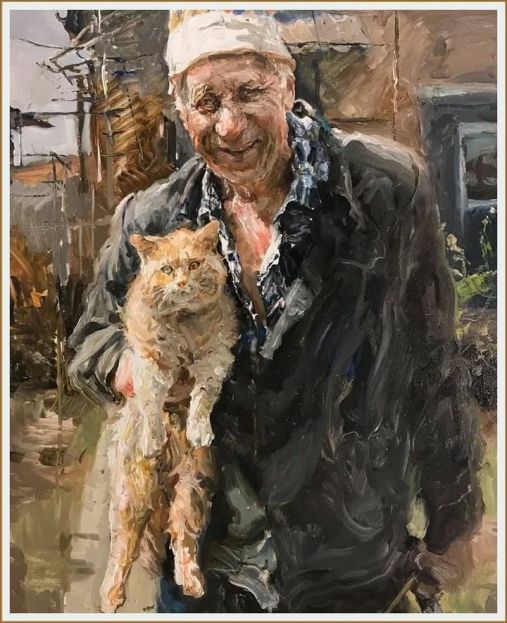
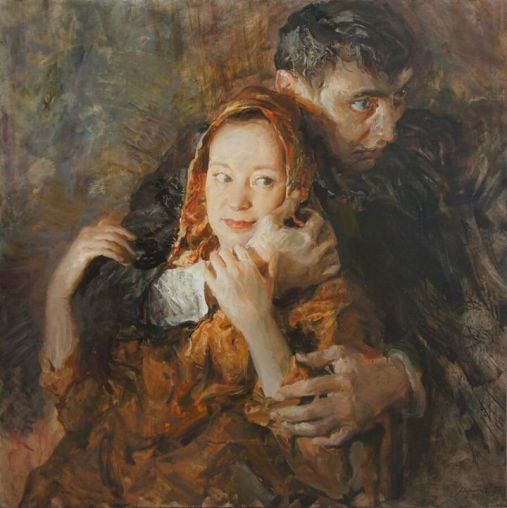
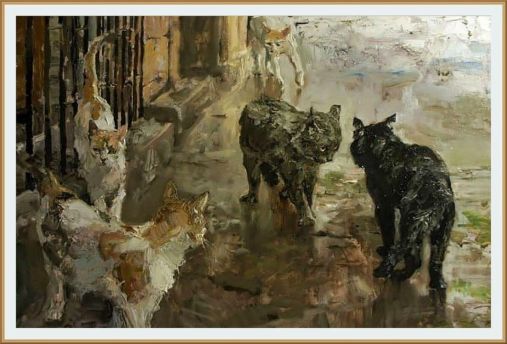
Another great artist in my “collection” is Konstantin Lupanov from Krasnodar. You have likely never heard of him. Sometimes, when you want to write about an artist and start looking for more works beyond the two or three you initially liked, you only discover that the rest are mediocre. That’s why I haven’t introduced you to, for instance, Miriam Escofet or Michaël Borremans (the rest was not mediocre, but not of my taste). However, with Lupanov, it’s hard to stop adding his paintings to the gallery. All of his works are exceptional. Konstantin portrays the reality around him just as it is: friends, relatives, and his beloved cat.
I remind you that similar posts are grouped under the tag #artrauflikes, and on beinginamerica.com in the “Art Rauf Likes” section, where all 68 (currently) are available (unlike Facebook, which forgets (ignores) almost half).







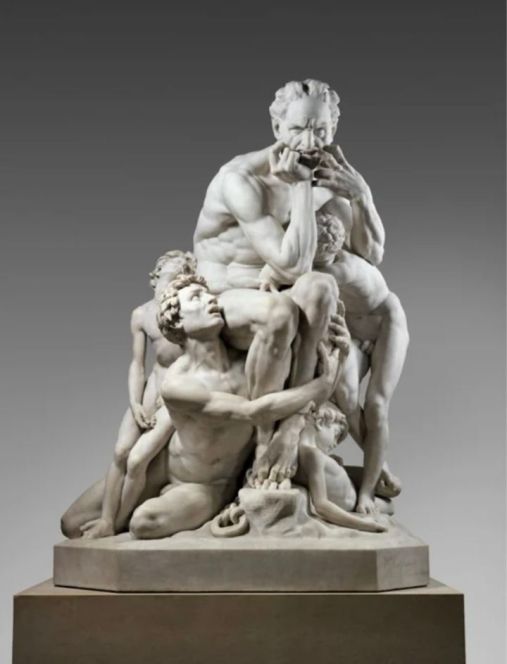
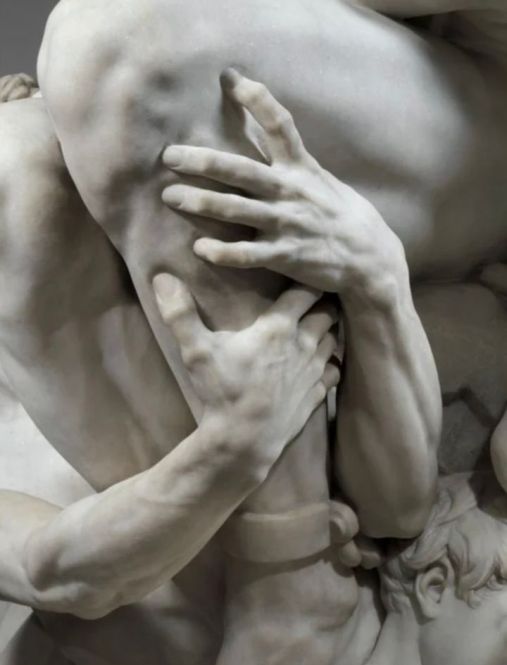
Today, to my surprise, I discovered that marble is not a durable material. After 150 years, signs of decay appear, and after 300-400 years, it completely deteriorates. Under the open sky, especially in places with variable humidity, it quickly gets covered with stains and crumbles. Granite and basalt, on the other hand, are a completely different matter.
Old marble statues that you see in museums are often heavily “patched” by restorers, both modern and from past centuries, plus they spent most of their history in a dry and stable climate (often artificially created, in those same museums).
I’ll also throw in another fact—apparently well-known, but relevant to the discussion. It seems that many Greek statues, probably even all of them, were painted, and what we now see is not what their contemporaries saw or how they were intended by the sculptor. I assume that we wouldn’t like the painted version now; they seem too gaudy for us. There are convincing evidences that many were painted, and it can be confidently assumed that painting was a common practice at the time, but it seems unclear whether there was a context in which the sculptures remained unpainted from the beginning, and why.
Illustration: “Ugolino and His Sons” by Jean-Baptiste Carpeaux


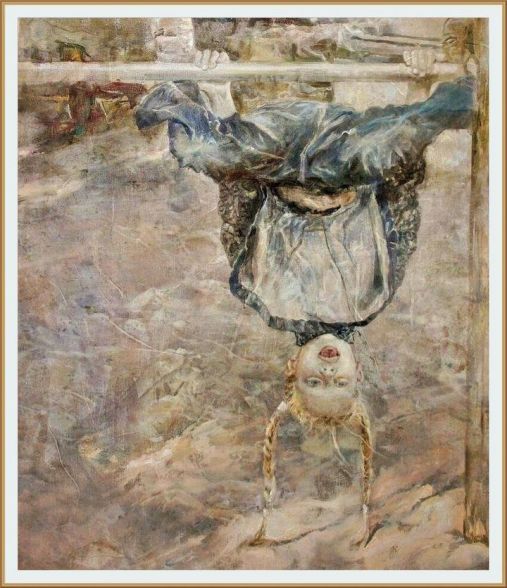
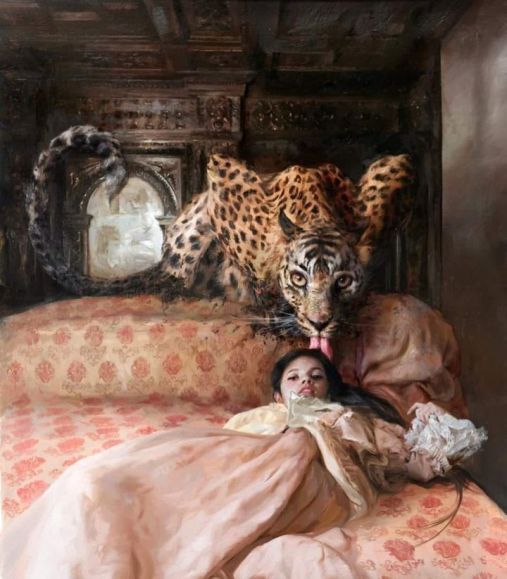
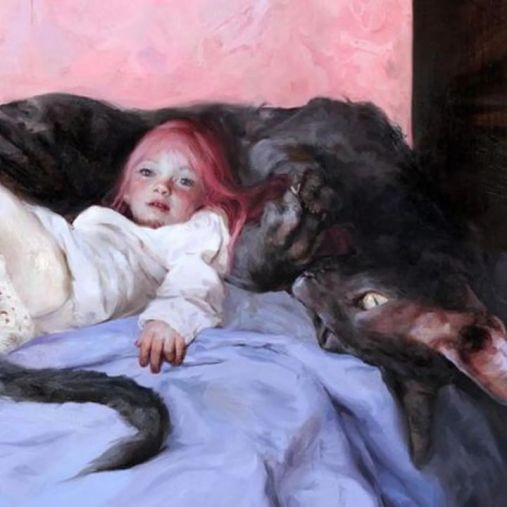
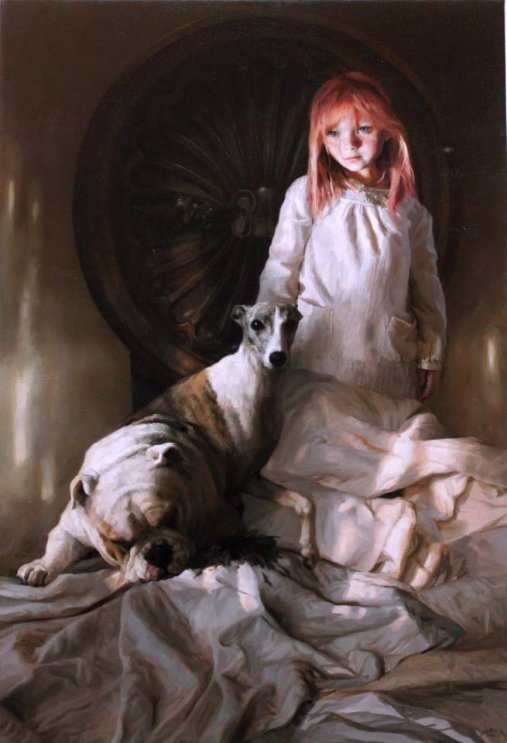
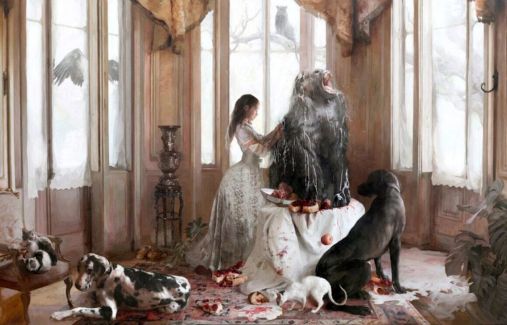
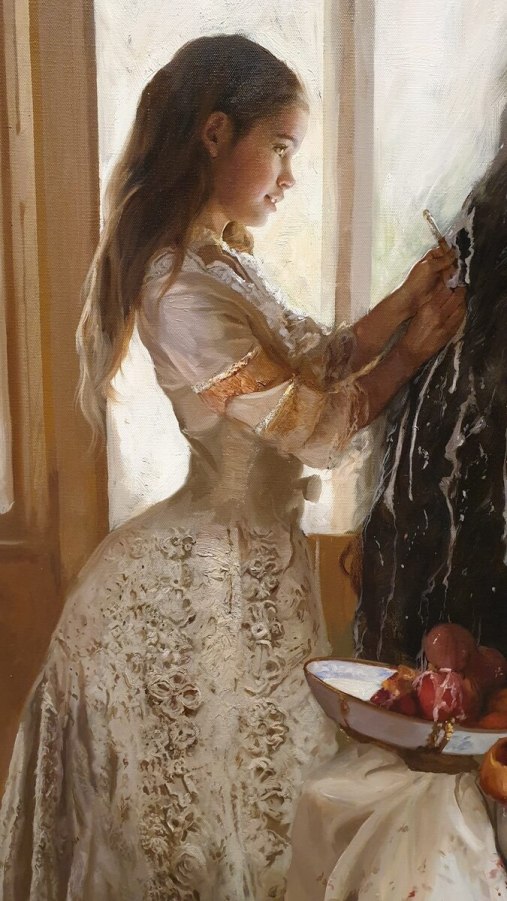
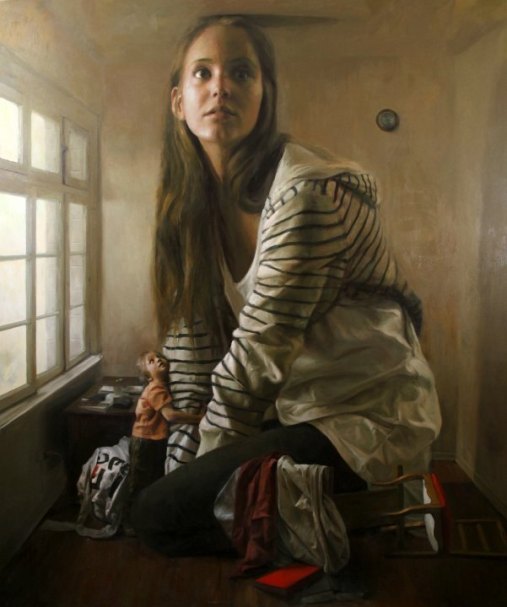
Today, I want to talk about an interesting contemporary artist, Guillermo Lorca García-Huidobro (1984). His works are very unusual and captivating, perhaps because they encapsulate childhood experiences and fears, each unique to the individual. His paintings feature little girls and all sorts of bizarre creatures in the form of their “pets”. I can’t say I’m thrilled by his art, but Guillermo definitely grabs attention and stands out among others.
I remind you that similar posts are grouped under the tag #artrauflikes, and on beinginamerica.com in the “Art Rauf Likes” section, all 64 (at the moment) are available (unlike Facebook, which forgets (ignores) almost half).





Three little spots

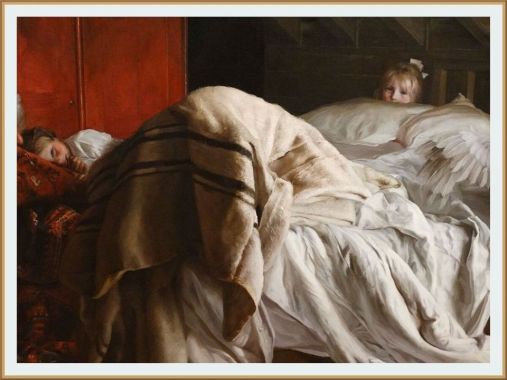
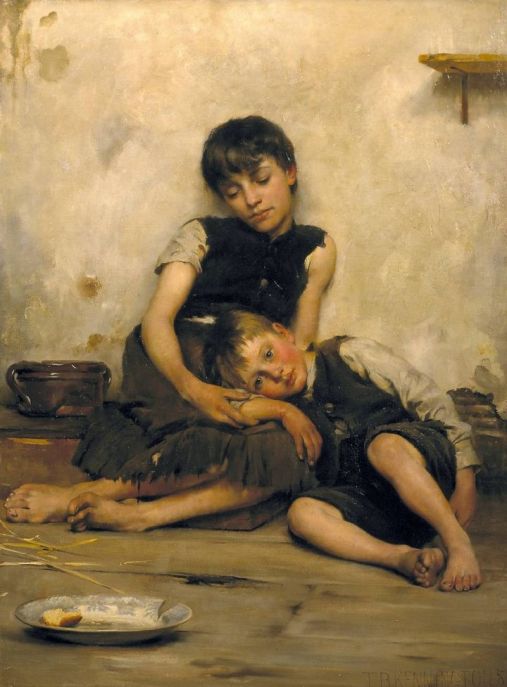
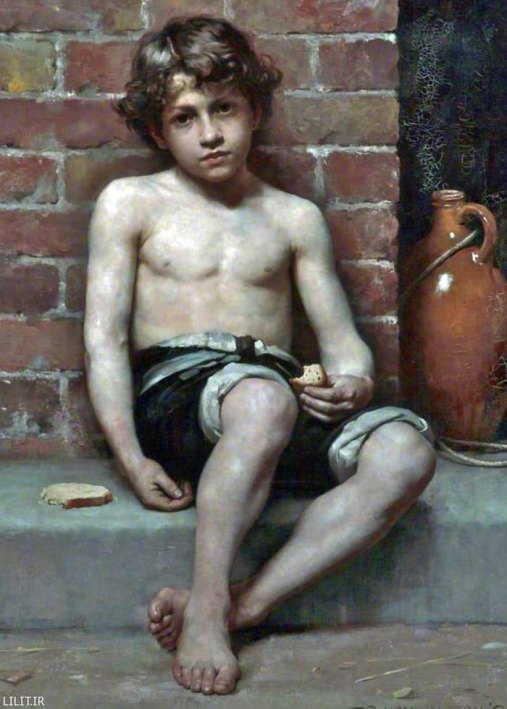
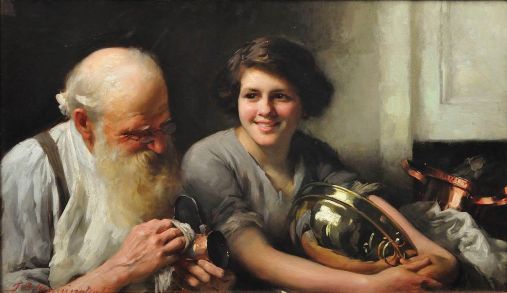
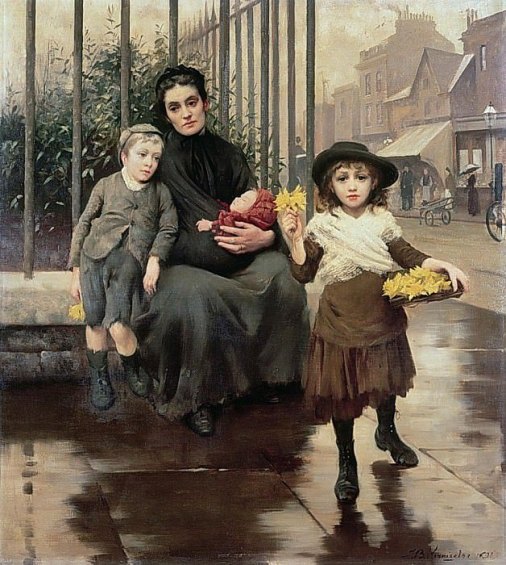
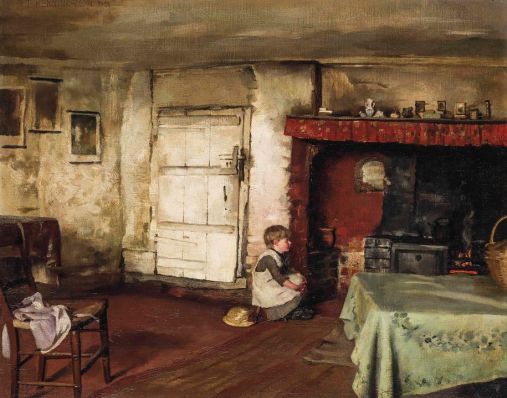
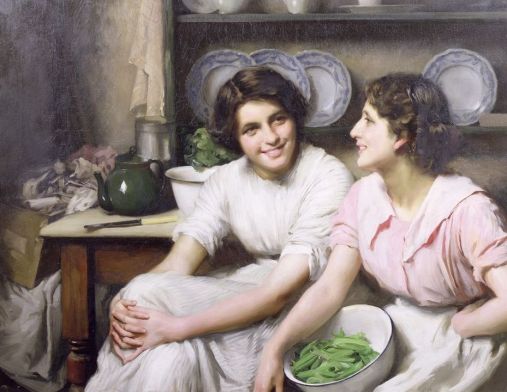
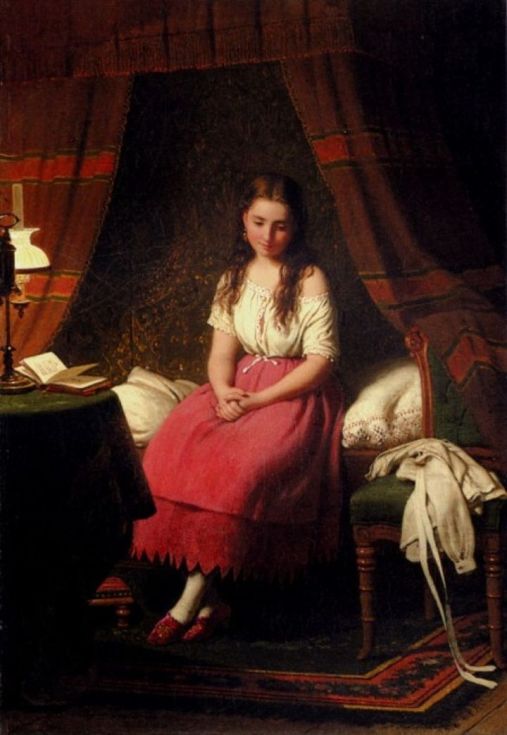
Artist Thomas Benjamin Kennington resided in Victorian England, a time rife with homeless children. I intentionally excluded numerous pieces in a quasi-Baroque style, filled with opulent and vivid beauties because they feel superficial. However, these works offer something profound for observation and contemplation.
I’d like to remind you that related posts can be accessed under the tag #artrauflikes, and on beinginamerica.com within the “Art Rauf Likes” section, where all 64 entries (current count) are available (unlike Facebook, which tends to overlook (or ignore) nearly half).





 Hi, I'm Rauf Aliev.