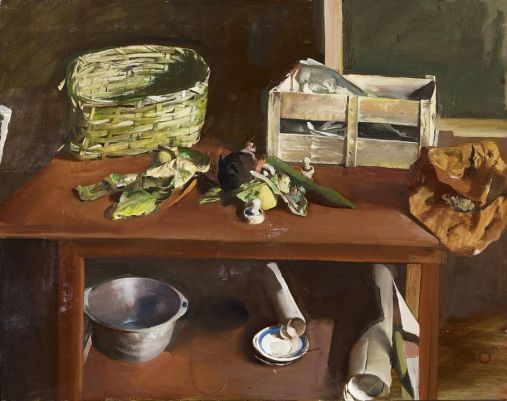
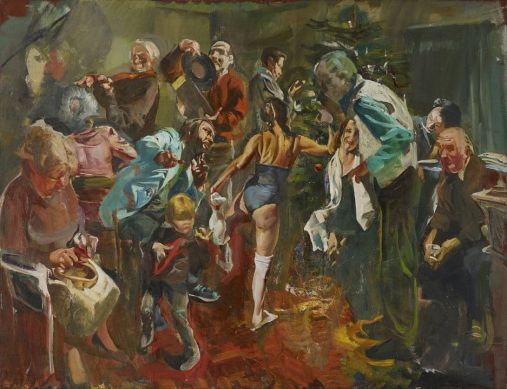
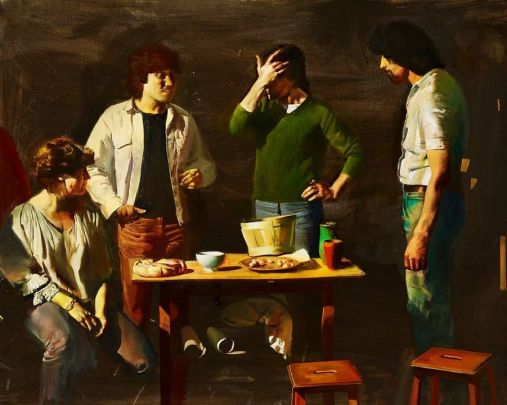
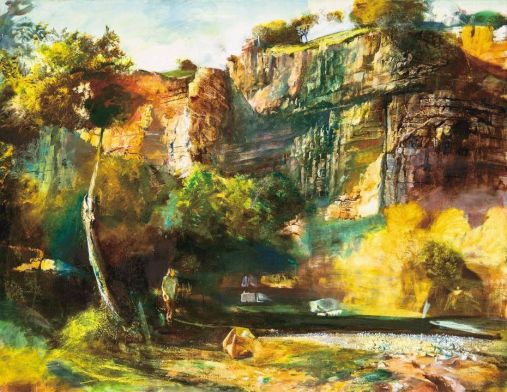
Nikolai Blokhin | July 09 2024, 21:53

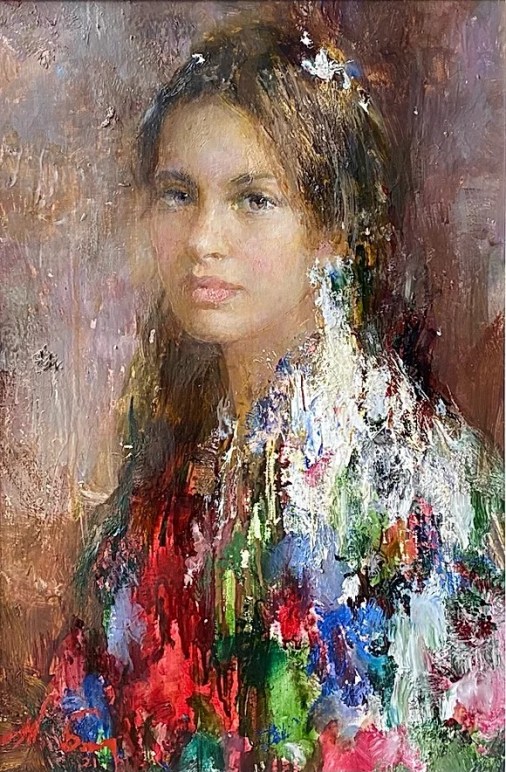
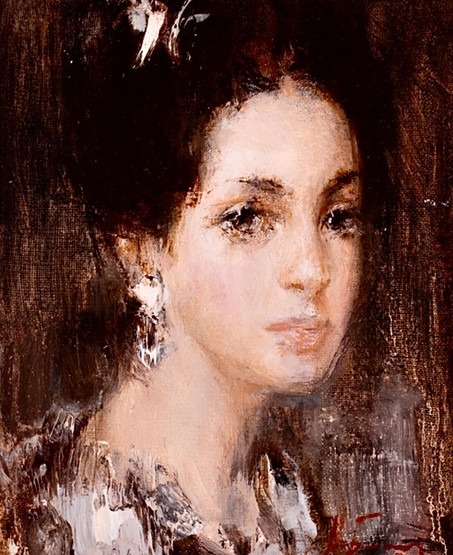
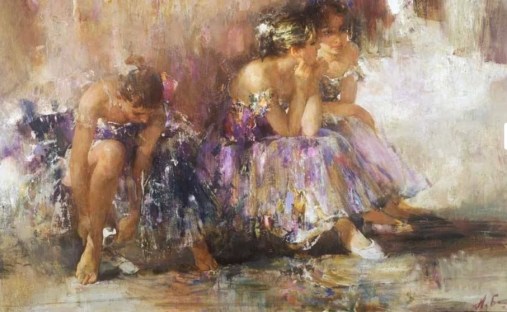
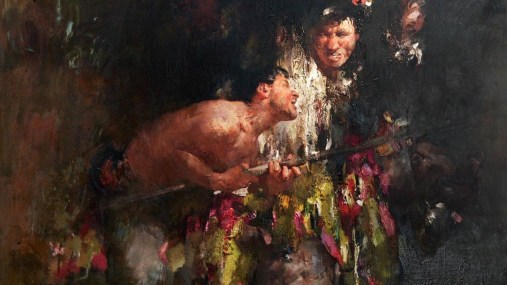
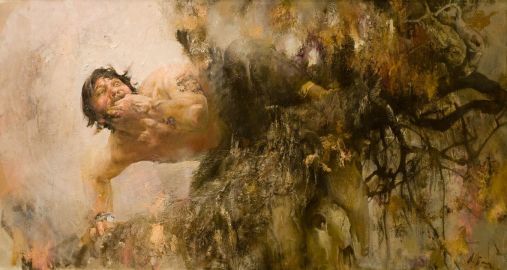
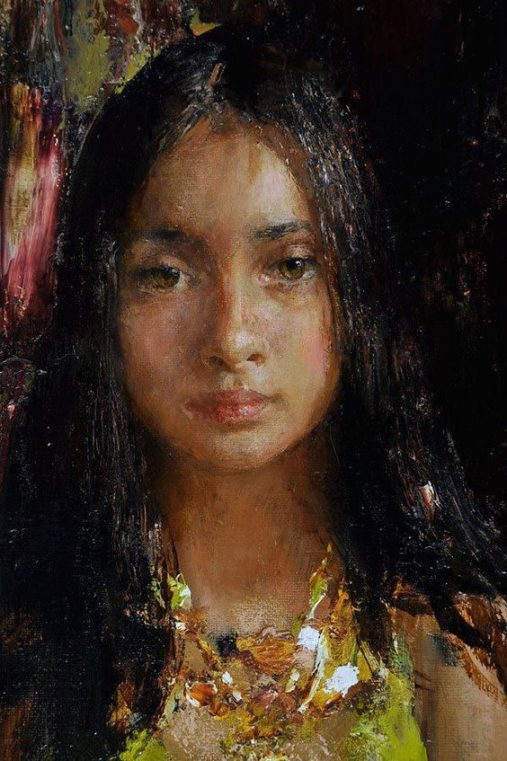
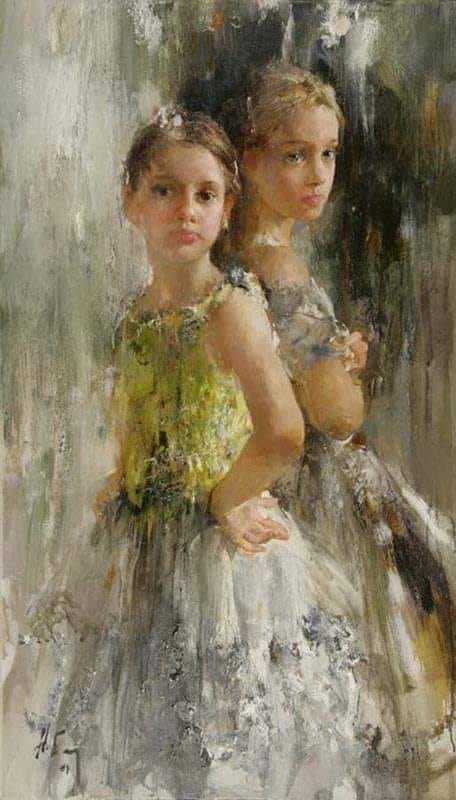
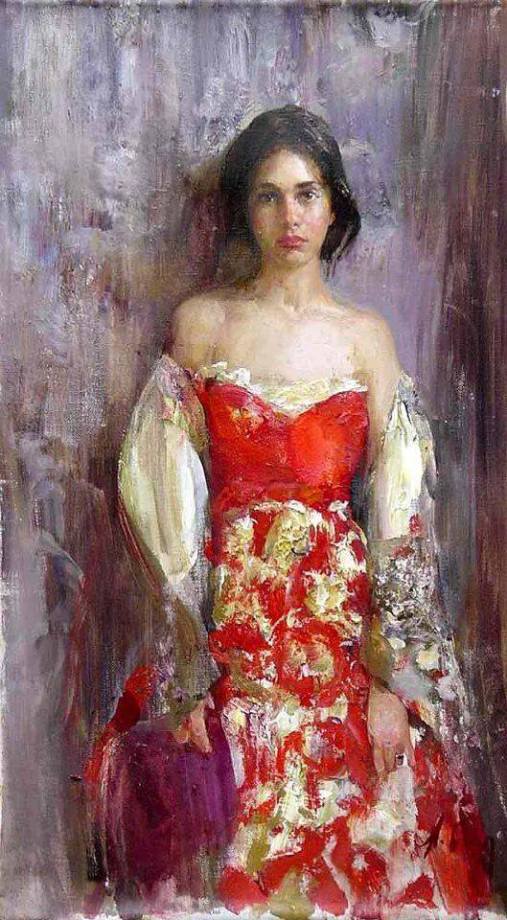
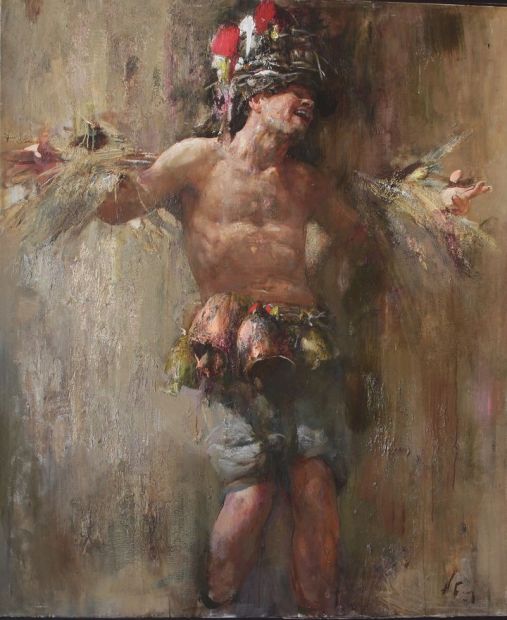
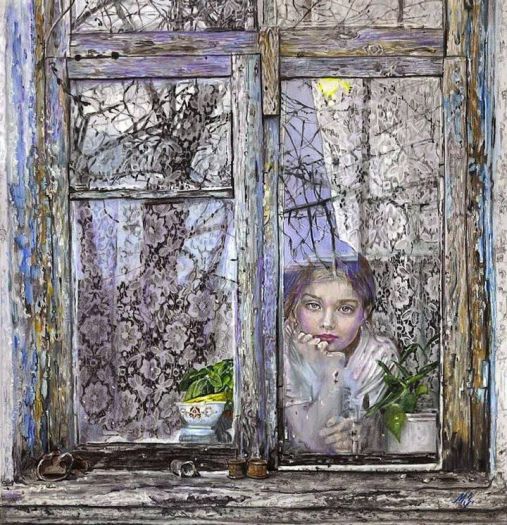
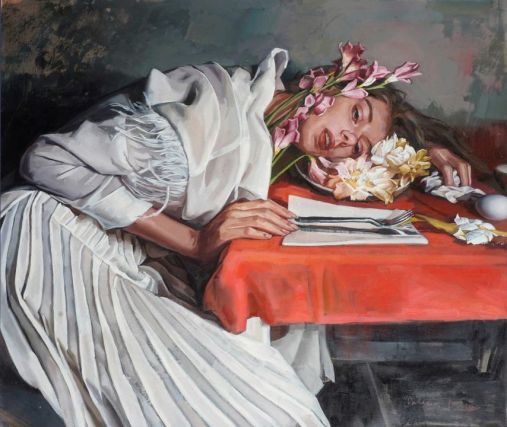
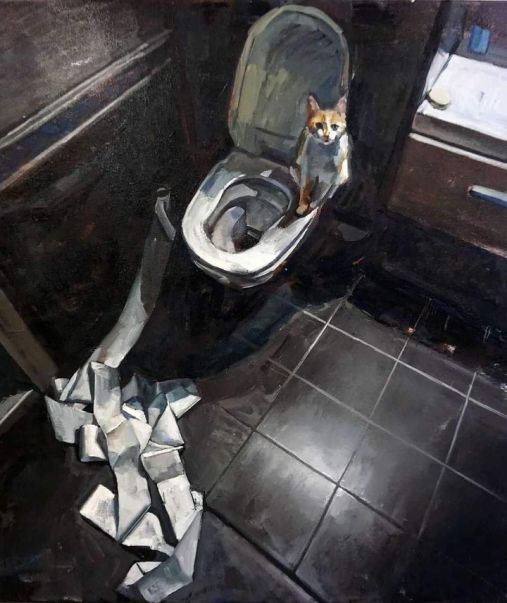
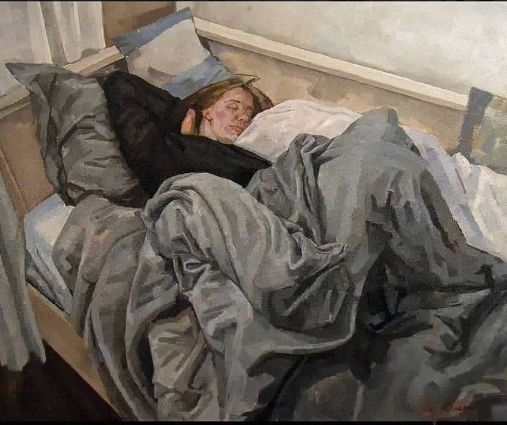
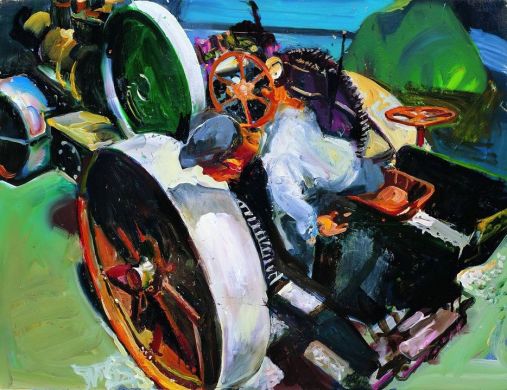
Today, I introduce you to Nikolai Blokhin (Nikolai Blokhin, 1968, Leningrad). He practices contemporary Impressionism applied to various genres. His technique is interesting and offers much to learn from.

I remind you that similar posts are grouped under the hashtag #artrauflikes, and all 95 of them can be found in the “Art Rauf Likes” section on beinginamerica.com (unlike Facebook, which forgets or neglects almost half of them).

Maria Zeldis | July 09 2024, 01:00

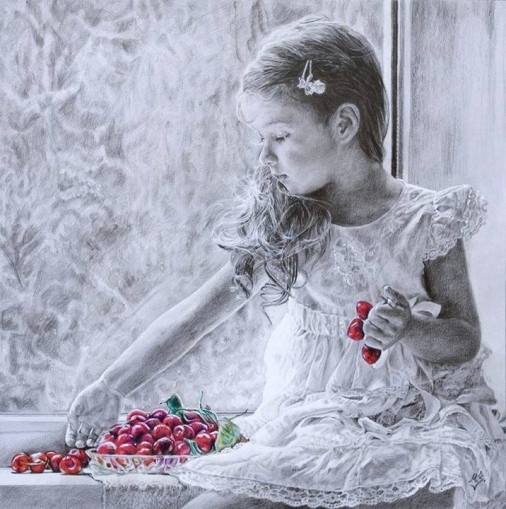
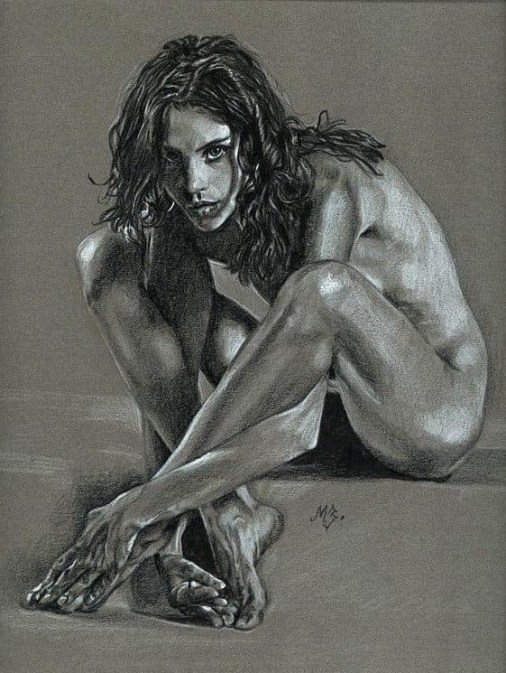
Maria Zeldis, an artist, was born exactly 69 years ago on July 8, 1955, in Kyiv, where she received her professional musical education. She is a pianist, and her husband, who was once her father’s student, is a violinist. One day, he was offered a job with the symphony orchestra in Mexico City, and since then, Maria and her husband have lived and worked in the “land of cacti.” She never studied painting and only picked up a pencil for the first time after the age of forty. Drawing for her is a hobby she has been pursuing for just over 10 years. However, her twin sister, a nun at the Kyiv Frolovsky Monastery, is a professional icon painter.

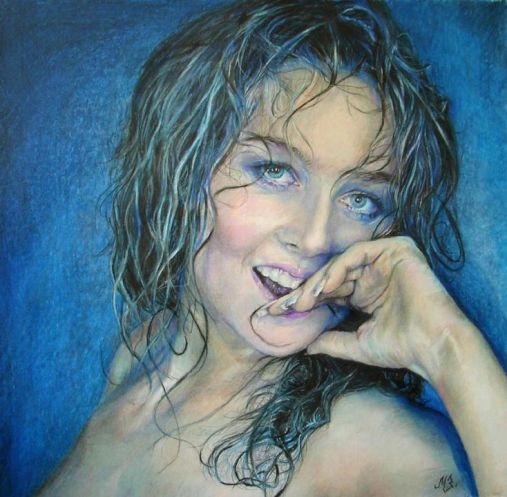
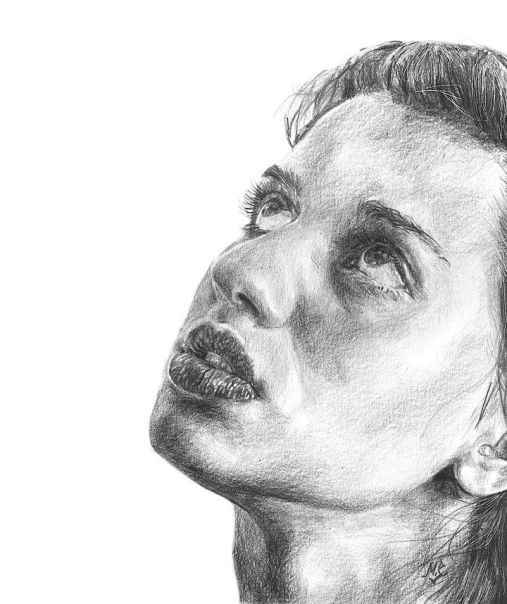
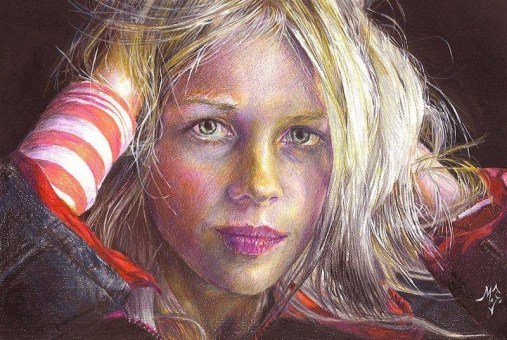
Maria created her works using simple pencil, ink, and pastel.

In 2018, she passed away in a car accident. She left a portfolio on DeviantArt under the nickname zeldis.

I remind you that similar posts are grouped under the tag #artrauflikes, and all 94 can be found in the “Art Rauf Likes” section on beinginamerica.com (unlike Facebook, which forgets (neglects) nearly half of them).

Valeria Duca | July 07 2024, 18:11

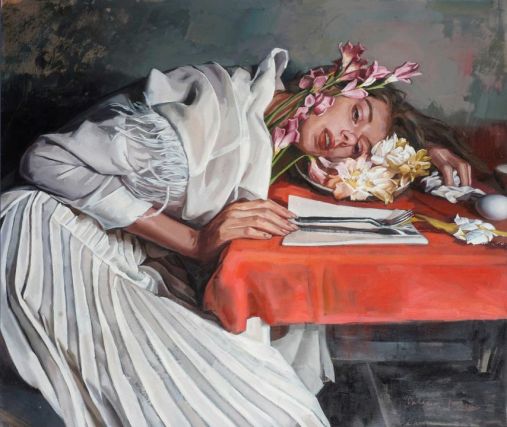
Valeria Duca is a very strange but interesting young Moldovan artist (1994). Her Instagram is valeria_duca. How can her style be characterized? There are abstractions and surrealism, but perhaps the overall word for all of them is “strange.” At the same time, the strangeness is pleasant.

“If there is anything constant in my work, it is that I always use oil paint, from the very first day. Everything else has always changed. I started with abstraction, had periods of landscapes, still lifes, portraits. I even tried my hand at conceptual art installation. I don’t want to succumb to the pressure of ‘defining my artistic style.’ I hope I continue to evolve, I hope I don’t become predictable and defined by one constant.”

The first painting in this series is called “Friday Evening.”

I remind you that similar posts are grouped under the hashtag #artrauflikes, and on beinginamerica.com in the “Art Rauf Likes” section, you can find all 93 (unlike Facebook, which forgets/ignoses almost half).

Reykjavik, Prague, Dresden: Some Reflections | July 06 2024, 17:47

Some quick thoughts after visiting Reykjavik, Europe, Czech Republic, and Germany.

Reykjavik is very stylish and expensive. Very stylish. Very tasty food. But expensive. For instance, a round trip from the airport to the capital and back cannot cost less than 52 bucks per person, and a taxi or a rental car starts to become cheaper than the bus only if there are four of you.

In Czech Republic and Germany:

Very tasty. Everything. From desserts to breakfasts and dinners. Even in small diners and even in the old town with tourists (one exception – we foolishly had breakfast at the main square in Prague. It was not tasty). I was in Dresden’s McDonalds, and it was delicious there too!

About tasty food: In the USA, it’s only tasty occasionally, and you need to know the places above a “three” on a five-point scale. In Europe, you need to know the places above a “four”. Places below a “four” are harder to find, especially when it comes to desserts… Mmm…

The mirror on the car was surprising. After the USA, the left mirror really “strains the eyes”. Whether it’s flat in the EU and convex in the US, or the other way around, but it’s really uncomfortable, the brain is accustomed to something else.

I was surprised by the Toyota Yaris hybrid, which over three days of driving from Prague to Dresden and back through villages used up only half a tank. 4l/100 km. In the USA, my car used at least twice as much. Hybrid turned out to be convenient, but it’s still weird that when you start the car, it makes no sound. At first, my reaction was “damn, the battery’s dead,” whenever that happened (every time).

It was surprising that in Prague, a large number of people, mainly the service staff, speak Russian or Ukrainian. We were understood at the reception desk, by waiters in cafes, by taxi drivers, in stores. Even now at the boarding gate at the airport. And at check-in. Literally everywhere. Familiar words can be heard in the crowd almost every minute. At the bus station, half of the 15 windows were decorated with names of Ukrainian cities. High demand.

And of course, I really missed fountains and free restrooms. You get used to quickly finding these in the US. Of course, it’s understandable why, and you should probably compare Prague to NY, where things are probably not that great either.
Crowds in the center of Prague. I came from my small town where there are neither traffic jams nor parking issues.

Prague seemed like a city where the authorities have allowed almost anything that brings money to the economy. All these stores with green leaves, beer to go, small businesses every meter.

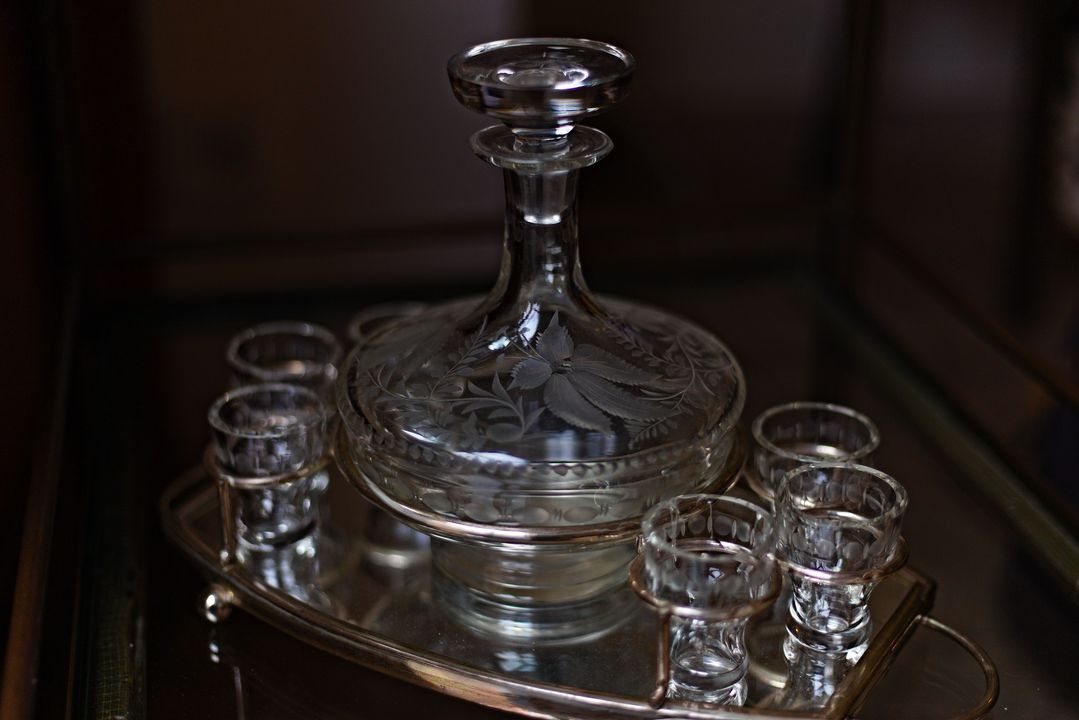
Glass | July 05 2024, 07:04

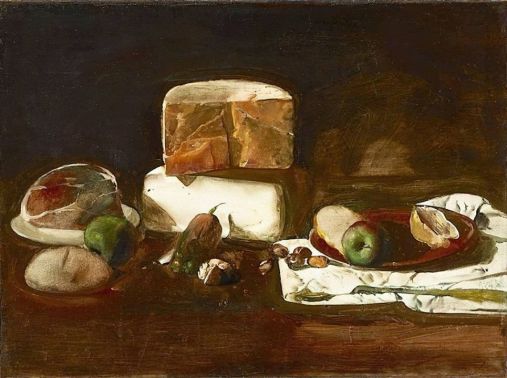
I take out my camera twice a year when I travel away from my home sweet home. For this trip, I also purchased a flash and a lens. Probably, the cafes in Prague are used to tourists hopping around artifacts with cameras. Well, at least, I’ll shoot dozens of references for future oil paintings.
(“Living Nature” will follow later, I’ll need to sort through tons of photos)

They said it was a bug | July 04 2024, 09:08

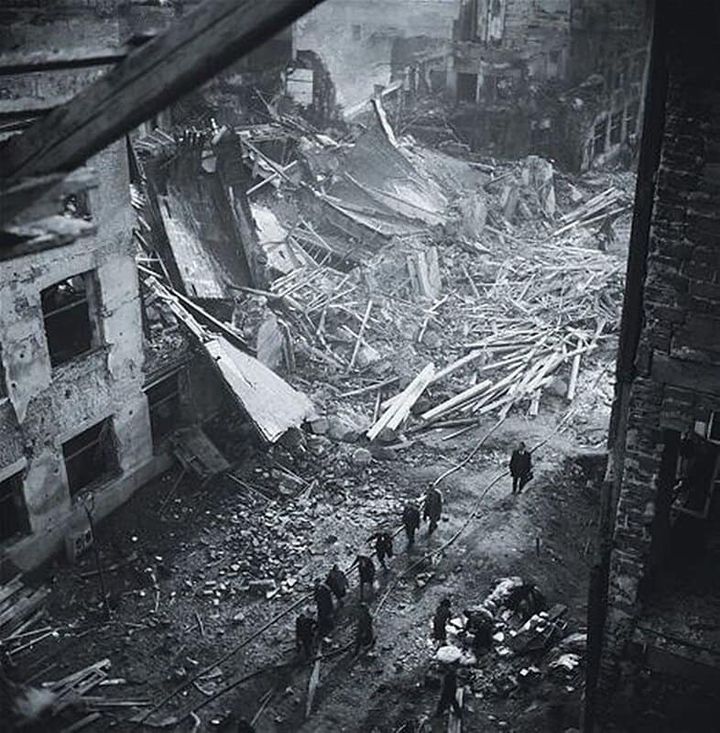
It turned out that Prague was bombed at the end of World War II by mistake. Just a glitch. There was a rounding error in the navigation or something of the sort. 62 B17 aircraft, each loaded with sixteen 500-pound bombs, got lost over Prague. More than 50 tons of explosives were dropped on the populated areas of Prague. The explosions covered Radlice, Vyšehrad, Zlíchov, Charles Square, Nusle, Vinohrady, Vršovice, and Pankrác. 701 people died, 1,184 were injured, and 11,000 Praguers suddenly found themselves without a roof over their heads. The raid did not damage factories or military strategic targets. War is like that, chaotic.

Cats in Art | July 04 2024, 06:45

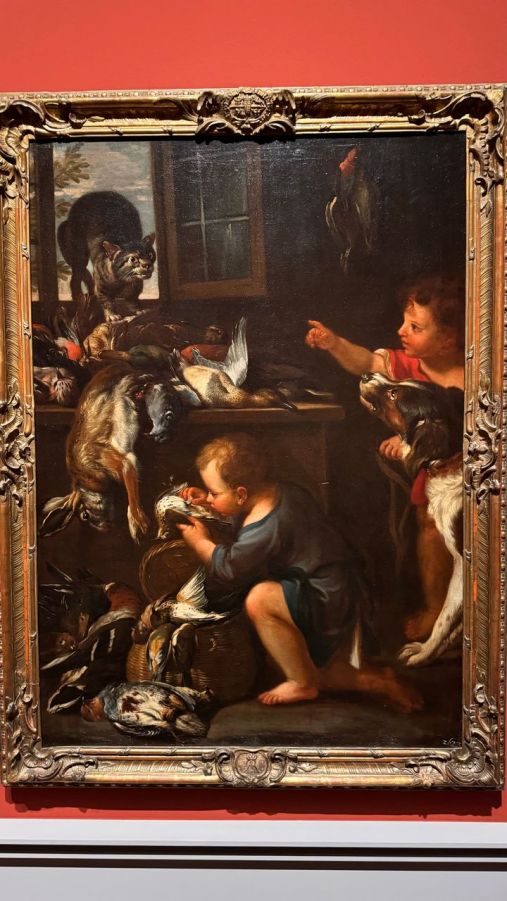
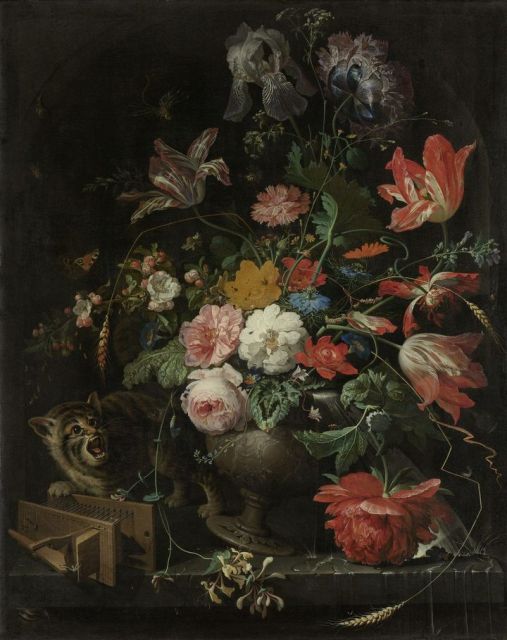
I noticed in the museum that earlier artists for some reason had trouble with drawing cats. There were constant blunders with the anatomy. With dogs, things were more or less okay, swans and other game they painted very accurately (well, because you can spread it out on the table for a whole day), but a cat, obviously, won’t stay still on a table for long, and it seems they drew them “from imagination.” And their imagination, it seems, was based on medieval depictions of cats, where there was complete chaos — cats were portrayed almost with human faces, with eyebrows and expressions.

At the same time, there were some really good examples from the 19th century — for instance, google the cats by Henriëtte Ronner-Knip.

Boselli Felice, Nature Morte avec chat, chien, et deux garçonnets

George Catlin, Le Chat d’Ostende (1868)

Abraham Mignon, The Overturned Bouquet (1660–79)

Tibor Csernus | June 28 2024, 12:55

Tibor Csernus (1927-2007) — oh, here we have a whole blend of postmodern neo-Caravaggism with a touch of post-impressionism and avant-garde. By the way, yesterday, June 27, was his birthday. He may not be a very well-known artist, but he is certainly remarkable, wouldn’t you agree?

I remind you that similar posts are grouped under the hashtag #artrauflikes, and on beinginamerica.com in the “Art Rauf Likes” section, you can find all 93 (unlike Facebook, which forgets/ignores almost half).

Exploring the Triangle of Freedom, Justice, and Security in Societal Structures | June 27 2024, 13:55

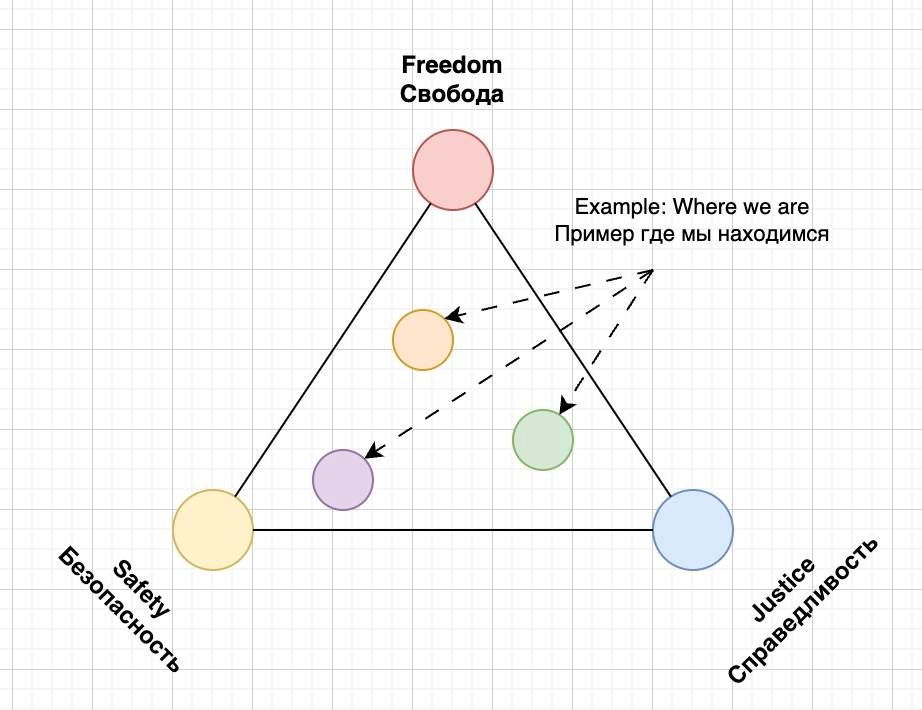
Yesterday I read a bit about various theories on values and stumbled upon an interesting notion—the triangle of Freedom—Justice—Security. It explains a lot about the world in general.

Freedom is measured by the ability of a person to do whatever they see fit.

Security is defined as the insurance against troubles and negative consequences, including those resulting from one’s actions.

Justice can be defined as ensuring equal opportunities and equal conditions for all people. In the context of the triangle, justice implies that each person gets what they deserve based on their actions, efforts, and needs, without discrimination or bias.

So, in the end, you get six points—three at the vertices and three on the sides of each face.

Societies at the vertices do not exist in reality, as these dystopias consume themselves and quickly self-destruct.

Absolute security is like a human zoo, where people are treated as favored pets.

Absolute justice is a society of automatons, deprived of free will.

Absolute freedom is complete anarchy and, probably, a war of all against all. In this state, a person is free to choose any actions and decisions regardless of their consequences or impacts on others.

But in combinations of two out of the three forces, the societal structures familiar to us are born.

1) Freedom + Justice. This is the classic society of capitalist countries during the Cold War era. It was declared so. Each had the opportunity to succeed if they worked hard enough. Meanwhile, everyone, rich and poor, was equal before the law. There was freedom of speech and religion. Of course, all this is ideally. In real life, it varied. Perhaps Sweden and the Netherlands are the closest to this model now.

2) Security + Justice. This is a socialist society. Public interests are above private ones, so the society has the right to interfere in an individual’s private life. At the same time, society takes responsibility for the individual, aiming to help them become a worthy person. And in case of trouble, it will provide support. Therefore, the emphasis is on social security and education. In real life, as usual, it differed. Nowadays, Cuba and China are probably trying to fit into this category, though I’m not sure how successfully.

3) In the third combination “Freedom + Security” we get a libertarian society. It implies minimal government intrusion into the private lives of citizens, yet retains basic functions for safety. In this society, the priority is given to individual freedom, but basic security is also ensured to protect against external and internal threats. In the USA, these currents are strong, perhaps it can be said that the USA fits into this category.

Although I mention some countries, there are no societies at the triangle’s edges or vertices. But there are countries close to these borders at certain points in their existence, and they are provided as examples. Even they are constantly moving within the triangle. If without revolutions, then more or less they maintain their place, shifting slightly each time.

Consider the center of the triangle Freedom—Justice—Security as the point furthest from all vertices. This point characterizes a society where these values are not priorities. Let’s define that this society will have a low level of all three aspects: minimal freedom, minimal justice, and minimal security.

– Minimal freedom: Restrictions on personal freedoms and rights, control over people’s expressions and actions.

– Minimal justice: High level of inequality, discrimination, lack of equal opportunities.

– Minimal security: High level of crime, political instability, lack of reliable social institutions.

Examples of countries that might be close to the center could be Somalia, Syria, Venezuela, and it seems Russia is gradually moving toward the center, though it’s still far from, say, Somalia.

Of course, all labels are controversial, no matter what they are. But it’s interesting that the Freedom-Justice-Security triangle allows a lot to be explained in politics and even in corporate policies. Looking at them from this perspective makes a lot more sense.

There is also an interesting opinion that the only real values are these three, and all others are based on them in one way or another.