
Very interesting interview. A police officer in the USA. About how he joined the academy and beyond. In general, Goblin invites cool guests, as it turns out.

February 01 2022, 18:51
Our constant companions when we walk Yuki in the evening

February 01 2022, 09:14
Although it’s flawed and needs reprinting, it already looks ominous before processing

January 29 2022, 01:33
On YouTube, there are at least two channels that are a must-have for aspiring artists – Alexandra Ryzhkina and Oleg Toropygin. I have watched dozens of hours of their videos, and I haven’t seen anything close to the quality of their lectures on YouTube (If you happen to know any worthy ones, please recommend)

January 26 2022, 14:46
January 25 2022, 22:10
A very interesting lecture on Toulouse-Lautrec. It just flows, Tairov is brilliant
January 25 2022, 01:17
Today, I learned with interest about an attempt in 2004 to sell the painting “Landscape with a Stream” by Marinus Kukkuk at a Sotheby’s auction as a work by Shishkin. The fraudsters, allegedly from Russia, almost succeeded. They even slightly retouched it to make it look like a Shishkin.

Plus, now there is this insanity with NFT tokens, where some idiots buy links to files on the internet from others. Alongside the growing ability to manufacture custom realities—an array of these Deep Fakes, and the creation of virtual worlds hardly distinguishable from real ones, if not yet as of today, then quite soon… It makes one think –
I predict that very soon all new video content will have a digital signature, and video playback devices will be able to read it, all video recording devices will incorporate it into the video, and some time later, they will figure out how to integrate digital signatures into text. Into simple text. Imagine, you copy-paste just a piece of news into a form, and it tells you – yes, this is a fragment of text from, say, RBK or Bloomberg, and this information is “encoded” in the text itself, not somewhere on the internet where some Google-like entity, which RBK or Bloomberg told you about. It’s like stylometry, but in reverse. Naturally, it will work on texts of a sufficient size to hide this info, and AI has to be involved in their writing, albeit in tertiary roles, to determine how and where to dissolve metadata and accordingly modify the text.
Maybe, as a digital signature, Chinese characters attached to the text might be used, which can easily carry information about the “checksum” and the author. There are 74,605 Chinese, Japanese, and Korean characters in Unicode, so literally a handful could prove to be a very simple and compact option for a digital signature. Currently, MD5 exists, but it is very sensitive to minor changes. For example, if it is made for the entire text, it will not show the authenticity of a fragment.
And all photo, audio, text information lacking such a fingerprint will be regarded as junk, as a possible forgery, as something suspicious, possibly stolen without permission. For instance, the use of deep fake, Photoshop version 2030 will simply be unnecessary, because such fabrications will be dismissed right from the start as unworthy.
January 23 2022, 12:52
An interesting video about using a microwave in the early years after its invention. Probably everyone knows the story of the microwave’s invention — Percy Spencer noticed that a chocolate bar in his pocket melted when he stood in front of an operating radar (idiot). After a series of experiments with popcorn and eggs, the first industrial model appeared in 1947, costing as much as a couple of cars.
So, Tom Scott dug up evidence that in the 50s, microwaves were used by scientists to defrost frozen hamsters. Cryonics experiments were conducted, and in the case of hamsters, it rarely, but effectively worked — from ice blocks, they turned into quite alive (but very dissatisfied, probably) little animals. Before the microwave, there were problems with how to quickly and evenly thaw a carcass. After all, if you simply heat it up, the inside will still be ice, while irreversible processes would start on the outside, so it must be thawed quickly. If the temperature is increased and one waits for the middle to thaw, the outside of the hamster might get severe burns. Thus, the microwave turned out to be the solution. Nearly all the hamsters survived the freeze down to zero with subsequent thawing by microwave. Here is a scientific article on this topic – https://www.ncbi.nlm.nih.gov/pmc/articles/PMC1365902/ Scientist James Lovelock (https://en.wikipedia.org/wiki/James_Lovelock), who is now 101, tells that one rat was frozen and thawed 10 times with intervals of several days.

January 23 2022, 12:24
@[100001248794401:2048:Irina Shikhman] has been quite delightful lately with the content on her channel. Besides “Revolution of the Dwarfs”

, you should also check out her discussions about Russian cartoons and their place in the global market today

, about the history of the New Year

, and a very interesting conversation with Ilya Kolmanovsky
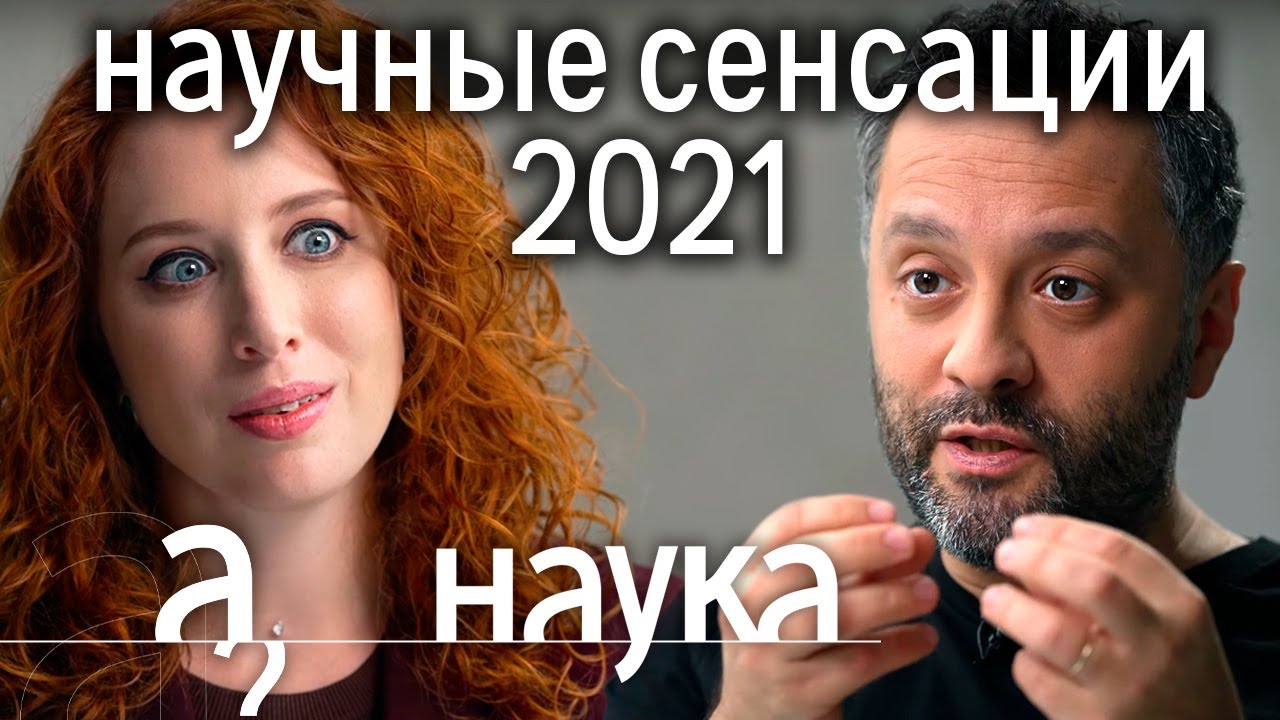
. And indeed, the entire “Ah, Science” segment is interesting. And of course, an interview with Mizulina about the Spanish shame
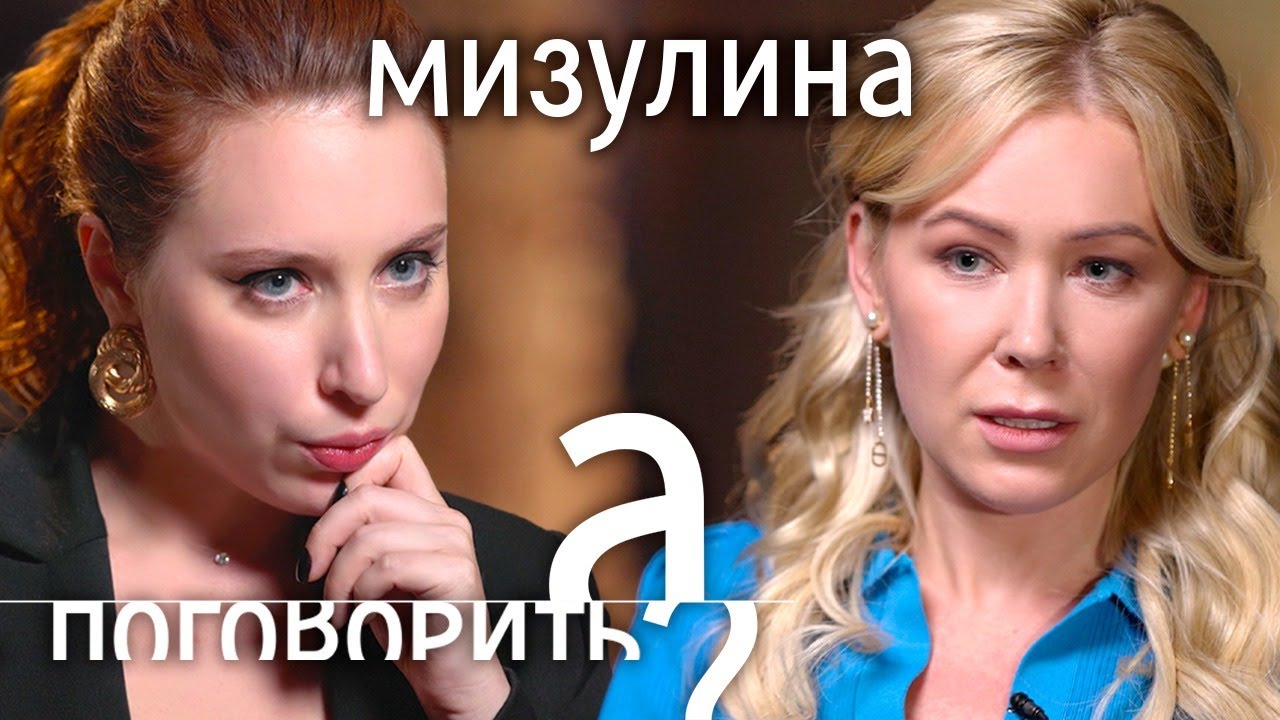
January 22 2022, 22:51
In the USA, there is a rather well-thought-out address system. To find my previous address, I need to enter three digits and two letters, and my current one requires only three digits and one letter. That’s it, the rest of the form fills in automatically – city, ZIP code, street, house number. That means, filling out an address form takes one to two seconds on a mobile device – just to enter four characters and click on a suggestion.
(you might say that Google knows where I am, and it simply shows the nearest match. No, it works this way even in incognito mode and with GPS turned off – CORRECTION. STILL, GOOGLE KNOWS WHERE I AM EVEN IN INCOGNITO – BY IP AND SHOWS THE NEAREST ADDRESS)
An address in the USA consists of a house number and a street in the XYY scheme, where X is the block number (single-, double-, or even triple-digit), and YY is the double-digit number of the house within the block boundaries. Plus the street, which is often in words or can also be numbered (in large cities with planned development). Of course, this combination is not unique within the country, you still need the city or ZIP code, but in new districts outside the cities, they try to make it unique by choosing a street with a clever name. The house number consists of the block number, followed by the building number within the block. The block often corresponds with the street number if the streets are numbered. For example, The White House, located at 1600 Avenue NW: it is located at 1600 NW Street (Lafayette Square) and Avenue N.


