January 21 2022, 15:51

This is when the vacuum cleaner is allergic to chairs, and it must be either it, or them, or you need to periodically (always) separate them and keep them in different rooms.

Does your vacuum cleaner poke its nose into chairs and generally get entangled in such unpleasant situations? In theory, this situation can be easily managed with LiDAR on its head and algorithms in its rear, but someone did a poor job of testing.

Apart from this downside, it cannot operate on three floors. It still manages on two, but it jumbles the map of one of the three, which ultimately makes mapping useless in the case of a house.

On the upside – it recognizes stairs and doesn’t attempt suicide on the staircase. It has befriended the dog, which is more than can be said for manual Dysons and the washing Bissel.

All in all, despite such indecent incidents with chair legs, this robot vacuum is the best purchase of recent years. It works more than me and manages everything by itself.

Wish someone would hack it soon and create a Python interface. There would be so much to do – from detecting shoelaces to drawing beautiful patterns on the carpet.

January 20 2022, 20:00

In the USA, COVID-19 rapid tests are being distributed for free, four per household. Friends living in the US, order here usps.com/covidtests. Recently, they were impossible to find at any price — the Omicron variant cleared them off the shelves entirely.

By the way, there is also a portable electronic PCR-test, the Lucira COVID-19 All-In-One test kit sold here. It costs 75 dollars and is available for purchase. Although it’s electronic, it is, of course, designed for SINGLE USE. It detects the presence of the virus’s RNA, not antibodies like other home tests. The result it provides is recognized by insurance companies, which also reimburse the 75 dollars upon submission of documents. Since January 15 of this year, all insurance companies are obliged to reimburse tests for self-testing without any questions, up to 8 per person per month. Well, visits to clinics for testing are even more readily reimbursed, but the interesting part here is how it works in the case of home tests purchased from pharmacies or Amazon.

January 20 2022, 10:51

We watched with interest the documentary series from BCC about Claude Monet, Renoir, Manet, Degas, Cezanne. Strange people — especially Cezanne — with their quirks, but unique and in many ways revolutionary. You can partly see the parallels — the attitude towards contemporary art now and how impressionism was perceived at the end of the 19th century. The film is shot like a drama, but essentially it’s a retelling of biographies. Colorful, rich, emotional, informative.

This year I managed to visit the “Monet, Rodin, and Boston” exhibition, as well as several art museums just a few days prior, in Washington, two in New York, one in Providence, and of course, the Boston one. So the memories are still fresh.

I’m concurrently reading the book “Falling in Love with Art: From Rembrandt to Andy Warhol” by Anastasiia Postrigai. And just as I was watching the series, I was on the chapters about Monet and Manet. So I was looking at the events from two perspectives 🙂

I highly recommend both.

January 17 2022, 02:29

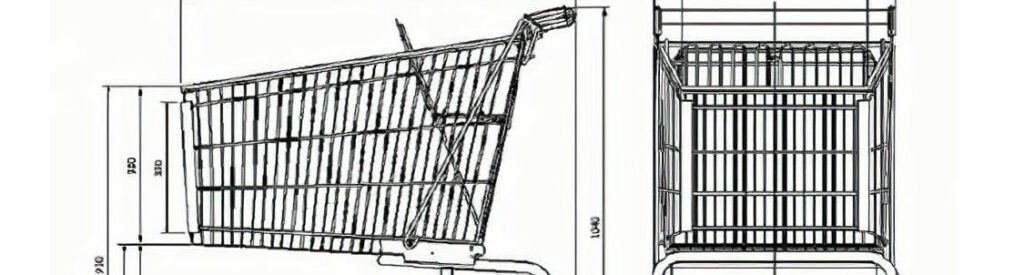
After a long (very) break—a new article on Hybrismart about online shopping carts and their architecture. The article is for developers on SAP Commerce, but around 20-30% of the content is also applicable to other platforms. Well, for instance, to be able to say “ugh, everything is so bad in Hybris” or “cool, we should adopt some good ideas from Hybris”. In short, welcome to the blog.

January 14 2022, 17:33

An excellent channel on pronunciation. For some unknown reason, the creator has only 21K subscribers. The latest half-hour video on the sound /ɹ/ – used in “Rory rarely reads romantic poetry” — I struggled with it in Russian, sounding like Lenin 🙂 Thanks to lessons with @[100000066699061:2048:Elliot Teplitsky-Bauer], it’s now as it should be in my English (neither rolling nor trill). In Russian, I never bothered to correct it. Thus, the pronunciation of the vast majority of those who studied English at school is quite far from being correct, as the Phonetics Fanatic videos vividly demonstrate.

Some Americans really think that our Russian ‘R’ is quite close to ‘Ж’. To one such American on Quora, all the Russian speakers commented that he should clean his ears, as ‘Ж’ is nowhere near ‘Р’. This goes to show how differently people who grew up in different linguistic environments can perceive sounds. Google “Why is ‘R’ corresponding to Russian letter Р instead of Ж? I feel that the pronunciation of ‘ж’ is closer to ‘r’ in English.”

January 09 2022, 16:47

As you may have noticed, I have always tried to learn various things throughout my life, and based on my accumulated experience, I want to share a simple conclusion: 1) you need to invest first and foremost in skills and abilities, and knowledge will follow 2) knowledge should be free, but acquiring skills, especially practical ones, is worth paying for.

The chess course by Kasparov on masterclass gave me almost nothing, although I still recommend it; it’s cool. The drawing course on Domestika also gave me almost nothing. About 200 hours of microbiology lectures couldn’t possibly give me nothing, but ask me about something complex from those lectures, and I can’t recount it. However, I could at least Google it and share the source. Reading history books left me with maybe 10% in memory after a year. At best, after reading a book, I know how to Google the topic, and quickly understand it when I find the answers. But all this does not stay in memory.

At the same time, music school—gave me something. Hundreds of hours of drawing—gave me something. Various experiments with electronics gave me something. English lessons—gave me something. When comparing the efficiency of investing an hour of my time, investing in skills is significantly more important and effective.

In Russia, education is historically built “from theory”. Partly because providing practical experience for hundreds of thousands of students is unrealistic. Therefore, not everyone reaches practical experience, or if they do, it is superficial. We learn languages by starting with grammar.

But almost any topic can be shifted from “acquiring knowledge” to “acquiring skills and abilities”. Yes, this would require somewhat more complex automation in the case of distance learning courses, but it would bring more benefits.

Online education should somehow move in this direction.

For example, today I am taking a course on GIT, which is a version control system. I know about 80-95% of it, but I’d like to improve on the remaining 10%, and I know the specific topics I need to brush up on. I could read the documentation, and even once read everything from ProGIT and understood it, but since I already have a subscription to educative, why not try there. The course there is excellently constructed—the terminal is integrated into the webpage and configured for the current topic. They also teach Python and Java. There are similar courses on Machine Learning.

But that’s only in programming and language learning. Almost everything else cannot be learned in this manner.

There are people who can create challenges for themselves and build skills independently. They have to go to thematic forums and ask for opinions of professionals for feedback, or form the right contacts to provide feedback.

There are few such people. Simply because to develop the skill of skill acquisition, they must have slightly missed out in life. If a child grows up in complete comfort, such a skill does not naturally develop. Because it’s not necessary. And later, in adulthood, developing this skill requires more effort, and many avoid such difficulties.

And so, I envision a network of educational centers, where each student has their own space, equipped with high-quality cameras, microphones, internet, computers, equipment, consumables, VR headsets. Students pay, of course, for renting such a center, as well as for the “teacher’s” time—or it is paid for by foundations or the state. In such a place, dawdling on your phone won’t be possible, as, through the camera system, the teacher can even see what’s in the phone’s messages. This same equipment can be rented and set up at home, if conditions allow. “Lessons” could be packaged in such a way that children would want, and even beg their parents to buy time there. Through such systems, you can teach embroidery and knitting, not to mention foreign languages and sciences.

All that is needed is to design such a room, select and standardize the equipment and software, wisely place cameras, create a marketplace for services, and develop a system for revenue sharing between authors and the service.

Who knows, maybe Facebook’s efforts in their Meta-universes will be a good kickstart.