Biking over the bridge | July 14 2024, 13:48

Yesterday we rode our bikes along a trail in Temple Hills, MD. Surprisingly, even in 2024, racial contrasts are still preserved in neighborhoods that are generally quite prosperous. People prefer to live in areas where their neighbors resemble them in culture and skin color, which makes sense. But the figures astounded me. According to the Census, there are only 2% White; the remaining 98% is divided among Black/African Americans (82%) and predominantly Hispanic (13%). Along the trail, we came across a great sports complex with a skating rink and plenty of courts in perfect condition, featuring free outdoor yoga and the like. However, during the two hours, we only encountered two other cyclists, and probably needless to mention, we were the only white people among everyone we ran into at all. Still, the area has no wealthy homes, but everything is neat and (at least during the day) very safe and peaceful.

Interestingly, I noticed that many people in the 95-degree heat were walking around in autumn jackets and jeans. This correlated quite well with my recent photo about autumn (though sadly, nobody passed by when I was shooting). I did a bit of Googling, and it seems, at least for Mexicans, this is normal. Clearly, shorts are not even considered (culturally; shorts equal low status), but apparently wearing T-shirts isn’t common either. Plus, they protect their skin from the sun as best they can (the reasons are unclear to me; they mention cancer risk, but darn it, for dark skin…).

Across the bridge is Alexandria, where the percentage of the Black population is 20% (In my city, in Leesburg, it’s even half that, 10%, but it’s still a 40-minute drive west from there).

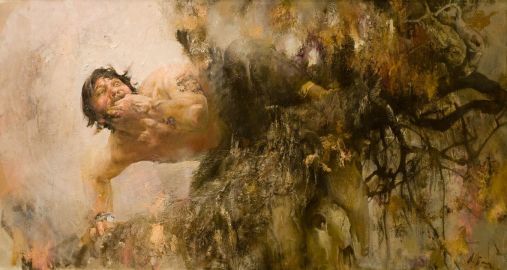
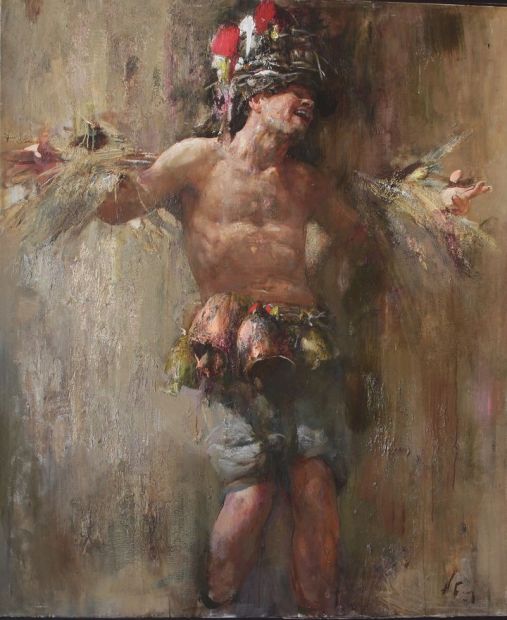
Nikolai Blokhin | July 09 2024, 21:53

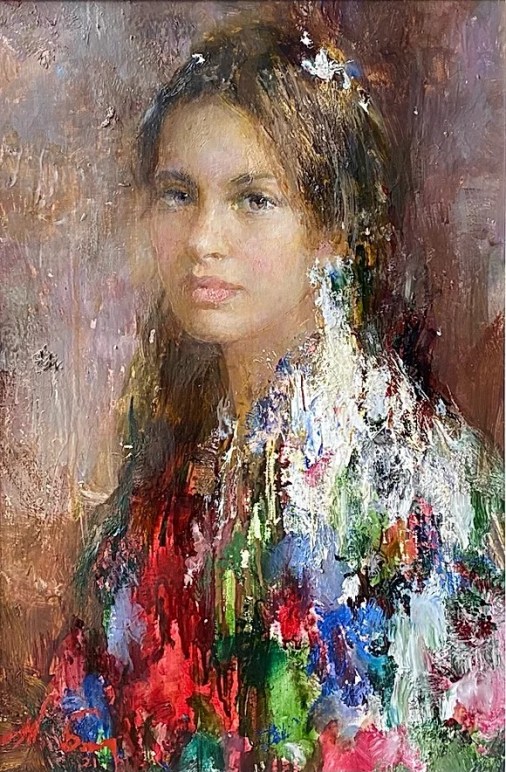
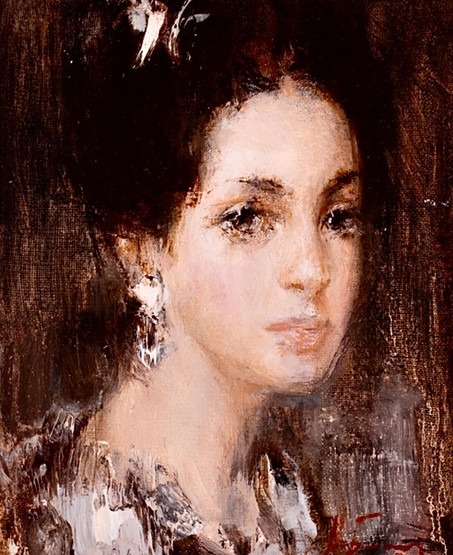
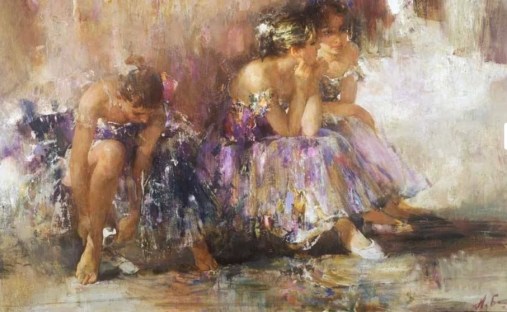
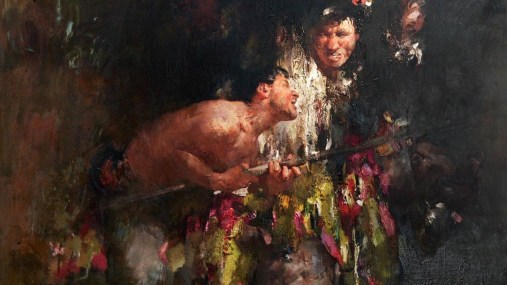
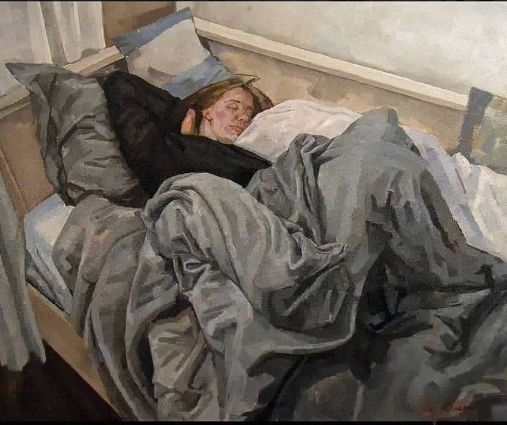
Today, I introduce you to Nikolai Blokhin (Nikolai Blokhin, 1968, Leningrad). He practices contemporary Impressionism applied to various genres. His technique is interesting and offers much to learn from.

I remind you that similar posts are grouped under the hashtag #artrauflikes, and all 95 of them can be found in the “Art Rauf Likes” section on beinginamerica.com (unlike Facebook, which forgets or neglects almost half of them).

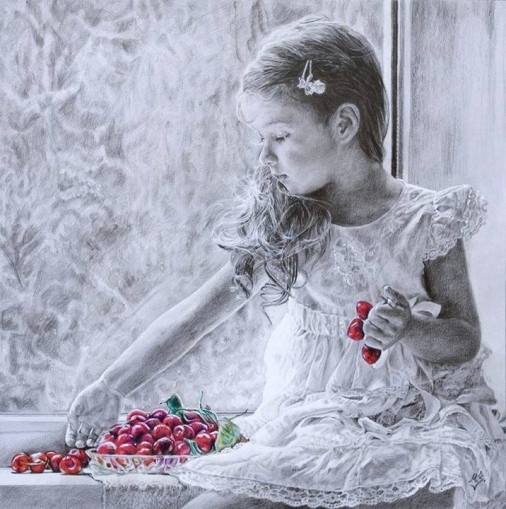
Maria Zeldis | July 09 2024, 01:00

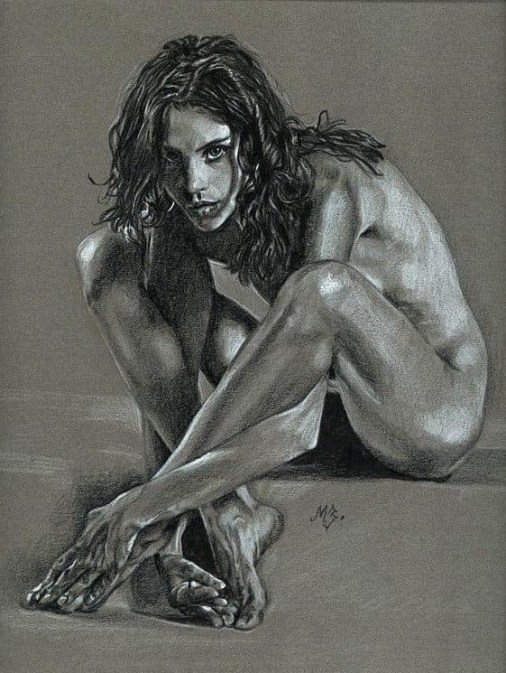
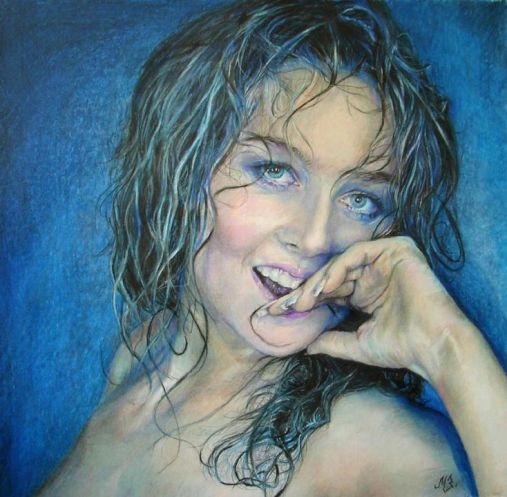
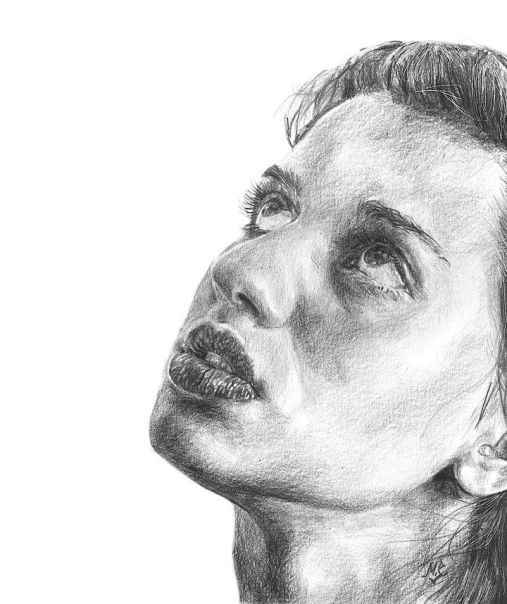
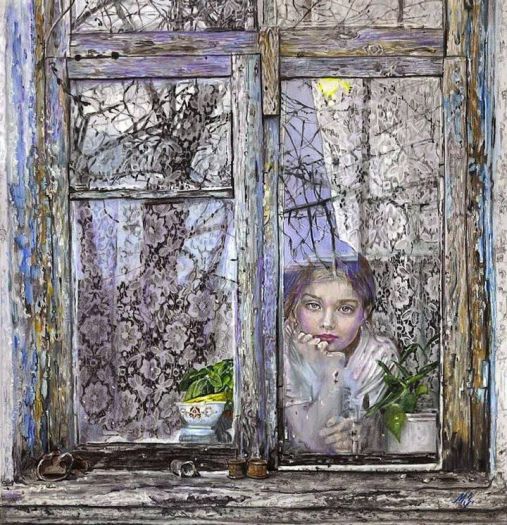
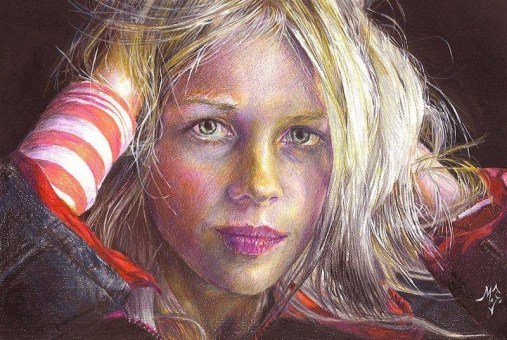
Maria Zeldis, an artist, was born exactly 69 years ago on July 8, 1955, in Kyiv, where she received her professional musical education. She is a pianist, and her husband, who was once her father’s student, is a violinist. One day, he was offered a job with the symphony orchestra in Mexico City, and since then, Maria and her husband have lived and worked in the “land of cacti.” She never studied painting and only picked up a pencil for the first time after the age of forty. Drawing for her is a hobby she has been pursuing for just over 10 years. However, her twin sister, a nun at the Kyiv Frolovsky Monastery, is a professional icon painter.

Maria created her works using simple pencil, ink, and pastel.

In 2018, she passed away in a car accident. She left a portfolio on DeviantArt under the nickname zeldis.

I remind you that similar posts are grouped under the tag #artrauflikes, and all 94 can be found in the “Art Rauf Likes” section on beinginamerica.com (unlike Facebook, which forgets (neglects) nearly half of them).

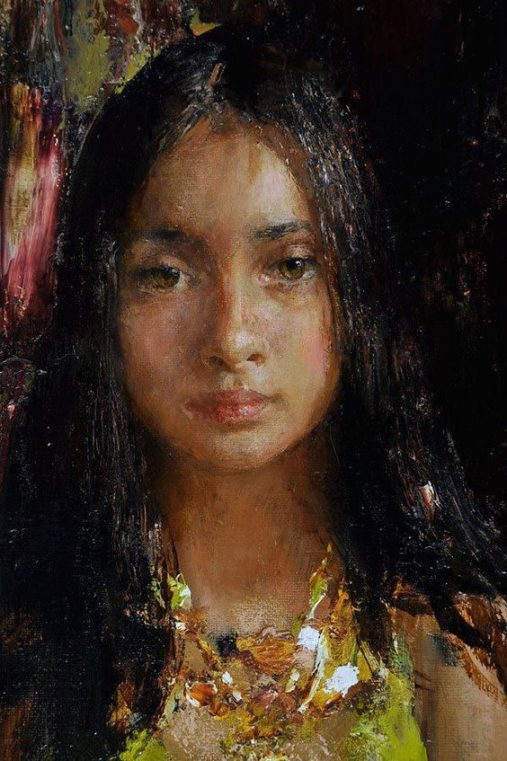
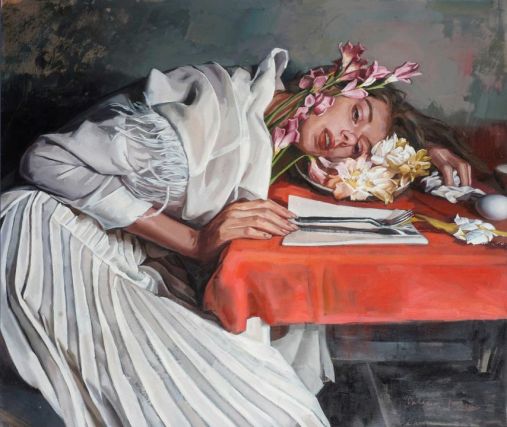
Valeria Duca | July 07 2024, 18:11

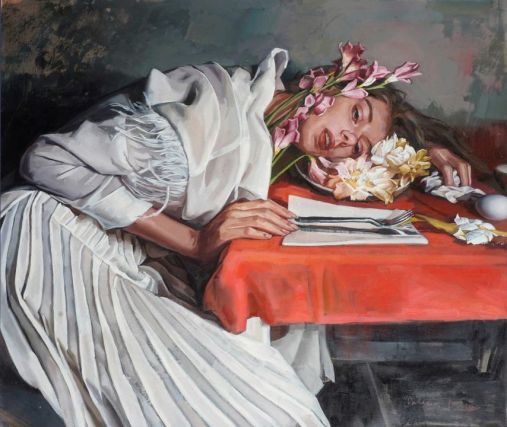
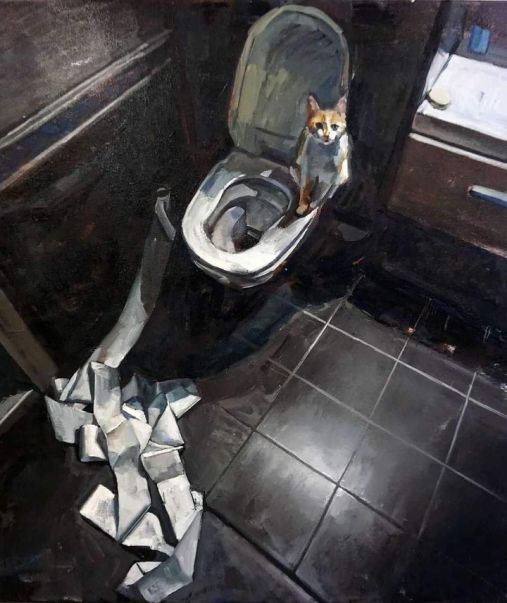
Valeria Duca is a very strange but interesting young Moldovan artist (1994). Her Instagram is valeria_duca. How can her style be characterized? There are abstractions and surrealism, but perhaps the overall word for all of them is “strange.” At the same time, the strangeness is pleasant.

“If there is anything constant in my work, it is that I always use oil paint, from the very first day. Everything else has always changed. I started with abstraction, had periods of landscapes, still lifes, portraits. I even tried my hand at conceptual art installation. I don’t want to succumb to the pressure of ‘defining my artistic style.’ I hope I continue to evolve, I hope I don’t become predictable and defined by one constant.”

The first painting in this series is called “Friday Evening.”

I remind you that similar posts are grouped under the hashtag #artrauflikes, and on beinginamerica.com in the “Art Rauf Likes” section, you can find all 93 (unlike Facebook, which forgets/ignoses almost half).

Reykjavik, Prague, Dresden: Some Reflections | July 06 2024, 17:47

Some quick thoughts after visiting Reykjavik, Europe, Czech Republic, and Germany.

Reykjavik is very stylish and expensive. Very stylish. Very tasty food. But expensive. For instance, a round trip from the airport to the capital and back cannot cost less than 52 bucks per person, and a taxi or a rental car starts to become cheaper than the bus only if there are four of you.

In Czech Republic and Germany:

Very tasty. Everything. From desserts to breakfasts and dinners. Even in small diners and even in the old town with tourists (one exception – we foolishly had breakfast at the main square in Prague. It was not tasty). I was in Dresden’s McDonalds, and it was delicious there too!

About tasty food: In the USA, it’s only tasty occasionally, and you need to know the places above a “three” on a five-point scale. In Europe, you need to know the places above a “four”. Places below a “four” are harder to find, especially when it comes to desserts… Mmm…

The mirror on the car was surprising. After the USA, the left mirror really “strains the eyes”. Whether it’s flat in the EU and convex in the US, or the other way around, but it’s really uncomfortable, the brain is accustomed to something else.

I was surprised by the Toyota Yaris hybrid, which over three days of driving from Prague to Dresden and back through villages used up only half a tank. 4l/100 km. In the USA, my car used at least twice as much. Hybrid turned out to be convenient, but it’s still weird that when you start the car, it makes no sound. At first, my reaction was “damn, the battery’s dead,” whenever that happened (every time).

It was surprising that in Prague, a large number of people, mainly the service staff, speak Russian or Ukrainian. We were understood at the reception desk, by waiters in cafes, by taxi drivers, in stores. Even now at the boarding gate at the airport. And at check-in. Literally everywhere. Familiar words can be heard in the crowd almost every minute. At the bus station, half of the 15 windows were decorated with names of Ukrainian cities. High demand.
And of course, I really missed fountains and free restrooms. You get used to quickly finding these in the US. Of course, it’s understandable why, and you should probably compare Prague to NY, where things are probably not that great either.

Crowds in the center of Prague. I came from my small town where there are neither traffic jams nor parking issues.

Prague seemed like a city where the authorities have allowed almost anything that brings money to the economy. All these stores with green leaves, beer to go, small businesses every meter.

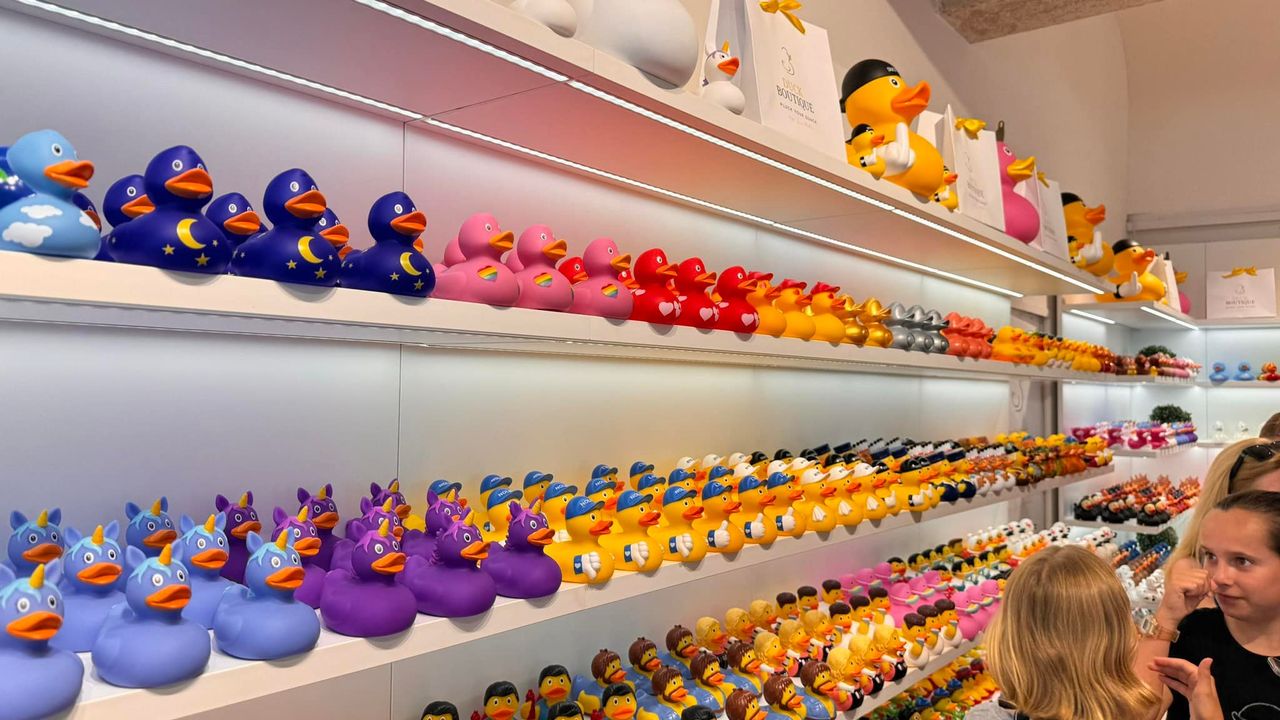
Glass | July 05 2024, 07:04

I take out my camera twice a year when I travel away from my home sweet home. For this trip, I also purchased a flash and a lens. Probably, the cafes in Prague are used to tourists hopping around artifacts with cameras. Well, at least, I’ll shoot dozens of references for future oil paintings.

(“Living Nature” will follow later, I’ll need to sort through tons of photos)

They said it was a bug | July 04 2024, 09:08

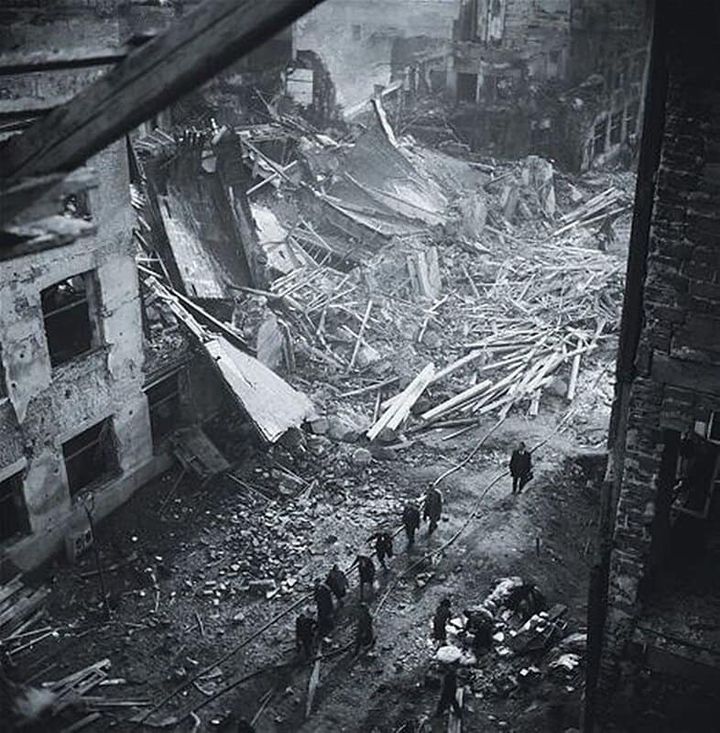
It turned out that Prague was bombed at the end of World War II by mistake. Just a glitch. There was a rounding error in the navigation or something of the sort. 62 B17 aircraft, each loaded with sixteen 500-pound bombs, got lost over Prague. More than 50 tons of explosives were dropped on the populated areas of Prague. The explosions covered Radlice, Vyšehrad, Zlíchov, Charles Square, Nusle, Vinohrady, Vršovice, and Pankrác. 701 people died, 1,184 were injured, and 11,000 Praguers suddenly found themselves without a roof over their heads. The raid did not damage factories or military strategic targets. War is like that, chaotic.

Cats in Art | July 04 2024, 06:45

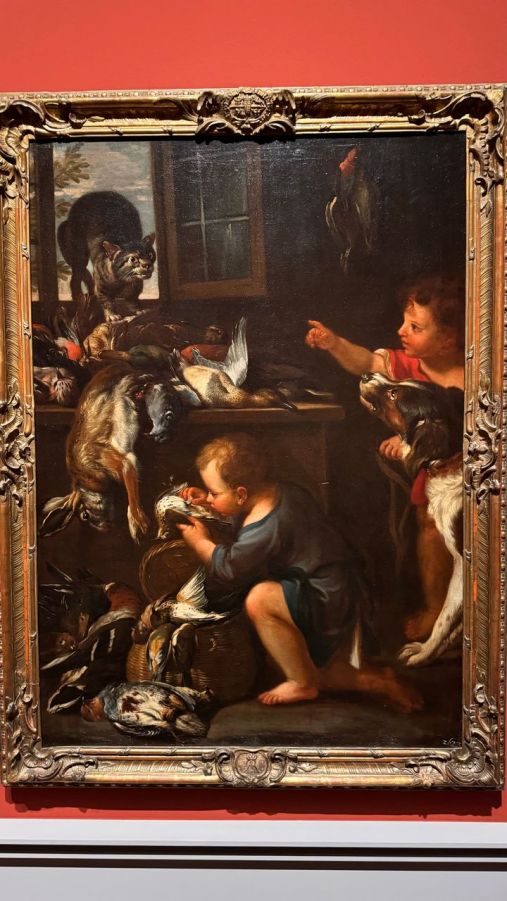
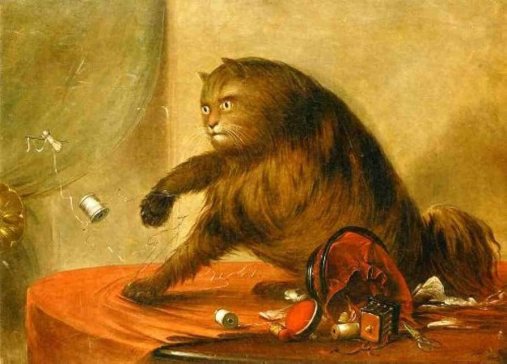
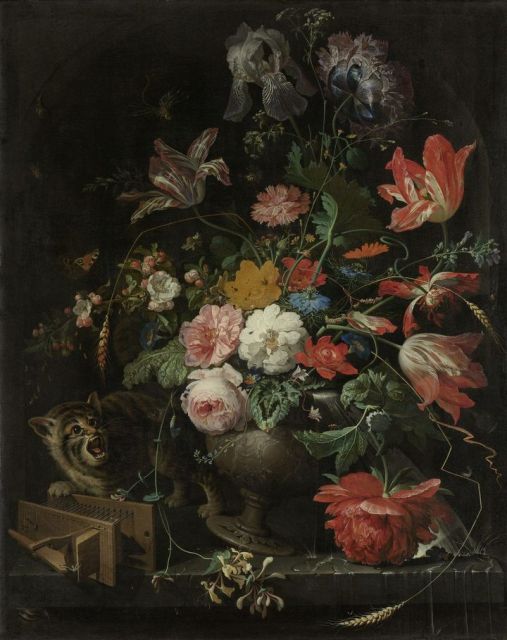
I noticed in the museum that earlier artists for some reason had trouble with drawing cats. There were constant blunders with the anatomy. With dogs, things were more or less okay, swans and other game they painted very accurately (well, because you can spread it out on the table for a whole day), but a cat, obviously, won’t stay still on a table for long, and it seems they drew them “from imagination.” And their imagination, it seems, was based on medieval depictions of cats, where there was complete chaos — cats were portrayed almost with human faces, with eyebrows and expressions.

At the same time, there were some really good examples from the 19th century — for instance, google the cats by Henriëtte Ronner-Knip.

Boselli Felice, Nature Morte avec chat, chien, et deux garçonnets

George Catlin, Le Chat d’Ostende (1868)

Abraham Mignon, The Overturned Bouquet (1660–79)