
In the Mozart opera “All Women Are the Same” or Cosi Fan Tutte by the Royal Opera House production, the one on the right (Dorabella) resembles Mizulina, while the one on the left (Fiordiligi) resembles Skabeeva.

In the Mozart opera “All Women Are the Same” or Cosi Fan Tutte by the Royal Opera House production, the one on the right (Dorabella) resembles Mizulina, while the one on the left (Fiordiligi) resembles Skabeeva.
“How many Romans or Jews in the time of Tiberius could have predicted that a small Jewish sect would ultimately conquer the Roman empire, and emperors would forsake the old Roman gods to worship a crucified Jewish rabbi?”
Indeed, a good question. As far as I am aware, at present, there is no religion that continues the traditions of ancient Roman or ancient Greek polytheism in their original form. Curiously, why is that?
I think that religions without centralized power simply stand no chance. On the other hand, what about Hinduism and Taoism? I’m not well-versed in this subject, but it’s interesting. I had never contemplated how it turned out that a dominant religion across a vast territory was completely obliterated.

As always, splendid, inspired, uplifting, interesting, informative, original, stylish, surprising, with bright eyes, love, kindness, and respect for listeners both male and female, admirers of all genders, adults and the not-so-much, with numerous examples of extensive, lengthy, homogeneous, and mismatched lists consisting of synonyms, antonyms, names of cities, rivers, books, small towns, hotels, people of various professions, characters, appearances, and writers of all times and nations the new video from Armen Zakharov, with Fedor or without, about lists, inventories, catalogs, enumerations in literature.
Today I finally made it to the exhibition Paris 1874: The Impressionist Moment – over an hour in line. Nadya says – look at that interesting wheelchair.
Nadya and I had been wheeling her dad around for many years. He fell ill, ended up without legs, and the wheelchair literally became an extension of him in everyday life. Just your “basic” wheelchair. We took him to the Black Sea by car several times, traveled abroad, and of course experienced all the “delights” of accessibility in Russia. Actually, I don’t even know how to translate “accessibility” into Russian properly. “Barrier-free environment”? It was not barrier-free, it was downright threateningly barriered. For example, we simply couldn’t get to the doctor at the clinic because the elevator was too narrow.
So, back to the wheelchair in the photograph. It’s the iBot by Mobius Mobility. It’s no longer customary to call them “wheelchairs,” it’s a “personal mobility device.” It operates both in balancing mode, where only two wheels are used — essentially, like a Segway, and in a four-wheel mode when terrain handling is needed. In two-wheel mode, the seat raises to a height of 91 cm, allowing the seated individual to be more or less at eye level with others. It also has a mode for climbing/descending stairs — that’s really cool. The range is 35 km in balance mode.
The iBot was invented by the same guy who invented the Segway — Dean Kamen. Overall, this startup is several years old, with several generations of the iBot already released.
Yes, the price of such a device ranges from 32 to 40 thousand dollars. Quite a lot. But it’s said that about half can be covered by insurance (still a lot, though).
There are a few people around us in wheelchairs. And there were few in Russia too. But in Russia, there were few because they just couldn’t leave the house, and each outing for the family or companion turned into a project that would be good to plan in advance. Here in the USA, there are few for another reason. Here, in case of problems, they don’t just hand out a wheelchair, they give a new leg or a new joint. And only if it’s completely irrepairable, then they resort to a wheelchair. Yes, such operations can cost a fortune for people without insurance, it’s a known problem, but usually, some charitable foundations are found.
For example, near our house is the organization ECHO (Every Citizen Has Opportunities). Besides helping financially with adjusting to a new way of life, they offer jobs to people who land in such trouble, they also provide free transportation (to work, to the store, etc.) and socialization.

There’s this Polish poet, Julian Tuwim. A funny story from his book: “…It reminds me of a story about a gentleman by the name of Abel, who went to America. There, they called him Ebel. So, he started spelling his name as Ebel. After that, they began calling him Ibel. He then wrote it as Ibel. Then they started calling him Aybel. And thus, on his business card appeared the surname Ajbel, which Americans pronounced as Edgebel. Later, the business card showed the surname Edżbel… Long story short, a few months later, Mr. Abel left America as Mr. Kопстручумчивадзе.”
That just came to my mind. Loads of famous people in the USA changed their names, for various reasons. And it was interesting to find out who— for me, quite a lot of new names.
Charles Aznavour, it turns out, was Shahnour Vaghinak Aznavourian. Sophia Loren — Sofia Villani Scicolone. Bob Dylan — Robert Allen Zimmerman (AAAA!). It’s common knowledge that Marilyn Monroe was Norma Jeane Mortenson. Elton John, turns out, is Reginald Kenneth Dwight. Our Jean Reno is not even French. He’s Juan Moreno Herrera Jiménez! Charlie Shein — Carlos Irvin Estévez. Demi Moore — Demetria Jean Guynes. Pablo Picasso — Pablo Diego José Francisco de Paula Juan Nepomuceno María de los Remedios Cipriano de la Santísima Trinidad Martyr Patricio Ruiz-y-Picasso.
Marc Chagall was Moishe Zakharovich Shagalov. Cary Grant, the Hollywood legend, was Archibald Alexander Leach. Another legend, Natalie Wood — Natalia Zacharenko. “Joker” Joaquin Phoenix — Joaquin Raphael Bottom. Apparently, Bottom wasn’t the best surname for an acting career. Natalie Portman — Neta-Lee Hershlag, she’s Jewish. Kirk Douglas — Issur Danielovitch Demsky (AAAA!).
Lady Gaga — Stefani Joanne Angelina Germanotta.
Remember Avraam Russo? Abraham Ipjian. Syrian Armenian. Steven Tyler from Aerosmith, turns out his mother was Belarusian — Steven Victor Tallarico. Nicolas Cage — Nicolas Kim Coppola (yes, he’s related to Francis Ford Coppola).
Turns out, Mark Twain was Samuel Langhorne Clemens, and Hulk Hogan — Terry Eugene Bollea. Olivia Wilde — Olivia Cockburn. Helen Mirren (starred in Tinto Brass’s “Caligula” among other things) — Helen Lydia Mironoff, she’s Russian on her father’s side.
I finished reading Nabokov’s “Lolita.” Started it in the original English, sporadically switched to the Russian translation, and fully switched to it in the second part.
In brief: it’s Lynch’s “Mulholland Drive” in prose due to the convoluted plot and “Leon” for its straightforwardness.
Indeed, the novel’s title features what is essentially a secondary character. The novel is not really about Dolores Haze. Essentially, it’s Humbert’s confession, as Humbert himself titled this book within a book.
I must admit, it feels like I missed half of the subtext, surely so obvious to more sophisticated readers.
Did Quilty exist? Was there an Annabel Lee? And overall, can Humbert be trusted? Is there anyone good in the novel at all?
“Lolita,” like the “The Defense” I read before it, is largely about form, not plot. It’s about “how,” not “what.” Why does Nabokov remind me of Lynch here? Because both seem to overestimate their audience – reader and viewer, respectively. They believe that the intricacies and minutiae cannot only be noticed but also not fail to be seen how beautifully they come together into a pattern and change, like a prism, a generally simple plot.
I was “re-reading” “The Defense” while listening to the audiobook on a drive from New Orleans. 12 hours. For instance, I noticed a reference to the very ending of the book (which you simply don’t know at first reading) at the very beginning, and then essentially a foreshadowing of what the plot would end up like — a book in a book, which is part of the plot (trying to avoid spoilers here). As the author himself wrote: “A book should not be read — it can only be re-read. A good reader, a choice reader, an active and creative reader, is a re-reader.”
Well, now “Pnin” is next in line. Wish me luck — its complexity promises an even bigger challenge. And after that, I might dare to take on “The Gift” — I foresee drowning there altogether.


I’ve always been curious: why do people assume that famous singers, musicians, and even artists must be intelligent? For instance, if some lady with a mere three years of schooling blathers some nonsense on the tram, nobody rushes to tweet about it, right? But if it’s not a lady from the tram, but a lady from the TV, suddenly there’s this expectation for her to be sensible.
I also don’t understand why sometimes these same singers are asked to comment on events. And others, probably their fans, for some reason regard their opinions as more substantial than those of an unknown person who is, obviously, closer to the topic.
There are good examples, though—like Makarevich, whose interviews on arbitrary topics genuinely reflect an understanding of how the world works and, I can’t quite find the word, wisdom, perhaps. But if you look deeper—he is just another intelligent person. There are many like him, but he also sings. And if an interviewer wants to talk to him, it’s only because Makarevich has something to say. Most celebrities, in general, have nothing to say. And often, even if a thought does mature in their head, they can’t express it clearly.
If you think about it, people who from an early age dedicated themselves to a profession—athletes, actors, often musicians—inevitably see the world around them skewed by their passion. Frankly, much of it remains unseen to them.
The same goes for Polunin, who can’t write in Russian without a dictionary, yet for some reason, people are interested in his opinion on matters other than the very thing he’s been doing since childhood.

Out of all the colors of the film, he chose💩

We had snowfall, and monsters began to appear on the roads.
This is the Apocalypse Hellfire 6×6, a product of Apocalypse Manufacturing. It’s based on a Jeep Gladiator with an 800 horsepower engine. Overall, Apocalypse has quite a lot of different designs, and they are all superb from a design standpoint.
In terms of brutality and design, the renders on the website look somewhat better than this particular instance. Perhaps the workshop invests more into aesthetics each year, and on the road, we encountered something from “past collections.”

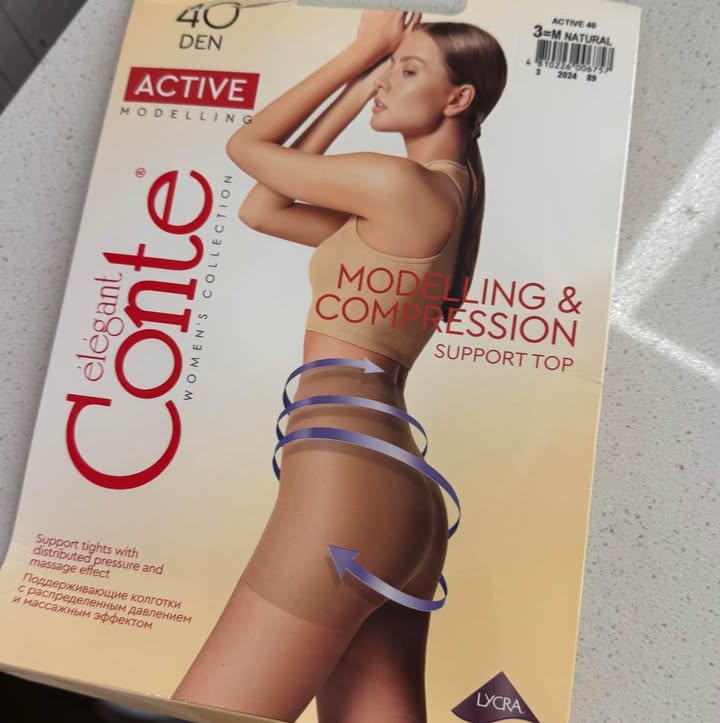
The last thing you expect to find in a package of women’s tights is a salad recipe. With mozzarella and avocado, no less.
So, I delved into a new topic for me and uncovered quite a lot.
For instance, it turns out that lycra is not the name of the fabric, as I always thought, but a brand name for the fabric known as spandex, which I would have guessed was the brand name. And by the way, spandex is officially an anagram of the word expands. In Europe, spandex is also known as elastane. There is a brand of elastane called Elaspan belonging to The Lycra Company. All in all, it’s complicated.
By the way, this spandex was invented by Joseph Shivers, just two hours away from me, in Waynesboro, VA.
In the USA, tights are extremely unpopular. Moreover, if they are worn, they tend to be black and nearly opaque. It’s almost impossible to find nude and sheer ones (at least around here). You can buy anything on Amazon, but you’ll never find them in stores. Apparently no one is interested in salad recipes. However, leggings have conquered the market. Especially lululemon. Meanwhile, women’s high-heeled shoes and tight mini-dresses are also extremely unpopular and are only worn about three times a year. For example, by schoolgirls for Prom and Homecoming—but even then, without tights. Both the shoes and dresses are often of very poor quality, but they suffice for two or three times a year, after which new ones are simply bought.
That same day in New Orleans at the antique M.S. Rau I saw a thing, the name (darner) and appearance of which seemed very perplexing to me. I went to Google it, and searches for darner only show dragonflies. Turns out, a stocking darner is a tool for darning stockings. Specifically, this glass darner, looking like a ball on a handle, was being sold at M.S. Rau for $4400. Google shows mostly metal darners, looking like a hoop with brackets. In Soviet times, they were “mushrooms”.
There’s also a linguistic aspect. In English, tights are called both tights and pantyhose. Generally, pantyhose are considered to be thin (8-40), and tights—are thick (40+). In British English, the word “tights” covers the entire spectrum of tights, unlike in American English.
Interestingly, back in 1972, Australian lifeguards came up with the idea of wearing tights to protect against potentially fatal stings from box jellyfish (sea wasps). Funny, but it’s supposed to help.
All in all, at 47, I’m discovering new horizons, and I hope you found this interesting too.

 Hi, I'm Rauf Aliev.