The Evolution of Sanitary Terms: From Toiletries to Restrooms | October 12 2024, 00:15

Finishing Bill Bryson’s At Home, I discovered that originally, around the year 1540, it was a word for fabric, a diminutive of “toile,” which is still used to describe a type of linen. Then, it came to denote fabric used for a dressing table. After that, the items on a dressing table (hence “toiletries”). Subsequently, the word came to mean the dressing table itself, then the process of dressing, then receiving guests while dressing, then the room for dressing, then any personal room next to the bedroom, then a room used for sanitary purposes, and, finally, the toilet itself. This explains why “eau de toilette” in English and French can mean both something women enjoy applying to their face and simultaneously “toilet water.”

Interesting note on the word “wardrobe,” exactly as garderobe. It was a combination of “guard” (“to keep”) and “robe” (“clothing”) and initially meant a storeroom, then any personal room, briefly (and briefly only) a bedroom, and finally, a toilet.

The “water closet” (WC) appeared in 1755 and originally designated a place where royal enemas were performed. From 1770, the French called the home toilet “un lieu à l’anglaise” (“an English place”), which might explain the origin of the English word “loo.” Online sources say that loo comes from “gardez l’eau,” meaning “watch out for the water,” as it was shouted before emptying chamber pots out the window.

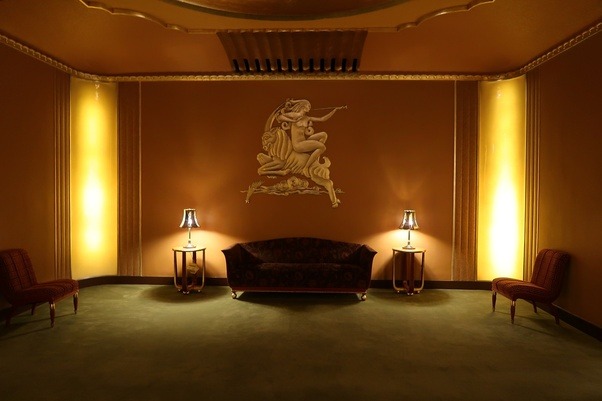
Here in the USA, toilets are called restrooms—a true Americanism. I just googled that in the first half of the 20th century, many American workplaces and public buildings had rooms with chairs or sofas that employees or clients could use to take a break, sit down, and rest. In some jurisdictions, laws were passed requiring these restrooms to also have toilet facilities. In everyday life, people who didn’t have the time to sit on a sofa and relax still entered the restroom to use the toilet. Over time, the expression “I’m going to the restroom” became synonymous with using the toilet or sinks, rather than chairs and sofas. Even as rooms with sofas became less common, the phrase with its new meaning persisted. Thus, a room with toilet facilities came to be called a “restroom.”

Of course, we can also say bathroom, without, of course, expecting any actual baths there.

The photo — a restroom from the 1930s.
Sewing Struggles: A DIY Armrest Cover Saga | October 11 2024, 17:47

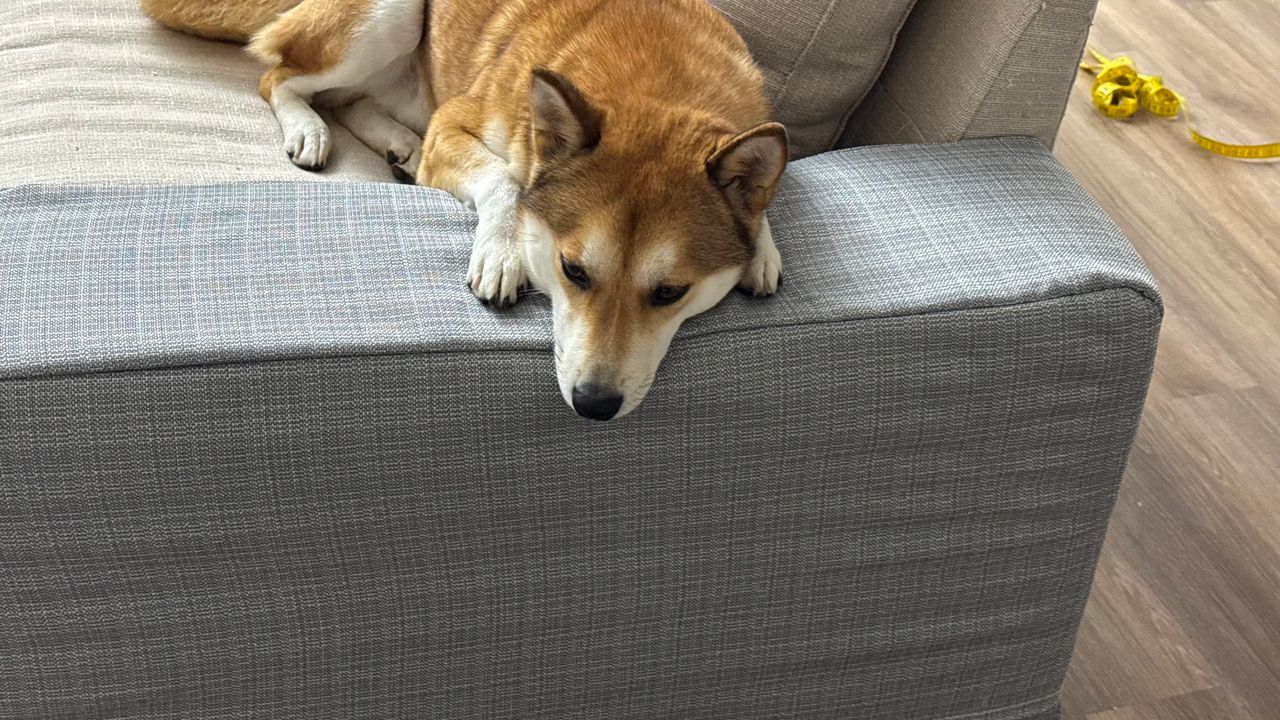
ME AND THE SEWING MACHINE. Yuki owns an Ikea sofa. I occasionally read on it too, but essentially, the sofa is truly his. He’s very meticulous with it (as with everything, really); we wash the covers, but over time, they began to look less presentable, and I decided instead of buying a new set for $99, I’d at least sew some armrest covers. So, it’s going to be two-tone.

Yesterday, I hopped on my scooter and zipped over to Hobby Lobby. Picked up 2 yards of fabric for 20 bucks.

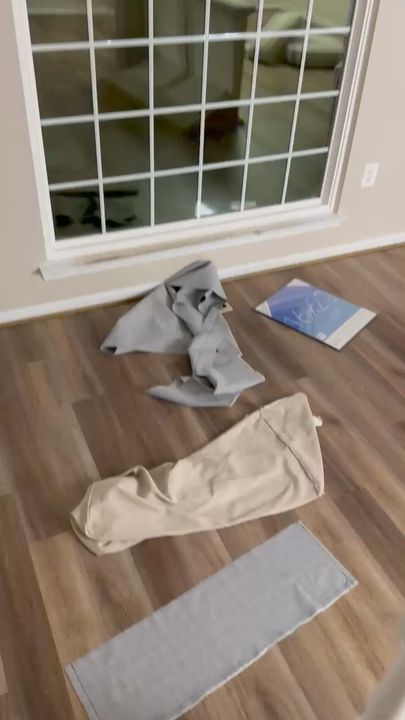
Look, this isn’t my first rodeo, but I hate it every single time. How do seamstresses manage to love this kind of work? It took me 4 hours just to make one armrest cover. I’m definitely not continuing and am now switching back to the original and ordering a set.

This whole endeavor is an engineering feat, no simpler than programming, I swear. First, you have to reverse-engineer the reference item. That’s a major challenge, especially if you don’t want to cut up the item. In this case, it’s just a cover, which is simpler than, say, shorts. So, it became clear that I needed three pieces of fabric, 45×88 cm, 178×23 cm, and 30×88 cm, plus each piece must have at least 2 cm allowance on each side.

The first challenge is just drafting all of this on the fabric in order to cut it later. Especially if the fabric has a pattern. Overall, millimeter precision isn’t necessary, but what’s needed is a) straightness of the lines b) the same angle with the fabric fibers throughout the straight lines, ideally at a strict 0 or 90 degrees. This is all quite complicated to achieve, especially if you need to cut a piece 188 cm long. You spread it out on the floor, and if any section of the fabric shifts by a couple of millimeters, then there you have it, the line will be crooked. So ideally, you need to secure/stretch the fabric and then draw along it.

Then there’s the separate issue with the fabric itself. First, if you follow the fibers with your eyes, you realize the fabric, or the pattern, does indeed break up periodically, or zigzags, and you can’t see past ten centimeters. Second, the fabric might stretch. Besides that, when you try to smooth something out, it slightly increases or decreases in different places, so that straight lines aren’t straight anymore. After washing, everything will probably return, but it’s bothersome nonetheless.

Separately, what you draw with. Whatever draws on the fabric needs to be erasable afterward and thin enough so that the blade doesn’t wander. A marker might not work. Okay, if you’re drawing on the inner part, it might be okay, but it won’t work with transparent and semi-transparent fabrics.

Next, what to cut with. Scissors obviously don’t work, unless you use them as a knife, not as scissors. There is a special knife. Pretty convenient, I must say.

So, we cut it. That’s half the job, but it takes a lot of time. The rest is technically simple – sewing these pieces together. But that’s if it’s just simple sewing. Any cheapest Chinese product is five times more complex than this “simple sewing.” At least, you need an overlocker (I have one). Plus, you need perfectly straight seams, and for that, you need more skill, as at slow speeds they don’t come out right (my skill is so-so, but if not rushed, generally what’s needed is achieved).

In general, the hassle with this is such that it’s easier to give up. Ultimately, I’ll be ordering a new set. If I ever think of sitting down at the sewing machine again, please remind me that there are far more interesting things in the world, and I definitely underestimated something.

But on the plus side – I can now say that, overall, superficially, I understand how it all works. Now I’d be interested in seeing how this is automated. How they manage to produce shirts for a dollar — it’s definitely not just because the Vietnamese in the factory are working for food. Surely there’s a lot of automation involved, where problems mentioned above were solved ages ago.

Exploring the Vast World of Clothing Terms | October 10 2024, 14:24

In “Monday Begins on Saturday,” I came across the word “culotte” and realized that I have a very vague idea of various clothing names in Russian, except for the most basic ones.

This is pretty much a whole new language for me. I don’t know, maybe those who go shopping for clothes have a better grasp of it.

Great source with pictures: https://lookso.ru/vidy-odezhdy/.

Following this link, you’ll encounter Balmacaan, Bushlat, Duster, Duffle coat, Sheepskin coat, Inverness, Cape, Covercoat, Cocoon, Coper, Crombie, Manto, Ulster, Pardessus, Polo, Poncho, Puffer, Raglan, Riding coat, Swinger, Trench coat, Chesterfield, Greatcoat, Hubertus, Raincoat, Mackintosh, Coat-robe, Trench, Anorak, Blouson, Bomber, Leather jacket, Cape jacket, Norfolk, Parka, Spencer, Blazer, Jumper, Cardigan, Kittel, Top, Afghan, Baggy, Bamster, Bananas, Bermudas, Boyfriends, Breeches, Galife, Gaucho, Jeans, Joggers, Pipers, Capri, Cargo, Carrot, Flared, Culottes, Leggings, Palazzo, Skinny, Slacks, Tubes, Chinos, Churidar, Shalwar, Shorts, Bodysuit, Boxers, Briefs, Bustier, Combidress, Negligee, Peignoir, Pajamas, Slip, Thong, Trunks.

No need to read the text below carefully because it’s pretty much impossible to understand.

Here’s an example of what I didn’t know:

I wouldn’t have been able to explain what a tunic, pashmina, cape, cardigan, parka, trench, bomber, or anorak is even though a Google search shows that all these terms are used.

Tunic – a long or short women’s blouse or dress, I don’t know how else to define it.

Pashmina – a wide scarf often used as a shoulder wrap.

Cardigan – a knitted sweater with buttons or without any fastenings.

Parka – a long jacket with a hood, often insulated.

Trench – a classic long coat with a belt and double-breasted buttoning, with a lapel collar.

Bomber – a short jacket with elastic at the waist and sleeves.

Anorak – a lightweight hooded jacket that fastens only halfway up.

Here are just a few coats from the list above:

Balmacaan — a single-breasted long coat model with raglan sleeves and a placket completely hiding the buttons.

Bushlat — a shortened double-breasted coat adorned with two rows of buttons and a turned-down English collar with lapels

Duster — a women’s lightweight, long, loose-fitting coat model with a belt instead of fastenings, worn like a robe

Duffle Coat — informal single-breasted coat of straight cut above the knee. Recognizable attributes of the model: patch pockets, hood, and toggle closures instead of traditional buttons.

Inverness — a vintage-style elongated coat with loose fit and sleeves covered with a cape.

Cape – a sleeveless cloak that fastens at the throat.

Covercoat — a single-breasted coat made from a namesake dense fabric. Recognizable for its pointed lapels and traditional decoration of four or five parallel rows of stitching at the bottom of the garment and on the sleeve edges.

Cocoon — a model of men’s or women’s oversized coat that narrows towards the bottom and broadens at the waist with dropped shoulders and a rounded silhouette.

But I started with culottes. It’s somewhat historical, but a Google search shows that not always, and there’s plenty of such items in marketplaces. So, there are certainly loads of unknown words to me. Starting with short-pants

Culotte – short or wide knee-length trousers. Nowadays, these are wide-legged women’s trousers, usually longer than the knee.

Coper — a long leather coat with a belt, visually resembling a raincoat. Most popular in men’s wardrobe, but women’s models are also available.

Manto — a spacious trapezoidal coat-wrap with no through fastenings, made of fur or with corresponding trim.

Capri are essentially the same as trousers, the difference being only that their length reaches the mid-calfement.hasMore …

Exploring Milk as an Alternative to Water in Espresso Making | October 08 2024, 20:33

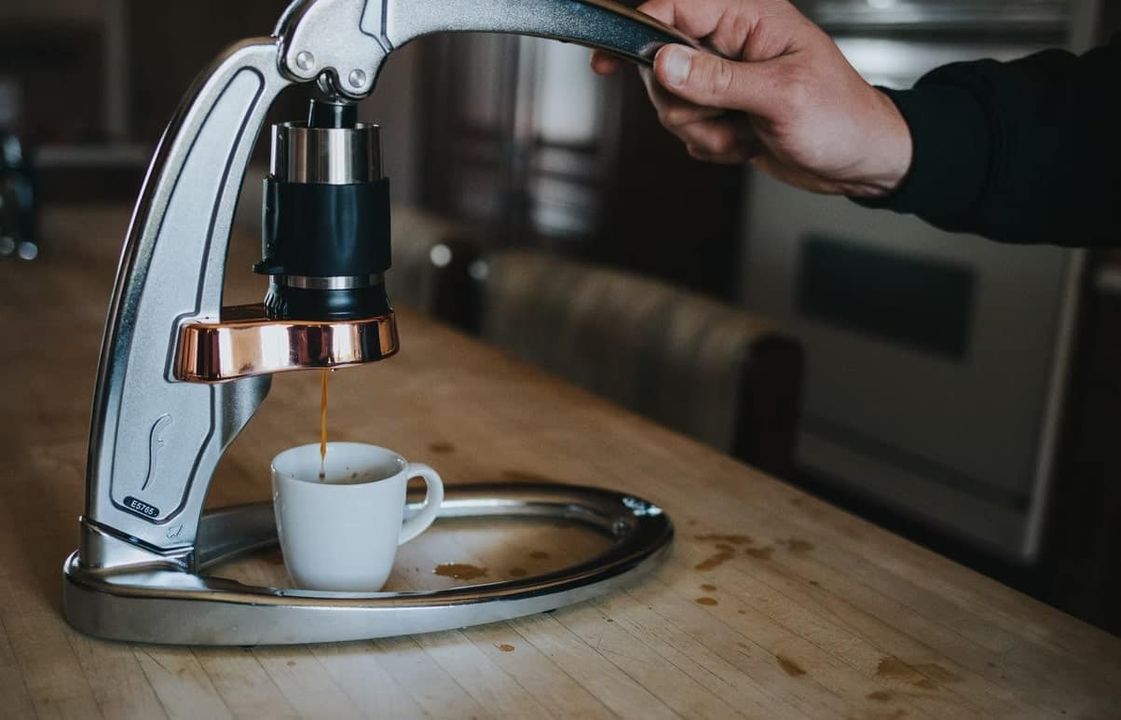
I wonder, what if instead of water we used milk to make espresso?

(From the image it seems unclear to many – there is no heating, no way for it to burn. Plus, there are different kinds of milk – like oat milk, for example)

Unveiling the Soviet Rock Scene | October 07 2024, 16:54

This picture is often mentioned in the same breath as “Who does Kiss harmonize with?”, “victims of pseudo-music”, and “Liverpool ‘idols’ shearing sheep”. The text is of terrible quality, unreadable, but if you manage to decipher it, it actually turns out to be an advertisement for the upcoming Soviet-Polish festival “Thrash Epidemic” at the Gorbunov House of Culture, featuring “Master”, “Hellraiser”, “Black Obelisk”, “Abaddon”, “Mass” and other hard rock bands. So, the freedom of the nineties was still something to behold.

Text from the picture below

* * *

A familiar journalist named John, originally from foggy Ireland, with an astonished lift of his eyebrows watched the trash-metal-sex-show “Corrosion of Metal” and asked Spider (real name Sergey Troitsky) about the age restriction for attending his performances. This time, it was Spider’s eyebrows that flew up in surprise, and in righteous anger he made a historic speech about how his show is primarily meant for Soviet teenagers.

It should be noted that all of Spider’s speeches hold historical value, and if there’s a biographer who decides to follow his every step, that biographer might make a killing on the memoirs. Because history has not yet witnessed anything similar.

Spider said that children are shielded from the truth about sex, hence “Corrosion of Metal” had to take up the heavy burden of enlightenment.

WHEN all this was just beginning, Spider openly stated that Soviet education only increases the risk of naive teenagers contracting syphilis, gonorrhea, and AIDS. “Prevent this,” Spider called out and brought onto the stage a group of desperate girls tasked not only with showing an orgasm but actually achieving it on stage.

“The truth and nothing but the truth,” says Spider and adds, “the truth cannot be vulgar…”. To him, thrash appears to be the most natural musical form capable of conveying the full extent of hypersexual teenagers’ feelings.

With all this, they will take the stage the day after tomorrow at the Gorbunov House of Culture during the Soviet-Polish festival “Thrash Epidemic” (thank God it’s only – thrash!). Also there, as “ZD” already reported, will be “Master”, “Hellraiser”, “Black Obelisk”, “Abaddon”, “Mass”, and Polish peers “Vader”, “Bloodlust”, and “Slashing Death”. Starts at 15:00 and 19:30.

MEANWHILE, with the help of our photojournalist Alexander Astafyev, “ZD” offers a look not only at the stage but also behind the scenes of such a cool team as “Cor-r-rrosion of Metal”…

Photos by Alexander ASTAFYEV.

“Moskovsky Komsomolets” 29.11.1990

Revello de Toro | October 07 2024, 03:16

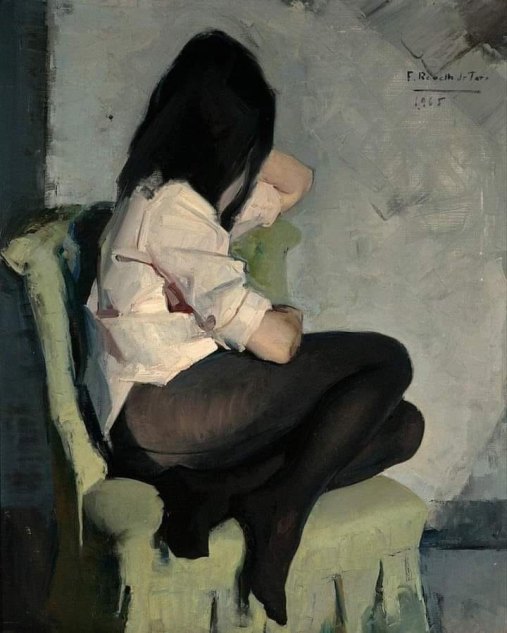
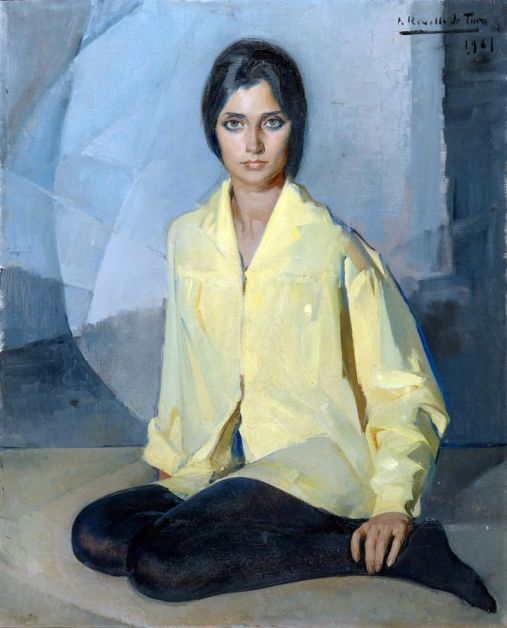
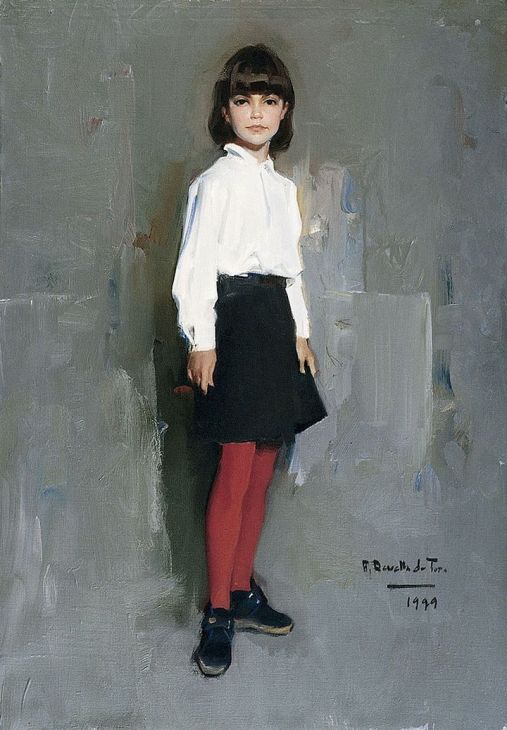
Today — meet Revello de Toro, a mid-20th-century Spanish painter. He primarily painted women in white, deep in thought, in various poses and life situations. But he did so—perfectly. If I ever make it to Málaga, I must visit his museum. There, they have about 150 of his works.

Posts like this are grouped under the tag #artrauflikes, and on beinginamerica.com, in the “Art Rauf Likes” section, you can find all 114 (unlike Facebook, which forgets or overlooks nearly half of them).

Sosumi: The Playful Sound of Apple’s Legal Battles with The Beatles | October 06 2024, 17:59

1) It turns out the MacOS notification sound had a name, and it was Sosumi. It was used from 1991 to 2020, after which it was replaced with Sonumi. There’s a funny story behind the name.

2) These sounds have a creator. It’s Jim Reekes—Apple’s sound designer, and there’s a secret that wasn’t disclosed for about 10 years after his departure from the company.

3) The Beatles are partly the authors of the MacOS startup sound.

Now for the full story. There was a company called Apple Corps, organized by the Beatles. Its logo was also an apple (of course), hence there was a legal dispute with Apple, which ended, as the joke goes, with the agreement “I don’t give loans, and the bank doesn’t sell seeds.” Apple Inc. could use its name but was not allowed to venture into the music industry and use music-related names in its products.

Accordingly, any Apple ventures into music immediately alarmed lawyers from both sides. When it came to creating system sounds, the lawyers tensed up and asked Reekes to first, not use the name “Chime,” and second, please no melodies in the sounds. As a result, operating system sounds like Frog, Funk, Glass, and Hero appeared.

Eventually, Reekes worked hard on the startup sound and created a C major chord.

Reekes assures that while creating the C major chord, he was inspired by The Beatles’ song “A Day in the Life. I don’t know why I’m laughing here.

Returning to notifications. After much deliberation and attempts to find a neutral name, Reekes proposed the playful name “Let it Beep” in the style of The Beatles’ song “Let it Be”, but his colleagues thought it would be hard to accept. When someone suggested such a name would lead to legal disputes, Reekes jokingly replied: “So sue me,” and suddenly realized that this phrase would be perfect for the sound name. Eventually, they decided to rename the sound to “Sosumi. He told his bosses it was a Japanese word having nothing to do with music.

In macOS Big Sur, the original chime was replaced with another, which was named Sonumi. The original name was retained in the first public version of the OS, but later changed to “Sonumi. The sound file itself /System/Library/Sounds/ is still named Sosumi.aiff.

Now, the OS startup sound is completely removed. It seems you can enable it in the settings.

Dog Alarmed by Mysterious Paper Invasion | October 05 2024, 00:29

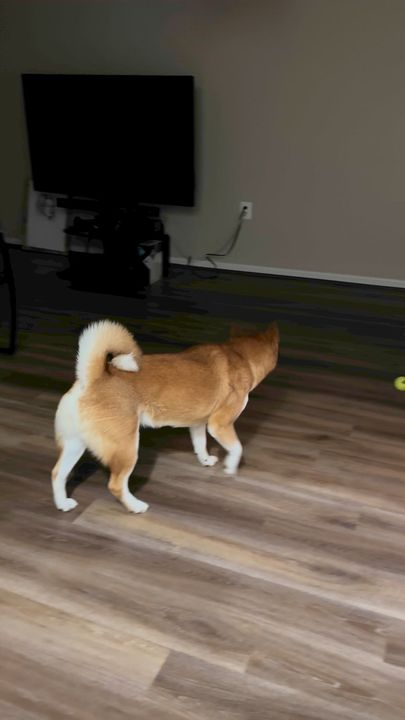
Sitting here, pressing the black-and-white keys on the first floor. Above, there is barking. Yuka, as a Shiba Inu, normally doesn’t bark at all. Well, like maybe once a year for various reasons. And now he’s giving a full serenade. I go to check, turning on the camera. It turned out that he had suddenly discovered a newly-purchased pack of printer paper opposite his couch, in a room where nothing new had appeared in his presence before. And there it was, such an aggressively white pack of paper with a whole 1000 sheets from Costco by the TV, clearly encroaching on his territory. He remained upset for quite a long time until I removed it. Later on, Yuka got to know it better. If it had been outside, he would definitely have peed on it, but inside, he just sniffed it for a long time, then cataloged it in his mind and no longer barks. That’s his exciting life.

Frustrations and Fixes in Modern UI Design Practices | October 04 2024, 17:01

There must be a special place in hell for those who program automatic text insertion when you copy something to the clipboard.

Right next to those who prevent copying text or images to the clipboard (as if you can’t just take a screenshot), enable autoplay on videos (like Facebook, for example), put a useful footer below a block that has infinite scrolling, making it impossible to ever reach the footer (I have this issue on my WordPress blog, for example, and can’t fix it), create software that functions differently on mobile and desktop (Facebook again), reset everything to zero when you go back to a page with infinite scrolling, prevent sharing a link to a post page (LinkedIn), break navigation with the back button (a lot of them do this), and limit passwords to certain special characters (for example, I was registering at the DMV yesterday, where an exclamation mark is considered a special character but an underscore isn’t).

I think we should publish a book on UI antipatterns. Because compiling what should be done is now impossible, there are too many variations, but what should not be done is a relatively limited list that can be divided into “sometimes even professionals do this” and “everything else”.

Exploring Forgotten Sci-Fi: From Obruchev to Efremov and Beyond | October 04 2024, 14:30

I wonder, has anyone under 25 read Obruchev and Efremov? I’m curious how these would read in the year 2024. As a child, I remember being utterly engrossed. The Sannikov Land, Plutonia, Andromeda Nebula — it all seems far from mothballed, and could even be turned into a decent Hollywood movie script, but then again this is just my nostalgic impression. Generally, Belyaev, the Strugatsky brothers, and many others have been undeservedly forgotten.