Invasive Spotted Lanternflies and the Battle to Control Them | October 04 2024, 19:41

We currently have about a dozen Spotted Lanternflies on our porch — Spotted Lanternfly. Here’s a photo of one I’m holding. It’s an insect from the cicada family, about the size of a thumb phalanx. Generally harmless, although, of course, it depends on how you look at it, since at home, it periodically annoys the dog, and it also drains vineyards, not disdaining apples, peaches, cherries, maple, oak, and birch.

This creature is actually an immigrant from China. And it brought its whole ecosystem from China with it. So, listen up.

Until 2013, we didn’t have Lanternflies in the U.S. They arrived from China. But generally, animals always have some environmental dependencies, which is why they don’t just colonize the entire world, but stick to familiar habitats. The Lanternfly’s preferred tree is beautifully called the “Tree of Heaven” because of its ability to grow 20-30 meters tall. The botanical name of this tree is also telling — Ailanthus altissima. And this tree is native to China, where they used it to breed silkworms. Actually, it grows in many places, including Russia and Ukraine. And these Lanternflies really love this tree.

It was introduced to the U.S., where it has become a weed. And for the Lanternflies — it’s a feast. They lay their eggs on it, and each year there are more than the last. How to deal with this, it’s unclear, as the typical recommendation of “scrape the eggs off the trees, putting them in two bags with alcohol” obviously won’t be applied.

One option is to bring in the combat wasp, Anastatus orientalis, from China, which greedily devours Lanternfly eggs. Quite an amusing method. They lay their eggs inside the egg masses of the lanternfly. The larvae of the wasp develop inside the eggs of the lanternfly, consuming them from within, which prevents the hatching of the lanternflies.

However, scientists suspect that if the combat wasps proliferate and start eating more than just Lanternflies, we might have to bring in yet someone else from China who eats the wasps themselves.


Frustrations and Fixes in Modern UI Design Practices | October 04 2024, 17:01

There must be a special place in hell for those who program automatic text insertion when you copy something to the clipboard.

Right next to those who prevent copying text or images to the clipboard (as if you can’t just take a screenshot), enable autoplay on videos (like Facebook, for example), put a useful footer below a block that has infinite scrolling, making it impossible to ever reach the footer (I have this issue on my WordPress blog, for example, and can’t fix it), create software that functions differently on mobile and desktop (Facebook again), reset everything to zero when you go back to a page with infinite scrolling, prevent sharing a link to a post page (LinkedIn), break navigation with the back button (a lot of them do this), and limit passwords to certain special characters (for example, I was registering at the DMV yesterday, where an exclamation mark is considered a special character but an underscore isn’t).

I think we should publish a book on UI antipatterns. Because compiling what should be done is now impossible, there are too many variations, but what should not be done is a relatively limited list that can be divided into “sometimes even professionals do this” and “everything else”.

Exploring Forgotten Sci-Fi: From Obruchev to Efremov and Beyond | October 04 2024, 14:30

I wonder, has anyone under 25 read Obruchev and Efremov? I’m curious how these would read in the year 2024. As a child, I remember being utterly engrossed. The Sannikov Land, Plutonia, Andromeda Nebula — it all seems far from mothballed, and could even be turned into a decent Hollywood movie script, but then again this is just my nostalgic impression. Generally, Belyaev, the Strugatsky brothers, and many others have been undeservedly forgotten.

Fernand Pelez | October 03 2024, 18:43

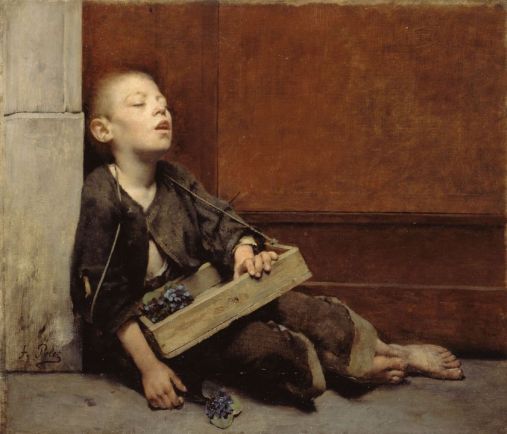
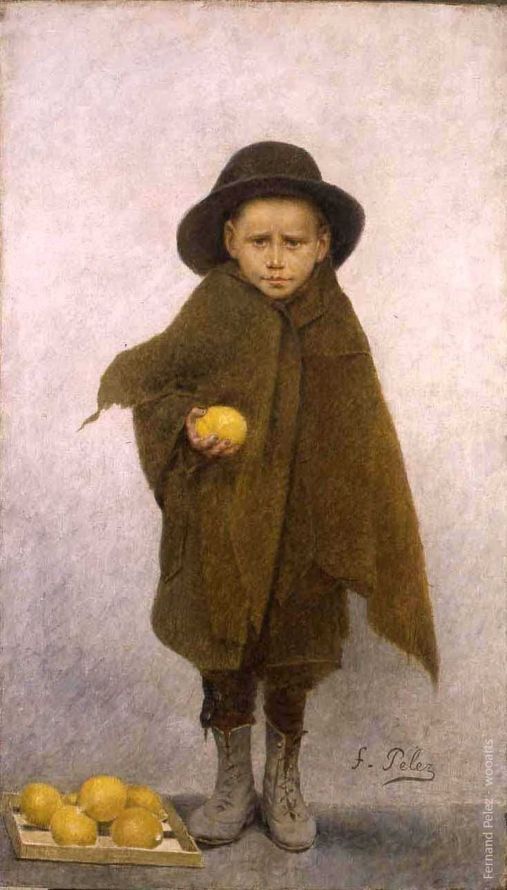
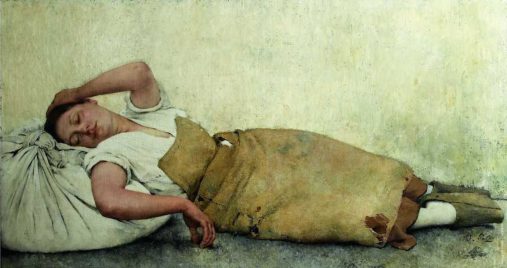
The French painter of Spanish descent, Fernand Pelez (1848-1913), produced his most striking works in a series, the first of which portrays a gaunt, weary mother and her five children struggling to survive on the streets. The few extant works of Pelez remind me of certain paintings by Thomas Benjamin Kennington, about whom I wrote in May this year. Alas, very few of Pelez’s paintings have survived to this day.

Posts like this fall under the tag #artrauflikes, and on beinginamerica.com, in the “Art Rauf Likes” section, you can explore all 112 of them (unlike Facebook, which ignores almost half of them).

Decoding Keystrokes: High Accuracy Typing Inference from Sound | October 03 2024, 14:22

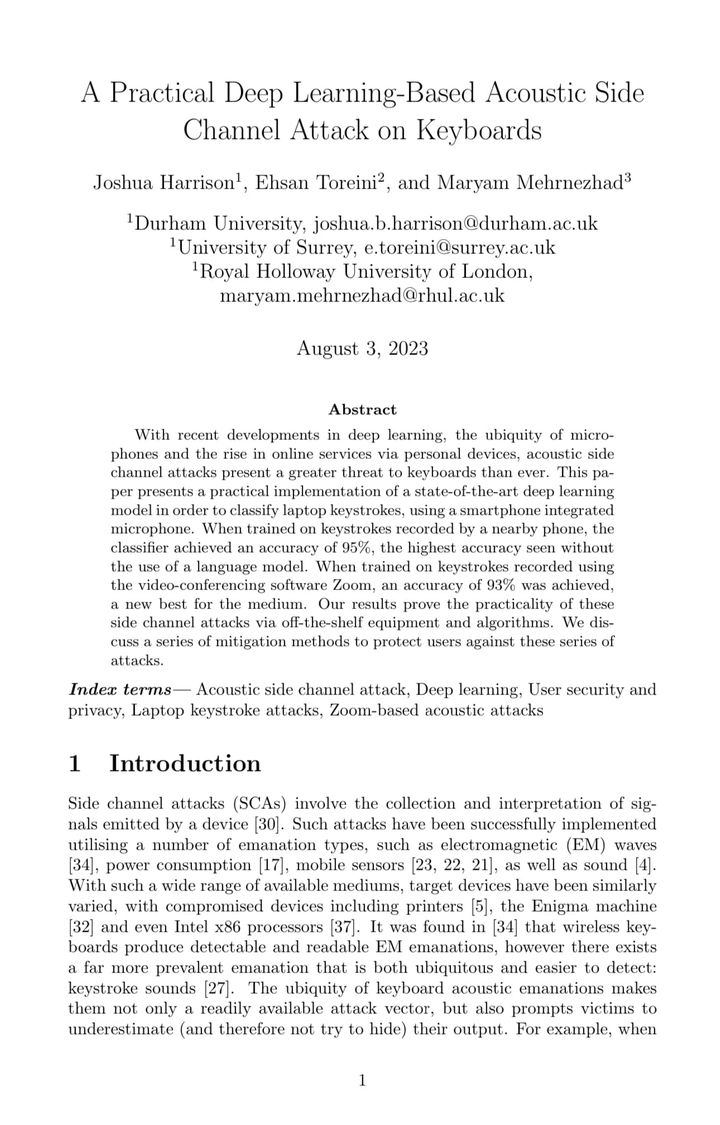
11 years ago, I wondered if it was possible to tell by the sound of keystrokes whether someone was messaging in a messenger or not. In 2023, a scientific article is published with a prototype that can determine with 95% accuracy what a person is typing just by recording the keystrokes on a smartphone, and 93% accuracy when recorded through Zoom. The code in the article is declared to be available to other researchers. And they admit that they have not yet used language models, but with them, it should be really good. Link in the comments.

Andrew McNeile Jones | October 01 2024, 20:42

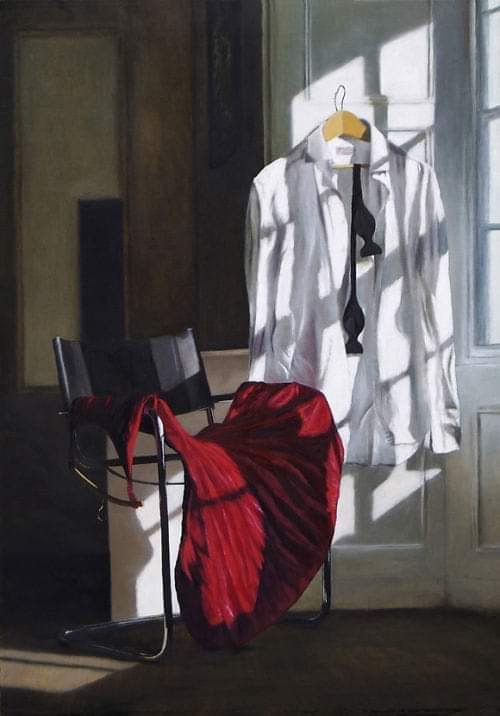
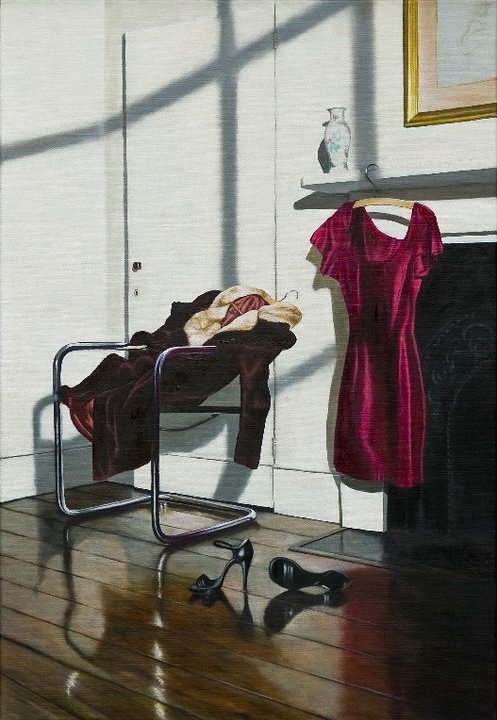
Why do still lifes typically feature mundane subjects like insignificant vases with fruit or lifeless fish? Consider Andrew McNeile Jones, for instance (Andrew McNeile Jones, British) — his still lifes focus more on interiors. Until 2017, his paintings primarily revolved around interior spaces, treating them as the main subject. However, from 2017 onwards, it appears his artworks shifted towards being predominantly suited for interiors — ones that enhance the look above a sofa in a contemporary apartment. This later phase of his oeuvre is more elusive to me. It’s as though the artist himself was supplanted. I’m not judging if it’s better or worse; it’s just markedly different. I’ll add a link to his website in the comments — do take a look.

Posts of similar interest are categorized under the tag #artrauflikes, and you can find all 110 of them on beinginamerica.com under the “Art Rauf Likes” section (unlike Facebook that tends to forget — or overlook — almost half of them).

Exploring Art and History: A Journey through Russia’s Cultural Legacy | September 30 2024, 00:30

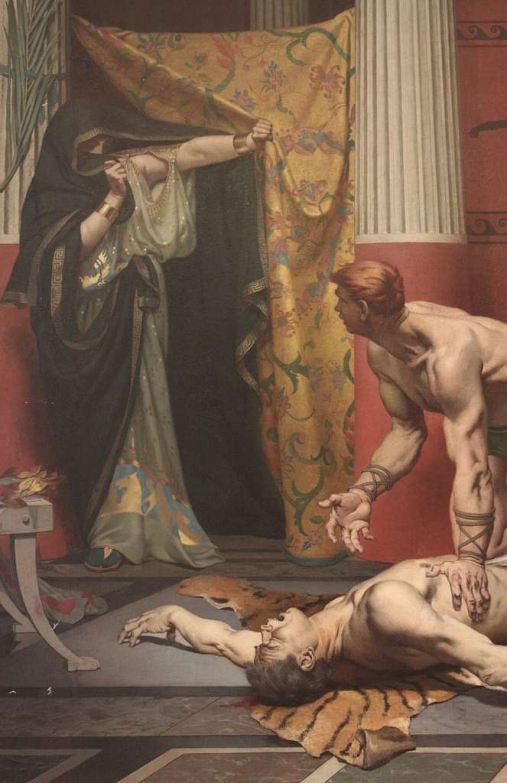
Cultural page. It was a surprise to see Bryullov’s work, and not just any work, but the famous portrait of Countess Samoilova (with a black boy and a ward), which it seems everyone knows right from school benches, along with the equally famous “Horsewoman”, also depicting her. Bryullov, generally, isn’t that well-known outside of Russia, and there aren’t many of his works in museums. This Samoilova, by the way, even appears in Bryullov’s “The Last Day of Pompeii” three or four times.

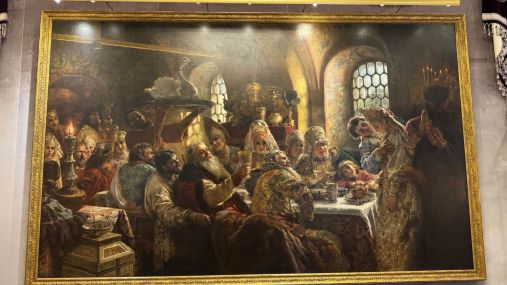
Across from Samoilova, the boyars are drinking. This painting, for some reason, is entirely unsigned. It’s a large, wall-sized canvas by Makovsky, “The Boyar Wedding Feast”. It invites prolonged viewing — every detail is captivating.

In the same hall, a third surprise awaited me — a portrait of a young black man. This was Lloyd Patterson. As it turned out, this gentleman ventured to the USSR in 1932 in search of racial equality, work, and simply a better life. In the Soviet Union, Patterson was invited to work as an artist on the film “Black and White”, the idea of which was to expose racism in America. The project was eventually canceled, but Lloyd stayed in the Soviet Union, mastered Russian, and married a Soviet artist and designer, Vera Aralova. It could be said that the issue of racism helped him settle his life.

Here in the USSR, his son, James Lloydovich, was born, and this young man is the same one who played in the famous film by Grigori Alexandrov “Circus” as the son of Marion Dixon – the American artist portrayed by Lyubov Orlova.

He grew up, became a poet, a prose writer, published in the USSR. Right after the USSR came to an end, James emigrated to the USA, and has been living here, in Washington, for over 30 years now. He is already 91 years old. He recently released a book titled “Chronicle of the Left Hand: An American Black Family’s Story from Slavery to Russia’s Hollywood”.

After the museum, we went to Mozart’s Requiem at the National Cathedral. The warm-up for Mozart was the Berlin Mass by Estonian composer Arvo Pärt. Too slow for me. But the Mozart Requiem I’ve heard about a hundred times, and this was my second time hearing it live (the first time was in a church in Moscow). Still, I can’t say I was very satisfied, coming to a live performance in one of the largest cathedrals in the world: I skimped when choosing seats and ended up in the back. I should have bought tickets closer to the front. By the place we were sitting, the sound was turning into a muddled “mush.”

Exploring the Bizarre World of Enrico Robusti: An Unconventional Artistic Vision | September 28 2024, 16:23

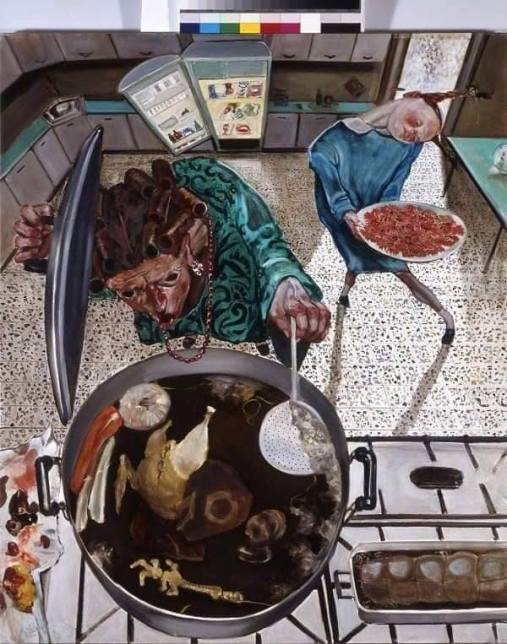
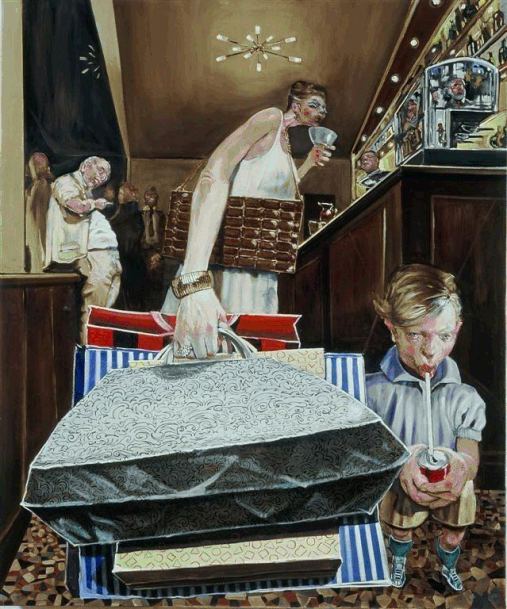
Today, I want to share with you an artist whose works are truly bizarre—Enrico Robusti (born 1956). Imagine putting door peepholes over your eyes instead of glasses, downing some vodka, and then visiting your relatives after banging your head a couple of times on a speeding tram. The result? Probably nothing good, but at some point, you might start seeing something akin to what this artist captures in his paintings.

I’ve always believed that consistency and the development of a unique style are more important for an artist than technique. Even if that style is highly controversial, over time it gains value. Perhaps only among a small circle of enthusiasts, but that circle forms a solid foundation for future popularity, and who knows—you might even leave a lasting mark on art history.

I can’t say I like Enrico Robusti’s work, but I can’t deny that it grabs your attention and stands apart from everything else. Yes, the pieces are somewhat repulsive—some even more than others—but that’s precisely the point, so it works.

Posts like this are grouped under the hashtag #artrauflikes, and all 109 of them are available on beinginamerica.com in the “Art Rauf Likes” section (unlike Facebook, which tends to forget—or ignore—nearly half of them).