The Fabrication of Poet James Clifford | November 04 2024, 15:33

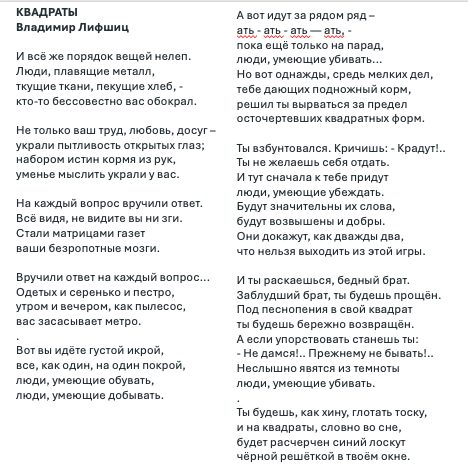
This is an excerpt from the poem “Square” by English poet James Clifford, translated by Vladimir Livshits. Clifford was a man with a remarkable destiny, crushed in the vices of two world wars. He was born on the eve of World War I, in 1913 in London, and died in 1944 while repelling a German tank attack in the Ardennes.

Paradoxically, the legacy of the young English poet was better known in the Soviet Union than in his homeland. While in England they asked, “Who is Mr. Clifford?”—in the USSR, his new poems were regularly published from the mid-sixties onward. Thanks must be given to his translator—Vladimir Livshits. He was the first to translate into Russian the famous, seemingly familiar lines from “Retreat in the Ardennes”: “There were five of us left. In a chilly dugout. The command had lost its mind. And was already fleeing.”

But Livshits didn’t just translate these lines; he practically “sanctified” them, because James Clifford, the young English poet who fell in 1944 while repelling the German attack, was for Livshits not just a translation subject but also his own creation. The real James Clifford, who supposedly was born in London, lost his parents early, and was raised by a grandfather—a connoisseur of English and Scottish folklore—never actually existed. Following Walter, Livshits repeated: “If Clifford did not exist, it would be necessary to invent him.” And he invented him.

For decades, Livshits published his own poems in the Soviet Union, presenting them as translations of the non-existent English poet James Clifford.

(taken from the video “Armen and Fedor,” “Comrade Hemingway: How the USSR reforged the novel ‘For Whom the Bell Tolls’?”)

This is how you hack the system 🙂

* * *

SQUARES

Vladimir Lifshits

.

And yet the order of things is absurd.

People, melting metal,

weaving fabric, baking bread—

Someone has shamelessly robbed you.

.

Not just your labor, love, leisure—

They stole the curiosity of open eyes;

Feeding truths by handfuls,

They robbed you of the ability to think.

.

For every question, they handed an answer.

Seeing all, you see nothing at all.

Your unquestioning minds

Have become matrices of newspapers.

.

They have handed an answer for every question…

Dressed both drab and colorful,

Morning and evening, like a vacuum cleaner,

The metro swallows you up.

.

Here you go, dense as caviar,

All cut from the same cloth,

People who can shoe,

People who can procure.

.

And here they go, row upon row—

March – march – march — march,

So far only for parades,

People who can kill…

.

But one day, amidst the trivial affairs,

Feeding you crumbs,

You decided to break out

From the tiresome square forms.

.

You rebelled. You scream: “They steal!”—

You refuse to comply.

And first, those will come to you

Who know how to persuade.

.

Their words will carry weight,

They will be exalted and kind.

They will prove, as twice two,

That you cannot leave this game.

.

And you will repent, poor brother.

Misguided brother, you will be forgiven.

To chants, you’ll be gently returned

Back to your square.

.

And if you persist:

– I won’t give in!.. No going back!…

Silently, from the shadows

Will come those who know how to kill.

.

You will gulp your despair like henna,

And on squares, as if in a dream,

A blue patch will be lined

With a black grid in your window.

Enhancing an EPUB Converter for Complex Texts | October 30 2024, 22:46

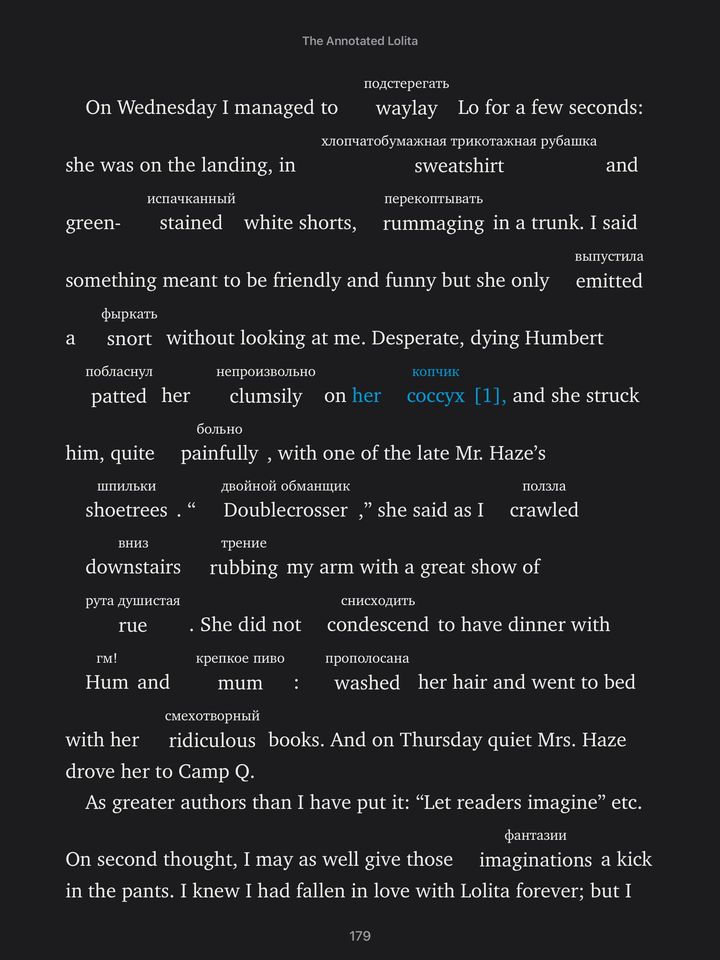
I have enhanced my EPUB converter for reading complex English literary texts. In the previous version, I used to send chapters to ChatGPT, asking it to translate (in brackets) the difficult words. I was asked in the comments how the difficult words are determined. In general, after having read the first quarter of the book this way, I realized that not all difficult words are considered difficult by ChatGPT, including some obviously complex ones, which it doesn’t translate.

Ultimately, I made a new version. Visually, it differs in that translations now appear above words. This arrangement does not break the sentences into pieces like when the translation was in brackets. But that’s not all.

I have changed the method for identifying “difficult words requiring translation.” It now operates with a list of 300,000 words based on their frequency of use in the English language. The first 3.5% of this frequency-sorted list (determined empirically) are now considered simple and do not require translation. The rest do. Technically, I also have a difficulty group for each word rated 1-30, but unfortunately, I cannot highlight them in colors in Books.

Then, the word needs to be translated into Russian somehow. To avoid using LLM for this, I found Müller’s dictionary with 55,954 words. The word that needs translation is put into its normal form and searched in the dictionary. If found, the first definition from the dictionary is taken. Unfortunately, the first one is not always correct, but it works most of the time. If Müller’s dictionary does not have it, the system moves to LLM. Here, I have two implementations – using local LLAMA3 and using OpenAI. The local one is obviously slower and the translation quality worse, but it is free. There is a separate system that checks what LLAMA3 has translated and makes it redo it if it returns something inappropriate (e.g., too long or containing special characters).

In addition, for LLM-based translations, the system is provided with more context — the sentence that contains the word to be translated. This makes the translation closer to the text. There are still minor flaws, but they are generally livable.

However, even with all this, the translation via LLM is of low-quality. Ideally, additional dictionaries should be connected so that if a word is not found in Müller’s, other dictionaries are tried, and only then, if still not found, would we use LLM. I’ve already acquired one and will be experimenting.

If the system tags too many obvious words, I can adjust a coefficient, and the frequency group from which words are not translated will be larger, and surely these obvious words will stop being translated. Of course, there are always “rare” words that do not need to be translated because their translation is obvious. But it’s not easy to teach the script to recognize such instances; it’s easier to just leave it as it rarely happens.

Next, the translation is displayed above the word. For Books, this also involves some complex maneuvers, but it eventually worked on both iPad and laptop. Unfortunately, for the phone, it needs to be done slightly differently, so the book version for the phone and the version for iPad/computer will be different. But this doesn’t really bother me much, what’s the difference.

Navigating the Complexity of Global Numerical Nomenclatures | October 29 2024, 22:55

Russian TV channels have demanded two undecillion (2*10^36) rubles from Google. But what amused me was something else — technically, Google, or rather Googol, stands for 10^100. So, they’ve got plenty left in reserve.

But it was also interesting to learn that for large numbers there are two different systems of nomenclature. They diverge starting from billion, which in one system is 10^9 (equivalent to a milliard in the other) and in the other system it’s a trillion, which is 1000 times more, and this trillion in the second system means quintillion in the first, and so on, ultimately making the undecillion of the first system equivalent to sextillion in the second. It’s quite a mess, really.

The complexity is further increased by a third variant, called “the first, but not quite” — with the amendment that 10^9 is still considered a milliard, not a billion.

Different countries historically use different scales. The first, which is called the short scale, has primarily been adopted in English-speaking countries. In their scale (thus, ours) — 10^9 is a billion. In the Arab world, it’s generally a milliard (مليار), like in Saudi Arabia, it’s a billion (بليون).

Russia is also among those using the short scale. Hence, they demand an undecillion from Google, not a sextillion.

The second scale, which is long, is used by the Danes, French, Germans, Portuguese, and Spanish. For them, 10^9 is called a milliard with adjustments for pronunciation and grammatical representation in the language.

And then there’s a slew of exceptions, including countries that don’t fit into either of these two “camps.”

But what’s even more interesting is that until 1974, Britain called a billion a milliard, a trillion was known as a billion, and a quadrillion as a billiard. In 1974, they officially switched to the short system.

Canada faces the toughest situation. There’s already confusion with units, and the big number systems add to the mix. Officially, it adopts the short system, like the US, but due to bilingualism (English and French) and significant cultural influence from France, you might occasionally encounter the long system. South Africa is in a similar situation.

Curiously, the only article about this in French (and it says sextillion!) — is from RT. No one else in the world seems to care about this stuff. 🙂

Exploring Brilliant Mechanisms with Alec Watson: A Must-Watch Video | October 27 2024, 20:49

If you enjoy brilliant mechanisms, then this video is for you. I’m utterly fascinated by such things, so Alec Watson is a must-see for me. I’m also subscribed to the Russian translations, and today it just popped up again, reminded me. The original video is about five years old. Here I’m posting the Russian translation, but really you should watch it on @technologyconnections

https://www.youtube.com/watch?v=zeWGsZGABDE

The Bitter Lesson: ABBYY’s Decline and the Shift in Computational Linguistics | October 27 2024, 12:43

Very interesting material about the decline of ABBYY and the crisis in computer linguistics, how AI is taking over ABBYY’s business and what Compreno is and why it didn’t take off as expected.

https://sysblok.ru/blog/gorkij-urok-abbyy-kak-lingvisty-proigrali-poslednjuju-bitvu-za-nlp/

Enhancing “Lolita”: Automated Annotations for Easier Reading | October 27 2024, 03:40

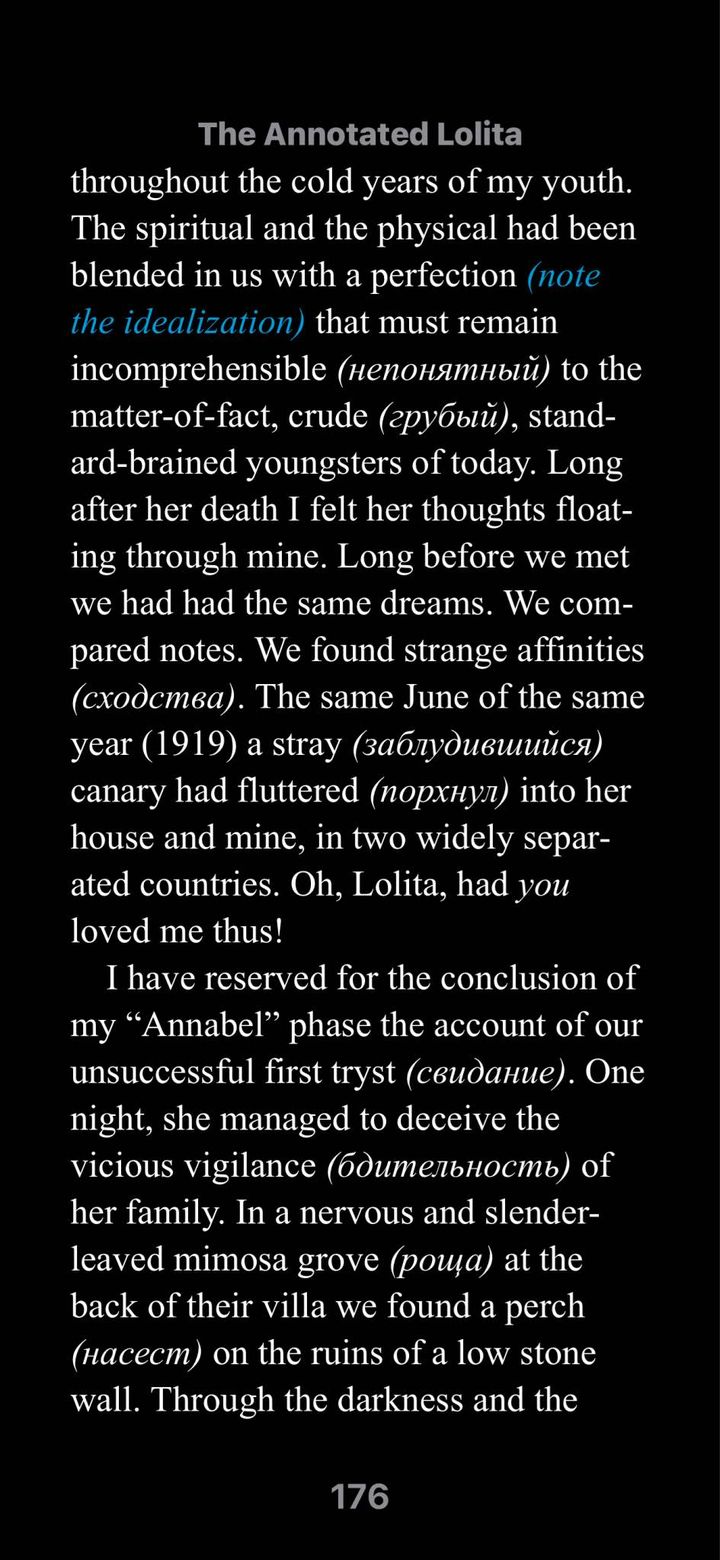
After reading the first few dozen pages, I almost considered giving up on “Lolita” because I had to consult the dictionary way too often. Well, additionally, there was studying various sentence structures and references, but that’s actually interesting, although it does slow down the reading.

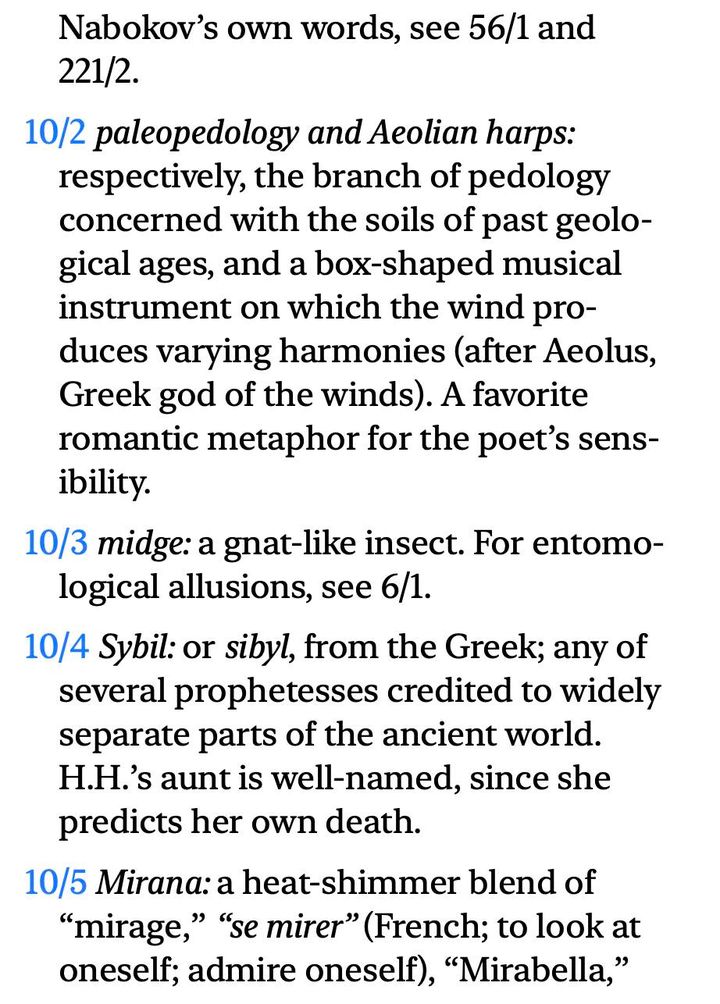
Then I thought, well, am I not a programmer or what. So together with ChatGPT, we created automated annotations. First off, it’s worth mentioning that “Lolita” has an annotated version with 200 pages and an extensive introduction of 100 pages. These annotations cover many topics, but they rarely clarify obscure words, assuming the reader is educated enough to understand that conspicuousness (/kənˈspɪkjuːəsnɪs/) means noticeability, thingamabob is a thingamajig, and callipygian means the same as callipygous, translating to “having perfect buttock form”. For instance, at the very start of the book, “My father was a gentle, easy-going person, a salad of racial genes: a Swiss citizen, of mixed French and Austrian descent with a dash of the Danube” — I wondered what this Danube was, and it turns out to be the river, Dunai in Russian, which in my version now appears in grey brackets after Danube.

Ultimately, in addition to the existing annotations, my script also adds translations into Russian in italic brackets, and it also includes some opinions on individual phrases and references — for this, after a sentence, something is added in brackets, which you need to click on.

With such enhancements, reading becomes much easier. And more interesting too

Exploring Nabokov’s “The Defense of Luzhin”: A Reader’s Journey | October 23 2024, 03:32

In just two days, I devoured Nabokov’s “The Defense of Luzhin.” A masterpiece! Next, I’ll be reading Lolita in English. While reading “The Defense,” I took notes. To avoid losing them, I’ll publish them here. My comments are in square brackets. Well, where they’re needed. Feel free to share, this is definitely interesting 🙂

…listening to the voice of his wife, coaxing silence to drink cocoa…

…and she had a turn of the head that hinted at possible harmony, promising true beauty, unfulfilled at the last moment…

…don’t mess up this table…

…a fire was burning, a fat man in white was shouting something, and a tower of plates ran on human legs…

…having sopped up the buldegomes, he asked if he could leave… [chatgpt told me that buldegomes are a hybrid of bullterrier and mastiffs 🙂 most likely, it’s boule de gomme – just gum]

…cut along the edge with round teeth, like petit-beurre biscuits… [petit-beurre – is a common cookie made by LU (Lefèvre-Utile)]

…music played, the small room was filled with light, blushing with a watermelon wound…

…he began to appear more frequently at literary evenings, organized by lawyers and ladies…

…a manufacturer, suffering from chronic constipation, about which he gladly spoke, a man with a single thought…

…mothballs emitted a sad, coarse smell. A doomed jacket hung in the hallway…

…A crystal ashtray settled between them, and, dipping their cigarettes into it simultaneously, their tips collided. “J’adoube,” Luzhin said amiably, straightening his bent cigarette… [j’adoube is French for “I adjust, a ritual phrase in chess, uttered to avoid a rule “if you touch a piece, you must move it. Literally, the verb adouber means “to dub [a knight]”)]

…the maid accepted Luzhin’s collapsible top hat. With a subtle smile, Luzhin demonstrated how it snaps shut… [this is a type of cylindrical hat, “chapeau-claque”. Note here ‘claque’ from claquer – to snap. Apparently, it’s not just any cylinder, but a collapsible cylinder. Google Opera hat, it’s the same thing]

…Luzhin in a dishabille, exuding simian passion, and her stubborn, cold, cold daughter… [apparently, dishabille isn’t just a state, but light, simple, home clothing worn after getting out of bed, not donned in front of guests]

…to the left of the corridor was a bathroom, beyond it, a maid’s room… [maid’s room — is a room for the servants]

…”such future is unknown, but sometimes it acquires a special opacity, as if another force joins the natural secrecy of fate, spreading this resilient mist from which thought bounces off…”

…a print hung on the wall… [wall-space — is a part of a wall between windows, door openings]

…the mercury, influenced by the environment, fell lower and lower… [useful if you suddenly feel like discussing the weather]

…he drew his mother-in-law, and she was offended; drew his wife in profile, and she said that if she looked like that, he should not have married her; but her father’s high starched collar turned out very well… [I’m drawing my wife and daughter right now]

…Having abandoned the typewriter, geography, drawing, now knowing that all this was part of a combination, an intricate repetition of moves recorded in childhood…

…the rooms dimmed as if the parts of a telescope had slid together, and Luzhin found himself in a bright corridor… In all three rooms, unfolded like a telescope, it was very bright.. [not very clear what this telescope is about. Most likely, Luzhin perceives the rooms as if they open and close one after another, similar to how sections of a spotting scope or telescope unfold. In one position, he sees one set of rooms, in another, they “shift,” disappear, and he finds himself in a new place.]

…on him was a shaky sector of silken gloss, like a moonlit boundary on the sea… [Gralitsa – turns out, it’s the reflection on the sea of sunlight or moonlight “by a column”]

…the panel slid, rose at a right angle, and swung back.. three people remained on the panel… [the German ‘Panel’ means sidewalk, referring to an event in Berlin. Separately, this and five pages back and forth beautiful descriptions of the brain’s suffering after a bar]

…”I knew one Luzhin,” said the gentleman slowly, squinting (because human memory is short-sighted)…

…from a store of talking and playing devices came chilly music, and someone closed the door so the music wouldn’t catch a cold…

…his fiancee brought him various casual light-hearted books — works by Gallic novelists…

…“But not in one day. There is another establishment. There we will hang on the wall for two weeks, and during this time, your wife will come from Palermo, look at the names, and say: it can’t be, Luzhin is mine … [Interesting. It seems that registries used to give two weeks to check feelings, like now a month is given for divorce]

…During those two weeks, while their names were displayed for all to see, – on the groom’s address, the bride’s address, proposals from various vigilant firms began arriving: coaches for weddings and funerals (with an image of a coach drawn by a pair of galloping horses), tuxedos for hire, top hats, furniture, wine, rental halls, pharmacy items. Luzhin diligently examined the illustrated price lists and stored them, amazed why the bride was so disdainful towards all these curious offers. There were offers of another kind. … [how similar this is to what happens today, if someone dies…]

…the clerk changed his jacket for a worn coat and pronounced the marriage sentence…

…And he remembered how … the word “fascha sounded in the tired priest’s mouth [I couldn’t figure out what this fascha was]

…she also fell silent, and started rummaging in her bag, painfully searching for a topic of conversation and finding only a broken comb…

…a manner, borrowed from a diplomat who spoke very gracefully “skoúl” [refers to the Scandinavian drinking toast skål – “cheers!”. Without googling, it’s impossible to know]

…“The window was empty, but a minute later, the darkness behind the front door parted, and a lit staircase appeared through the glass, marble up to the first landing, and before this newly born staircase could fully petrify, quick female steps appeared on it… Meanwhile, the staircase continued to give birth to people…

…and to say, she reasoned, our troubled times throw us off our game, and it’s understandable that from time to time, one turns to the green comforter… [green comforter — is likely green wine, that is, alcohol spiced with herbs, hops, St. John’s wort]

…you’ll be with him in a yellow house (…) in a yellow or blue. [yellow house — asylum, they were painted yellow. ]

…ageing actor, with a face, groped by many roles…

…at the top, the square night blackened with a mirrored sheen…

.. to hand over the seal coat.. [not from cats, precisely, from seals, but not those. It’s from sea lions]

…a gentle optical illusion occurred: he returned to life not from the side he had left, and the task of distributing his memories was taken over by that amazing happiness which first met him…

…well then, goodbye, – as they say in Soviet… [“Goodbye! as an independent farewell sign appears around the time of World War I and does not immediately become customary. Even the Soviet Explanatory Dictionary of Ushakov, published in the latter half of the 1930s, marks this meaning as “familiar. Let alone the émigrés: for them, the standalone “goodbye was a clear and very unpleasant Sovietism. – Dmitry Sichinava]

…I’ll give him a wafer, – she said. – That’s that.” The wafer didn’t work… [Wafer — this item was used in church rituals, for letters and in medicine. In ancient times, it referred to small ritual breads, with which Catholics and Protestants communed. Wafers also named thin shells made of starch dough or gelatin, in which a medicinal compound was placed, and medicines in this form. Postal wafers were circles of adhesive mass or glued paper. They sealed envelopes and stamped documents.]

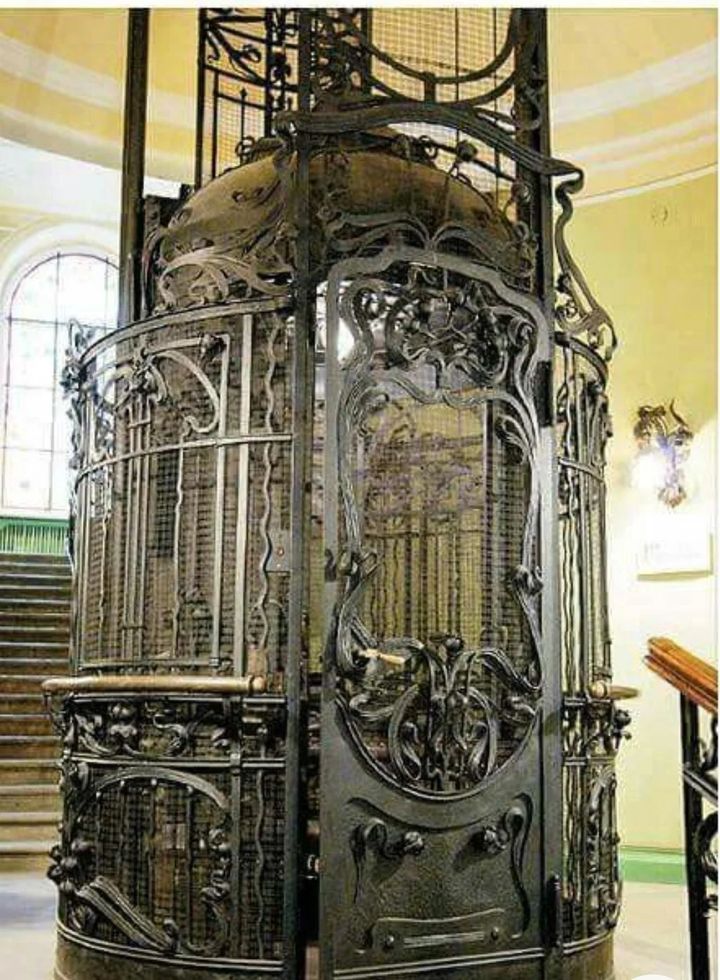
…he recalled how, in a Petersburg house, her asthmatic bulk preferred the elevator, old-fashioned, water-driven, which the concierge operated with a lever on the wall of the vestibule.. [interesting about water- and steam-powered elevators in Petersburg. I didn’t know about that. Attaching a picture]

…a puppet engineer, too large for the locomotive and therefore placed in the tender [tender — is a special wagon that is attached to a locomotive and designed to store fuel (coal or wood) and water, necessary for the locomotive’s operation]

…from the little Luzhin during that first school winter, tenderly smelled of garlic from arsenic injections, prescribed by the doctor. [interesting that even children were prescribed. This was probably “Duplex” — a solution of strychnine with arsenic for injections. A very popular remedy in the past, especially for asthenias, neuroses, impotence, and “anemia”]

…spots of light, scattered along the paths of the garden at the estate, merged into one warm, whole glow [estate — a manor house in the Baltic states, Latvian muiža, for example]

The Boy and the Heron | October 14 2024, 18:15

We watched “The Boy and the Heron” by Hayao Miyazaki yesterday (original Japanese title: “How Do You Live?”). After viewing it, of course, I scoured the internet searching for answers to my questions.

Here I am, considering myself educated and well-rounded, yet some films and sometimes cartoons trigger an “I must be the dumbest person alive” complex.

It all started with Mulholland Drive. According to the reviews, everyone who watched it seemed to grasp the depth of the director’s vision, except maybe for some details, but I remember watching it and barely understanding anything. Then, of course, after reading various reviews and discussions on the subject, I watched it a second, and then a third and a fourth time. Now, indeed, a lot of it makes sense, but it feels like cheating. I couldn’t figure it out on my own. Well, that’s Lynch for you; his works are always like that.

Sometimes it seems that a director just shoots whatever, and then someone in the reviews starts connecting the plot dots, which picks up, deepens, and becomes rationalized, and suddenly there’s meaning even where there was none by design. This is partly why directors dislike discussing the “what did the author want to say” topic. What I wanted to say, I’ve said; the rest is up to you.

Or take something like “Barbie.” I watched it and saw nothing noteworthy, but then you start reading, and it turns out it’s a work of art where everything is interconnected. Or “Asteroid City” by Wes Anderson. If I’m honest, I didn’t even finish watching it.

And now there’s “The Boy and the Heron.” It’s brilliantly made from every perspective. But the depth and complexity of the meanings really raise the bar high for viewers who want to fully understand the film.

I categorize such works as “stop thinking and just watch how awesomely it’s made; maybe you’ll get it later.” With Mulholland Drive, it worked, and it did with Lars von Trier’s “Melancholia” as well. This approach even worked for me with the recent “Deadpool and Wolverine,” where I clearly lacked the context to grasp the director’s vision, but in the moment, everything was beautiful and captivating, boom boom bam. But, damn, a bunch of people around me see much more than I did. And it’s comics! A product for the masses. Am I dumbing down?

It’s great, of course, that films are made in such a way that each audience finds something commensurate with their education, exposure, understanding of the context, etc. When a film’s structure is nonlinear, full of visual metaphors, where symbolism is more important than the plot and can be interpreted in different ways, when a film rather provokes the viewer to feel and interpret what’s seen than to follow a clear narrative — this all requires from the viewer a rather high level, I don’t know, of IQ or thoughtfulness. How such films collect big box office and ratings when most people going to cinemas are somewhat obtuse, and I often classify myself in this category when I leave another “complex” movie.

You know what it’s like? It’s like someone who grew up on rock, bards, and chanson goes to a Wagner opera, something from “The Ring of the Nibelung” or “The Master-Singers of Nuremberg,” and then finds everyone around is amazed, while despite trying hard, he understood little.

So, if I am not the only one, give a thumbs up 🙂

The Evolution of Sanitary Terms: From Toiletries to Restrooms | October 12 2024, 00:15

Finishing Bill Bryson’s At Home, I discovered that originally, around the year 1540, it was a word for fabric, a diminutive of “toile,” which is still used to describe a type of linen. Then, it came to denote fabric used for a dressing table. After that, the items on a dressing table (hence “toiletries”). Subsequently, the word came to mean the dressing table itself, then the process of dressing, then receiving guests while dressing, then the room for dressing, then any personal room next to the bedroom, then a room used for sanitary purposes, and, finally, the toilet itself. This explains why “eau de toilette” in English and French can mean both something women enjoy applying to their face and simultaneously “toilet water.”

Interesting note on the word “wardrobe,” exactly as garderobe. It was a combination of “guard” (“to keep”) and “robe” (“clothing”) and initially meant a storeroom, then any personal room, briefly (and briefly only) a bedroom, and finally, a toilet.

The “water closet” (WC) appeared in 1755 and originally designated a place where royal enemas were performed. From 1770, the French called the home toilet “un lieu à l’anglaise” (“an English place”), which might explain the origin of the English word “loo.” Online sources say that loo comes from “gardez l’eau,” meaning “watch out for the water,” as it was shouted before emptying chamber pots out the window.

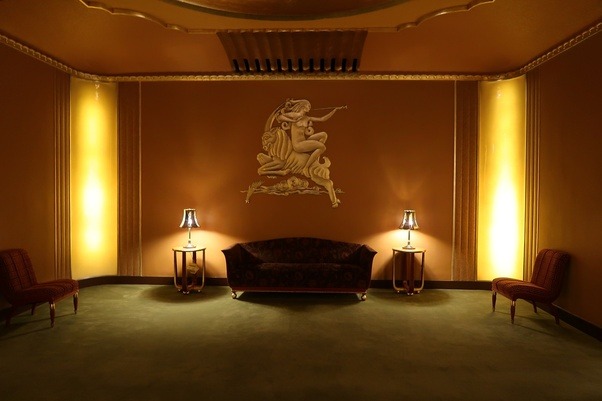
Here in the USA, toilets are called restrooms—a true Americanism. I just googled that in the first half of the 20th century, many American workplaces and public buildings had rooms with chairs or sofas that employees or clients could use to take a break, sit down, and rest. In some jurisdictions, laws were passed requiring these restrooms to also have toilet facilities. In everyday life, people who didn’t have the time to sit on a sofa and relax still entered the restroom to use the toilet. Over time, the expression “I’m going to the restroom” became synonymous with using the toilet or sinks, rather than chairs and sofas. Even as rooms with sofas became less common, the phrase with its new meaning persisted. Thus, a room with toilet facilities came to be called a “restroom.”

Of course, we can also say bathroom, without, of course, expecting any actual baths there.

The photo — a restroom from the 1930s.

Exploring the Vast World of Clothing Terms | October 10 2024, 14:24

In “Monday Begins on Saturday,” I came across the word “culotte” and realized that I have a very vague idea of various clothing names in Russian, except for the most basic ones.

This is pretty much a whole new language for me. I don’t know, maybe those who go shopping for clothes have a better grasp of it.

Great source with pictures: https://lookso.ru/vidy-odezhdy/.

Following this link, you’ll encounter Balmacaan, Bushlat, Duster, Duffle coat, Sheepskin coat, Inverness, Cape, Covercoat, Cocoon, Coper, Crombie, Manto, Ulster, Pardessus, Polo, Poncho, Puffer, Raglan, Riding coat, Swinger, Trench coat, Chesterfield, Greatcoat, Hubertus, Raincoat, Mackintosh, Coat-robe, Trench, Anorak, Blouson, Bomber, Leather jacket, Cape jacket, Norfolk, Parka, Spencer, Blazer, Jumper, Cardigan, Kittel, Top, Afghan, Baggy, Bamster, Bananas, Bermudas, Boyfriends, Breeches, Galife, Gaucho, Jeans, Joggers, Pipers, Capri, Cargo, Carrot, Flared, Culottes, Leggings, Palazzo, Skinny, Slacks, Tubes, Chinos, Churidar, Shalwar, Shorts, Bodysuit, Boxers, Briefs, Bustier, Combidress, Negligee, Peignoir, Pajamas, Slip, Thong, Trunks.

No need to read the text below carefully because it’s pretty much impossible to understand.

Here’s an example of what I didn’t know:

I wouldn’t have been able to explain what a tunic, pashmina, cape, cardigan, parka, trench, bomber, or anorak is even though a Google search shows that all these terms are used.

Tunic – a long or short women’s blouse or dress, I don’t know how else to define it.

Pashmina – a wide scarf often used as a shoulder wrap.

Cardigan – a knitted sweater with buttons or without any fastenings.

Parka – a long jacket with a hood, often insulated.

Trench – a classic long coat with a belt and double-breasted buttoning, with a lapel collar.

Bomber – a short jacket with elastic at the waist and sleeves.

Anorak – a lightweight hooded jacket that fastens only halfway up.

Here are just a few coats from the list above:

Balmacaan — a single-breasted long coat model with raglan sleeves and a placket completely hiding the buttons.

Bushlat — a shortened double-breasted coat adorned with two rows of buttons and a turned-down English collar with lapels

Duster — a women’s lightweight, long, loose-fitting coat model with a belt instead of fastenings, worn like a robe

Duffle Coat — informal single-breasted coat of straight cut above the knee. Recognizable attributes of the model: patch pockets, hood, and toggle closures instead of traditional buttons.

Inverness — a vintage-style elongated coat with loose fit and sleeves covered with a cape.

Cape – a sleeveless cloak that fastens at the throat.

Covercoat — a single-breasted coat made from a namesake dense fabric. Recognizable for its pointed lapels and traditional decoration of four or five parallel rows of stitching at the bottom of the garment and on the sleeve edges.

Cocoon — a model of men’s or women’s oversized coat that narrows towards the bottom and broadens at the waist with dropped shoulders and a rounded silhouette.

But I started with culottes. It’s somewhat historical, but a Google search shows that not always, and there’s plenty of such items in marketplaces. So, there are certainly loads of unknown words to me. Starting with short-pants

Culotte – short or wide knee-length trousers. Nowadays, these are wide-legged women’s trousers, usually longer than the knee.

Coper — a long leather coat with a belt, visually resembling a raincoat. Most popular in men’s wardrobe, but women’s models are also available.

Manto — a spacious trapezoidal coat-wrap with no through fastenings, made of fur or with corresponding trim.

Capri are essentially the same as trousers, the difference being only that their length reaches the mid-calfement.hasMore …