How to Use ChatGPT for Reading Aloud Text in Any Language | August 19 2024, 17:43

If you need your phone to read any text in any language, with good diction, and not like a robot, there is a convenient feature: send the text to ChatGPT (app) preceded by the prefix “return this exact text to me”, and on the returned text, click Read Aloud. I haven’t tried it on very long texts, but it easily could last for 15-20 minutes.

Bill Bryson, At Home | August 10 2024, 00:37

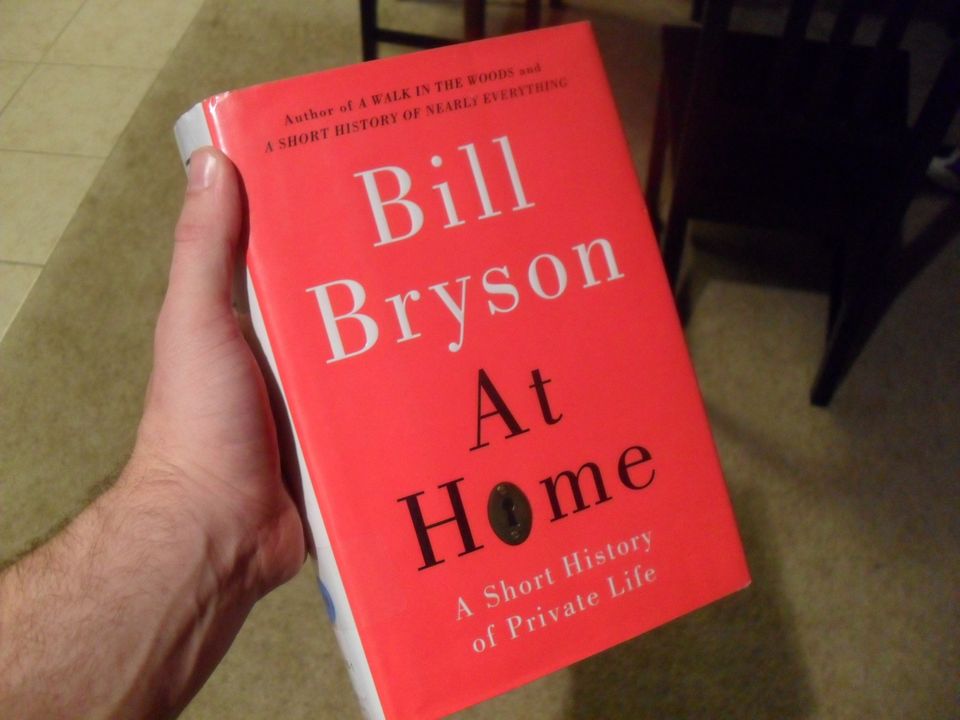
I’m reading At Home by Bill Bryson. Every so often, he hurls at me so many unfamiliar words in one sentence that there are hardly any familiar ones left.

Ptarmigan, sturgeon, larks, hare, woodcock, gurnet, barbel, smelts, plover, snipe, gudgeon, dace, eels, tench, sprats, turkey poults and many more largely forgotten delicacies featured in Mrs Beeton’s many recipes

Jefferson and his contemporaries enjoyed tayberries, tansy, purslane, Japanese wine berries, damsons, medlars, seakale, screwpine, rounceval peas, skirrets, cardoons (a thistle), scorzonera (~salsify), lovage, turnip-cabbage, and scores more that nowadays are encountered rarely or not at all.

These treasured concoctions could involve any number of ingredients – beeswax, bullock’s gall, alum, vinegar, turpentine and others even more startling.

Pepper accounted for some 70 per cent of the spice trade by bulk, but other commodities from further afield – nutmeg and mace, cinnamon, ginger, cloves and turmeric, as well as several largely forgotten exotics such as calamus, asafoetida, ajowan, galangal and zedoary – began to find their way to Europe, and these became even more valuable

Nineteenth-century pattern books offered homeowners an almost infinite array of shapely, esoterically named motifs – ovolos, ogees, quirks, crockets, scotias, cavettos, dentils, evolute spirals, even a ‘Lesbian cymatium’, and at least two hundred more – with which to individualize projecting surfaces of wood or plaster, and Mr Marsham chose liberally, opting for bubble-like beading around the doorcase, fluted columns at the windows, ribbony swags fluttering across the fireplace breast and a stately show of repeating demi-hemispheres in a style known as egg-and-dart around the ceiling trim.

Here’s something else interesting:

Although he is hardly read now, Horace Walpole was immensely popular in his day for his histories and romances. He was a particularly adept coiner of words. The Oxford English Dictionary credits him with no fewer than 233 coinages. Many, like ‘gloomth’, ‘greenth’, ‘fluctuable’ and ‘betweenity’, didn’t take, but a great many others did. Among the terms he invented or otherwise brought into English are ‘airsickness’, ‘anteroom’, ‘bask’, ‘beefy’, ‘boulevard’, ‘café’, ‘cause célèbre’, ‘caricature’, ‘fairy tale’, ‘falsetto’, ‘frisson’, ‘impresario’, ‘malaria’, ‘mudbath’, ‘nuance’, ‘serendipity’, ‘sombre’, ‘souvenir’ and, as mentioned a few pages back, ‘comfortable’ in its modern sense.

English Pronunciation (RUS) | August 05 2024, 04:03

This is a very, very good channel on English pronunciation. The creator really goes all out, preparing simply fabulous and lengthy videos on various topics, yet for some reason remains very “niche” with only 50K subscribers.

There are about fifty videos on his channel; they are released infrequently, but each one is a treasure trove of very interesting information about English pronunciation, and very useful tips specifically for Russian speakers on how to improve their pronunciation. I think I’ve watched them all.

And now, after a long hiatus, another one has just been released. Highly recommend it.

https://youtu.be/LmSpJzJZ4W0?si=7u6BiHZkzo3VWNie

Reykjavik, Prague, Dresden: Some Reflections | July 06 2024, 17:47

Some quick thoughts after visiting Reykjavik, Europe, Czech Republic, and Germany.

Reykjavik is very stylish and expensive. Very stylish. Very tasty food. But expensive. For instance, a round trip from the airport to the capital and back cannot cost less than 52 bucks per person, and a taxi or a rental car starts to become cheaper than the bus only if there are four of you.

In Czech Republic and Germany:

Very tasty. Everything. From desserts to breakfasts and dinners. Even in small diners and even in the old town with tourists (one exception – we foolishly had breakfast at the main square in Prague. It was not tasty). I was in Dresden’s McDonalds, and it was delicious there too!

About tasty food: In the USA, it’s only tasty occasionally, and you need to know the places above a “three” on a five-point scale. In Europe, you need to know the places above a “four”. Places below a “four” are harder to find, especially when it comes to desserts… Mmm…

The mirror on the car was surprising. After the USA, the left mirror really “strains the eyes”. Whether it’s flat in the EU and convex in the US, or the other way around, but it’s really uncomfortable, the brain is accustomed to something else.

I was surprised by the Toyota Yaris hybrid, which over three days of driving from Prague to Dresden and back through villages used up only half a tank. 4l/100 km. In the USA, my car used at least twice as much. Hybrid turned out to be convenient, but it’s still weird that when you start the car, it makes no sound. At first, my reaction was “damn, the battery’s dead,” whenever that happened (every time).

It was surprising that in Prague, a large number of people, mainly the service staff, speak Russian or Ukrainian. We were understood at the reception desk, by waiters in cafes, by taxi drivers, in stores. Even now at the boarding gate at the airport. And at check-in. Literally everywhere. Familiar words can be heard in the crowd almost every minute. At the bus station, half of the 15 windows were decorated with names of Ukrainian cities. High demand.

And of course, I really missed fountains and free restrooms. You get used to quickly finding these in the US. Of course, it’s understandable why, and you should probably compare Prague to NY, where things are probably not that great either.

Crowds in the center of Prague. I came from my small town where there are neither traffic jams nor parking issues.

Prague seemed like a city where the authorities have allowed almost anything that brings money to the economy. All these stores with green leaves, beer to go, small businesses every meter.

Manhattan’s Historical Grid Design and Urban Expansion | June 26 2024, 15:42

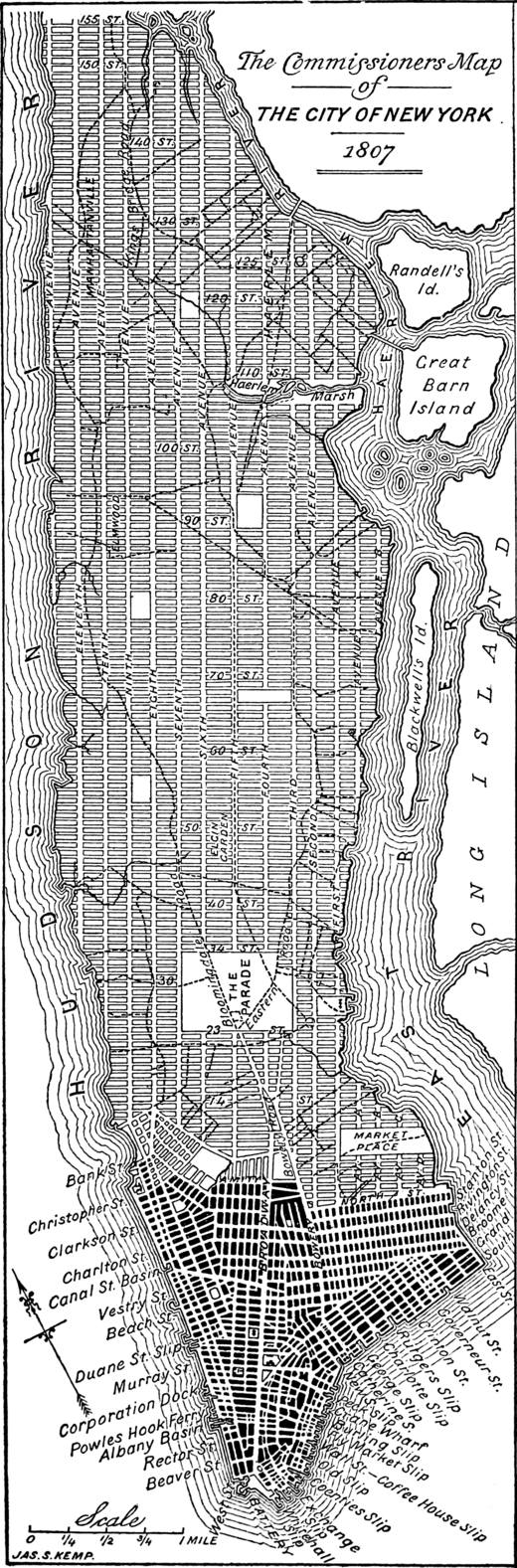
I’m reading about the general plan of Manhattan. The history of it is quite fascinating. When Europeans first settled in Manhattan, they built houses haphazardly. Back then, it was the Dutch who called the place “New Amsterdam.” After gaining independence, the USA saw a massive influx of migrants, and there was a pressing need to expand the city rapidly. Ultimately, in 1806, the authorities formed a commission of three people (Morris, Rutherfurd, De Witt) and gave them four years to devise a city plan. It was decided beforehand that any plan they came up with would be final. This commission did literally nothing for three out of the four years. Then, they started to make a move, meeting a few months before the deadline for key decisions. And they came up with a grid (see picture). In English, this is called a gridiron. They nowhere explained why they specifically chose a grid design. Probably because the deadline was just a few months away.

It’s interesting how the plan was then implemented. To transpose the grid onto the ground, nearly 1600 markers were installed — primarily square marble “monuments” with street numbers, located at every intersection. Where rocks prevented the use of marble markers, the rocks were blasted away, iron bolts were inserted, and encased in molten lead. In total, they set up 1549 marble markers and 98 iron bolts to delineate the grid pattern. Landowners who disagreed with the city cutting through their fields would dig everything up.

The famous Central Park, as it turned out, came about 70 years later, in 1876. On the map, you see The Parade—located further to the south—but the idea was originally to not build on this site, using it as an open space designated for military drills and as a rally point in case the city was invaded. At that time, they thought this Grand Parade could become the city’s “central park,” but over time the area gradually reduced, until what now remains is the current Madison Square Park. Just like that, it shrank from 97 hectares to 2.8 hectares. Optimized. At least Central Park eventually came into existence (341 hectares).

Broadway merged several streets that historically went against the grid (Bloomingdale and others).

What happens when Chinese have to print in Russian (weird font) | June 19 2024, 15:26

Today, there were reports about a visit to the sun-great by the sun-great, and there were banners with text on the streets.

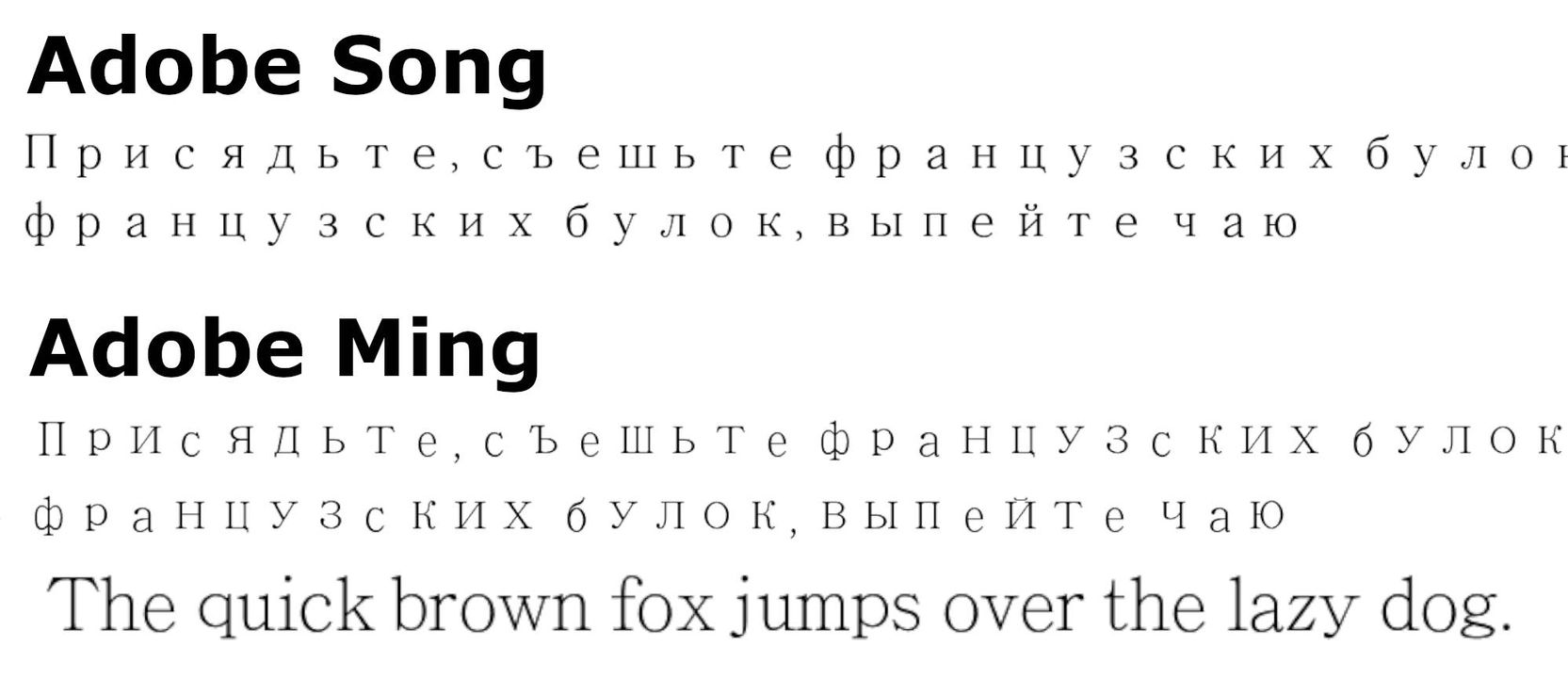
And it made me think, why do the Chinese love to write everything in Cyrillic with this idiotic font, and where did it even come from? There are so many fonts nowadays.

It turns out that Adobe and Microsoft are to blame. They included very poorly drawn fonts in their packages. And since the Chinese characters are of very good quality, the font is used everywhere, but the Cyrillic and even the Latin are just there for show. The main culprits are three – Adobe Ming Std L, Adobe Myungjo Std M (also called Adobe Ming), Adobe Song Std L. The most “eye-straining” one is Adobe Ming. With Latin, it’s more or less okay, but it seems that the Cyrillic was drawn by the Chinese themselves at the dawn of computer fonts, and it has not changed since then.

Seeking Insights on Slow Google Indexing and Zero Traffic for Two WordPress Sites | June 12 2024, 18:38

Could someone give me some free advice—just to better understand how this works? I have two sites, beinginamerica.com and raufaliev.com. Beinginamerica has 6000 posts (pages), and raufaliev.com has 4600. Both sites run on standard WordPress, the SaaS kind, not self-hosted. Essentially, you can’t configure much there, whether it’s custom, special, or accidental. You can’t even install Google Analytics. Everything has been up since mid-April.

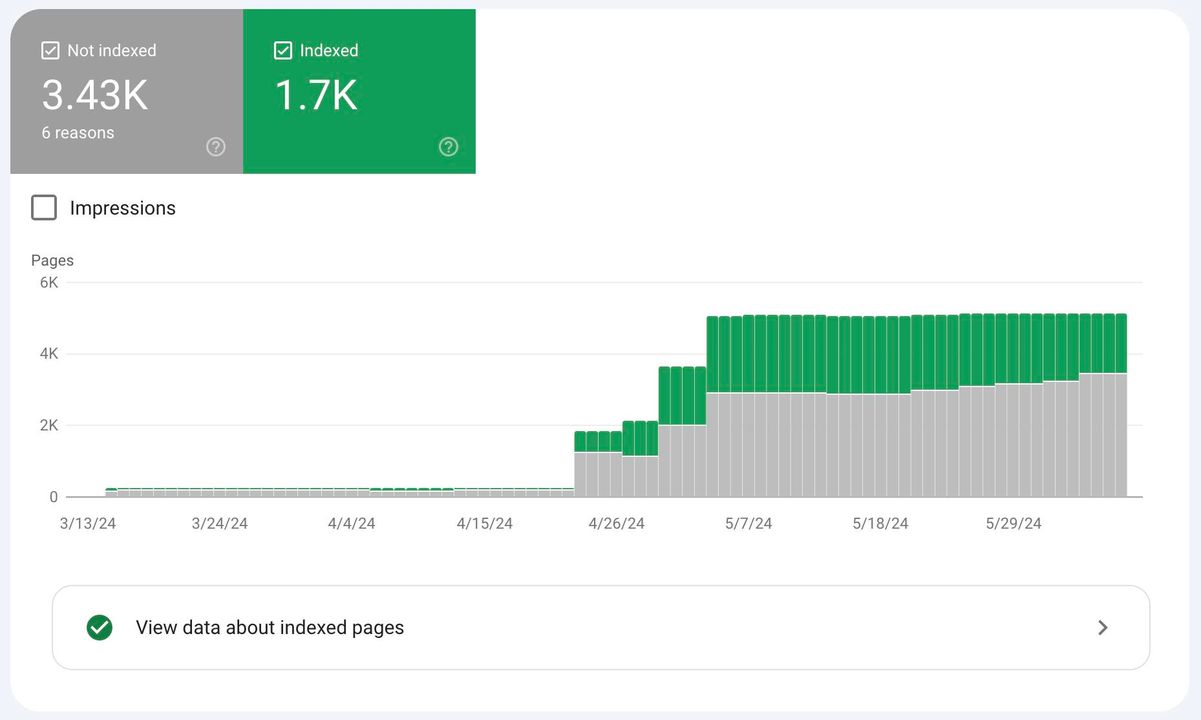
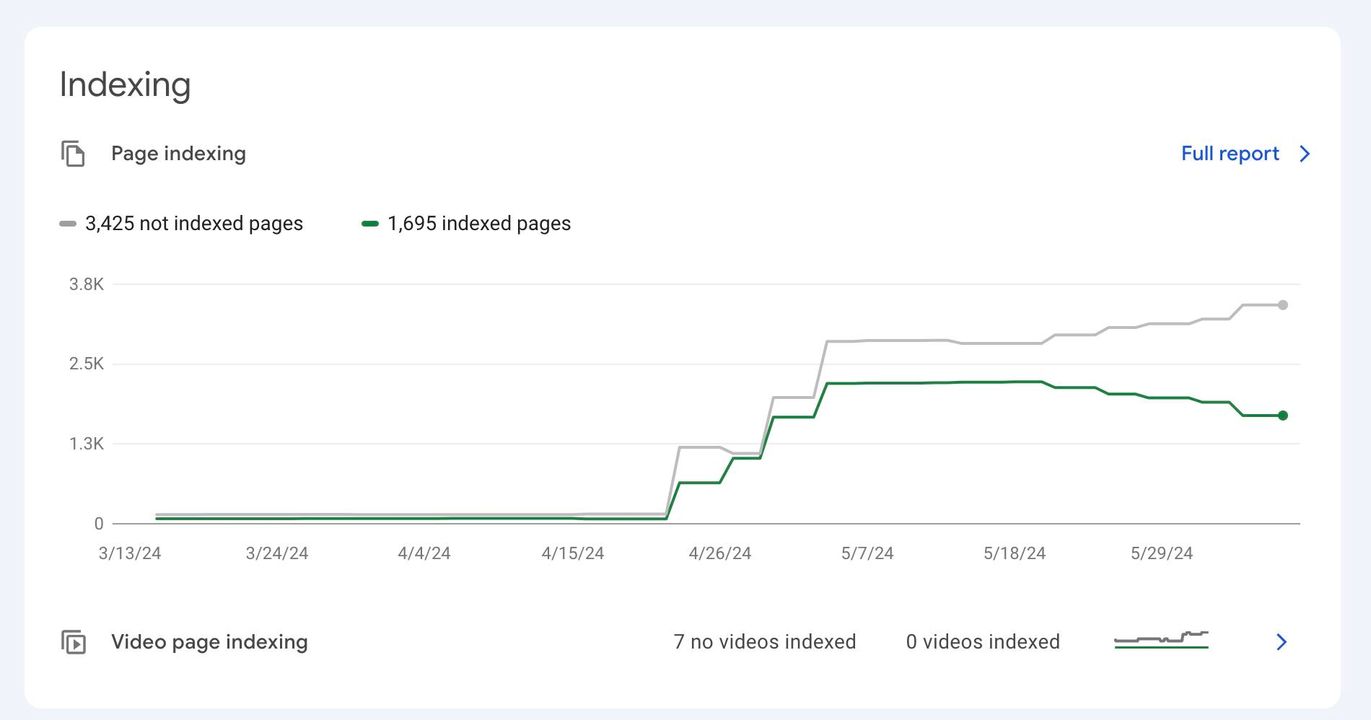
Google indexes beinginamerica incredibly slowly. Currently, raufaliev.com has 320 pages in the index, while beinginamerica.com has 1700. Additionally, another 2.2K pages are marked as “having redirects, hence unindexed.” For example, “/2013/10/15/15-октября-2013-года-1058/”. There’s no redirect there. Meanwhile, 100% of URLs contain Russian letters, and it somehow works for the 1700.

Well okay, let it be 1700. But why then are there zero visits? I mean, statistically, it shouldn’t be zero, since it’s all unique content, not available elsewhere on the internet, and logically should be something Google finds showable from time to time, and someone should occasionally visit. But nobody does.

I don’t even need visitors. What would I do with this traffic—I have no ads there, and comments are deliberately disabled. I’m more interested in understanding how all this works, as I’m somewhat of an expert in this field.

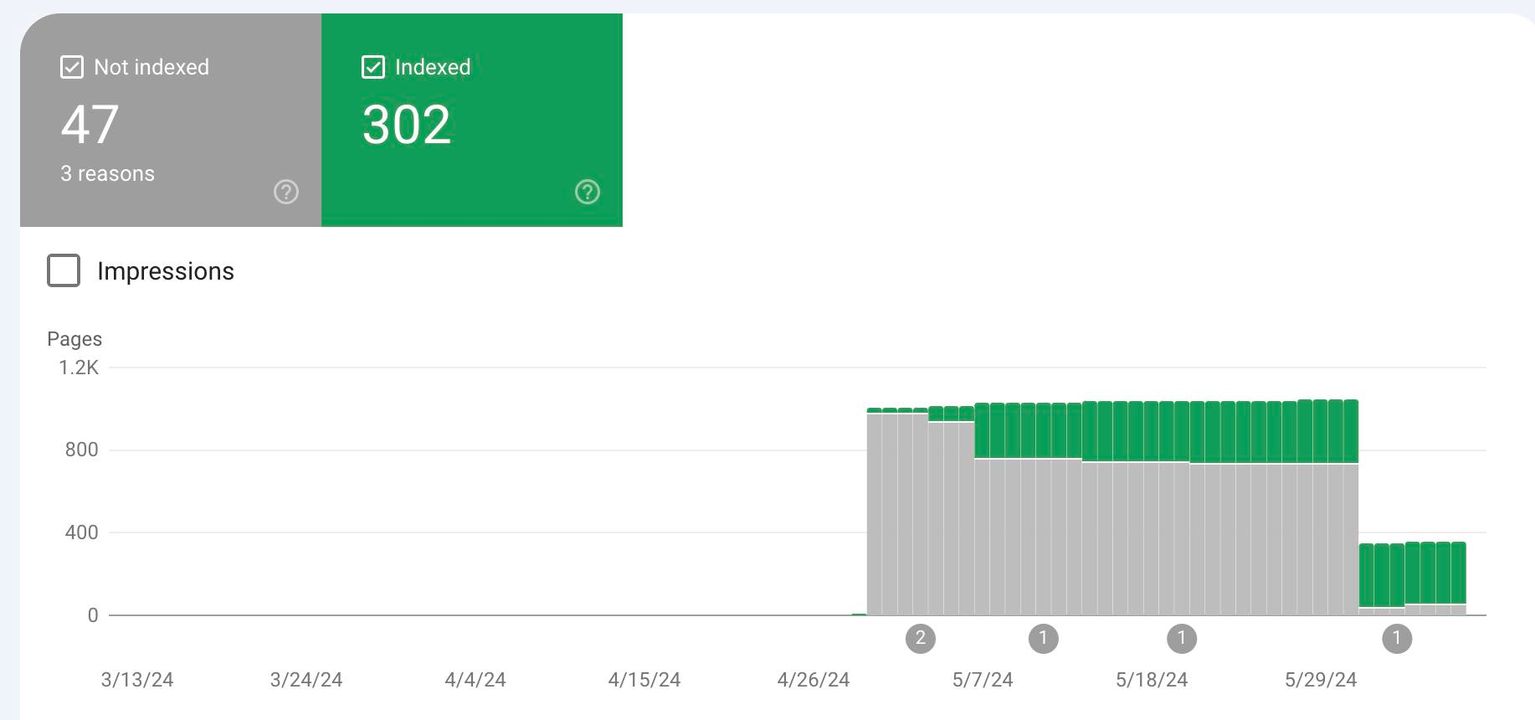
Why does raufaliev.com have only 302 pages indexed and 47 not indexed. Why are all the rest ignored? Again, both sites are on the same platform. They both return the same headers. Unlike beinginamerica, raufaliev has no Cyrillic characters.

Who knows?

Chinese Names in Latin Script: how to pronounce | May 18 2024, 19:25

I’m currently reading Liu Cixin’s “The Dark Forest,” and I realized that I don’t understand how to pronounce Chinese names transcribed into Latin script, like Quang or Xin. I decided to educate myself on the topic and dug up some information. Below is a little guide for the similarly curious, who were perhaps too lazy to figure it out themselves.

For transcription into Russian, there is the Palladius system (Google it if you speak Russian). Generally, all of the information below is from there and from the Pinyin system (a romanization system for Chinese).

In general, most letters can be pronounced more or less (very roughly speaking) as in the English alphabet, except that the voiceless consonants p, t, k (for example) come with aspiration, but there are exceptions:

* q — pronounced like the Russian “ч” or the English “ch” (as in the word cheese) with a light aspiration. For example, Qiang is read as “Ч’ань”. Other names: Qing, Qin.

* x — resembles the soft Russian “ш/щ” or the English sh/sch. For example, Xia is pronounced as “Ща”. Other names: Xin, Xiu.

* r — something between r and zh/ж. In the Palladius system, ran is prescribed to be read as zhàn (жань), and rang as zhan (жан), and rao as zhao (жао). In Pinyin, it’s written that r is read as in red with a slight zh hue.

* z — like “ds” in the word “reads”.

* c — like the Russian “ts” as in “cats”.

Therefore, Xi Jinping is read as Си Цзиньпин. And Dèng Xiǎopíng is cyrillicized as Дэн Сяопин.

In Chinese names, the last name comes first, followed by the given name. For example, in “Li Wei,” “Li” is the surname, and “Wei” is the given name. Máo Zédōng, the name here is Zédōng, not Mao. Or Dèng Xiǎopíng, where the given name is Xiǎopíng. In the case of the author of “The Dark Forest,” Liu Cixin, the given name is Cixin.

However, I learned that addressing Chinese people by their full name is impolite and even rude. According to Chinese etiquette (in China), it is customary to address by last name, adding a title of social status/position (engineer, doctor, professor, academic, ambassador, teacher, master, foreman, director, etc.) or a general salutation (Mr., Comrade, Ms.). For example, Mr. Wu (in Chinese: Wu xiansheng), Ms. Zhang (in Chinese: Zhang nüshi). But that’s there, in China. In the case of international teams, where someone like Li Wei is a frontend developer, of course, it’s normal to write “Hi Wei.” But not “Hi Li.”

By the way, Chinese people often change their names when moving out of China. Jackie Chan, for example, was 成龙 (Chéng Lóng) back home, Bruce Lee was 李小龙 (Lǐ Xiǎolóng).

Rediscovering Raytburt: A Look at “Physics at Half Past Nine” | May 14 2024, 22:21

A truly excellent short documentary from 53 years ago (in Russian). Highly recommended viewing. It features a bald man who perplexes a young woman with various follies. The original title is “Physics at Half Past Nine”. Tsentrnauchfilm, 1971. Scriptwriter and director: S. Raytburt. Raytburt, incidentally, received an award at the Venice International Film Festival for “The Development of Reflex Activity in Ontogeny”. It’s a shame that almost all his films are unavailable online.