The Evolution of Sanitary Terms: From Toiletries to Restrooms | October 12 2024, 00:15

Finishing Bill Bryson’s At Home, I discovered that originally, around the year 1540, it was a word for fabric, a diminutive of “toile,” which is still used to describe a type of linen. Then, it came to denote fabric used for a dressing table. After that, the items on a dressing table (hence “toiletries”). Subsequently, the word came to mean the dressing table itself, then the process of dressing, then receiving guests while dressing, then the room for dressing, then any personal room next to the bedroom, then a room used for sanitary purposes, and, finally, the toilet itself. This explains why “eau de toilette” in English and French can mean both something women enjoy applying to their face and simultaneously “toilet water.”

Interesting note on the word “wardrobe,” exactly as garderobe. It was a combination of “guard” (“to keep”) and “robe” (“clothing”) and initially meant a storeroom, then any personal room, briefly (and briefly only) a bedroom, and finally, a toilet.

The “water closet” (WC) appeared in 1755 and originally designated a place where royal enemas were performed. From 1770, the French called the home toilet “un lieu à l’anglaise” (“an English place”), which might explain the origin of the English word “loo.” Online sources say that loo comes from “gardez l’eau,” meaning “watch out for the water,” as it was shouted before emptying chamber pots out the window.

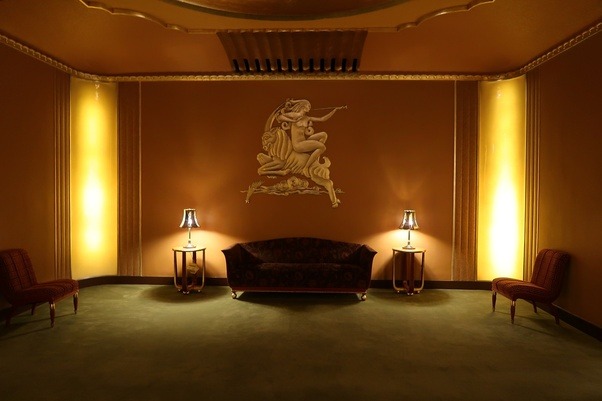
Here in the USA, toilets are called restrooms—a true Americanism. I just googled that in the first half of the 20th century, many American workplaces and public buildings had rooms with chairs or sofas that employees or clients could use to take a break, sit down, and rest. In some jurisdictions, laws were passed requiring these restrooms to also have toilet facilities. In everyday life, people who didn’t have the time to sit on a sofa and relax still entered the restroom to use the toilet. Over time, the expression “I’m going to the restroom” became synonymous with using the toilet or sinks, rather than chairs and sofas. Even as rooms with sofas became less common, the phrase with its new meaning persisted. Thus, a room with toilet facilities came to be called a “restroom.”

Of course, we can also say bathroom, without, of course, expecting any actual baths there.

The photo — a restroom from the 1930s.
Exploring the Vast World of Clothing Terms | October 10 2024, 14:24

In “Monday Begins on Saturday,” I came across the word “culotte” and realized that I have a very vague idea of various clothing names in Russian, except for the most basic ones.

This is pretty much a whole new language for me. I don’t know, maybe those who go shopping for clothes have a better grasp of it.

Great source with pictures: https://lookso.ru/vidy-odezhdy/.

Following this link, you’ll encounter Balmacaan, Bushlat, Duster, Duffle coat, Sheepskin coat, Inverness, Cape, Covercoat, Cocoon, Coper, Crombie, Manto, Ulster, Pardessus, Polo, Poncho, Puffer, Raglan, Riding coat, Swinger, Trench coat, Chesterfield, Greatcoat, Hubertus, Raincoat, Mackintosh, Coat-robe, Trench, Anorak, Blouson, Bomber, Leather jacket, Cape jacket, Norfolk, Parka, Spencer, Blazer, Jumper, Cardigan, Kittel, Top, Afghan, Baggy, Bamster, Bananas, Bermudas, Boyfriends, Breeches, Galife, Gaucho, Jeans, Joggers, Pipers, Capri, Cargo, Carrot, Flared, Culottes, Leggings, Palazzo, Skinny, Slacks, Tubes, Chinos, Churidar, Shalwar, Shorts, Bodysuit, Boxers, Briefs, Bustier, Combidress, Negligee, Peignoir, Pajamas, Slip, Thong, Trunks.

No need to read the text below carefully because it’s pretty much impossible to understand.

Here’s an example of what I didn’t know:

I wouldn’t have been able to explain what a tunic, pashmina, cape, cardigan, parka, trench, bomber, or anorak is even though a Google search shows that all these terms are used.

Tunic – a long or short women’s blouse or dress, I don’t know how else to define it.

Pashmina – a wide scarf often used as a shoulder wrap.

Cardigan – a knitted sweater with buttons or without any fastenings.

Parka – a long jacket with a hood, often insulated.

Trench – a classic long coat with a belt and double-breasted buttoning, with a lapel collar.

Bomber – a short jacket with elastic at the waist and sleeves.

Anorak – a lightweight hooded jacket that fastens only halfway up.

Here are just a few coats from the list above:

Balmacaan — a single-breasted long coat model with raglan sleeves and a placket completely hiding the buttons.

Bushlat — a shortened double-breasted coat adorned with two rows of buttons and a turned-down English collar with lapels

Duster — a women’s lightweight, long, loose-fitting coat model with a belt instead of fastenings, worn like a robe

Duffle Coat — informal single-breasted coat of straight cut above the knee. Recognizable attributes of the model: patch pockets, hood, and toggle closures instead of traditional buttons.

Inverness — a vintage-style elongated coat with loose fit and sleeves covered with a cape.

Cape – a sleeveless cloak that fastens at the throat.

Covercoat — a single-breasted coat made from a namesake dense fabric. Recognizable for its pointed lapels and traditional decoration of four or five parallel rows of stitching at the bottom of the garment and on the sleeve edges.

Cocoon — a model of men’s or women’s oversized coat that narrows towards the bottom and broadens at the waist with dropped shoulders and a rounded silhouette.

But I started with culottes. It’s somewhat historical, but a Google search shows that not always, and there’s plenty of such items in marketplaces. So, there are certainly loads of unknown words to me. Starting with short-pants

Culotte – short or wide knee-length trousers. Nowadays, these are wide-legged women’s trousers, usually longer than the knee.

Coper — a long leather coat with a belt, visually resembling a raincoat. Most popular in men’s wardrobe, but women’s models are also available.

Manto — a spacious trapezoidal coat-wrap with no through fastenings, made of fur or with corresponding trim.

Capri are essentially the same as trousers, the difference being only that their length reaches the mid-calfement.hasMore …

Decoding Keystrokes: High Accuracy Typing Inference from Sound | October 03 2024, 14:22

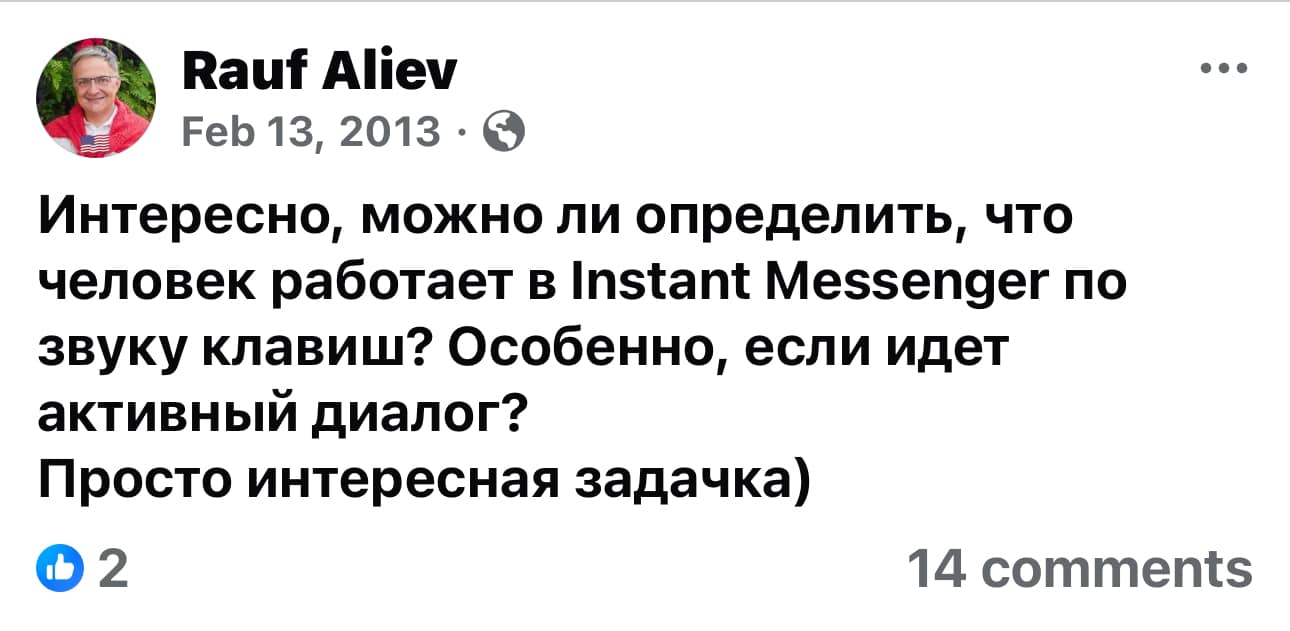
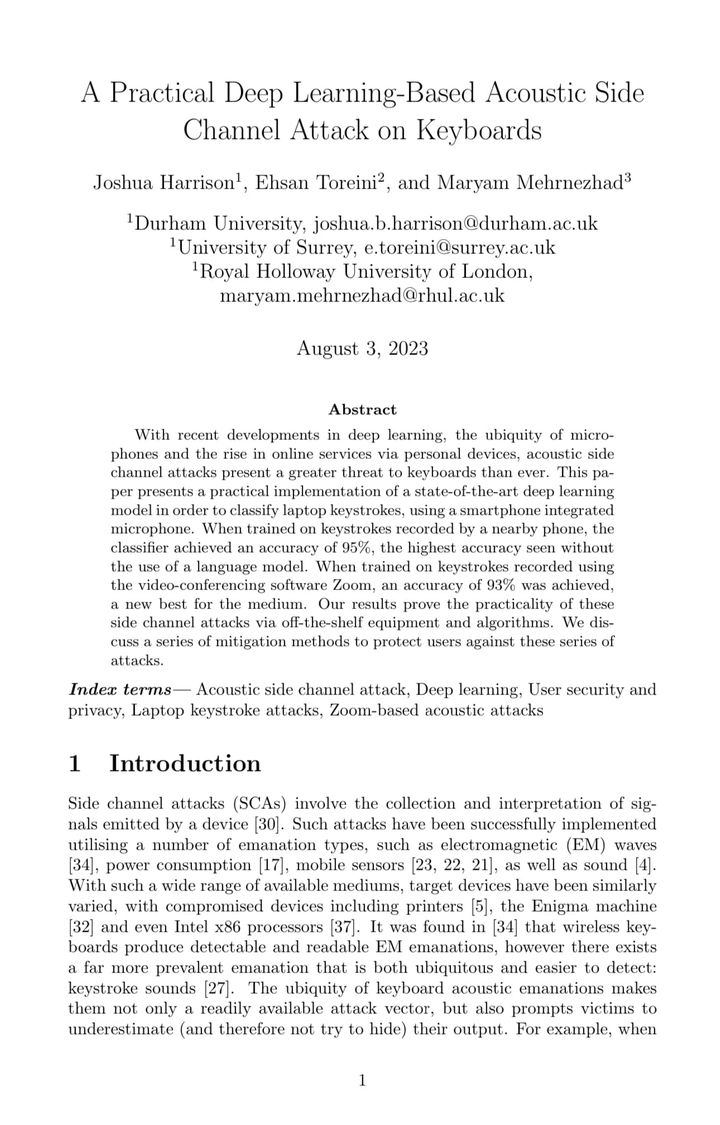
11 years ago, I wondered if it was possible to tell by the sound of keystrokes whether someone was messaging in a messenger or not. In 2023, a scientific article is published with a prototype that can determine with 95% accuracy what a person is typing just by recording the keystrokes on a smartphone, and 93% accuracy when recorded through Zoom. The code in the article is declared to be available to other researchers. And they admit that they have not yet used language models, but with them, it should be really good. Link in the comments.

KitKat: From Elite Club to Global Candy Phenomenon | September 17 2024, 23:04

I’m reading At Home. There, Bryson talks about Kit-Cat, an elite political-literary club of 18th century London (c.1690s-c.1720). It turns out that the KitKat bar was indeed named after this club, although the spelling is slightly different.

Moreover, the olds should remember the TV commercial “Take a break – have a TWIX!”. Interestingly, Mars co-opted the competitor’s slogan :- ) Around the world, this slogan is used by Nestle for Kit-Kat: “Have a break. Have a Kit-Kat” (Take a break. Eat a Kit-Kat). When Kit-Kat was introduced in Russia, the slogan had to be changed to “Есть перерыв. Есть Kit-Kat”. By the way, Mars and Nestlé even sued over this matter.

And what does this elite club have to do with it all, and what is this club anyways? The club’s name originates from the tavern owner where its members initially gathered — Chris Katling, known among friends as Kit Cat.

It’s also interesting that KitKat in the USA is produced by Hershey’s, essentially a competitor of Nestlé.

Exploring the Shift in Meaning of “Ambition” in Russian Culture | September 11 2024, 17:46

Currently reading “Russian with a Dictionary” by Irina Levontina.

It turns out that the modern meaning of “ambitious” when applied to a person has shifted quite significantly from its previous connotations.

The word “ambition” both in the USSR and earlier was predominantly associated with an inflated self-esteem and baseless claims. This interpretation was also reflected in dictionaries: ambition – “heightened self-love, excessive conceit.”

Interestingly, in the Russian language, nearly all words that denote a high self-regard by a person are negatively connoted: pretension, aplomb, haughtiness, arrogance, airs, self-assurance, overconfidence. The list goes on. This reflects the deep-rooted notion in Russian culture that a proud person ought to be humble. And yet, we understand that sometimes a person soberly assesses their capabilities, is ready to tackle a task, and speaks of it without any affectation, and this is good. However, it is impossible to use the word overconfidence even with a clarification that it is meant in a good sense in such a case.

A word needs to be torn apart and reassembled in a different order – confidence in oneself. Otherwise, the negative connotation remains inescapable.

When the word ambition was borrowed into the Russian language, it quickly acquired this shade. And during Soviet times, it was even harder to use the word ambition outside of a negative context.

The Big Explanatory Dictionary of the Russian Language, Kuznetsov’s Dictionary:

ambition

1. Heightened self-love, excessive conceit.

Example: To prove, to argue with ambition.

2. ambitions, -ций. disapproving

Claims, pretensions to something.

Example: To set aside one’s political ambitions.

By the way, “Russian with a Dictionary” is an interesting book.

Lorne Malvo as Woland: Unmasking Evil in Fargo Season One | September 05 2024, 18:56

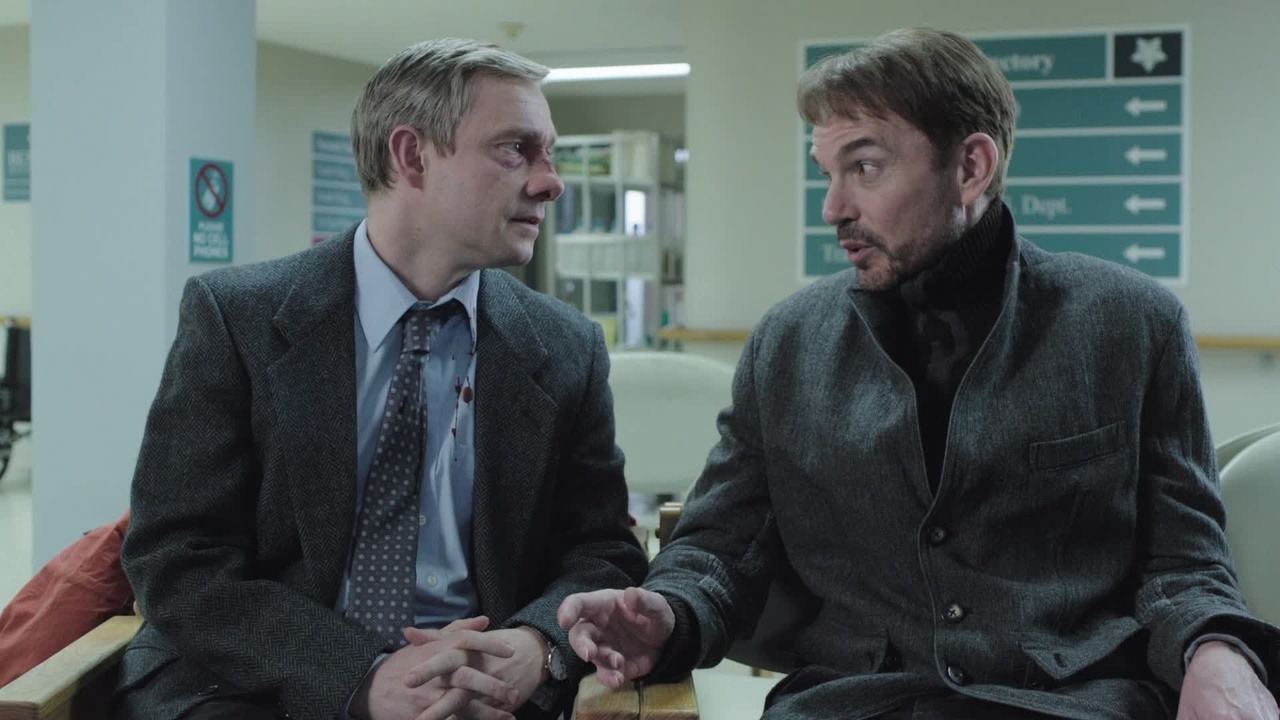
We’re revisiting the first season of Fargo. You know who Lorne Malvo (the one on the right in the photo) reminds me of? Woland.

Just look. He awakens the evil he sees in people and tempts them to act upon this evil, which is characteristic of Satan in Abrahamic religions—to tempt and entice people into sin. His collection of tapes can be seen as a symbol of “soul collecting”.

He creates chaos literally without any reason, like when he incites a kid to pee in a gas tank and then reports him, just like Satan, who perpetrates evil simply because he is evil, and to have a bit of fun. He phones Hess’s sons, lies to them and manipulates them into fighting, again, for no apparent reason. Or he scares the children living in Lester’s old house.

Somehow, he managed to escape from Lester’s basement, although there was no exit—a normal person couldn’t have done that. The character is often linked with religion: he pretends to be a priest, quotes biblical verses to manipulate a wealthy man, etc.

I barely remember the second half of the season, we are still watching it. But it seems to me that there will be even more evidence that Lorne is Woland 🙂

Till Lindemann Tour Ad | September 05 2024, 03:03

TILL LINDEMANN recently visited us on tour. For the promotion of his American tour, they featured his performance at Red Square with the song “Любимый Город” (in Russian, of course). It was during the military-music festival “Spasskaya Tower”, September 2021. In a white jacket and bow tie, he looked like an eccentric. 


Multilingual Ave Maria Signs at the Franciscan Monastery | September 02 2024, 19:00

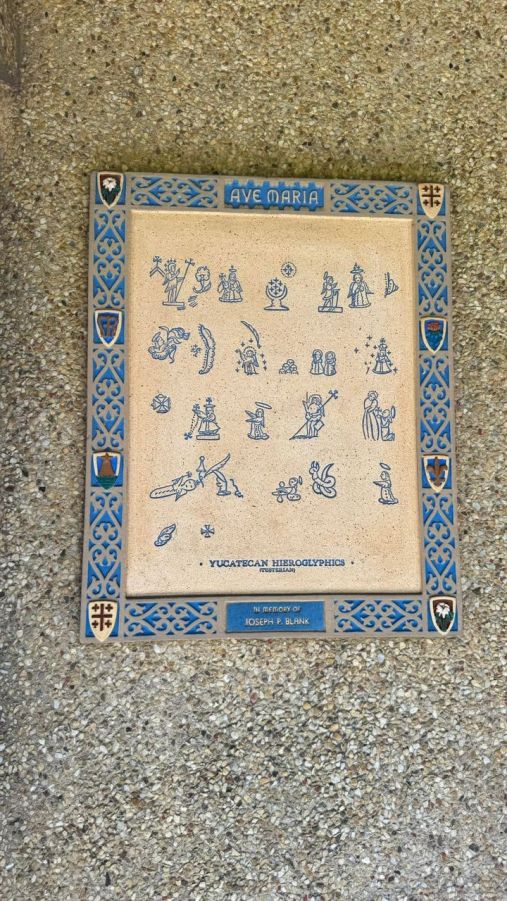
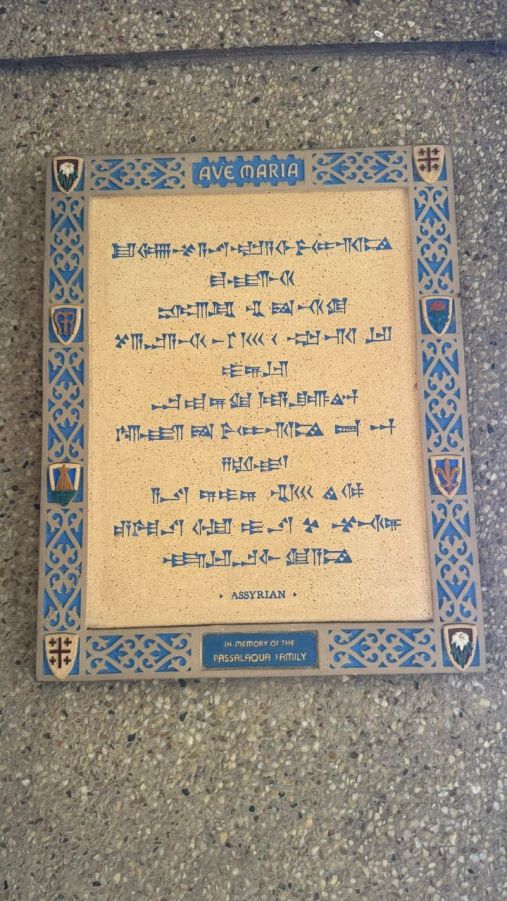
We stopped by the Franciscan Monastery, where around the perimeter there are signs with ave maria in different languages. Very enlightening indeed; of course, I had imagined how diverse scripts could be, but the signs still surprised me. It seems there are over a hundred signs; I only photographed a few.

Exploring the Use of “Positively” in Prohibitive Signage | September 02 2024, 02:12

POSITIVELY NO ADMITTANCE. Captured today in the center of the hall of the largest Catholic church in North America.

Another linguistic puzzle. Why POSITIVELY?

The correct translation is “ENTRANCE STRICTLY FORBIDDEN TO WHOMEVER.” But why not ABSOLUTELY NO ADMITTANCE?

“Positively” in the phrase “positively no admittance” (strictly prohibited entrance) is easiest understood as employing its primary meaning: it emphasizes “no admittance” (prohibition of entry to whomever).

But why positively?

I read that there was an assumption that this word in its early uses was employed to describe positive law, that is, law established or recognized by state authority, as opposed to natural law — those “laws” that seemingly are naturally understood by people as applicable to all, such as “do not kill.” “Positive” in the context of positive law means “officially established or imposed”; it is a synonym for “prescribed.” So, could the expressions “positively no trespassing” and “positively no admittance” fundamentally mean “as officially established or prescribed, entry is forbidden” or “by law, entry is forbidden”?

As attractive as this theory may sound, early evidence of the phrases “positively no trespassing” and “positively no admittance” does not show such a direct link to positive law; therefore, this explanation falls apart.

A more probable explanation for the odd sound of modern cases of “positively no trespassing/admittance” is that the word “positively” is now so readily applied in contexts unrelated to law that it has lost some of its forcefulness, although, perhaps, it never had a legal meaning.

In short, it’s not clear at all; what’s clear is that it is used for emphasis.