Global Museum Trek: Surprising Statistics and Desired Destinations | November 14 2024, 15:56

I decided to see which of the world’s largest museums I have visited and which ones still await me. I was quite surprised to find the Moscow Multimedia Art Museum in third place for visitors, after the Louvre and the Russian Museum, and ahead of New York’s Metropolitan, the National Gallery in Washington, the Hermitage, the Vatican, and the Tretyakov Gallery. I have never been to this Multimedia Art Museum, although I lived in Moscow for 17 years. Is it really that cool? Has been or is?

I also realized that we need to go to Madrid and Tokyo, with 4 museums in each, all pretty decent. In terms of the number of important and large museums, Paris (10) and London (8) of course lead, with Moscow in third place.

[X] Louvre (Paris)

[X] Russian Museum (Saint Petersburg)

[!] Multimedia Art Museum (Moscow)

[X] Metropolitan Museum of Art (New York)

[X] National Gallery of Art (Washington)

[X] State Hermitage Museum (Saint Petersburg)

[!] Queen Sofia Arts Center (Madrid)

[X] Vatican Museums (Vatican (Rome))

[X] State Tretyakov Gallery (Moscow)

[X] National Museum of Modern Art (Paris)

[X] British Museum (London)

[!] National Museum of Korea (Seoul)

[!] Prado Museum (Madrid)

[X] Royal Castle (Warsaw)

[X] Museum of Modern Art New York (New York)

[X] Tate Modern (London)

[!] Tokyo Metropolitan Art Museum (Tokyo)

[X] Musée d’Orsay (Paris)

[X] Somerset House (London)

[X] Uffizi Gallery (Florence)

[!] National Museum of Modern and Contemporary Art (Seoul)

[!] National Art Center (Tokyo)

[!] Shanghai Museum (Shanghai)

[X] Victoria and Albert Museum (London)

[!] Museum of New Zealand Te Papa Tongarewa (Wellington)

[!] Museum of European and Mediterranean Civilizations (Marseille)

[!] National Gallery of Victoria (Melbourne)

[X] Pushkin State Museum of Fine Arts (Moscow)

[!] National Gallery of Singapore (Singapore)

[X] National Gallery London (London)

[!] Fondation Louis Vuitton (Paris)

[X] National Museum in Krakow (Krakow)

[!] Thyssen-Bornemisza Museum (Madrid)

[!] National Gallery of Scotland (Edinburgh)

[!] Gyeongju National Museum (Gyeongju)

[X] Rijksmuseum (Amsterdam)

[!] Los Angeles County Museum of Art (Los Angeles)

[!] Hong Kong Museum of Art (Hong Kong)

[!] Musée du quai Branly (Paris)

[!] National Museum Tokyo (Tokyo)

[!] West Bund Museum of Fine Arts (Shanghai)

[!] UCCA Center for Contemporary Art (Beijing)

[X] Kunsthistorisches Museum (Vienna)

[X] Moscow Kremlin (Moscow)

[!] Frederik Meijer Gardens & Sculpture Park (Grand Rapids)

[!] Acropolis Museum (Athens)

[X] Guggenheim Museum Bilbao (Bilbao)

[X] Tate Britain (London)

[!] Petit Palais (Paris)

[!] Humboldt Forum (Berlin)

[!] Paris Bourse de Commerce (Paris)

[!] Getty Center (Los Angeles)

[!] Gallery of Modern Art (Brisbane)

[X] Museum of Fine Arts Houston (Houston)

[!] Whitney Museum of American Art (New York)

[!] Tel Aviv Museum of Art (Tel Aviv)

[X] Museum of Fine Arts Boston (Boston)

[!] Royal Academy of Arts (London)

[!] National Gallery of Australia (Canberra)

[!] Pudong Art Museum (Shanghai)

[X] Academy Gallery (Florence)

[!] Art Gallery of South Australia (Adelaide)

[!] Milan Triennale (Milan)

[!] Crystal Bridges Museum of American Art (Bentonville)

[!] Philadelphia Museum of Art (Philadelphia)

[!] Art Gallery of New South Wales (Sydney)

[!] Fabergé Museum (Saint Petersburg)

[!] National Palace Museum (Taipei)

[!] Virginia Museum of Fine Arts (Richmond)

[!] Cleveland Museum of Art (Cleveland)

[X] Garage Museum of Contemporary Art (Moscow)

[!] ARoS (Aarhus)

[!] Nelson-Atkins Museum of Art (Kansas City)

[!] Egyptian Museum of Turin (Turin)

[X] de Young Museum (San Francisco)

[!] National Museum of African American History and Culture (Washington)

[!] Museum of Decorative Arts (Paris)

[!] CaixaForum Barcelona (Barcelona)

[!] Kunsthaus Zurich (Zurich)

[!] Musée de l’Orangerie (Paris)

[!] M+ (Hong Kong)

[X] Van Gogh Museum (Amsterdam)

[!] Albertina Gallery (Vienna)

[!] Yorkshire Sculpture Park (City of Wakefield)

[!] Tomie Ohtake Institute (São Paulo)

[!] Queensland Art Gallery (Brisbane)

[!] Louisiana Museum of Modern Art (Humlebæk)

[!] World Museum (Liverpool)

[X] Smithsonian American Art Museum (Washington)

[X] National Portrait Gallery (Washington)

[!] MMCA National Museum of Modern and Contemporary Art (Seoul)

[!] Belvedere Museum (Vienna)

[!] Art Gallery of Ontario (Toronto)

[!] Saint Louis Art Museum (Saint Louis)

[!] Imperial War Museum (London)

[!] Pinacoteca do Estado de São Paulo (São Paulo)

[!] Tokyo Palace (Paris)

[!] Fondation Beyeler Museum (Riehen)

[!] National Museum of Modern Art, Tokyo (Tokyo)

[!] CaixaForum Madrid (Madrid)

MRI Musings and Magnetic Mysteries | November 13 2024, 21:50

Today I found myself in an MRI machine, where they scanned my brain. I hope the brain is still there, and I hope the MRI operators didn’t find anything interesting in there.

What else to think about for 45 minutes in this buzzing machine, where you can’t move, but thinking isn’t forbidden?

Right, I wondered how headphones could work in an MRI machine, the ones they put on me. Music was playing from them, and occasionally—the voice of the MRI operator. Think about it—in any headphones, there should be diaphragms and magnetic coils, yet inside an MRI coil, none of this can exist. I started to ponder, and if my implants are in order, maybe the headphones could be made from special materials like titanium. In general, I lay there and racked my brain. Eventually, I came to a solution, which turned out to be just that.

A thick hose stretched from the headphones to the machine, and that explained everything. The headphones are just cups with tubes stretching from the headphones to another room where the speakers are located. The sound travels through the tube via air—a very simple solution.

Unveiling a Lost Chopin Waltz: Discovery, Recording, and Mystery | November 01 2024, 14:52

So, here Chopin has released a new single.

This year, in the New York library and the Morgan museum’s vault, a manuscript of a previously unknown waltz was found—short and likely unfinished. After thorough analysis, experts concluded that it indeed belongs to Chopin, identified by his handwriting, specific features, dating, etc. Chopin has roughly 250 works and up to 28 waltzes, of which only nine were published; the rest were lost or destroyed, making this newly discovered piece incredibly rare.

The unsigned waltz was never officially acknowledged by Chopin, remaining unpublished and out of the public eye. Little is known about its origin and its possible acquisition by A. Sherrill Whiting Jr., the director of the New York School of Interior Design. From there, a close friend, Arthur Sacks, bought the piece from Whiting’s wife, Jean, and donated it to Morgan in 2019. It has only recently undergone expert examination.

Lang Lang recorded and posted the performance.

https://youtu.be/Poq0VrCF2vo?si=cD8zAyGbG36UW3c_

Exploring Nabokov’s “The Defense of Luzhin”: A Reader’s Journey | October 23 2024, 03:32

In just two days, I devoured Nabokov’s “The Defense of Luzhin.” A masterpiece! Next, I’ll be reading Lolita in English. While reading “The Defense,” I took notes. To avoid losing them, I’ll publish them here. My comments are in square brackets. Well, where they’re needed. Feel free to share, this is definitely interesting 🙂

…listening to the voice of his wife, coaxing silence to drink cocoa…

…and she had a turn of the head that hinted at possible harmony, promising true beauty, unfulfilled at the last moment…

…don’t mess up this table…

…a fire was burning, a fat man in white was shouting something, and a tower of plates ran on human legs…

…having sopped up the buldegomes, he asked if he could leave… [chatgpt told me that buldegomes are a hybrid of bullterrier and mastiffs 🙂 most likely, it’s boule de gomme – just gum]

…cut along the edge with round teeth, like petit-beurre biscuits… [petit-beurre – is a common cookie made by LU (Lefèvre-Utile)]

…music played, the small room was filled with light, blushing with a watermelon wound…

…he began to appear more frequently at literary evenings, organized by lawyers and ladies…

…a manufacturer, suffering from chronic constipation, about which he gladly spoke, a man with a single thought…

…mothballs emitted a sad, coarse smell. A doomed jacket hung in the hallway…

…A crystal ashtray settled between them, and, dipping their cigarettes into it simultaneously, their tips collided. “J’adoube,” Luzhin said amiably, straightening his bent cigarette… [j’adoube is French for “I adjust, a ritual phrase in chess, uttered to avoid a rule “if you touch a piece, you must move it. Literally, the verb adouber means “to dub [a knight]”)]

…the maid accepted Luzhin’s collapsible top hat. With a subtle smile, Luzhin demonstrated how it snaps shut… [this is a type of cylindrical hat, “chapeau-claque”. Note here ‘claque’ from claquer – to snap. Apparently, it’s not just any cylinder, but a collapsible cylinder. Google Opera hat, it’s the same thing]

…Luzhin in a dishabille, exuding simian passion, and her stubborn, cold, cold daughter… [apparently, dishabille isn’t just a state, but light, simple, home clothing worn after getting out of bed, not donned in front of guests]

…to the left of the corridor was a bathroom, beyond it, a maid’s room… [maid’s room — is a room for the servants]

…”such future is unknown, but sometimes it acquires a special opacity, as if another force joins the natural secrecy of fate, spreading this resilient mist from which thought bounces off…”

…a print hung on the wall… [wall-space — is a part of a wall between windows, door openings]

…the mercury, influenced by the environment, fell lower and lower… [useful if you suddenly feel like discussing the weather]

…he drew his mother-in-law, and she was offended; drew his wife in profile, and she said that if she looked like that, he should not have married her; but her father’s high starched collar turned out very well… [I’m drawing my wife and daughter right now]

…Having abandoned the typewriter, geography, drawing, now knowing that all this was part of a combination, an intricate repetition of moves recorded in childhood…

…the rooms dimmed as if the parts of a telescope had slid together, and Luzhin found himself in a bright corridor… In all three rooms, unfolded like a telescope, it was very bright.. [not very clear what this telescope is about. Most likely, Luzhin perceives the rooms as if they open and close one after another, similar to how sections of a spotting scope or telescope unfold. In one position, he sees one set of rooms, in another, they “shift,” disappear, and he finds himself in a new place.]

…on him was a shaky sector of silken gloss, like a moonlit boundary on the sea… [Gralitsa – turns out, it’s the reflection on the sea of sunlight or moonlight “by a column”]

…the panel slid, rose at a right angle, and swung back.. three people remained on the panel… [the German ‘Panel’ means sidewalk, referring to an event in Berlin. Separately, this and five pages back and forth beautiful descriptions of the brain’s suffering after a bar]

…”I knew one Luzhin,” said the gentleman slowly, squinting (because human memory is short-sighted)…

…from a store of talking and playing devices came chilly music, and someone closed the door so the music wouldn’t catch a cold…

…his fiancee brought him various casual light-hearted books — works by Gallic novelists…

…“But not in one day. There is another establishment. There we will hang on the wall for two weeks, and during this time, your wife will come from Palermo, look at the names, and say: it can’t be, Luzhin is mine … [Interesting. It seems that registries used to give two weeks to check feelings, like now a month is given for divorce]

…During those two weeks, while their names were displayed for all to see, – on the groom’s address, the bride’s address, proposals from various vigilant firms began arriving: coaches for weddings and funerals (with an image of a coach drawn by a pair of galloping horses), tuxedos for hire, top hats, furniture, wine, rental halls, pharmacy items. Luzhin diligently examined the illustrated price lists and stored them, amazed why the bride was so disdainful towards all these curious offers. There were offers of another kind. … [how similar this is to what happens today, if someone dies…]

…the clerk changed his jacket for a worn coat and pronounced the marriage sentence…

…And he remembered how … the word “fascha sounded in the tired priest’s mouth [I couldn’t figure out what this fascha was]

…she also fell silent, and started rummaging in her bag, painfully searching for a topic of conversation and finding only a broken comb…

…a manner, borrowed from a diplomat who spoke very gracefully “skoúl” [refers to the Scandinavian drinking toast skål – “cheers!”. Without googling, it’s impossible to know]

…“The window was empty, but a minute later, the darkness behind the front door parted, and a lit staircase appeared through the glass, marble up to the first landing, and before this newly born staircase could fully petrify, quick female steps appeared on it… Meanwhile, the staircase continued to give birth to people…

…and to say, she reasoned, our troubled times throw us off our game, and it’s understandable that from time to time, one turns to the green comforter… [green comforter — is likely green wine, that is, alcohol spiced with herbs, hops, St. John’s wort]

…you’ll be with him in a yellow house (…) in a yellow or blue. [yellow house — asylum, they were painted yellow. ]

…ageing actor, with a face, groped by many roles…

…at the top, the square night blackened with a mirrored sheen…

.. to hand over the seal coat.. [not from cats, precisely, from seals, but not those. It’s from sea lions]

…a gentle optical illusion occurred: he returned to life not from the side he had left, and the task of distributing his memories was taken over by that amazing happiness which first met him…

…well then, goodbye, – as they say in Soviet… [“Goodbye! as an independent farewell sign appears around the time of World War I and does not immediately become customary. Even the Soviet Explanatory Dictionary of Ushakov, published in the latter half of the 1930s, marks this meaning as “familiar. Let alone the émigrés: for them, the standalone “goodbye was a clear and very unpleasant Sovietism. – Dmitry Sichinava]

…I’ll give him a wafer, – she said. – That’s that.” The wafer didn’t work… [Wafer — this item was used in church rituals, for letters and in medicine. In ancient times, it referred to small ritual breads, with which Catholics and Protestants communed. Wafers also named thin shells made of starch dough or gelatin, in which a medicinal compound was placed, and medicines in this form. Postal wafers were circles of adhesive mass or glued paper. They sealed envelopes and stamped documents.]

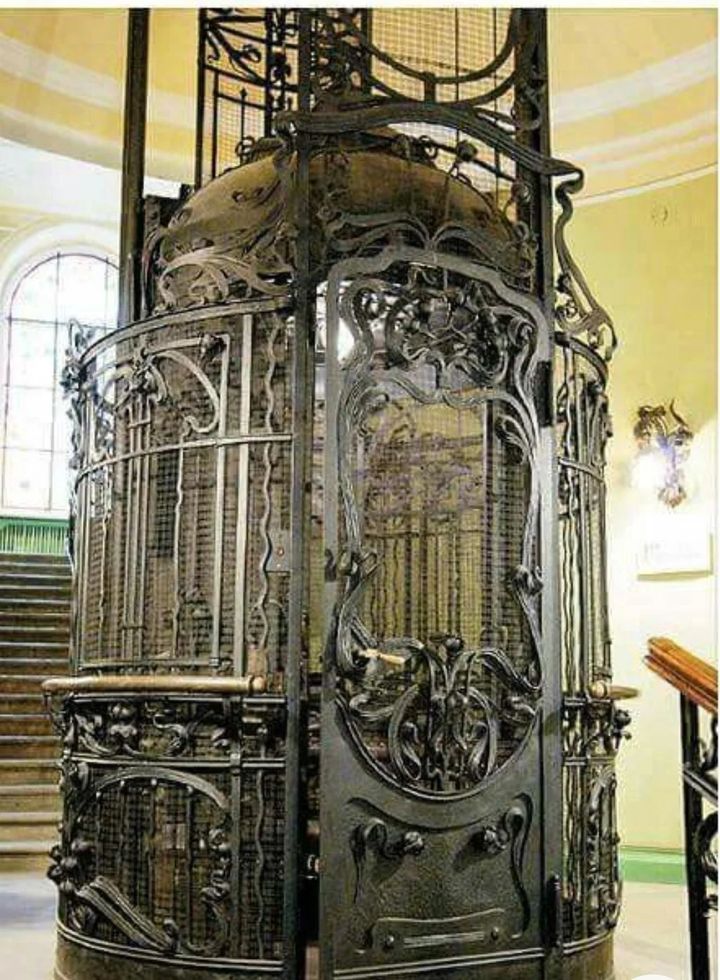
…he recalled how, in a Petersburg house, her asthmatic bulk preferred the elevator, old-fashioned, water-driven, which the concierge operated with a lever on the wall of the vestibule.. [interesting about water- and steam-powered elevators in Petersburg. I didn’t know about that. Attaching a picture]

…a puppet engineer, too large for the locomotive and therefore placed in the tender [tender — is a special wagon that is attached to a locomotive and designed to store fuel (coal or wood) and water, necessary for the locomotive’s operation]

…from the little Luzhin during that first school winter, tenderly smelled of garlic from arsenic injections, prescribed by the doctor. [interesting that even children were prescribed. This was probably “Duplex” — a solution of strychnine with arsenic for injections. A very popular remedy in the past, especially for asthenias, neuroses, impotence, and “anemia”]

…spots of light, scattered along the paths of the garden at the estate, merged into one warm, whole glow [estate — a manor house in the Baltic states, Latvian muiža, for example]

The Boy and the Heron | October 14 2024, 18:15

We watched “The Boy and the Heron” by Hayao Miyazaki yesterday (original Japanese title: “How Do You Live?”). After viewing it, of course, I scoured the internet searching for answers to my questions.

Here I am, considering myself educated and well-rounded, yet some films and sometimes cartoons trigger an “I must be the dumbest person alive” complex.

It all started with Mulholland Drive. According to the reviews, everyone who watched it seemed to grasp the depth of the director’s vision, except maybe for some details, but I remember watching it and barely understanding anything. Then, of course, after reading various reviews and discussions on the subject, I watched it a second, and then a third and a fourth time. Now, indeed, a lot of it makes sense, but it feels like cheating. I couldn’t figure it out on my own. Well, that’s Lynch for you; his works are always like that.

Sometimes it seems that a director just shoots whatever, and then someone in the reviews starts connecting the plot dots, which picks up, deepens, and becomes rationalized, and suddenly there’s meaning even where there was none by design. This is partly why directors dislike discussing the “what did the author want to say” topic. What I wanted to say, I’ve said; the rest is up to you.

Or take something like “Barbie.” I watched it and saw nothing noteworthy, but then you start reading, and it turns out it’s a work of art where everything is interconnected. Or “Asteroid City” by Wes Anderson. If I’m honest, I didn’t even finish watching it.

And now there’s “The Boy and the Heron.” It’s brilliantly made from every perspective. But the depth and complexity of the meanings really raise the bar high for viewers who want to fully understand the film.

I categorize such works as “stop thinking and just watch how awesomely it’s made; maybe you’ll get it later.” With Mulholland Drive, it worked, and it did with Lars von Trier’s “Melancholia” as well. This approach even worked for me with the recent “Deadpool and Wolverine,” where I clearly lacked the context to grasp the director’s vision, but in the moment, everything was beautiful and captivating, boom boom bam. But, damn, a bunch of people around me see much more than I did. And it’s comics! A product for the masses. Am I dumbing down?

It’s great, of course, that films are made in such a way that each audience finds something commensurate with their education, exposure, understanding of the context, etc. When a film’s structure is nonlinear, full of visual metaphors, where symbolism is more important than the plot and can be interpreted in different ways, when a film rather provokes the viewer to feel and interpret what’s seen than to follow a clear narrative — this all requires from the viewer a rather high level, I don’t know, of IQ or thoughtfulness. How such films collect big box office and ratings when most people going to cinemas are somewhat obtuse, and I often classify myself in this category when I leave another “complex” movie.

You know what it’s like? It’s like someone who grew up on rock, bards, and chanson goes to a Wagner opera, something from “The Ring of the Nibelung” or “The Master-Singers of Nuremberg,” and then finds everyone around is amazed, while despite trying hard, he understood little.

So, if I am not the only one, give a thumbs up 🙂

Neil Carroll | October 12 2024, 22:01

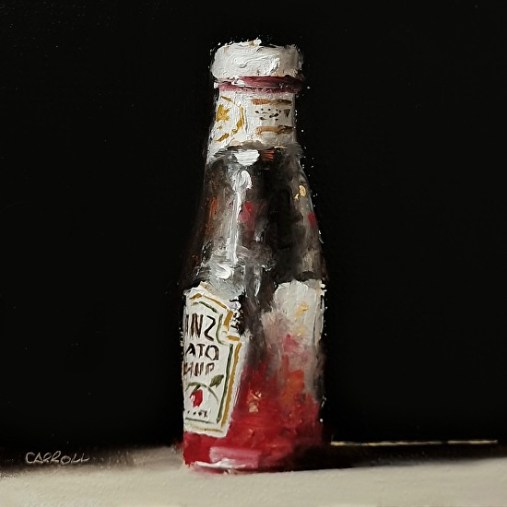
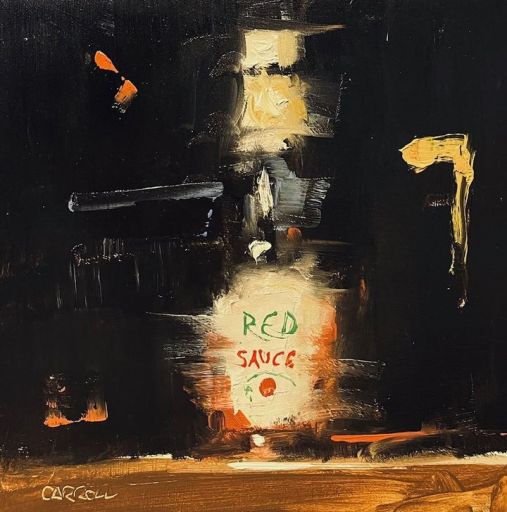
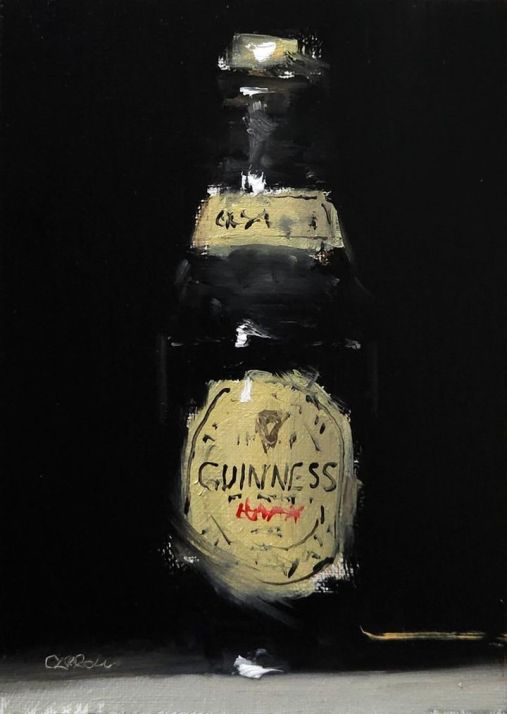
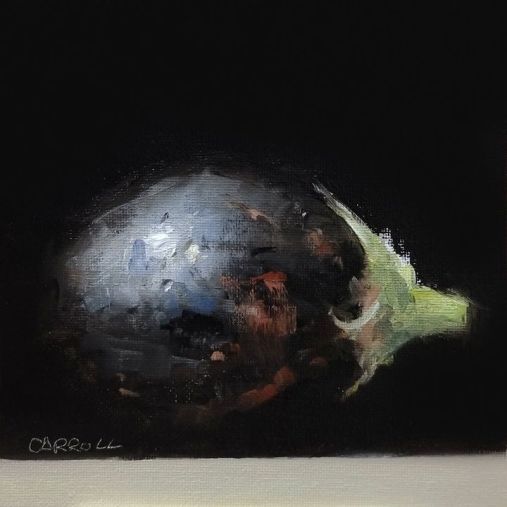
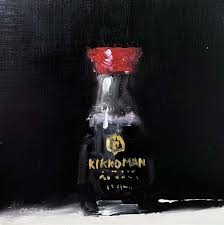
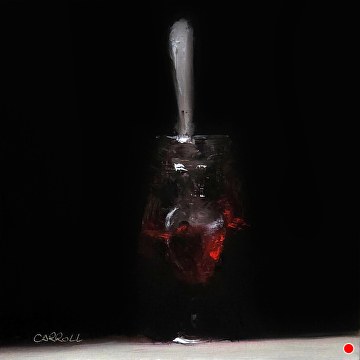
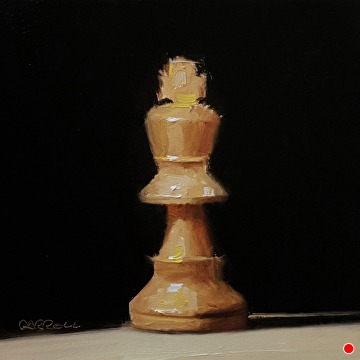
Today, I’m sharing these thematically simple paintings by British artist Neil Carroll. All of them depict everyday kitchen objects against a dark background. Many of them are quick sketches that likely didn’t take more than a few hours to complete (most canvases are about 6″ wide, give or take). Carroll has turned this into a steady output, and online, you can find hundreds of similar yet distinct paintings, all in a consistent style.

But what’s so special about a painting of an apple or a lemon with side lighting on a dark background? It’s practically a student sketch—art school students have piles of these gathering dust in the back of their closets. Yet once you gather at least a dozen of these uniform paintings, completed in a consistent style, suddenly it becomes “real” art, and the artist is lauded for carving out their niche. The more they create, the more firmly they establish themselves in that niche.

It’s a straightforward formula: do what you enjoy and remain consistent in your style and approach.

What’s also captivating about such simple objects is observing how the artist distinguishes between what’s significant and what’s not. I’ve gleaned a lot of intriguing insights and now I’m eager to try my hand at it having studied Carroll’s techniques. So, expect some ketchup paintings from me soon.

Posts like this are grouped under the hashtag #artrauflikes, and all 117 of them can be found on beinginamerica.com in the “Art Rauf Likes” section (unlike Facebook, which forgets—or neglects—almost half).

Unveiling the Soviet Rock Scene | October 07 2024, 16:54

This picture is often mentioned in the same breath as “Who does Kiss harmonize with?”, “victims of pseudo-music”, and “Liverpool ‘idols’ shearing sheep”. The text is of terrible quality, unreadable, but if you manage to decipher it, it actually turns out to be an advertisement for the upcoming Soviet-Polish festival “Thrash Epidemic” at the Gorbunov House of Culture, featuring “Master”, “Hellraiser”, “Black Obelisk”, “Abaddon”, “Mass” and other hard rock bands. So, the freedom of the nineties was still something to behold.

Text from the picture below

* * *

A familiar journalist named John, originally from foggy Ireland, with an astonished lift of his eyebrows watched the trash-metal-sex-show “Corrosion of Metal” and asked Spider (real name Sergey Troitsky) about the age restriction for attending his performances. This time, it was Spider’s eyebrows that flew up in surprise, and in righteous anger he made a historic speech about how his show is primarily meant for Soviet teenagers.

It should be noted that all of Spider’s speeches hold historical value, and if there’s a biographer who decides to follow his every step, that biographer might make a killing on the memoirs. Because history has not yet witnessed anything similar.

Spider said that children are shielded from the truth about sex, hence “Corrosion of Metal” had to take up the heavy burden of enlightenment.

WHEN all this was just beginning, Spider openly stated that Soviet education only increases the risk of naive teenagers contracting syphilis, gonorrhea, and AIDS. “Prevent this,” Spider called out and brought onto the stage a group of desperate girls tasked not only with showing an orgasm but actually achieving it on stage.

“The truth and nothing but the truth,” says Spider and adds, “the truth cannot be vulgar…”. To him, thrash appears to be the most natural musical form capable of conveying the full extent of hypersexual teenagers’ feelings.

With all this, they will take the stage the day after tomorrow at the Gorbunov House of Culture during the Soviet-Polish festival “Thrash Epidemic” (thank God it’s only – thrash!). Also there, as “ZD” already reported, will be “Master”, “Hellraiser”, “Black Obelisk”, “Abaddon”, “Mass”, and Polish peers “Vader”, “Bloodlust”, and “Slashing Death”. Starts at 15:00 and 19:30.

MEANWHILE, with the help of our photojournalist Alexander Astafyev, “ZD” offers a look not only at the stage but also behind the scenes of such a cool team as “Cor-r-rrosion of Metal”…

Photos by Alexander ASTAFYEV.

“Moskovsky Komsomolets” 29.11.1990

Sosumi: The Playful Sound of Apple’s Legal Battles with The Beatles | October 06 2024, 17:59

1) It turns out the MacOS notification sound had a name, and it was Sosumi. It was used from 1991 to 2020, after which it was replaced with Sonumi. There’s a funny story behind the name.

2) These sounds have a creator. It’s Jim Reekes—Apple’s sound designer, and there’s a secret that wasn’t disclosed for about 10 years after his departure from the company.

3) The Beatles are partly the authors of the MacOS startup sound.

Now for the full story. There was a company called Apple Corps, organized by the Beatles. Its logo was also an apple (of course), hence there was a legal dispute with Apple, which ended, as the joke goes, with the agreement “I don’t give loans, and the bank doesn’t sell seeds.” Apple Inc. could use its name but was not allowed to venture into the music industry and use music-related names in its products.

Accordingly, any Apple ventures into music immediately alarmed lawyers from both sides. When it came to creating system sounds, the lawyers tensed up and asked Reekes to first, not use the name “Chime,” and second, please no melodies in the sounds. As a result, operating system sounds like Frog, Funk, Glass, and Hero appeared.

Eventually, Reekes worked hard on the startup sound and created a C major chord.

Reekes assures that while creating the C major chord, he was inspired by The Beatles’ song “A Day in the Life. I don’t know why I’m laughing here.

Returning to notifications. After much deliberation and attempts to find a neutral name, Reekes proposed the playful name “Let it Beep” in the style of The Beatles’ song “Let it Be”, but his colleagues thought it would be hard to accept. When someone suggested such a name would lead to legal disputes, Reekes jokingly replied: “So sue me,” and suddenly realized that this phrase would be perfect for the sound name. Eventually, they decided to rename the sound to “Sosumi. He told his bosses it was a Japanese word having nothing to do with music.

In macOS Big Sur, the original chime was replaced with another, which was named Sonumi. The original name was retained in the first public version of the OS, but later changed to “Sonumi. The sound file itself /System/Library/Sounds/ is still named Sosumi.aiff.

Now, the OS startup sound is completely removed. It seems you can enable it in the settings.

Exploring Art and History: A Journey through Russia’s Cultural Legacy | September 30 2024, 00:30

Cultural page. It was a surprise to see Bryullov’s work, and not just any work, but the famous portrait of Countess Samoilova (with a black boy and a ward), which it seems everyone knows right from school benches, along with the equally famous “Horsewoman”, also depicting her. Bryullov, generally, isn’t that well-known outside of Russia, and there aren’t many of his works in museums. This Samoilova, by the way, even appears in Bryullov’s “The Last Day of Pompeii” three or four times.

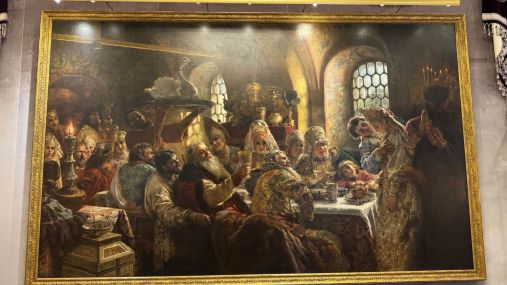
Across from Samoilova, the boyars are drinking. This painting, for some reason, is entirely unsigned. It’s a large, wall-sized canvas by Makovsky, “The Boyar Wedding Feast”. It invites prolonged viewing — every detail is captivating.

In the same hall, a third surprise awaited me — a portrait of a young black man. This was Lloyd Patterson. As it turned out, this gentleman ventured to the USSR in 1932 in search of racial equality, work, and simply a better life. In the Soviet Union, Patterson was invited to work as an artist on the film “Black and White”, the idea of which was to expose racism in America. The project was eventually canceled, but Lloyd stayed in the Soviet Union, mastered Russian, and married a Soviet artist and designer, Vera Aralova. It could be said that the issue of racism helped him settle his life.

Here in the USSR, his son, James Lloydovich, was born, and this young man is the same one who played in the famous film by Grigori Alexandrov “Circus” as the son of Marion Dixon – the American artist portrayed by Lyubov Orlova.

He grew up, became a poet, a prose writer, published in the USSR. Right after the USSR came to an end, James emigrated to the USA, and has been living here, in Washington, for over 30 years now. He is already 91 years old. He recently released a book titled “Chronicle of the Left Hand: An American Black Family’s Story from Slavery to Russia’s Hollywood”.

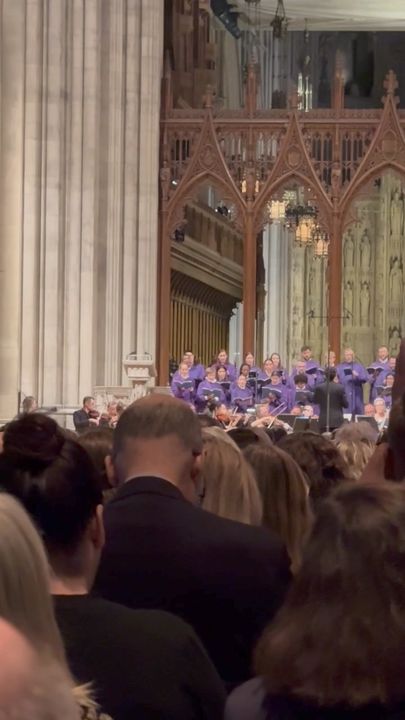
After the museum, we went to Mozart’s Requiem at the National Cathedral. The warm-up for Mozart was the Berlin Mass by Estonian composer Arvo Pärt. Too slow for me. But the Mozart Requiem I’ve heard about a hundred times, and this was my second time hearing it live (the first time was in a church in Moscow). Still, I can’t say I was very satisfied, coming to a live performance in one of the largest cathedrals in the world: I skimped when choosing seats and ended up in the back. I should have bought tickets closer to the front. By the place we were sitting, the sound was turning into a muddled “mush.”