When you turn on modern virtuoso pianists (about 70% of them are Chinese), everything is great, but it never even crossed my mind to go look for the sheet music because they just don’t play anything even remotely at my level. If I were to start learning today, I might barely manage the first two pages by retirement.
But with Horowitz, it’s a completely different story. For the third time on my playlist, I come across pieces that are technically manageable, which I immediately rush to the internet to download and print for myself, thinking, how did I miss these before? And for the third time, I realize that in these seemingly simple pieces, Horowitz sets such a “bar” in performance, in sound, in the character of the performance, that all that seeming simplicity evaporates (and maybe by retirement, I’ll manage two pages).
Today, I printed out four pages of Consolation No. 3 in D-Flat Major by Franz Liszt. It’s very beautiful and not very difficult technically, but to play even close to Horowitz…
But that’s for later. Right now, I’m learning a short piece, Träumerei by Robert Schumann. It’s the same story — technically simple, but not at all simple in its sound.. especially after listening to Horowitz… The link is in the comments.
Thought of a cool idea. Surprising that no one has done anything like it. Essentially, it’s a drum machine with AI that plays music to the rhythm and accents a person makes into a mic. Plus, you can overlay synthesized sounds, mimicking various instruments with your voice or lips, while the smart AI organically integrates it with the existing sounds, creating something new. So you could sing a rhythm, sing a melody, and have it layered over the rhythm.
Details are hard to whip up on the spot, but imagine millions of people playing with this out of boredom if even the basic version is implemented. You could create an entire store of paid add-ons. It’s possible to make a service that does very high-quality mixing in the cloud and outputs the source file and mp3
for use anywhere. Theoretically, it could be in the form of an app for iPhone.
Imagine TikTok or Instagram buying this and integrating it into their apps.
Nadya says, write about contemporary composers, not just about contemporary artists. Well, of course, she means classical, not pop music ones.
Here’s a good one for today – Mexican composer Arturo Márquez with his piece Danzon No. 2. Director Guillermo Ortiz Pichardo made a small short film about it, slightly nonsensical, but very much in tune with the music. By the way, the composer himself appears at 5:19.
In the comments, I’ve left a piano rendition of a segment performed by Yuja Wang. It might even be worth listening to these three minutes first. A really cool performance.
Today, I was reading about dissonances and decided to see if there are any compositions where dissonances are deliberately used as the main material. And I stumbled upon György Ligeti’s Atmosphères.
Listen, it’s very unusual and hardly resembles music at all. He used something called micropolyphony, creating dense webs of chromatic notes moving at different speeds and at various distances from each other.
If you feel like you don’t understand such music and don’t find this assembly of sounds beautiful, imagine instead of an orchestra playing it with solemn faces, a Stanley Kubrick film, for example. Suddenly, everything falls into place.
About a week ago, when I watched The Shining, the first thing I texted a friend was, “Notice that there’s no music in the film,” to which he replied that there is, but it’s so well made and integrated that you don’t notice it. Actually, The Shining has a very cool soundtrack, very well-selected.
So, specifically, this composition Atmosphères (as well as parts of Lux Aeterna, Requiem, and Aventures) was used by Kubrick in his 2001: A Space Odyssey. Another piece, Lontano, was used in The Shining. And Musica ricercata was used in Eyes Wide Shut. By the way, Musica ricercata is quite good; I’ll drop a link in the comments.
I finished “Theodora”. It’s a three-hour opera in a production by the Royal Opera House. About Christian saints and martyrs Theodora and Didymus, who lived in the 4th century in what’s now modern Syria. On stage – prostitutes, pole dances, a bomb, essentially, the full package.
And yes, originally it’s not an opera, but an oratorio, meaning originally on stage there is a chorus that sings for three hours, and nothing else happens. In the production, however, the oratorio is decked out like an opera, plus a bit more.
In short. The plot. Briefly. Valens, the Roman envoy, forces everyone to worship Roman gods, and threatens to execute those who refuse. Theodora, a Christian, does not comply. Her lover, Didymus, secretly converted to Christianity, tries to save her by disguising himself in her dress. In the end, Theodora surrenders to the enemies to save Didymus, and both die as martyrs for their faith. Afterwards, they were canonized by Christians in gratitude.
The oratorio is in English. That’s unusual in itself. Well.. in English. “Vouchsafe, dread Sir, a gracious ear. Lowly the matron bow’d, and bore away the prize…”. English from three hundred years ago. I understood “Carmen” in French with subtitles better. But no matter, there are translations you can hold in your hand and glance at one-eyed, plus everything happens veeery slowly there.
So, what we have here. A classic plot on a religious theme. In Katie Mitchell’s production, they decided to break all norms at once, making the oratorio into an opera and also setting it in modern times. It turned out pretty cool, actually.
Katie Mitchell situates the action in, as they called in an Alicante publication, a “Putin-like” embassy in Antioch, where rooms function as a brothel. This is the first theatre piece to involve an intimacy coordinator for sex and violence scenes (Ita O’Brien).
Valens, the Roman envoy in Antioch, wears a red sweater. He hasn’t heard of the #MeToo movement, hence the brothel accommodates “comfort women” for him and his bodyguards. They in red lingerie dance on poles in the red room (kind of a striptease; Holly Weston and Kelly Vee).
Next, we are introduced to Septimius, Valens’ head of security. His task is to ensure that all citizens publicly worship Roman gods as a sign of loyalty. Otherwise – death.
Here comes Didymus, one of the bodyguards. Didymus used to believe in Roman gods but secretly converted to Christianity. He’s in love with the Christian Theodora, the head of the household staff at the embassy.
Theodora plans an assassination attempt on Valens with a homemade explosive. They actually assemble it on stage with duct tape and some stuff.
Septimius uncovers the conspiracy and defuses the bomb. Theodora’s punishment – she becomes a “comfort woman”. For this, they dress her up as Marilyn Monroe. Oh, actually, it seems more like Louise Brooks, but never mind, they look alike.
Then the drama continues with an escape, Didymus saves Theodora, then the other way around. But ultimately, as in all operas, things end up not very well, but specifically in Mitchell’s production, good prevails over evil.
The role of Didymus is played by Jakub Józef Orliński. He has a beautiful scene where he changes into heels and a shimmering dress, in which he continues to perform until the end of the opera.
Jakub has a rather unusual voice. He is a countertenor. It’s the highest male voice. After castrati fell out of favor – quite rare. Google it, his voice is very beautiful. I’ll leave a few links in the comments.
One of the scenes towards the end reminds me of the café scene from “Pulp Fiction”.
The first performance of “Theodora” was in London, at the Royal Theatre in Covent Garden in 1750, and this production 272 years later comes from there too. Quite symbolic. True, back then it flopped – almost no audience. But now, it’s a classic.
In the Mozart opera “All Women Are the Same” or Cosi Fan Tutte by the Royal Opera House production, the one on the right (Dorabella) resembles Mizulina, while the one on the left (Fiordiligi) resembles Skabeeva.
For those who play the piano — there’s a very interesting channel by Mikhail Proshin. I’ve been subscribed to it for a long time and have watched it for a while. Just to illustrate, here’s the latest from it. It has a good thought, very applicable to my case.
He talks about the trap of professional musicians (I am not professional). They often perceive music “top-down”– as a finished product that must be reproduced. This results in them giving equal attention to both fundamental and minor elements, which can hinder development and prevent enjoyment of the process. Amateurs, lacking high technical skill, simplify compositions, accompany themselves, and focus attention on the basic structures of music. This allows them to quickly understand and internalize musical basics, such as chords and harmonies, and use this experience in other songs. A professional might learn 100 songs without truly understanding them, and quickly forget many — this is just my case. An amateur, by simplifying 100 songs, can extract fundamental knowledge and build their own style on this basis, experiencing 100 situations of success.
The idea is that playing “from the bottom up” is not just simplification, but a conscious process that helps better understand music and enjoy performing it. A very good thought, indeed.
Today I found myself in an MRI machine, where they scanned my brain. I hope the brain is still there, and I hope the MRI operators didn’t find anything interesting in there.
What else to think about for 45 minutes in this buzzing machine, where you can’t move, but thinking isn’t forbidden?
Right, I wondered how headphones could work in an MRI machine, the ones they put on me. Music was playing from them, and occasionally—the voice of the MRI operator. Think about it—in any headphones, there should be diaphragms and magnetic coils, yet inside an MRI coil, none of this can exist. I started to ponder, and if my implants are in order, maybe the headphones could be made from special materials like titanium. In general, I lay there and racked my brain. Eventually, I came to a solution, which turned out to be just that.
A thick hose stretched from the headphones to the machine, and that explained everything. The headphones are just cups with tubes stretching from the headphones to another room where the speakers are located. The sound travels through the tube via air—a very simple solution.
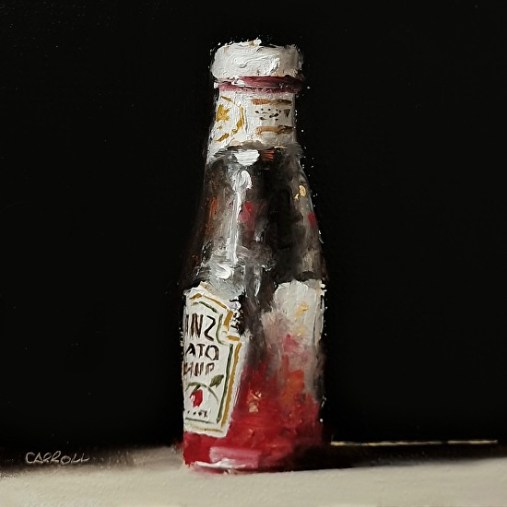
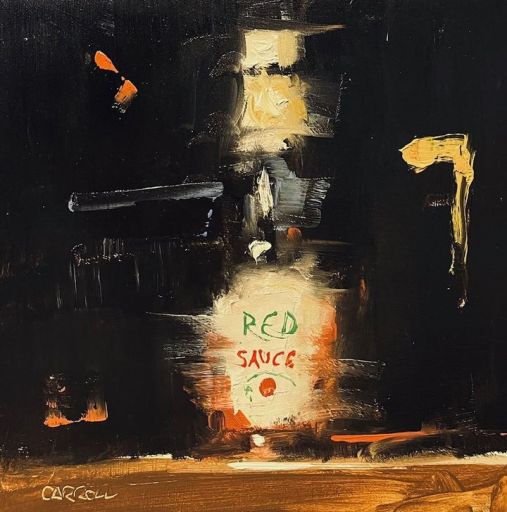
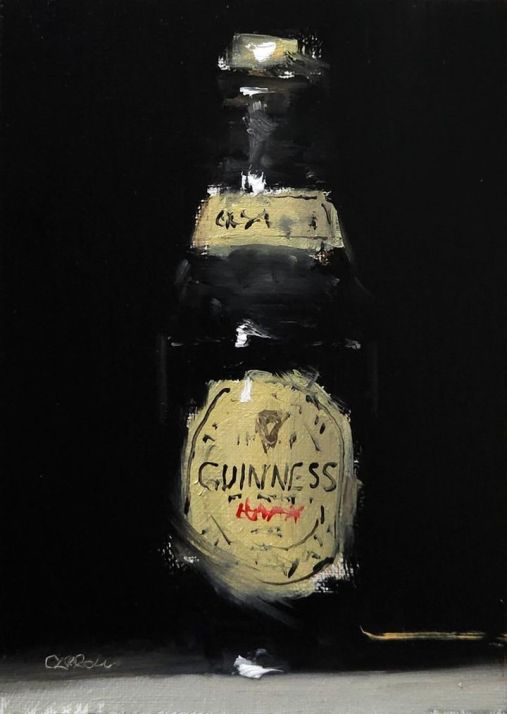
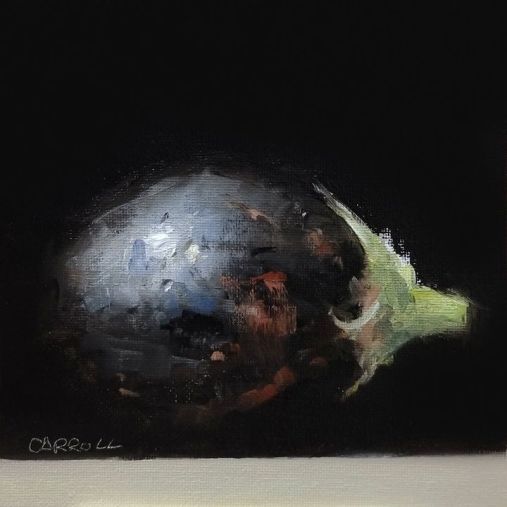
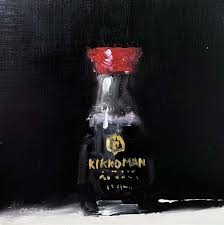
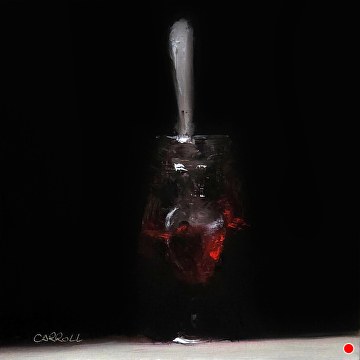
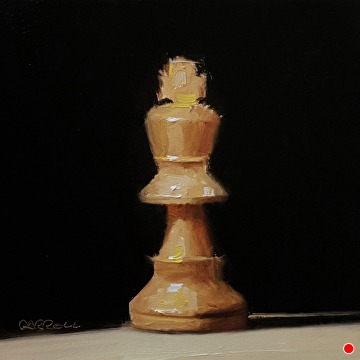
Today, I’m sharing these thematically simple paintings by British artist Neil Carroll. All of them depict everyday kitchen objects against a dark background. Many of them are quick sketches that likely didn’t take more than a few hours to complete (most canvases are about 6″ wide, give or take). Carroll has turned this into a steady output, and online, you can find hundreds of similar yet distinct paintings, all in a consistent style.
But what’s so special about a painting of an apple or a lemon with side lighting on a dark background? It’s practically a student sketch—art school students have piles of these gathering dust in the back of their closets. Yet once you gather at least a dozen of these uniform paintings, completed in a consistent style, suddenly it becomes “real” art, and the artist is lauded for carving out their niche. The more they create, the more firmly they establish themselves in that niche.
It’s a straightforward formula: do what you enjoy and remain consistent in your style and approach.
What’s also captivating about such simple objects is observing how the artist distinguishes between what’s significant and what’s not. I’ve gleaned a lot of intriguing insights and now I’m eager to try my hand at it having studied Carroll’s techniques. So, expect some ketchup paintings from me soon.
Posts like this are grouped under the hashtag #artrauflikes, and all 117 of them can be found on beinginamerica.com in the “Art Rauf Likes” section (unlike Facebook, which forgets—or neglects—almost half).









 Hi, I'm Rauf Aliev.