Exploring the Global Reach and Unique Development of SQLite | January 18 2025, 17:00

Discovered a plethora of interesting facts about SQLite. For those unaware — it is likely the most widespread database in the world. It’s utilized everywhere: from smartphones to cars and rockets. The scale of deployment — over _a trillion_ instances, billions of active copies worldwide. In your phone, dozens of applications use it.

Initially, SQLite emerged from the need to ensure reliable database operations on the USS Oscar Austin destroyer.

It is supported by _three people_. They do not admit external contributors. You can’t just send a pull request and hope the patch will be approved. SQLite’s development is backed by the company Hwaci. Interestingly, they seem to be involved in music too. Their website is extremely succinct. Office in a private house.

For each line of SQLite code, there are over 600 lines of test code. Tests cover 100% of branches (and 100% MC/DC) of the library. The test suite is highly diverse, including fuzzing tests, boundary value tests, regression tests, and tests simulating operating system crashes, power failures, I/O errors, and out-of-memory errors. Originally, SQLite was an extension of Tcl, and its main test suite is written in Tcl.

Interestingly, some SQLite tests are proprietary. The TH3 (Test Harness 3) test suite, which provides one hundred percent code branch coverage, is proprietary, and access to it is restricted.

I know of no other project that is open-source yet has paid tests.

To gain access, one must join the SQLite Consortium with an annual membership fee of 120 thousand dollars.

This is an interesting business model. Developers generate profit through licenses, paid support, service maintenance, consortium membership, and commercial extensions.

SQLite does not have a Code of Conduct (CoC); instead, they use a Code of Ethics derived from the “kinds of good deeds” from chapter 4 of the Rule of Saint Benedict. Google SQLite Code of Ethics, it’s a very intriguing document.

At the beginning of all source files, instead of legal notices, there is a blessing: “In place of a legal notice, here is a blessing: May you do good and not evil…”

SQLite creator Richard Hipp (D. Richard Hipp, DRH) couldn’t find any version control system that suited him, so he created his own called Fossil. Of course, Fossil is based on SQLite.

It reminded me of how Linus wrote Git.

DRH also wrote his own parser generator called Lemon.

All the above is described in more interesting details (and expanded) in an article on Habr, which is a translation into Russian of an article by Avinash Sajjanshetty. For originals — check the comments

Discoveries Underwater, Online, and Under Anesthesia | January 16 2025, 22:18

Some novelties for me. Sharing, as they’re likely new for you too. About bulbous bows on ships, about how the body of water under the Paris Opera from “The Phantom of the Opera” actually exists, about how 70% of all global internet traffic passes by my house, and about how no one really knows how general anesthesia or paracetamol works.

= First Discovery =. Large ships may have this thing in front, called a bulbous bow. I didn’t understand what it was for, it seems to disrupt hydrodynamics. Turns out, it’s quite the opposite. It improves it. It creates a counter wave that partially offsets the main bow wave occurring when the ship is moving — especially at high speeds and for large vessels. Each ship’s bulb is designed individually.

= Second Discovery =. Remember “The Phantom of the Opera”? There was a body of water under the Paris Opera where Erik and Christine sailed. Well, it’s not fictional. There really is a body of water beneath the Paris Opera House.

The opera house required a much deeper basement space beneath the stage than other types of buildings, but the groundwater level turned out to be unexpectedly high. In February 1862, wells were drilled and in March eight steam pumps were installed, which operated around the clock, yet the site remained damp. To solve this problem, Garnier designed a double foundation to protect the structure from moisture. The design included waterways and a huge concrete tank (cuve), meant to reduce the pressure of the external groundwater on the basement walls and to serve as a reservoir in case of fire. The construction contract was signed on June 20. Soon, a persistent legend arose that the opera house was built over an underground lake, inspiring Gaston Leroux to include this idea in his novel “The Phantom of the Opera”.

= Third Discovery = Of course I knew it was a lot, but today I saw the number — 70% of internet traffic passes through a place just about 10 minutes from where I live. Around me, more than 130 data centers have been built covering an area of three million square meters. Quite a thrilling neighborhood. I hope no ill-wishers will mark this place on the map with a cross. This cluster specifically consumes about 150 TWh, which by my estimates is like ___THREE MOSCOWS___.

= Fourth Discovery = It turns out that no one really knows how general anesthesia works. There are theories in Wikipedia on how anesthesia functions. But though they exist, none of them is completely convincing. In 2019, it was found that human-like anesthesia even works on plants, like on a mimosa and on a venus flytrap—they stop responding to touch under it. Not to mention, as everyone knows, plants don’t have a central nervous system at all. Not a brain, not even neurons. There’s also xenon anesthesia. Meaning, it’s fundamentally an inert substance, doesn’t react with anything, but somehow works. They recently figured out how aspirin works, but there’s still no full understanding of paracetamol.

Exploring the iBot: A Leap in Personal Mobility Technology | January 11 2025, 00:34

Today I finally made it to the exhibition Paris 1874: The Impressionist Moment – over an hour in line. Nadya says – look at that interesting wheelchair.

Nadya and I had been wheeling her dad around for many years. He fell ill, ended up without legs, and the wheelchair literally became an extension of him in everyday life. Just your “basic” wheelchair. We took him to the Black Sea by car several times, traveled abroad, and of course experienced all the “delights” of accessibility in Russia. Actually, I don’t even know how to translate “accessibility” into Russian properly. “Barrier-free environment”? It was not barrier-free, it was downright threateningly barriered. For example, we simply couldn’t get to the doctor at the clinic because the elevator was too narrow.

So, back to the wheelchair in the photograph. It’s the iBot by Mobius Mobility. It’s no longer customary to call them “wheelchairs,” it’s a “personal mobility device.” It operates both in balancing mode, where only two wheels are used — essentially, like a Segway, and in a four-wheel mode when terrain handling is needed. In two-wheel mode, the seat raises to a height of 91 cm, allowing the seated individual to be more or less at eye level with others. It also has a mode for climbing/descending stairs — that’s really cool. The range is 35 km in balance mode.

The iBot was invented by the same guy who invented the Segway — Dean Kamen. Overall, this startup is several years old, with several generations of the iBot already released.

Yes, the price of such a device ranges from 32 to 40 thousand dollars. Quite a lot. But it’s said that about half can be covered by insurance (still a lot, though).

There are a few people around us in wheelchairs. And there were few in Russia too. But in Russia, there were few because they just couldn’t leave the house, and each outing for the family or companion turned into a project that would be good to plan in advance. Here in the USA, there are few for another reason. Here, in case of problems, they don’t just hand out a wheelchair, they give a new leg or a new joint. And only if it’s completely irrepairable, then they resort to a wheelchair. Yes, such operations can cost a fortune for people without insurance, it’s a known problem, but usually, some charitable foundations are found.

For example, near our house is the organization ECHO (Every Citizen Has Opportunities). Besides helping financially with adjusting to a new way of life, they offer jobs to people who land in such trouble, they also provide free transportation (to work, to the store, etc.) and socialization.

Exploring the Boundaries of AI in Dreyfus’s Pioneering Work | January 10 2025, 01:40

Currently skimming through a book, Dreyfus (1972) – What Computers Can’t Do – The Limits of Artificial Intelligence. In it, across 300 pages, the author convincingly, with numerous references to scientific papers, argues that, for example, programming a chess game is impossible, and intuitive and situational human tasks, such as understanding natural language, are even more profoundly unprogrammable.

The conclusion of the book is that instead of striving for complete autonomy, AI researchers should focus on enhancing human intelligence and exploring the fundamental differences between human and machine minds. They should probably read this book first.

And 53 years later, I am using AI to translate and extract key ideas from this book.

Hubert Dreyfus passed away 7 years ago. Overall, he probably began to suspect long ago that things were not as he had written in the book, because in 1992 he wrote a second series “What Computers Still Can’t Do”.

But the funniest thing is that the 1972 book was printed in Russian in 2010 and can be purchased; it is still widely sold on “Ozone” for 976 rubles. Labeled as NEW!

Celebrity Wisdom: Perception vs. Reality | January 08 2025, 03:57

I’ve always been curious: why do people assume that famous singers, musicians, and even artists must be intelligent? For instance, if some lady with a mere three years of schooling blathers some nonsense on the tram, nobody rushes to tweet about it, right? But if it’s not a lady from the tram, but a lady from the TV, suddenly there’s this expectation for her to be sensible.

I also don’t understand why sometimes these same singers are asked to comment on events. And others, probably their fans, for some reason regard their opinions as more substantial than those of an unknown person who is, obviously, closer to the topic.

There are good examples, though—like Makarevich, whose interviews on arbitrary topics genuinely reflect an understanding of how the world works and, I can’t quite find the word, wisdom, perhaps. But if you look deeper—he is just another intelligent person. There are many like him, but he also sings. And if an interviewer wants to talk to him, it’s only because Makarevich has something to say. Most celebrities, in general, have nothing to say. And often, even if a thought does mature in their head, they can’t express it clearly.

If you think about it, people who from an early age dedicated themselves to a profession—athletes, actors, often musicians—inevitably see the world around them skewed by their passion. Frankly, much of it remains unseen to them.

The same goes for Polunin, who can’t write in Russian without a dictionary, yet for some reason, people are interested in his opinion on matters other than the very thing he’s been doing since childhood.

Snowfall and Monsters: Unveiling the Apocalypse Hellfire 6×6 | January 06 2025, 14:19

We had snowfall, and monsters began to appear on the roads.

This is the Apocalypse Hellfire 6×6, a product of Apocalypse Manufacturing. It’s based on a Jeep Gladiator with an 800 horsepower engine. Overall, Apocalypse has quite a lot of different designs, and they are all superb from a design standpoint.

In terms of brutality and design, the renders on the website look somewhat better than this particular instance. Perhaps the workshop invests more into aesthetics each year, and on the road, we encountered something from “past collections.”

Unexpected Discoveries from a Pair of Tights | January 02 2025, 22:17

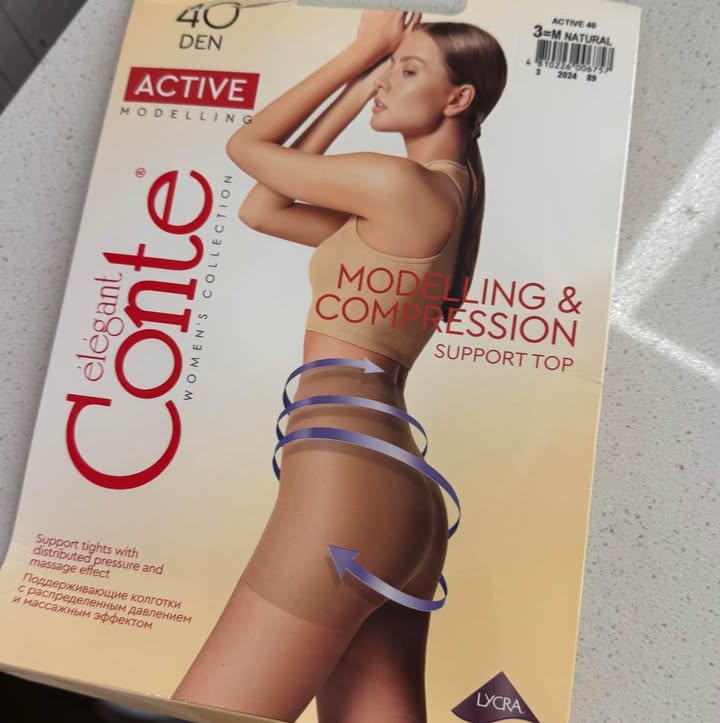
The last thing you expect to find in a package of women’s tights is a salad recipe. With mozzarella and avocado, no less.

So, I delved into a new topic for me and uncovered quite a lot.

For instance, it turns out that lycra is not the name of the fabric, as I always thought, but a brand name for the fabric known as spandex, which I would have guessed was the brand name. And by the way, spandex is officially an anagram of the word expands. In Europe, spandex is also known as elastane. There is a brand of elastane called Elaspan belonging to The Lycra Company. All in all, it’s complicated.

By the way, this spandex was invented by Joseph Shivers, just two hours away from me, in Waynesboro, VA.

In the USA, tights are extremely unpopular. Moreover, if they are worn, they tend to be black and nearly opaque. It’s almost impossible to find nude and sheer ones (at least around here). You can buy anything on Amazon, but you’ll never find them in stores. Apparently no one is interested in salad recipes. However, leggings have conquered the market. Especially lululemon. Meanwhile, women’s high-heeled shoes and tight mini-dresses are also extremely unpopular and are only worn about three times a year. For example, by schoolgirls for Prom and Homecoming—but even then, without tights. Both the shoes and dresses are often of very poor quality, but they suffice for two or three times a year, after which new ones are simply bought.

That same day in New Orleans at the antique M.S. Rau I saw a thing, the name (darner) and appearance of which seemed very perplexing to me. I went to Google it, and searches for darner only show dragonflies. Turns out, a stocking darner is a tool for darning stockings. Specifically, this glass darner, looking like a ball on a handle, was being sold at M.S. Rau for $4400. Google shows mostly metal darners, looking like a hoop with brackets. In Soviet times, they were “mushrooms”.

There’s also a linguistic aspect. In English, tights are called both tights and pantyhose. Generally, pantyhose are considered to be thin (8-40), and tights—are thick (40+). In British English, the word “tights” covers the entire spectrum of tights, unlike in American English.

Interestingly, back in 1972, Australian lifeguards came up with the idea of wearing tights to protect against potentially fatal stings from box jellyfish (sea wasps). Funny, but it’s supposed to help.

All in all, at 47, I’m discovering new horizons, and I hope you found this interesting too.

Upgrading to Kukirin G2 Max: A New Chapter in Electric Mobility | December 19 2024, 17:49

Updated the electric ride. Now, the old (dead) ecoreco l5+ will head to the dump, and the new kukirin G2 Max will take its place. 1000W, claims a range of 80 km on a single charge, but realistically, if it gets 30-35km with my weight, that would already be very good. People on Reddit write 20% battery for every 10km. Rides swiftly, can accelerate up to 55km/h, but again, weight, terrain, slope, and a sense of self-preservation matter. By the way, it handles grass and other irregularities quite well. The previous one couldn’t at all.