Exploring Brilliant Mechanisms with Alec Watson: A Must-Watch Video | October 27 2024, 20:49

If you enjoy brilliant mechanisms, then this video is for you. I’m utterly fascinated by such things, so Alec Watson is a must-see for me. I’m also subscribed to the Russian translations, and today it just popped up again, reminded me. The original video is about five years old. Here I’m posting the Russian translation, but really you should watch it on @technologyconnections

https://www.youtube.com/watch?v=zeWGsZGABDE

The Bitter Lesson: ABBYY’s Decline and the Shift in Computational Linguistics | October 27 2024, 12:43

Very interesting material about the decline of ABBYY and the crisis in computer linguistics, how AI is taking over ABBYY’s business and what Compreno is and why it didn’t take off as expected.

https://sysblok.ru/blog/gorkij-urok-abbyy-kak-lingvisty-proigrali-poslednjuju-bitvu-za-nlp/

Enhancing “Lolita”: Automated Annotations for Easier Reading | October 27 2024, 03:40

After reading the first few dozen pages, I almost considered giving up on “Lolita” because I had to consult the dictionary way too often. Well, additionally, there was studying various sentence structures and references, but that’s actually interesting, although it does slow down the reading.

Then I thought, well, am I not a programmer or what. So together with ChatGPT, we created automated annotations. First off, it’s worth mentioning that “Lolita” has an annotated version with 200 pages and an extensive introduction of 100 pages. These annotations cover many topics, but they rarely clarify obscure words, assuming the reader is educated enough to understand that conspicuousness (/kənˈspɪkjuːəsnɪs/) means noticeability, thingamabob is a thingamajig, and callipygian means the same as callipygous, translating to “having perfect buttock form”. For instance, at the very start of the book, “My father was a gentle, easy-going person, a salad of racial genes: a Swiss citizen, of mixed French and Austrian descent with a dash of the Danube” — I wondered what this Danube was, and it turns out to be the river, Dunai in Russian, which in my version now appears in grey brackets after Danube.

Ultimately, in addition to the existing annotations, my script also adds translations into Russian in italic brackets, and it also includes some opinions on individual phrases and references — for this, after a sentence, something is added in brackets, which you need to click on.

With such enhancements, reading becomes much easier. And more interesting too

Exploring the “Solnyshko”: A Glimpse into Unorthodox Soviet Physiotherapy Practices | October 20 2024, 20:20

I just came across a device called “Solnyshko” that is still in use and available for sale in Russia. It commonly appears in memes about the first children’s hookah. A while back, I read about Soviet physiotherapy, which essentially differed from Western practices in that it involved testing all sorts of wild ideas on people without the usual processes required for legitimate medical devices.

So, what exactly is this “Solnyshko”? You can Google it by “OUFnu (UHN-1)”. Inside, there’s a DRT 240 lamp – a high-pressure mercury arc tube lamp used in sterilizers. The 240 in the name stands for 240 nm, which refers to the harsh UV radiation (100-280 nm). The device directs UV-C radiation towards the mucous membrane inside the mouth. The mucous membrane (excluding the eyes), as known, is not protected from UV rays (unlike skin and eyes), and here it is exposed to intense UV-C radiation, which, under normal circumstances without ozone holes, doesn’t even reach the Earth’s surface. Essentially, “treatment” is achieved by burning off the mucous membrane along with bacteria and viruses. Sterilizer radiation simply kills cells and, like any UV-C exposure, is proven to promote the development of cancer.

How did we ever survive all this in childhood 🙂 I just googled and it turns out that the arsenal of children’s health resorts also included UHF-therapy (ultra-high frequency electromagnetic fields), VLOK (intravascular laser blood irradiation), and electrophoresis (this is a type of drug delivery in a non-invasive way — without needles! — directly to the exact spot where it hurts, though it doesn’t work at all, but at least it doesn’t cause harm).

It’s madness overall, and if you search for the Solnyshko irradiator, for instance, you’ll find it in hundreds of places.

Technological Revolutions: From Textiles to AI and Their Unintended Consequences | October 19 2024, 02:49

Regarding the issue of “AI taking people’s jobs. I read about an interesting example in a book where the invention of a machine that was supposed to greatly simplify people’s work ultimately led to worsening working and living conditions for laborers (and, incidentally, the British occupation of Egypt). It’s about Whitney’s machine, which simplified cotton processing.

Before the invention of the loom, fabric was worth its weight in gold. Literally, a gram of silk cost almost as much as a gram of gold. Stories about crime in the 18th and 19th centuries are almost always about how criminals were put in jail or sent to Australia for stealing a handkerchief, a bundle of lace, or some other seemingly trivial item, but in reality, these were often items of enormous value. A pair of silk stockings could cost 5 pounds, and a bundle of lace could be sold for 20 pounds — enough to live on for a couple of years, and a very serious loss for any shop owner. A silk cloak cost 50 pounds sterling, which was unaffordable for anyone but the highest nobility.

John Kay, a young man from Lancashire, invented the mechanical (flying) shuttle — one of the first revolutionary inventions necessary for the development of the textile industry. Kay’s mobile shuttle doubled the speed of weaving work. Spinners, who were already struggling to keep up with weavers, fell even further behind, and problems began to arise across the entire supply chain, creating huge economic difficulties for all participants in the process.

In 1764, an illiterate weaver from Lancashire named James Hargreaves invented an amazingly simple device known as the “spinning jenny, which used multiple spindles to do the work of ten spinners.

Before this invention, home craftsmen spun 500,000 pounds of cotton by hand each year in England. By 1785, thanks to Hargreaves’ machine and its improved versions, this number had jumped to 16 million pounds.

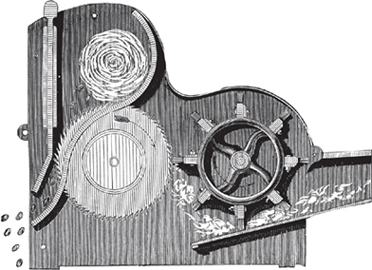
In England. In the USA, there was a different problem. In the American South, the only type that grew well was short-staple cotton. But it was not profitable to harvest because each boll contained sticky seeds – three pounds of seeds for every pound of fiber, and they had to be picked out by hand. This was so labor-intensive that even using slave labor didn’t pay off. By hand, one worker could only clean about 1 pound (0.45 kg) of cotton per day. Eli Whitney solved the problem by inventing a simple rotating drum, which used nails to grasp the fiber, leaving the seeds behind. He called his machine a “gin” (from engine). Whitney’s machine allowed one person to clean up to 50 pounds (about 22.7 kg) of cotton per day. That is, 50 times more. In effect, it replaced 50 people with one.

At that point, slavery existed in six states in the US; by the time of the Civil War, it had spread to 15.

Why? It turned out that instead of reducing the need for labor, Whitney’s machine increased it: because cleaning was no longer the bottleneck of production, more workers were needed for planting, harvesting, and processing the increasing crop. The US became the main global supplier of cotton, which made the textile industry in Europe (especially Britain) dependent on American raw materials. This led to the growth of the slaveholding system in the southern states, and in England, increased the share of child labor in production (because they didn’t need to be paid, just fed, and children managed better).

Subsequently, when the Civil War in the US ended, cotton prices fell, leading Egypt (where high-quality long-staple cotton was grown and sold to England) into an economic crisis and a rise in foreign debts. Eventually, this was one of the reasons for the British occupation of Egypt in 1882.

Returning to the topic of AI. The job market adapts, but sometimes slowly and with losses. In the long run, new jobs will appear, but the transition period might be accompanied by mass unemployment and social upheavals.

Indeed, there is still no such thing as true artificial intelligence. AI will become real AI when it understands and utilizes knowledge about the structure of the world, not just projections of this knowledge. Take image generation—it uses “projections—a database of annotated photo and video materials. It does not use knowledge about anatomy and the structure of the world. The same is true in GenAI—projections are everywhere, not pure knowledge. It seems that the current breakthroughs in GenAI are unsuitable for storing, accumulating, and using “pure knowledge.

Also, we need not just a system that can correctly answer our trivial questions. We need a system capable of posing the right non-trivial questions. Large language models (LLM) by their nature are not capable of this.

Nevertheless, the stories of the inventions by Kay, Hargreaves, and Whitney do draw parallels.

Historical Curiosities: From Fashionable Mouches to Milk Sickness | October 17 2024, 00:53

Curiosities — four items on various topics: about face patches, wigs, an architect, and milk sickness.

First: I’m reading that in England, during the 16th to 18th centuries, it was fashionable to wear artificial beauty marks, known as mouches (French for ‘fly’). Eventually, these beauty marks took on shapes like stars or crescents, worn on the face, neck, and shoulders. It is written that one lady had a carriage and six horses galloping across her cheeks. At the height of this fashion, people wore a multitude of mouches, probably looking as if they were swarmed by flies.

Interestingly, both men and women wore mouches, and they were reckoned to reflect a person’s political leanings depending on which cheek they were worn – on the right (by the Whigs) or on the left (by the Tories). Similarly, a heart on the right cheek meant that a person was married, and on the left, that they were engaged. They became so complex and varied that they spawned an entire vocabulary: on the chin called silencieuse, on the nose – l’impudente or l’effrontée, in the middle of the forehead – majestueuse, and so on throughout the head. In the 1780s, artificial eyebrows made of mouse skin briefly became fashionable.

Thus, stylized stickers and acne patches in the shape of stars and hearts are a modern counterpart to this trend. We await the modern equivalent of mouse-skin eyebrows.

Illustration: “The Morning: The Woman at Her Toilet by Gilles-Edme Petit, c. 1745-1760. The text below – “these artificial spots add ‘vivacity’ to the eyes and face. However, placed poorly, they could mar beauty.”

Second: It turns out that there was a condition called Milk sickness in the USA. At the beginning of the 19th century, it claimed thousands of lives among settlers in the Midwest, especially around the Ohio River and its tributaries. The essence of it was that a seemingly healthy cow would start giving milk that could quickly “knock one off their feet” in the worst case, or just cause severe suffering from vomiting and pain if you were luckier. The culprit was a plant the cow ate, known as white snakeroot, but, of course, no one told it what was safe and what was not. Anna Pierce Hobbs Bixby is credited with figuring out the cause. She was told about it by a Shawnee woman she had befriended, after which Bixby conducted experiments to observe and document evidence.

Bonus curiosity about Benjamin Latrobe, the architect of the Capitol in our Washington. Finished college, tried building something in Europe, didn’t work out, his wife died, went bankrupt, the guy decided to drop everything and move to the States. Met Washington’s nephew and the rest is history. Seven years after moving, he was already building the Capitol, and before that, he designed several other important buildings today (Philadelphia Bank, original jail in Richmond, etc.). Basically, networking — it’s important, and it’s crucial in moments when things just aren’t going right to just take everything and change it.

About wigs, it’s even more interesting. From the mid-17th to the early 19th centuries, men wore wigs so massively that the fashion lasted a whole 150 years. Wigs were made of anything: human and horse hair, silk, goat wool, cotton thread, and even wire. They were very expensive — up to 50 sterling pounds each — and were considered such valuable property that they were bequeathed by inheritance. The bigger and heavier the wig, the higher the status of its owner — hence the expression ‘bigwig.’ Since wigs were often stolen, they were the first things robbers grabbed.

Wig maintenance was also a hassle. Once a week they were sent back for “rebaking” to re-curl the locks — this process was called fluxing. From the 1700s it became fashionable to sprinkle the wig with white flour daily (incidentally, “to sprinkle one’s head with ashes isn’t about this. It’s from the Bible, used as a symbol of repentance, mourning, and admission of guilt). When a wheat shortage hit France in the 1770s, it triggered massive riots — people were outraged that scarce flour was being used on aristocrats’ heads instead of bread. By the end of the 18th century, colored powders, especially blue and pink, became popular. The powdering process was a whole ceremony: they put on the wig, covered the shoulders with cloth, put the face in a paper funnel (so as not to suffocate), and a servant would spray powder on the head using bellows.

Some aristocrats took style to the next level: one prince hired four servants to simultaneously spray different colored powders, through which he dramatically walked. Lord Effingham kept a whole five French masters just to care for his hairstyle.

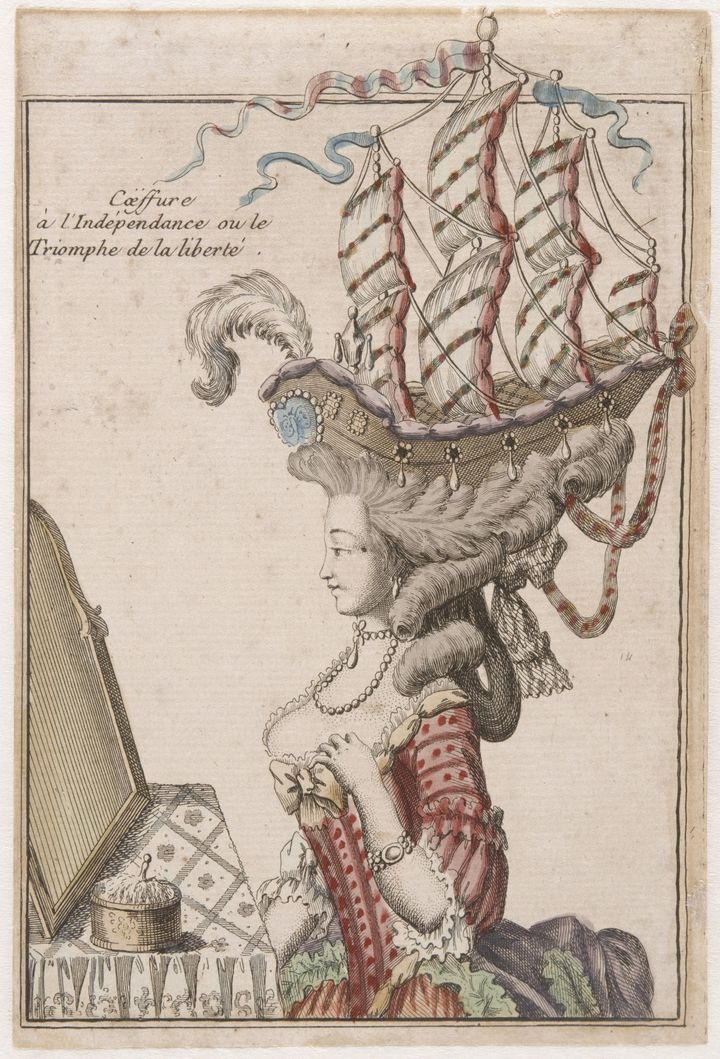
By the way, women’s hairstyles were not that simple either. They were built on a wire frame, and for volume, they added wool and horsehair. The height of some women’s hairstyles reached 75 centimeters, so that the ladies barely fit in carriages and sometimes had to ride sticking their heads out the window. There were even instances when hairstyles caught fire from chandeliers, sometimes ending tragically. Of course, the hairstyle wasn’t dismantled for months, maintaining its shape with paste, and to avoid disrupting the structure during sleep, they slept on special wooden supports. Notably, there were significant hygiene issues: the hair was teeming with insects, and one lady even lost a child after discovering a mouse nest in her hairstyle in the morning, having been deeply shocked.

But the fashion for wigs among men sharply ended at the beginning of the 19th century. So much so that desperate wigmakers petitioned King George III to make wearing wigs obligatory. But the king refused. Old wigs were then used as household rags. Today, wigs are still worn in British courts — they still wear horsehair wigs, costing about 600 pounds, which are customarily soaked in tea to give them an old-fashioned look — after all, a too-new wig might give away an inexperienced lawyer.

All this — for the sake of fashion!

The Boy and the Heron | October 14 2024, 18:15

We watched “The Boy and the Heron” by Hayao Miyazaki yesterday (original Japanese title: “How Do You Live?”). After viewing it, of course, I scoured the internet searching for answers to my questions.

Here I am, considering myself educated and well-rounded, yet some films and sometimes cartoons trigger an “I must be the dumbest person alive” complex.

It all started with Mulholland Drive. According to the reviews, everyone who watched it seemed to grasp the depth of the director’s vision, except maybe for some details, but I remember watching it and barely understanding anything. Then, of course, after reading various reviews and discussions on the subject, I watched it a second, and then a third and a fourth time. Now, indeed, a lot of it makes sense, but it feels like cheating. I couldn’t figure it out on my own. Well, that’s Lynch for you; his works are always like that.

Sometimes it seems that a director just shoots whatever, and then someone in the reviews starts connecting the plot dots, which picks up, deepens, and becomes rationalized, and suddenly there’s meaning even where there was none by design. This is partly why directors dislike discussing the “what did the author want to say” topic. What I wanted to say, I’ve said; the rest is up to you.

Or take something like “Barbie.” I watched it and saw nothing noteworthy, but then you start reading, and it turns out it’s a work of art where everything is interconnected. Or “Asteroid City” by Wes Anderson. If I’m honest, I didn’t even finish watching it.

And now there’s “The Boy and the Heron.” It’s brilliantly made from every perspective. But the depth and complexity of the meanings really raise the bar high for viewers who want to fully understand the film.

I categorize such works as “stop thinking and just watch how awesomely it’s made; maybe you’ll get it later.” With Mulholland Drive, it worked, and it did with Lars von Trier’s “Melancholia” as well. This approach even worked for me with the recent “Deadpool and Wolverine,” where I clearly lacked the context to grasp the director’s vision, but in the moment, everything was beautiful and captivating, boom boom bam. But, damn, a bunch of people around me see much more than I did. And it’s comics! A product for the masses. Am I dumbing down?

It’s great, of course, that films are made in such a way that each audience finds something commensurate with their education, exposure, understanding of the context, etc. When a film’s structure is nonlinear, full of visual metaphors, where symbolism is more important than the plot and can be interpreted in different ways, when a film rather provokes the viewer to feel and interpret what’s seen than to follow a clear narrative — this all requires from the viewer a rather high level, I don’t know, of IQ or thoughtfulness. How such films collect big box office and ratings when most people going to cinemas are somewhat obtuse, and I often classify myself in this category when I leave another “complex” movie.

You know what it’s like? It’s like someone who grew up on rock, bards, and chanson goes to a Wagner opera, something from “The Ring of the Nibelung” or “The Master-Singers of Nuremberg,” and then finds everyone around is amazed, while despite trying hard, he understood little.

So, if I am not the only one, give a thumbs up 🙂

Amtrak’s Car-on-Train Travel to Miami: Cost and Process | October 13 2024, 12:28

Some time ago, Amtrak came up with an interesting business model — travel by train with your car — and now it’s being advertised to me on Facebook. Clearly, it’s for those who, for some reason, find it important to drive around Miami in their own car, but don’t want to make the fifteen-hour drive themselves.

So, there’s a special station where you arrive, hand over your keys, and head to boarding. Your car is loaded into a special wagon, and in Florida, both you and your car are unloaded, and you drive to your hotel on your own wheels.

For a standard-sized car, they charge over $500, plus the train ticket itself, which can cost anywhere from $100 to $280 depending on when and how far in advance you buy the ticket. A motorcycle costs $310.

The Surprising Origins of the Word “Crap” | October 12 2024, 13:41

Here is the translated text with the style and HTML markup preserved:

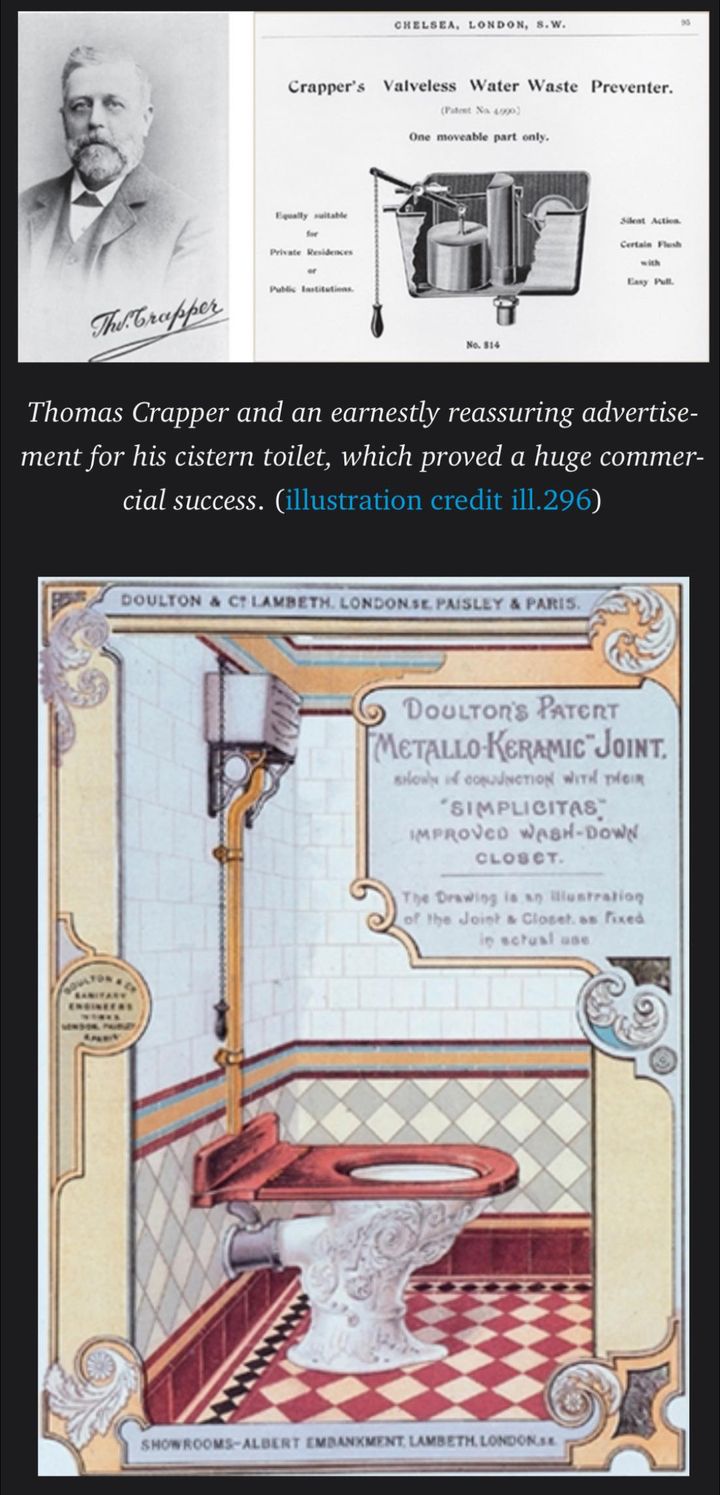
Interestingly, the first properly functioning toilet flush device was invented by a dude named Crapper. Moreover, the meaning of the word crap is actually due to the fact that every tank was branded T. Crapper & Co. Sanitary Engineers. Joseph-Ignace Guillotin, Rudolf Diesel, Étienne de Silhouette, Louis Pasteur, Pierre de Coubertin, and others are quietly envious.

Evolution of Personal Tech: A Nostalgic Journey Through Mobile Phones and PDAs | October 12 2024, 01:49

Do you remember your first mobile phones and PDAs? I wasn’t exactly making a lot of money, but somehow I managed to buy them.

My first was a Philips Aeon. 1999. Beeline, DAMPS. This little brick was eating up twenty-five cents per minute of talk. I was spending around 600 rubles a month, earning 1200 at the time. It had a green glowing screen. For lacking a mobile communication license, I ended up in a cell with prostitutes one night, arrested by the cops. This happened on my way to the store for some food from the office where I was overnighting, as it was farther to go home. I wasn’t released until I paid 100 rubles.

After that came the Motorola CD930. Heavy and indestructible.

Next was the metallic Benefon Q. Stylish, beautiful, golden. It even had a browser 🙂 WAP.

Then there was the LG 600 flip phone. With two screens, one on the lid and another inside. It had a great Korean joke — 70 characters in the address book for a number, and 10, I think, for a name.

Then came the chic Siemens S65. This one had a color screen.

After that was the wonderful Sony Ericsson K790i. It was the most comfortable phone as a phone. If only the buttons weren’t so close together.

Then came the era of touchscreens. I got a Glofiish X500+ (E-Ten). This was already a PDA with a stylus and GPS on Windows CE. And it had GPS!

Among PDAs, I had two Toshibas – e310 and e740. The latter could connect to the Internet via WiFi.

And before all that was a Casio Cassiopeia A-20. It was a precursor to laptops. It had Excel installed.

Among Android devices, I had the Samsung Galaxy Note II. There was also a Samsung Note 4.. With a fingerprint scanner, and the resolution back then was impressive. In 2015

Among tablets, there was the Samsung Galaxy Note 10.1, then iPads.

Then began the era of iPhones. I missed the first iPhone, the second – 3GS I drowned in tea. Then I bought an iPhone4.

Well, then came more iPhones. It’s boring to list them all. Probably updated every generation, now iPhone 15 Pro Max.

And before mobile communications, I spent a couple of years with a Midland Alan 42 radio station. It could be used as a phone. You had to call a special lady on 27MHz who would “connect” you to a telephone subscriber. I mean, she dialed the number and held the radio station to the phone. And vice versa. If they called her, she would shout to reach me. I paid monthly for this service.

And around that time, I also had a Motorola pager.

Cameras… Among digital ones there was a Canon PowerShot Pro 70, Sony Cyber-shot DSC F505, for a compact camera Canon PowerShot SD630, then Canon 40d, and I’m still using a Canon 6d