Got access to OpenAI Search. Something is disappointing—why are the sources in Russian? Yes, I asked in Russian, but what does that have to do with the choice of sources? If you ask in English, everything is fine.
By the way, Google responds to such a query immediately with “I can’t help with responses on elections and political figures right now.”
Perplexity has a much cooler UI for now. Attaching screenshots
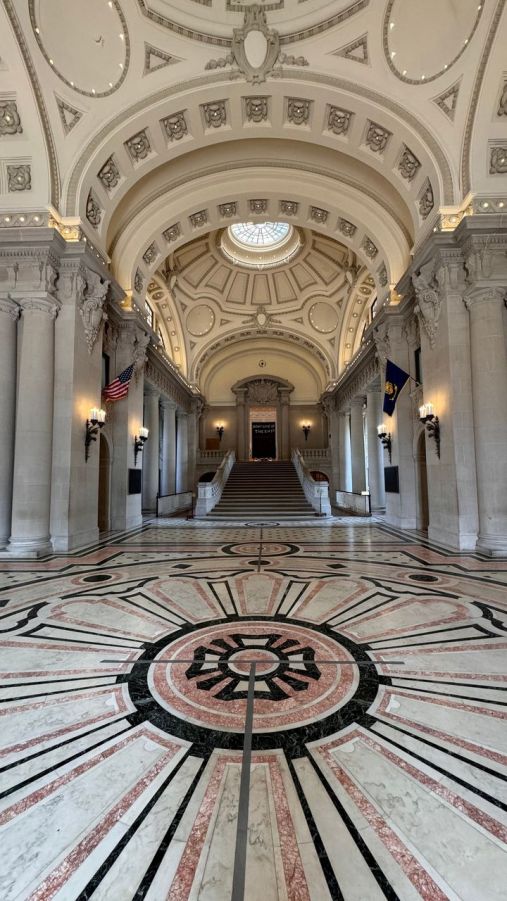
Last weekend we drove to Annapolis, which is about a 1.5-hour drive from our house. There you’ll find the Naval Academy – the U.S. Naval Academy (USNA). They train officers for the Marine Corps and officers for the U.S. Navy there.
Anyone with an ID is allowed on the grounds. They don’t photograph your documents or log them anywhere, but the area is certainly equipped with high-resolution cameras, so there’s no need for such measures. The territory includes educational buildings, dormitories, sports facilities, administrative buildings, historical monuments, and memorials. You can enter almost anywhere, and on Sundays in the summer, it’s almost deserted. You can wander around the floors of the educational buildings, see theses with formulas on the walls, almost all classrooms are open. No doubt the vigilant security is monitoring curious visitors through cameras, but still, the openness is quite striking. In total, we met at most a dozen other tourists, and this on a 137-hectare site. I don’t know whether few people know about it or everyone has already visited.
On one of the floors, for example, I found a pool for testing underwater robots. This pool, equipped with 40 surface and underwater motion capture cameras (Qualisys Oqus 7+), can pinpoint the position of the tested object 300 times a second. And there are many such laboratories there, I didn’t photograph everything (don’t know why). For instance, I discovered a planetarium in one of the rooms. A regular classroom door, and inside there’s a dome ceiling and a retractable robotic “head”.
In the courtyard, there was something happening that I jokingly called “yoga for sailors.” It was also worth recording, but somehow felt awkward to do so. On the field, a group of cadets in branded white sport suits sat in a precise grid, each with a bag and water beside them — all uniform, logos of the academy visible. The leader was shouting through a megaphone “two, three, four,” and after each count, the cadets responded “two sir! three sir! four sir!” and on each count, they synchronously did something, like jumping, or some kind of stretching. On the side stood three people with limited mobility, someone on crutches, someone in a cast, participating as best as they could.
And it’s still the summer, the campus is half-empty. Apparently, some kind of preparation for the main academic year.
The academy is waterfront, and understandably, there are many yachts around, including training ones. Sea wolves in training, so practice is essential.
Everything on the campus is impeccable. Despite the academy being state-run, every detail screams “this is a prestigious place where no expense is spared.” It’s interesting that getting into the USNA is not so straightforward.
Admission to the USNA is a complex and multi-layered process, involving several stages. Candidates must secure a nomination from a member of the U.S. Congress, the vice president, or the president. This stage involves writing essays, interviews, and extensive preparation. In addition to the standard application, it is necessary to provide SAT or ACT scores, academic grades, and recommendations. Additionally, candidates must pass a physical test (Candidate Fitness Assessment), which includes running, push-ups, pull-ups, and other exercises, plus a medical examination. In general, it’s a tough process that also involves members of the United States Congress. Fascinating.
I’m thinking of creating a next-generation palette. Somehow, these aren’t available for sale.
Here’s the issue. If you leave oil paints out in the air, by the next day they start to dry out, and after a few days, you have to throw them away. If it’s a thin layer, it dries up significantly; if squeezed out from a tube, a crust forms and you still end up throwing it away after a few days because mixing the crust with the normal paint inside is subpar.
To preserve them, there are special tubes where you can scrape off the paint and put it in the freezer. It’s tedious, I don’t do that. But there are special palettes with airtight lids. I believe only Masterson makes them, and I have one such palette. But even then, the paint dries out because there is a lot of space under the lid, and that’s enough. So essentially, if you take a break for a week — you might as well clean the entire palette and squeeze out new paint.
Well, the paint isn’t cheap either. One large tube of a single color costs about $25, and I have about 25 tubes of different colors. True, they’ve lasted me a year already, and they’re still going because I don’t apply them thickly with a palette knife. Obviously, the white paint runs out faster.
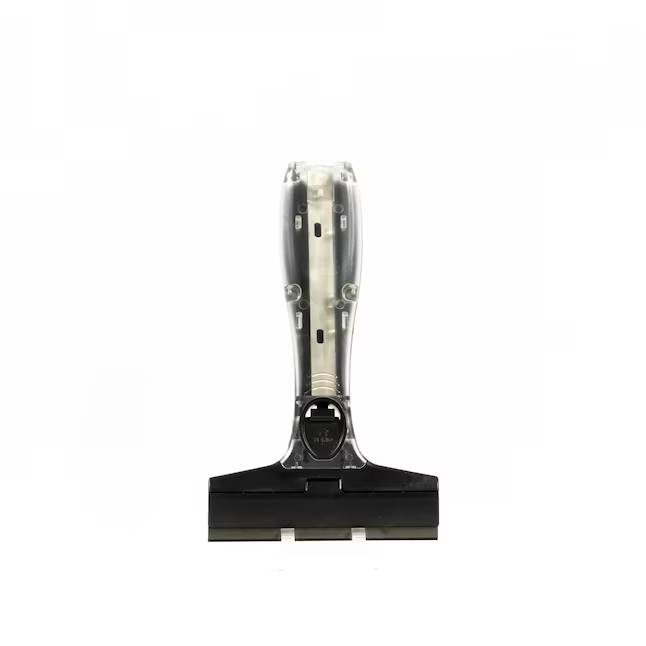
Additionally, the palette from Masterson is sold as just an empty plastic box, which is difficult to clean from dried paint. Any scraper would scratch the plastic. I insert a piece of glass in it, and under the glass, a sheet of gray paper. One piece of the right size glass sells for $36, but you could buy a picture frame and use the glass from it — which ends up three times cheaper. A scraper for glass works great – it cleanly removes even the most dried-up paint. It’s sold in hardware stores — practically eternal. And you need gray paper under the glass, which is sold everywhere.
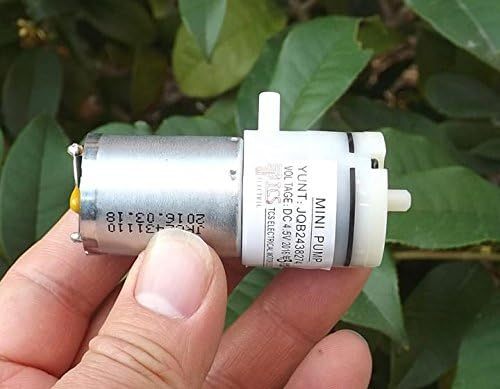
But back to drying. Here’s what I think – what if we could integrate a pump in the lid that sucks out the air? You press a button — and the air is evacuated, the lid presses even tighter, and it seems like then the paints could stay fresh practically forever.
An artist almost buys a palette once in a lifetime. What’s gonna break there, anyway? At least now there would be something to… no, but seriously, paying an extra $20-30 for such a “feature” wouldn’t be a problem at all. They could even sell the glass, scraper, and gray paper as a kit, so you wouldn’t have to buy all this separately, and in different stores.
Sometimes, in museums, you can find some very interesting exhibits. Here’s one lying on the floor at the Schwarzenberský palác museum in Prague. I snapped a photo right away, and did a bit of research upon returning home.
This device is a product of Soundlazer, a company that launched on Kickstarter back in 2012 by Richard Haberkern. The device is a speaker that focuses an audio “beam” in a special way. As you can see in the picture, it consists of an array of tiny speakers, each of which is ultrasonic, meaning they emit sound beyond the audio spectrum audible to us. These ultrasonic waves interfere with each other, and as a result, we hear sound within the audible spectrum. Interestingly, you can create this interference at a certain spot in space, so that only there will the input to this device be clearly audible. In practice, this means you hear sound only in specific spots in a room where the device is directed. And if you reflect the sound off the walls… it can well be used to effectively voice hauntings, because the sound seems to come “out of nowhere” 🙂 Or in a museum, it could make a guide that speaks about a sculpture only to a person standing in front of it, while someone only a meter away hears almost nothing. I haven’t tested, but I suspect there must be some high-frequency whistling sound. Does anyone know?
It’s particularly intriguing that such a device can be assembled at home for just a few tens of dollars. It’s really very simple in its minimal form. However, if you think about buying it – I have disappointing news: Soundlazer has long been closed, and a company called Audio Spotlight by Holosonics sells their devices at very high prices, starting at $500. Devices from Ultrasonic-Audio are also quite expensive. VideoTel’s HSS 3000 speakers cost $1275. There are also good solutions from Brown Innovations. But all these are very costly.
Soundlazer was cheap and, interestingly, open source. Although, as we see in the picture, it also used cheap piezoelectric elements to generate sound at frequencies of 40-45 kHz, which probably compromised the sound quality. But it should have been suitable for museums! And interestingly, there is no direct replacement. The cost of a Soundlazer kit ranged from $170 to $200! According to videos, the sound quality was pretty good.
Some quick thoughts after visiting Reykjavik, Europe, Czech Republic, and Germany.
Reykjavik is very stylish and expensive. Very stylish. Very tasty food. But expensive. For instance, a round trip from the airport to the capital and back cannot cost less than 52 bucks per person, and a taxi or a rental car starts to become cheaper than the bus only if there are four of you.
In Czech Republic and Germany:
Very tasty. Everything. From desserts to breakfasts and dinners. Even in small diners and even in the old town with tourists (one exception – we foolishly had breakfast at the main square in Prague. It was not tasty). I was in Dresden’s McDonalds, and it was delicious there too!
About tasty food: In the USA, it’s only tasty occasionally, and you need to know the places above a “three” on a five-point scale. In Europe, you need to know the places above a “four”. Places below a “four” are harder to find, especially when it comes to desserts… Mmm…
The mirror on the car was surprising. After the USA, the left mirror really “strains the eyes”. Whether it’s flat in the EU and convex in the US, or the other way around, but it’s really uncomfortable, the brain is accustomed to something else.
I was surprised by the Toyota Yaris hybrid, which over three days of driving from Prague to Dresden and back through villages used up only half a tank. 4l/100 km. In the USA, my car used at least twice as much. Hybrid turned out to be convenient, but it’s still weird that when you start the car, it makes no sound. At first, my reaction was “damn, the battery’s dead,” whenever that happened (every time).
It was surprising that in Prague, a large number of people, mainly the service staff, speak Russian or Ukrainian. We were understood at the reception desk, by waiters in cafes, by taxi drivers, in stores. Even now at the boarding gate at the airport. And at check-in. Literally everywhere. Familiar words can be heard in the crowd almost every minute. At the bus station, half of the 15 windows were decorated with names of Ukrainian cities. High demand.
And of course, I really missed fountains and free restrooms. You get used to quickly finding these in the US. Of course, it’s understandable why, and you should probably compare Prague to NY, where things are probably not that great either.
Crowds in the center of Prague. I came from my small town where there are neither traffic jams nor parking issues.
Prague seemed like a city where the authorities have allowed almost anything that brings money to the economy. All these stores with green leaves, beer to go, small businesses every meter.
Today, there were reports about a visit to the sun-great by the sun-great, and there were banners with text on the streets.
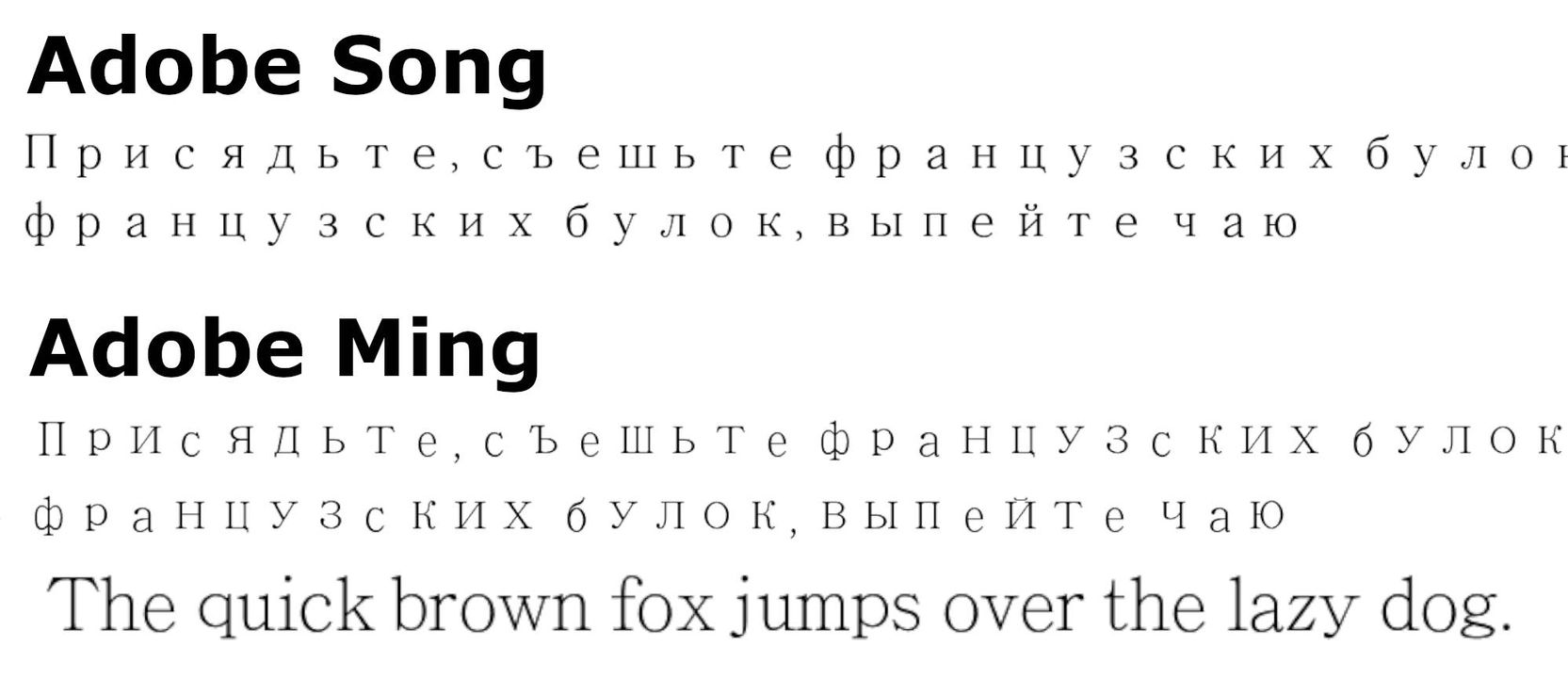
And it made me think, why do the Chinese love to write everything in Cyrillic with this idiotic font, and where did it even come from? There are so many fonts nowadays.
It turns out that Adobe and Microsoft are to blame. They included very poorly drawn fonts in their packages. And since the Chinese characters are of very good quality, the font is used everywhere, but the Cyrillic and even the Latin are just there for show. The main culprits are three – Adobe Ming Std L, Adobe Myungjo Std M (also called Adobe Ming), Adobe Song Std L. The most “eye-straining” one is Adobe Ming. With Latin, it’s more or less okay, but it seems that the Cyrillic was drawn by the Chinese themselves at the dawn of computer fonts, and it has not changed since then.
Got a Canon 1:1.8 50mm lens for $33 (it’s brand-new/rf costs about $125-150, this one was sold “as is,” so no big loss if it doesn’t work, but it seems to be working so far)
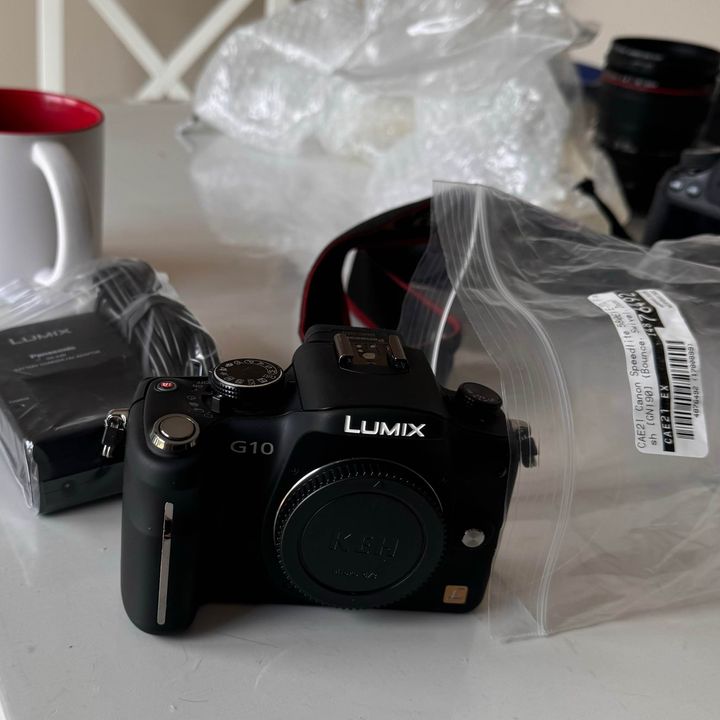
I also ordered a Speedlight 580EX II for $43. It’s around $150 on FB Marketplace.
Received the flash.
Here it is.
Trying to figure out how to fit it into my Canon 6D
Today I learned about “sacrificial anodes” used for corrosion protection. This mechanism, called “cathodic protection,” safeguards the ship’s hull from rusting. It works by establishing an electrical current between two different metals, either via a conductor or directly, because electrons are held with varying strengths in different metals. Thus, electrons physically transfer from one metal to another. Incidentally, this is roughly the same principle on which batteries operate. So, special little bars, usually made of zinc, are attached to the ship’s hull, causing an electron flow from the zinc, effectively turning the entire ship into a huge battery. As a result, it’s not the hull that corrodes but the material of these bars. That’s why they’re called sacrificial anodes.
How does corrosion work anyway? It’s a redox reaction that occurs in two stages. First, the metal is oxidized, meaning its atoms lose electrons and become positively charged ions. Then comes the reduction: they bond with OH ions, which are abundantly found in water, resulting in rust. This is, of course, a simplified explanation.
The main point is that both these processes occur on the same area on the surface of the metal. Cathodic protection, however, spatially separates them. On the sacrificial anode, oxidation strictly occurs as electrons leave zinc atoms, while iron acts as the cathode where the surplus electrons are reduced. The ions from the water are reduced, but the iron atoms remain untouched—which is exactly the intended goal. The anode degrades over time, but it can always be replaced. As long as it’s present, no rust will form.
It’s truly impressive how these small bars can save such a massive machine by sacrificing themselves.
By the way, the cathodic protection system is also used, for example, in the Burj Khalifa in Dubai. There’s a titanium grid underground with pulsed current supplied to it. If this generator is shut down, they say the building won’t last long. Burj Khalifa is located in an area with high humidity and air salinity due to its proximity to the Persian Gulf, and generally, building skyscrapers there seems like a strange idea. But with such engineering ingenuity, it’s feasible.
The hull’s bottom is often painted (or was painted) red. It turns out that without this, the bottom of the ship would quickly become covered with sea organisms such as algae and shells (these are known as foulers). Historically, red paint was used in anti-fouling paints, containing copper oxide, red lead, and other components. Copper (Cu) and its compounds (copper oxide (CuO) and copper sulfate (CuSO4)) are toxic to many marine organisms. Copper ions (Cu²⁺), released from the coating, interfere with the metabolic processes of marine organisms, disrupting their ability to attach and grow. In addition, a protective oxide film forms on the surface of the copper, which prevents further oxidation. Nowadays, chemistry has advanced, and the color of the protective layer can be any color, but historically, red has been used. And the shells have already adapted.



























 Hi, I'm Rauf Aliev.