
Finally found a tea shop! And a bit of a bookstore too. Stocked up a little to try out.


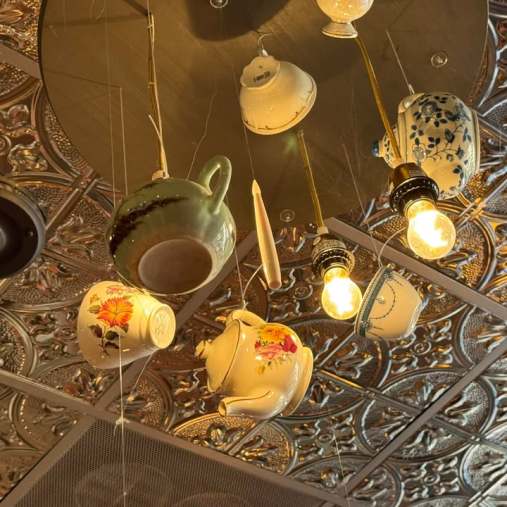
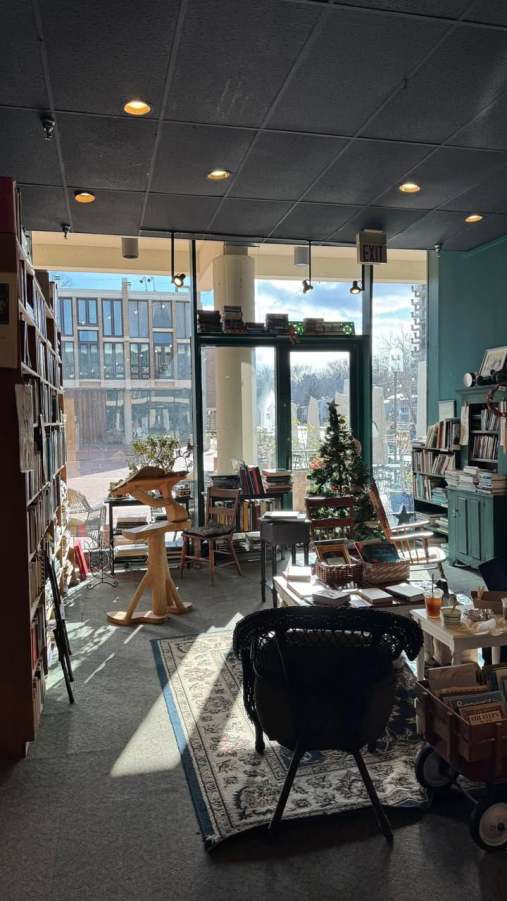
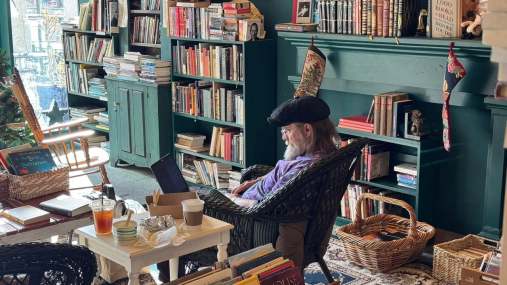

Finally found a tea shop! And a bit of a bookstore too. Stocked up a little to try out.
There is a wide variety of teas at our Wegmans. Here in the photo are all the teas from left to right. But, there’s not a single loose leaf tea. Only various teas for weight loss, in bags, some grains in jars labeled tea. However, a tea ball is sold in the same section — for brewing loose leaf in a cup, and I bought one. But you have to specifically look for loose leaf tea. It’s not popular in the USA.

I’m exchanging tickets for The Nutcracker over the phone.
– What is your card number?
– Five quadrillion three hundred seventy-three trillion six hundred sixty billion two hundred sixty-three million three hundred thirty-four thousand eight hundred seventy.
– Expiration date?
– October twenty-eighth. That’s basically half of October.
– Done!
Turns out, you can exchange the tickets, and now we are not going to the ballet on Sunday, but on Saturday.
Remember how I mentioned needing to digitize old tapes brought from Russia? A solution was found. Maybe it will be useful to someone, so here’s the story.
First off, it turns out you can digitize tapes for free by just visiting the local Leesburg library. They have a bunch of equipment available for free use, from engravers to 3D printers; you only pay for consumables. There are no consumables needed for tape transfer, so it’s completely free.
However, it turned out that this doesn’t work with tapes from Russia. Because in Europe it’s PAL/SECAM, and the equipment in the USA is NTSC. So, they just aren’t compatible.
Friends let me know that they have a PAL/SECAM standard VHS player and video capture equipment with HDMI. Hurray! That solved half the problem—I managed to digitize all the “big” tapes. But there were still MINIDV tapes. Technically, MINIDV is a digital format, and ostensibly PAL/SECAM/NTSC shouldn’t matter, but it turns out MINIDV cameras are still region-dependent and can only play tapes recorded in their native format.
Finding a PAL/SECAM camera in the USA was not easy, and shipping one from Europe was too pricey. So, I just went to Istanbul.
Of course, I didn’t go there just for the camera. But I did buy one. Istanbul’s market setup is very convenient. The whole city is like a market. If you need electronics, there are at least two places that sell only electronics, and there are places that sell only photo-video equipment, both new and used, and they also offer repairs. In one such place, there are three floors, each large, in another—six, but each smaller.
The lowest price for a MINIDV camera was 3,500 lira, which is roughly 100 dollars. Nobody is willing to drop even 10%. I found about 10 cameras in different places. Eventually, I managed to get a slightly flawed one (minor issue) for 2,000 lira—about 57 dollars. Samsung Duocam VP-D6550i PAL. It’s a model from 2004 (21 years ago!) with a cassette and SD cards. And it seems like all these cameras are new. I don’t know how that works—maybe the Turks have learned to restore old cameras to perfect condition, but more likely, the Chinese just never stopped making them.
As I write this post, the third tape is being copied. But it wasn’t all smooth sailing. The power supply, although it says 100-220V, does not work on 110 volts—it does not output the necessary 7.2V. I had to buy an additional camera battery charger for 10 dollars, which is universal at all markets.
For video capture, a combination of AVERMEDIA LiveGamer GC311 (thanks, Misha!) and a simple RCA to HDMI Converter is used. The AVERMEDIA software is very good—it works “like clockwork.”
The camera is quite remarkable for 2004. It has a separate lens for photos and—separately—a telescopic lens for video. There’s even a built-in flash. In short, the task is accomplished.

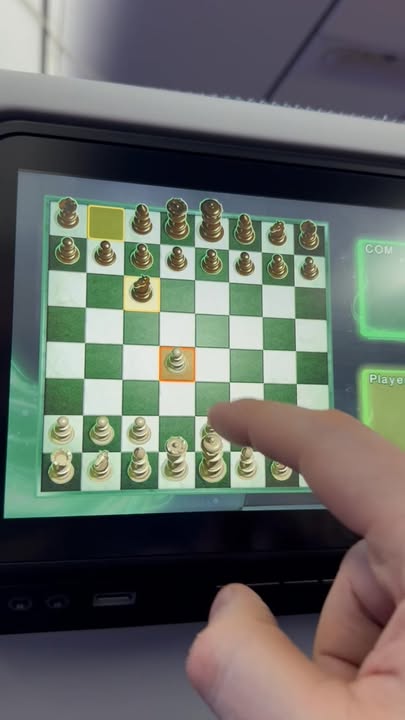
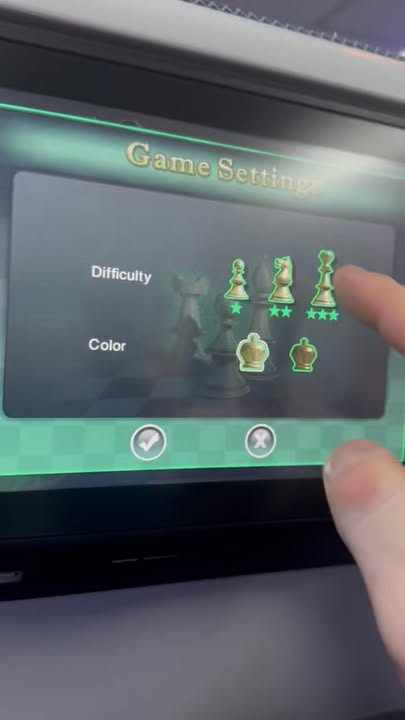
In the whole wide Boeing 777, chess on the second level is undoubtedly lost in 20 seconds, and on the third, each move is given a minimum of three seconds. Even the first one;) and then the time only increases.
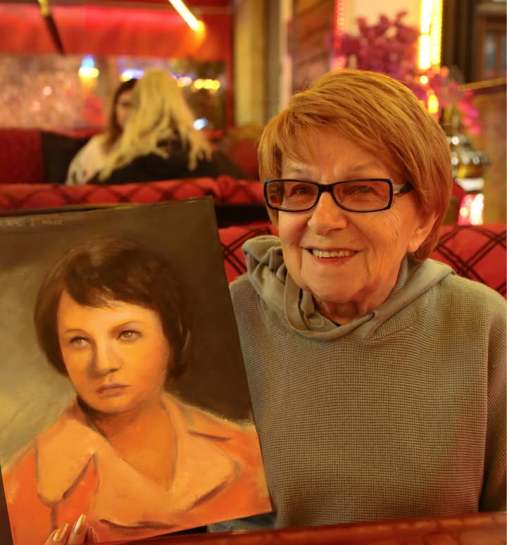
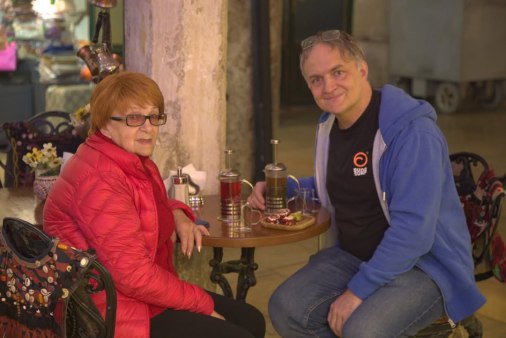
The one who covered 39 km in Istanbul in a single day is me. Met my mom for the first time since COVID. Very happy! And for her, it was even the first trip abroad.
Today’s my last day here, half of which I need to spend working. So I’ll jot down some impressions. I’m sure most of you have been here, but still, a refresher.
The first unusual thing — everyone smokes a lot. I haven’t seen so many people smoking cigarettes (especially girls and women) in ten years.
You can’t cross the road where there’s a fence. Although if a crowd does it, it’s okay. Trams and taxis assume a pedestrian would generally prefer to live, so it’s in their interest to leap aside in time. Taxi drivers seem to feel the dimensions of their car down to the millimeter. For comparison, when I cycle on a (narrow for us) road in the States, a queue forms behind me, even though there’s space for 2.5 cars in width beside me.
There are a lot of men everywhere. In my hotel, for instance, young guys do the room cleaning. In restaurants, it’s also mostly guys, both in service and cooking. On the streets, the male to female ratio looks about three to one.
The seagulls scream differently than I’m used to. Sometimes their cry resembles a human scream.
Oddly, people don’t play backgammon or chess on the streets here. I don’t know if it’s a Turkish characteristic or just the times.
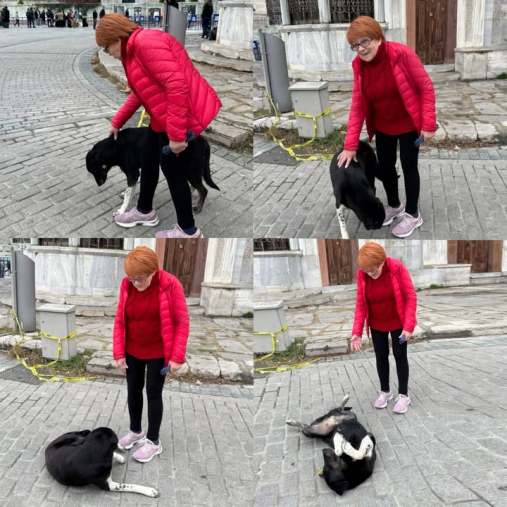
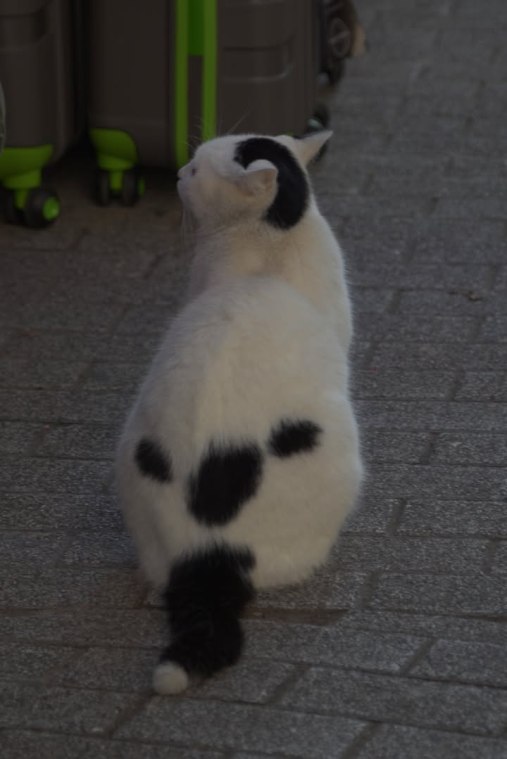
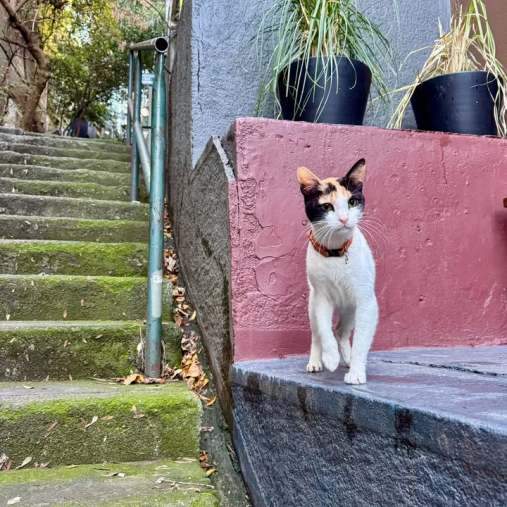
Everyone knows about the cats, but for some reason, during this visit, dogs caught my attention. I encountered three chow chows in just a few days – apparently, a popular breed here. But also, there are very cute strays. Mom didn’t miss a single one. They look clean, well-fed, and are very affectionate towards people and attention.
Almost no electric cars. Saw just one Tesla and one local “brew (Togg). In general, electric transport isn’t popular. There are very few private scooters and bicycles, probably just because for the overwhelming majority of working people here, they are seen as pointless luxury: you can buy a cheaper motorbike that travels faster and can even carry a load. And of course, hills play a part too.
Also, I noticed that in some languages, “Hello on the phone sounds exactly like it does in Russian, no accent at all. And Turkish is among them. Turns your head every time someone responds in ‘perfect Russian,’ and there’s a natural dark-haired, mustachioed Turk on the phone.
The water in glass bottles is very tasty, like HAYAT, for example.
It’s quite unusual to see so many cafés without people with laptops inside. They even talk to each other!






“Cameras in the bathrooms are for your safety”
It’s interesting, are these sensor-equipped bathrooms found only here or elsewhere as well? Do they accidentally display the stall number of someone who has been in there too long?

We attended Beethoven’s 4th concert (Jeremy Denk, Christopher Zimmerman) and Rachmaninoff’s “Symphonic Dances”. It opened with the premiere of a contemporary composer Quinn Mason’s “She Dreams of Flying. Honestly, out of the trio, only Beethoven truly resonated with me, followed by Rachmaninoff.
I had never heard Rachmaninoff’s “Dances” before—they had somehow passed me by. Yet I am well-acquainted with his Second and Third Concertos, I know his Vocalise, Rhapsody on a Theme of Paganini, and once even attempted to learn the Prelude in C-sharp minor (to no avail), and it was with these expectations that I attended the “Symphonic Dances”—a piece which Rachmaninoff himself considered his best. And somehow, it just didn’t click. The first part is beautiful, the second a bit more complex, but beyond that, it became less comprehensible to me. There are some allusions to religious motifs, and that’s where I completely lose track.
Quinn Mason appeared to me like something out of a museum of modern art—all the components of art in place, and clearly resonating with someone, but that someone is not me. Probably, it’s somewhere in the same corner as Schnittke with his experiments.
Beethoven’s 4th concert with Jeremy Denk at the piano was wonderful. There’s nothing to critique here. Especially the second part is superb.
https://www.youtube.com/watch?v=otJmf3pyb1E
For those who play the piano — there’s a very interesting channel by Mikhail Proshin. I’ve been subscribed to it for a long time and have watched it for a while. Just to illustrate, here’s the latest from it. It has a good thought, very applicable to my case.
He talks about the trap of professional musicians (I am not professional). They often perceive music “top-down”– as a finished product that must be reproduced. This results in them giving equal attention to both fundamental and minor elements, which can hinder development and prevent enjoyment of the process. Amateurs, lacking high technical skill, simplify compositions, accompany themselves, and focus attention on the basic structures of music. This allows them to quickly understand and internalize musical basics, such as chords and harmonies, and use this experience in other songs. A professional might learn 100 songs without truly understanding them, and quickly forget many — this is just my case. An amateur, by simplifying 100 songs, can extract fundamental knowledge and build their own style on this basis, experiencing 100 situations of success.
The idea is that playing “from the bottom up” is not just simplification, but a conscious process that helps better understand music and enjoy performing it. A very good thought, indeed.
I decided to see which of the world’s largest museums I have visited and which ones still await me. I was quite surprised to find the Moscow Multimedia Art Museum in third place for visitors, after the Louvre and the Russian Museum, and ahead of New York’s Metropolitan, the National Gallery in Washington, the Hermitage, the Vatican, and the Tretyakov Gallery. I have never been to this Multimedia Art Museum, although I lived in Moscow for 17 years. Is it really that cool? Has been or is?
I also realized that we need to go to Madrid and Tokyo, with 4 museums in each, all pretty decent. In terms of the number of important and large museums, Paris (10) and London (8) of course lead, with Moscow in third place.
[X] Louvre (Paris)
[X] Russian Museum (Saint Petersburg)
[!] Multimedia Art Museum (Moscow)
[X] Metropolitan Museum of Art (New York)
[X] National Gallery of Art (Washington)
[X] State Hermitage Museum (Saint Petersburg)
[!] Queen Sofia Arts Center (Madrid)
[X] Vatican Museums (Vatican (Rome))
[X] State Tretyakov Gallery (Moscow)
[X] National Museum of Modern Art (Paris)
[X] British Museum (London)
[!] National Museum of Korea (Seoul)
[!] Prado Museum (Madrid)
[X] Royal Castle (Warsaw)
[X] Museum of Modern Art New York (New York)
[X] Tate Modern (London)
[!] Tokyo Metropolitan Art Museum (Tokyo)
[X] Musée d’Orsay (Paris)
[X] Somerset House (London)
[X] Uffizi Gallery (Florence)
[!] National Museum of Modern and Contemporary Art (Seoul)
[!] National Art Center (Tokyo)
[!] Shanghai Museum (Shanghai)
[X] Victoria and Albert Museum (London)
[!] Museum of New Zealand Te Papa Tongarewa (Wellington)
[!] Museum of European and Mediterranean Civilizations (Marseille)
[!] National Gallery of Victoria (Melbourne)
[X] Pushkin State Museum of Fine Arts (Moscow)
[!] National Gallery of Singapore (Singapore)
[X] National Gallery London (London)
[!] Fondation Louis Vuitton (Paris)
[X] National Museum in Krakow (Krakow)
[!] Thyssen-Bornemisza Museum (Madrid)
[!] National Gallery of Scotland (Edinburgh)
[!] Gyeongju National Museum (Gyeongju)
[X] Rijksmuseum (Amsterdam)
[!] Los Angeles County Museum of Art (Los Angeles)
[!] Hong Kong Museum of Art (Hong Kong)
[!] Musée du quai Branly (Paris)
[!] National Museum Tokyo (Tokyo)
[!] West Bund Museum of Fine Arts (Shanghai)
[!] UCCA Center for Contemporary Art (Beijing)
[X] Kunsthistorisches Museum (Vienna)
[X] Moscow Kremlin (Moscow)
[!] Frederik Meijer Gardens & Sculpture Park (Grand Rapids)
[!] Acropolis Museum (Athens)
[X] Guggenheim Museum Bilbao (Bilbao)
[X] Tate Britain (London)
[!] Petit Palais (Paris)
[!] Humboldt Forum (Berlin)
[!] Paris Bourse de Commerce (Paris)
[!] Getty Center (Los Angeles)
[!] Gallery of Modern Art (Brisbane)
[X] Museum of Fine Arts Houston (Houston)
[!] Whitney Museum of American Art (New York)
[!] Tel Aviv Museum of Art (Tel Aviv)
[X] Museum of Fine Arts Boston (Boston)
[!] Royal Academy of Arts (London)
[!] National Gallery of Australia (Canberra)
[!] Pudong Art Museum (Shanghai)
[X] Academy Gallery (Florence)
[!] Art Gallery of South Australia (Adelaide)
[!] Milan Triennale (Milan)
[!] Crystal Bridges Museum of American Art (Bentonville)
[!] Philadelphia Museum of Art (Philadelphia)
[!] Art Gallery of New South Wales (Sydney)
[!] Fabergé Museum (Saint Petersburg)
[!] National Palace Museum (Taipei)
[!] Virginia Museum of Fine Arts (Richmond)
[!] Cleveland Museum of Art (Cleveland)
[X] Garage Museum of Contemporary Art (Moscow)
[!] ARoS (Aarhus)
[!] Nelson-Atkins Museum of Art (Kansas City)
[!] Egyptian Museum of Turin (Turin)
[X] de Young Museum (San Francisco)
[!] National Museum of African American History and Culture (Washington)
[!] Museum of Decorative Arts (Paris)
[!] CaixaForum Barcelona (Barcelona)
[!] Kunsthaus Zurich (Zurich)
[!] Musée de l’Orangerie (Paris)
[!] M+ (Hong Kong)
[X] Van Gogh Museum (Amsterdam)
[!] Albertina Gallery (Vienna)
[!] Yorkshire Sculpture Park (City of Wakefield)
[!] Tomie Ohtake Institute (São Paulo)
[!] Queensland Art Gallery (Brisbane)
[!] Louisiana Museum of Modern Art (Humlebæk)
[!] World Museum (Liverpool)
[X] Smithsonian American Art Museum (Washington)
[X] National Portrait Gallery (Washington)
[!] MMCA National Museum of Modern and Contemporary Art (Seoul)
[!] Belvedere Museum (Vienna)
[!] Art Gallery of Ontario (Toronto)
[!] Saint Louis Art Museum (Saint Louis)
[!] Imperial War Museum (London)
[!] Pinacoteca do Estado de São Paulo (São Paulo)
[!] Tokyo Palace (Paris)
[!] Fondation Beyeler Museum (Riehen)
[!] National Museum of Modern Art, Tokyo (Tokyo)
[!] CaixaForum Madrid (Madrid)
 Hi, I'm Rauf Aliev.